Hair Regimen for Different Hair Types
4 min read ·
Understanding your hair type is fundamental to developing an effective hair care routine that promotes health, manageability, and desired aesthetics.
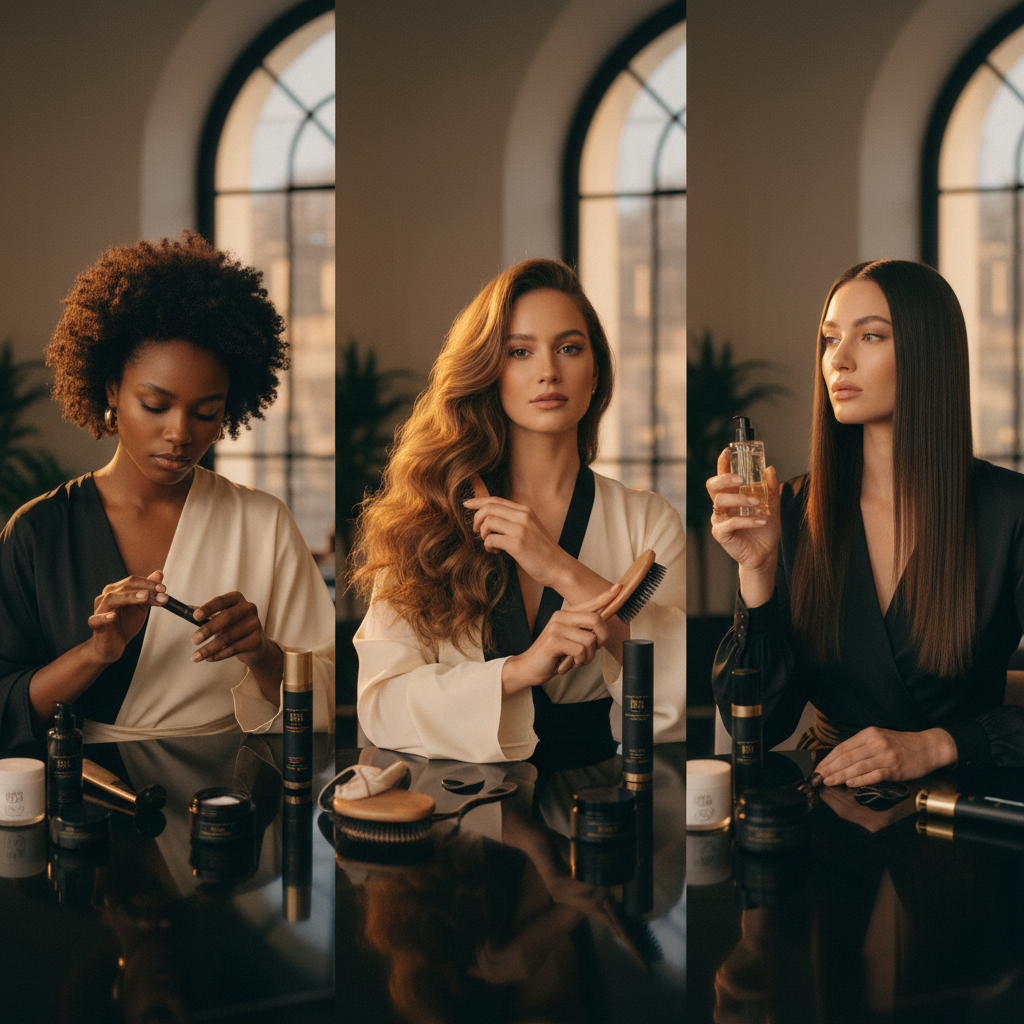
Selecting hair care products and developing a corresponding regimen requires an understanding of your specific hair type. Hair is broadly categorized by its texture, porosity, and oil production, each influencing how it interacts with products and environmental factors.
Understanding Hair Texture
Hair texture refers to the thickness of individual strands and the shape of the hair follicle. This is often described as fine, medium, or thick.
- Fine Hair: Individual strands are thin and delicate. This hair type can be prone to tangling, limpness, and can be easily weighed down by heavy products. It benefits from lightweight formulations that add volume without causing buildup.
- Medium Hair: The most common hair texture, individual strands are neither fine nor coarse. It is generally easy to manage and holds styles well. Medium hair can tolerate a wider range of products but still benefits from balanced formulations.
- Thick/Coarse Hair: Individual strands are wide and strong. This hair type can be resilient but may also be prone to dryness, frizz, and can be difficult to style. It often benefits from richer, more moisturising products.
The shape of the hair follicle determines its curl pattern, ranging from straight to coily.
- Straight Hair (Type 1): Lacks natural curl. It can be prone to oiliness as sebum, the natural oil produced by the scalp, travels easily down the straight shaft.
- Wavy Hair (Type 2): Has a loose S-shaped pattern. It can range from fine to coarse and can be prone to frizz.
- Curly Hair (Type 3): Forms distinct S-shaped curls that are clearly defined. This hair type tends to be drier than straight or wavy hair as sebum has more difficulty traveling down the curved shaft.
- Coily Hair (Type 4): Features tightly packed, often Z-shaped coils. It is the driest and most fragile hair type due to its many bends and turns, which impede sebum distribution.
Understanding Hair Porosity
Hair porosity refers to your hair's ability to absorb and retain moisture. This is determined by the condition of the cuticle, the outermost layer of the hair shaft composed of overlapping scales.
- Low Porosity: The cuticles are tightly closed, making it difficult for moisture to penetrate. Once moisture is in, it's well-retained. Products tend to sit on the hair rather than absorbing. This hair type can benefit from lightweight, humectant-rich products and gentle heat during conditioning to help open the cuticle.
- Medium Porosity: The cuticles are slightly less tightly bound, allowing for easy absorption and retention of moisture. This is generally considered the ideal porosity, requiring balanced products.
- High Porosity: The cuticles are raised or damaged, making it easy for moisture to enter but also to escape quickly. This hair type can be prone to frizz, dryness, and breakage. It benefits from rich, moisturising, and protein-containing products that help to seal the cuticle.
Understanding Scalp Oil Production
Scalp oiliness is determined by the sebaceous glands' activity. This influences how frequently hair needs to be cleansed.
- Oily Scalp: Sebaceous glands produce an abundance of sebum, leading to hair that can look greasy quickly. Daily or every-other-day washing with clarifying or balancing shampoos may be necessary.
- Normal Scalp: Sebum production is balanced, leading to hair that can go a few days between washes without looking oily or dry.
- Dry Scalp: Sebaceous glands produce insufficient sebum, leading to a tight, itchy scalp and potentially dry hair. Washing less frequently with moisturising shampoos and conditioners is often beneficial.
Recommended Regimens by Hair Type
| Hair Type | Cleansing Frequency | Shampoo Type | Conditioner Type | Styling Products | Key Considerations |
|---|---|---|---|---|---|
| Fine, Straight | Daily to every other day | Volumizing, Sulfate-free | Lightweight, Detangling | Volumizing mousse, Root lift spray | Avoid heavy oils, focus on volume |
| Fine, Wavy | Every 2-3 days | Hydrating, Sulfate-free | Lightweight, Hydrating | Leave-in conditioner, Light curl cream | Define waves without weighing down |
| Medium, Straight | Every 2-3 days | Balancing, Hydrating | Hydrating, Detangling | Heat protectant, Light serum | Versatile, can handle most products |
| Medium, Wavy | Every 2-4 days | Hydrating, Balancing | Hydrating, Curl-enhancing | Curl cream, Texturizing spray | Maintain wave pattern, control frizz |
| Thick, Curly | Every 3-5 days | Moisturizing, Sulfate-free | Deep conditioning, Leave-in | Curl cream, Gel, Hair butter | Focus on moisture, frizz control |
| Thick, Coily | Weekly to bi-weekly | Co-wash, Cleansing cream | Deep conditioning, Leave-in, Hair mask | Heavy oils, Butters, Styling creams | Maximize moisture, protect fragile strands |
Regardless of your hair type, a gentle approach to cleansing, conditioning, and styling is always beneficial. Regular trims remove split ends, and minimizing heat styling can prevent damage. Developing a consistent regimen tailored to your hair's unique characteristics will yield the best results.