Scalp Seborrhoeic Dermatitis vs Dry Scalp: The Essential Guide
10 min read ·
Understand the real differences in Scalp Seborrhoeic Dermatitis vs Dry Scalp, from underlying biological causes to targeted treatments and proper flake identification.
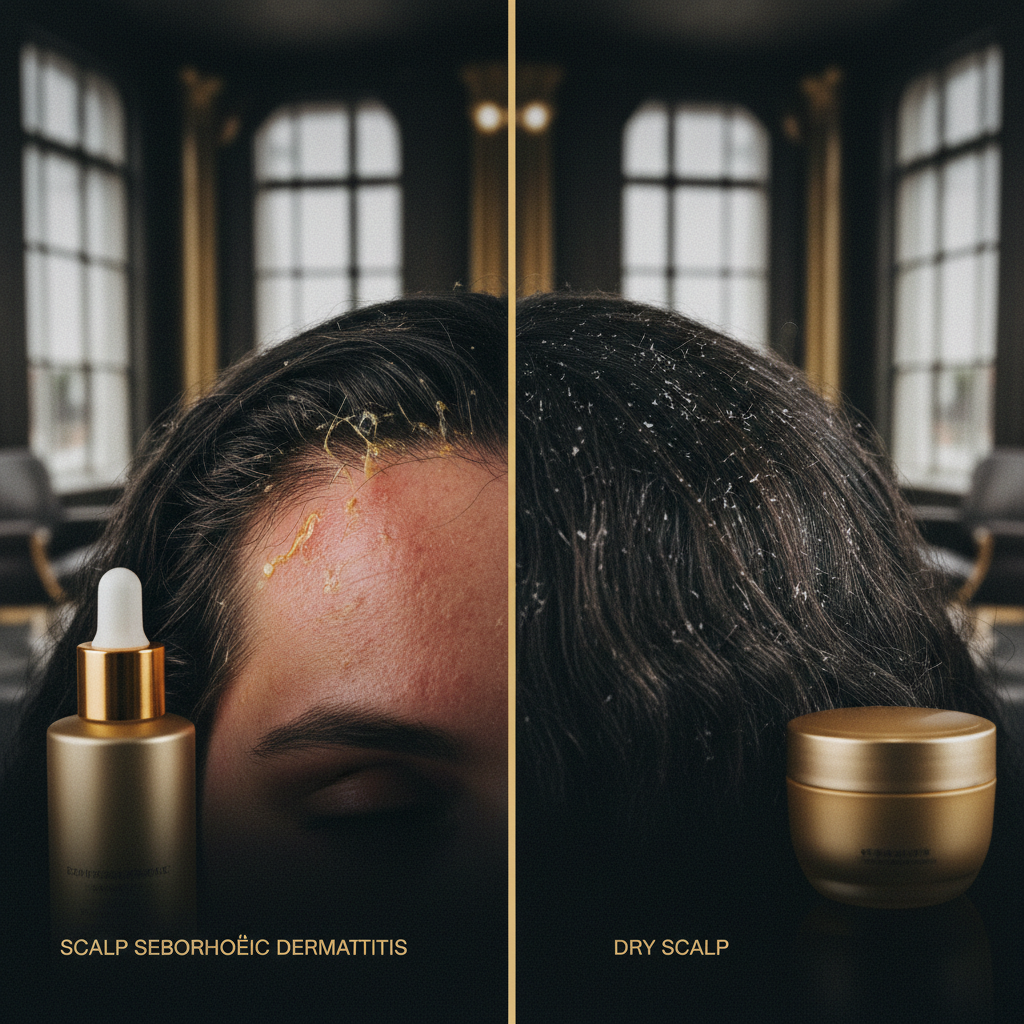
Quick answer: When evaluating Scalp Seborrhoeic Dermatitis vs Dry Scalp, the fundamental distinction lies between an inflammatory fungal reaction and simple skin barrier dehydration. Seborrhoeic dermatitis is a chronic inflammatory disorder driven by excess sebum and an overgrowth of Malassezia yeast, producing greasy, yellowish flakes on erythematous (red or discoloured) skin. Dry scalp is non-inflammatory moisture depletion, producing tiny, powdery white flakes without notable redness. Misdiagnosing the condition can worsen symptoms, as applying heavy oils to seborrhoeic dermatitis actively feeds the underlying yeast.
Key takeaways
- Seborrhoeic dermatitis involves an inflammatory reaction to Malassezia yeast feeding on sebum, whereas dry scalp is simply a lack of water and epidermal lipids.
- Flake appearance differs noticeably: seborrhoeic flakes are large, waxy, and yellowish, while dry scalp flakes are tiny, dry, and white.
- Erythema (redness or pinkish-purple discoloration) and persistent itch are hallmarks of seborrhoeic dermatitis, whereas dry scalp rarely presents with visible inflammation.
- Oil treatments frequently aggravate seborrhoeic dermatitis by providing free fatty acids for yeast proliferation, but they may soothe a genuine dry scalp.
- Neither condition directly causes permanent hair loss, though intense scratching from inflammatory dermatitis can trigger temporary hair shedding (telogen effluvium) or mechanical hair breakage.
Scalp Seborrhoeic Dermatitis vs Dry Scalp: what the evidence shows
Differentiating Scalp Seborrhoeic Dermatitis vs Dry Scalp is essential because their underlying mechanisms require fundamentally opposite management strategies. Clinical dermatology literature classifies seborrhoeic dermatitis as a recurrent, papulosquamous skin condition that affects sebum-rich areas such as the scalp, nasolabial folds, and upper chest. Estimates from the British Association of Dermatologists indicate that seborrhoeic dermatitis affects between 1% and 5% of the general adult population, with a higher prevalence in men.
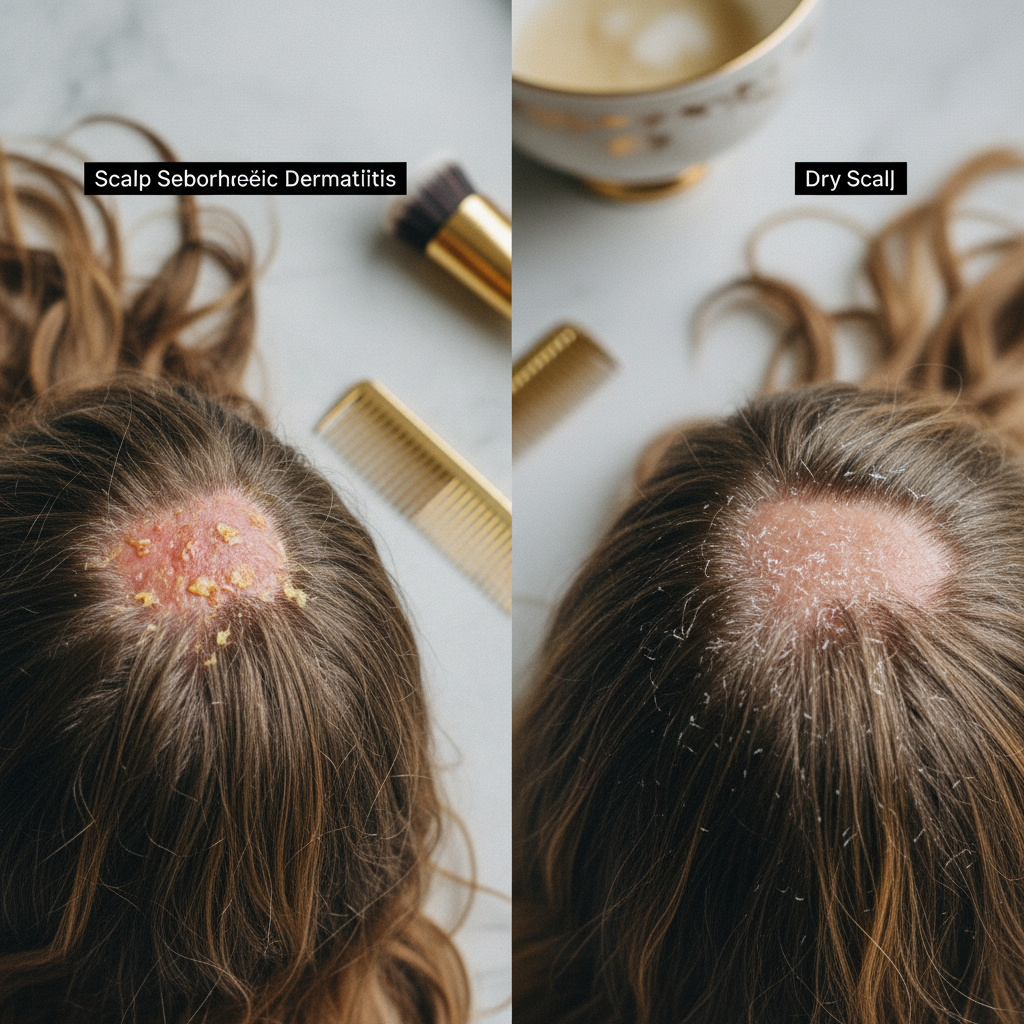
In contrast, a dry scalp is a superficial physiological state (xerosis) where the stratum corneum loses its moisture retention capacity. This dehydration is often triggered by environmental factors, such as central heating, cold outdoor air, or excessively harsh anionic surfactants that strip the protective lipid layer of the scalp.
While both conditions present with shedding corneocytes (skin flakes) and a sensation of tightness or discomfort, the biochemical environment of the scalp tissue in each case is distinct. Confusing the two often leads individuals to treat greasy, inflamed dermatitis with conditioning plant oils, creating an ideal breeding ground for microbial overgrowth.
| Clinical Feature | Scalp Seborrhoeic Dermatitis | Dry Scalp (Scalp Xerosis) |
|---|---|---|
| Primary Cause | Malassezia yeast overgrowth and sebum breakdown | Epidermal barrier dehydration, low ambient humidity |
| Flake Morphology | Large, thick, oily, yellowish or greyish scales | Small, fine, powdery, white or translucent flakes |
| Inflammation / Redness | Evident erythema (red, pink, or purplish depending on skin tone) | Minimal to absent; scalp colour remains normal |
| Sebum Production | Moderate to excessively oily scalp | Low to balanced sebum production; skin feels dry |
| Sensation | Intense, persistent itching and burning sensation | Mild itch, primarily sensations of tightness and irritation |
| Response to Heavy Oils | Worsens; lipids feed the yeast | Improves; lipids replenish the compromised barrier |
| Secondary Affected Areas | Eyebrows, sides of nose, beard area, behind ears | Often accompanied by dry skin on arms, hands, or legs |
What the evidence does not show
Controlled research has not found that seborrhoeic dermatitis is caused by poor personal hygiene. Washing frequency can influence the build-up of sebum, but the condition stems from an altered immune response to normal skin flora, not from an unclean scalp.
Similarly, there is no evidence that seborrhoeic dermatitis or dry scalp directly attacks the hair follicle to cause irreversible hair loss (such as androgenetic alopecia or scarring alopecia). While severe, neglected inflammation and aggressive scratching can lead to follicle trauma, mechanical hair breakage, or temporary shedding (telogen effluvium), the follicles themselves remain intact and capable of regrowth once the inflammation subsides. Finally, scientific trials do not support the idea that drinking extra water alone will cure a dry scalp; barrier repair requires topical moisture retention alongside systemic hydration.
Understanding the biological mechanisms
The human scalp supports a complex microbiome dominated by Malassezia species, particularly Malassezia globosa and Malassezia restricta. These yeasts are lipophilic, meaning they rely on external lipids for survival because they cannot synthesise their own saturated fatty acids.
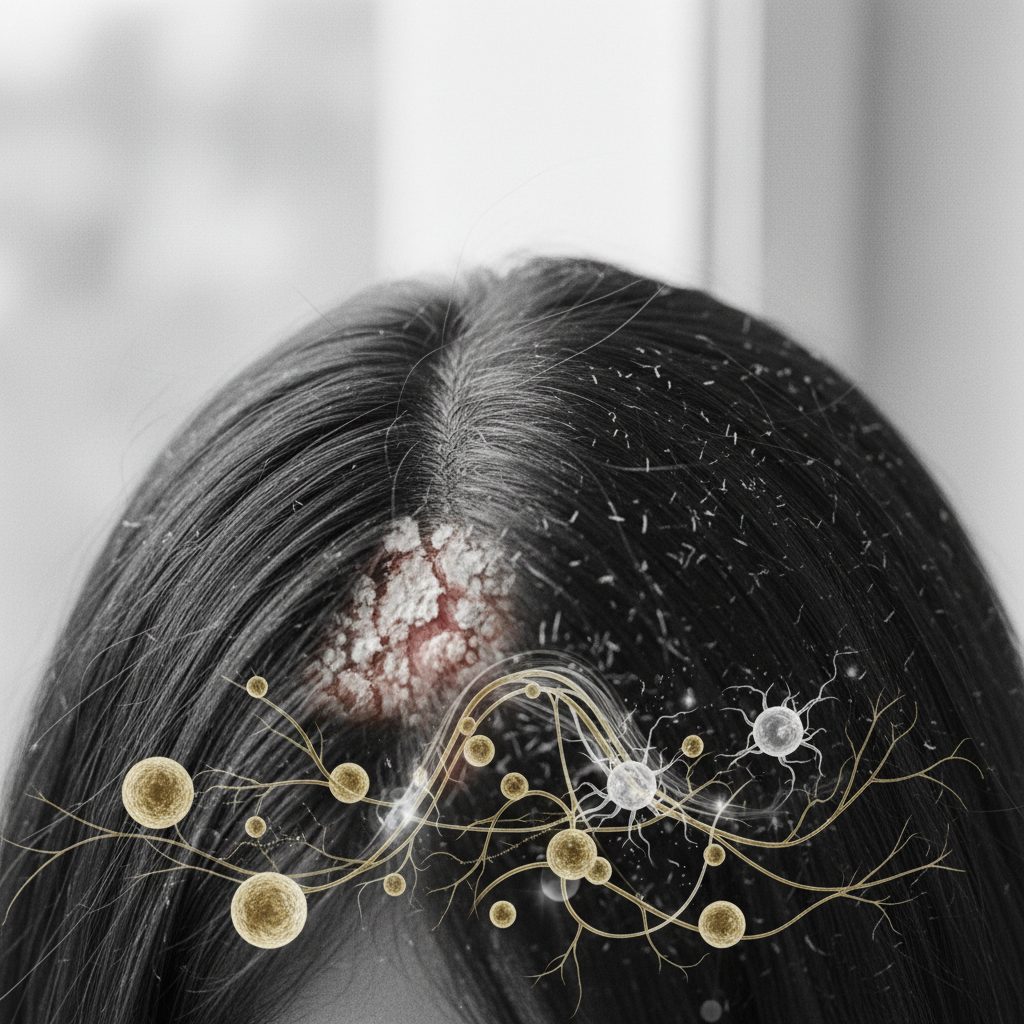
In seborrhoeic dermatitis, the sebaceous glands produce an abundance of sebum. The Malassezia yeast produces lipase enzymes that hydrolyse this sebum, breaking down neutral triglycerides into free fatty acids. Among these is oleic acid. In susceptible individuals, oleic acid penetrates the stratum corneum, disrupting the epidermal barrier and triggering an inflammatory immune response. This leads to hyperproliferation: the scalp speeds up its cellular turnover from the normal 28-day cycle to as rapidly as 7 to 10 days. Immature corneocytes aggregate with excess sebum, producing greasy, yellow scales accompanied by inflammatory erythema.
With dry scalp, the issue is not microbial proliferation but transepidermal water loss (TEWL). When environmental humidity drops below 30%, or when the scalp is repeatedly stripped by high-pH cleansers (pH above 6.5) and hot water, the natural moisturising factors (NMFs) and intercellular lipids (ceramides, cholesterol, and free fatty acids) deplete. Without sufficient moisture, the desquamation enzymes that smoothly detach dead cells cannot function properly. Consequently, small groups of dehydrated corneocytes peel away prematurely, falling as tiny, dry, white flakes.
The signs to look for
Accurate visual and sensory assessment helps identify which condition is present:
- Check flake adhesion: Run a fine-toothed comb through the hair. If the flakes fall freely like light snow onto your shoulders, you are likely looking at a dry scalp. If the flakes adhere stubbornly to the scalp and hair shafts in thick, sticky clumps, seborrhoeic dermatitis is the probable cause.
- Inspect the scalp surface: Part the hair under bright, neutral lighting. A dry scalp appears matte, parched, and uniform in colour. Seborrhoeic dermatitis reveals glistening, oily patches, plaque-like build-up, and clear redness or darker pigmentation around the hair follicles.
- Assess surrounding areas: Examine the eyebrows, the creases alongside the nostrils, the external ear canals, and the chest. Seborrhoeic dermatitis frequently co-exists in these sebum-dense regions. Dry scalp is more likely to coincide with xerosis on the limbs or face.
What you can do: evidence-based management
Targeted care depends entirely on the verified condition.
Managing seborrhoeic dermatitis
- Use targeted antimicrobial cleansers: Shampoos formulated with active ingredients such as ketoconazole (1% to 2%), piroctone olamine, zinc pyrithione, or selenium sulphide reduce Malassezia colonies and lower inflammatory byproducts.
- Incorporate keratolytic agents: Salicylic acid (1% to 3%) helps dissolve stubborn, sticky plaques, allowing antifungal actives to penetrate effectively.
- Maintain consistent scalp hygiene: Wash the hair regularly to prevent sebum accumulation. Leave medicated shampoos on the scalp for 3 to 5 minutes before rinsing to give active agents sufficient contact time.
- Avoid heavy plant oils: Coconut oil, olive oil, and argan oil contain lipid profiles that Malassezia yeasts consume, which can intensify flare-ups.
Managing dry scalp
- Switch to gentle, low-pH formulations: Cleanse with sulphate-free shampoos formulated around pH 4.5 to 5.5 to preserve the acid mantle and minimise barrier disruption.
- Reduce water temperature: Wash your hair with lukewarm water rather than hot water, which accelerates lipid stripping.
- Apply humectants: Use lightweight scalp serums containing glycerin, hyaluronic acid, aloe vera, or panthenol to attract and bind water directly into the stratum corneum.
- Use a home humidifier: Maintaining indoor relative humidity above 40% during colder months reduces ambient transepidermal water loss.
When the cause may be something else
If symptoms do not improve with appropriate care, other scalp conditions should be considered:
- Scalp Psoriasis: Produces well-demarcated, raised, thick plaques covered with silvery-white scales. It frequently extends beyond the hairline onto the forehead and neck, exhibiting the Auspitz sign (pinpoint bleeding when scales are lifted).
- Contact Dermatitis: An allergic or irritant reaction to hair dyes (particularly paraphenylenediamine or PPD), fragrances, or preservatives, causing intense burning, swelling, and acute peeling.
- Tinea Capitis: A fungal dermatophyte infection, common in children, which invades the hair shaft, producing localized scaling accompanied by circular patches of hair breakage and stubble.
Supporting overall scalp vitality with Watermans
When managing day-to-day scalp health, choosing balanced, nutrient-rich formulations helps maintain an optimal environment for hair growth. Watermans focuses on non-greasy, scalp-first formulas designed to support the skin barrier without leaving heavy, pore-clogging residues.
Watermans Grow Me Shampoo combines gentle cleansing agents with scalp-supportive compounds including biotin, rosemary extract, niacinamide, and allantoin. Niacinamide supports the skin's natural barrier function, while allantoin offers soothing properties for easily irritated skin.
For targeted nourishment, Watermans Grow More Scalp Elixir provides a leave-in, water-based blend of lupin protein, silica, and caffeine. Because it is formulated without heavy oils, it supplies conditioning hydration to the scalp without feeding lipid-dependent microflora, making it a versatile option for keeping the scalp feeling balanced, invigorated, and clear.
When to get professional advice
Consult a GP, dermatologist, or qualified trichologist if:
- Flaking and redness persist after 3 to 4 weeks of regular use of targeted anti-dandruff or hydrating products.
- The scalp becomes severely painful, swollen, or produces yellow crusting or weeping fluid, which may indicate a secondary bacterial infection.
- Scalp itching causes persistent sleep disruption or distress.
- You notice diffuse hair shedding or distinct patches of hair loss alongside scalp scaling.
Frequently asked questions about Scalp Seborrhoeic Dermatitis vs Dry Scalp
Can you have both seborrhoeic dermatitis and dry scalp at the same time?
It is possible to experience dehydrated surface skin alongside seborrhoeic dermatitis, often caused by using harsh, stripping cleansers to combat oiliness. However, true dry scalp (low sebum, low water) and seborrhoeic dermatitis (high sebum, fungal inflammation) are clinically distinct. Treating the inflammatory condition first with targeted actives like piroctone olamine, followed by gentle hydration, resolves this overlap.
Does oiling the scalp help with Scalp Seborrhoeic Dermatitis vs Dry Scalp?
Oiling helps dry scalp by replenishing lost surface lipids, but it typically worsens seborrhoeic dermatitis. When comparing Scalp Seborrhoeic Dermatitis vs Dry Scalp, applying plant oils like coconut or olive oil directly supplies fatty acids that nourish the Malassezia yeast driving seborrhoeic flares. If your scalp is inflamed, red, and greasy, keep oils off the skin.
Can seborrhoeic dermatitis cause permanent hair loss?
No. Seborrhoeic dermatitis does not destroy hair follicles. However, severe inflammation, combined with vigorous scratching, can damage hair shafts and cause mechanical breakage. The chronic itching can also shock hair follicles into a resting phase, causing temporary hair shedding (telogen effluvium). Once the inflammation is treated, hair growth cycles return to normal.
How often should I wash my hair if I have seborrhoeic dermatitis?
Most dermatologists recommend washing every 1 to 2 days during an active flare-up. Frequent washing removes excess sebum, clears cellular debris, and suppresses yeast levels. As symptoms stabilise, you can gradually reduce cleansing to 2 or 3 times per week using a gentle maintenance shampoo, alternating with an active treatment.
Does cold weather trigger both conditions?
Yes, but through different biological mechanisms. Cold weather brings lower humidity and indoor heating, which directly depletes moisture from the stratum corneum, triggering a dry scalp. In seborrhoeic dermatitis, winter flare-ups often relate to shifts in skin surface lipids, impaired barrier resistance, and reduced exposure to natural ultraviolet light, which naturally inhibits yeast proliferation.
Conclusion
Distinguishing between Scalp Seborrhoeic Dermatitis vs Dry Scalp is the key to choosing an effective routine and avoiding products that aggravate your symptoms. A dry scalp requires moisture replenishment, gentle low-pH cleansing, and barrier protection. Seborrhoeic dermatitis requires active management targeting excess sebum, cellular turnover, and Malassezia populations using proven antimicrobials and keratolytic agents. By identifying whether your flakes stem from simple dehydration or chronic fungal inflammation, you can restore scalp comfort and maintain strong, healthy-looking hair.
Sources and references
- British Association of Dermatologists. (2020). Seborrhoeic Dermatitis: Patient Information Leaflet. BAD Guidelines.
- National Institute for Health and Care Excellence (NICE). (2022). Seborrhoeic Dermatitis: Clinical Knowledge Summaries.
- Borda, L. J., & Wikramanayake, T. C. (2015). Seborrheic Dermatitis and Dandruff: A Comprehensive Review. Journal of Clinical and Investigative Dermatology, 3(2), 10.
- Dawson, T. L. (2007). Malassezia globosa and restricta: Breakthrough Understanding of the Etiology and Treatment of Dandruff and Seborrheic Dermatitis through Whole-Genome Sequencing. Journal of Investigative Dermatology Symposium Proceedings, 12(2), 15-19.
- World Health Organization / International Classification of Diseases. (2019). ICD-11: Seborrhoeic Dermatitis (EA82).
Find these ingredients in Watermans products
- Zinc: you will find this ingredient in our Hair Vitamins.
- Oleic Acid: you will find this ingredient in our Camellia & Black Castor Hair & Body Oil.
- Niacinamide: you will find this ingredient in our Hair Mask.
- Panthenol (Provitamin B5): you will find this ingredient in our Heat Protection Spray.
- Aloe Vera: you will find this ingredient in our Curly Hair Conditioner.