Scalp Micropigmentation for Thinning Hair: A Complete Evidence Guide
9 min read ·
Scalp Micropigmentation for Thinning Hair creates an effective optical illusion of density. Learn how SMP works, its longevity, safety, and key limitations.
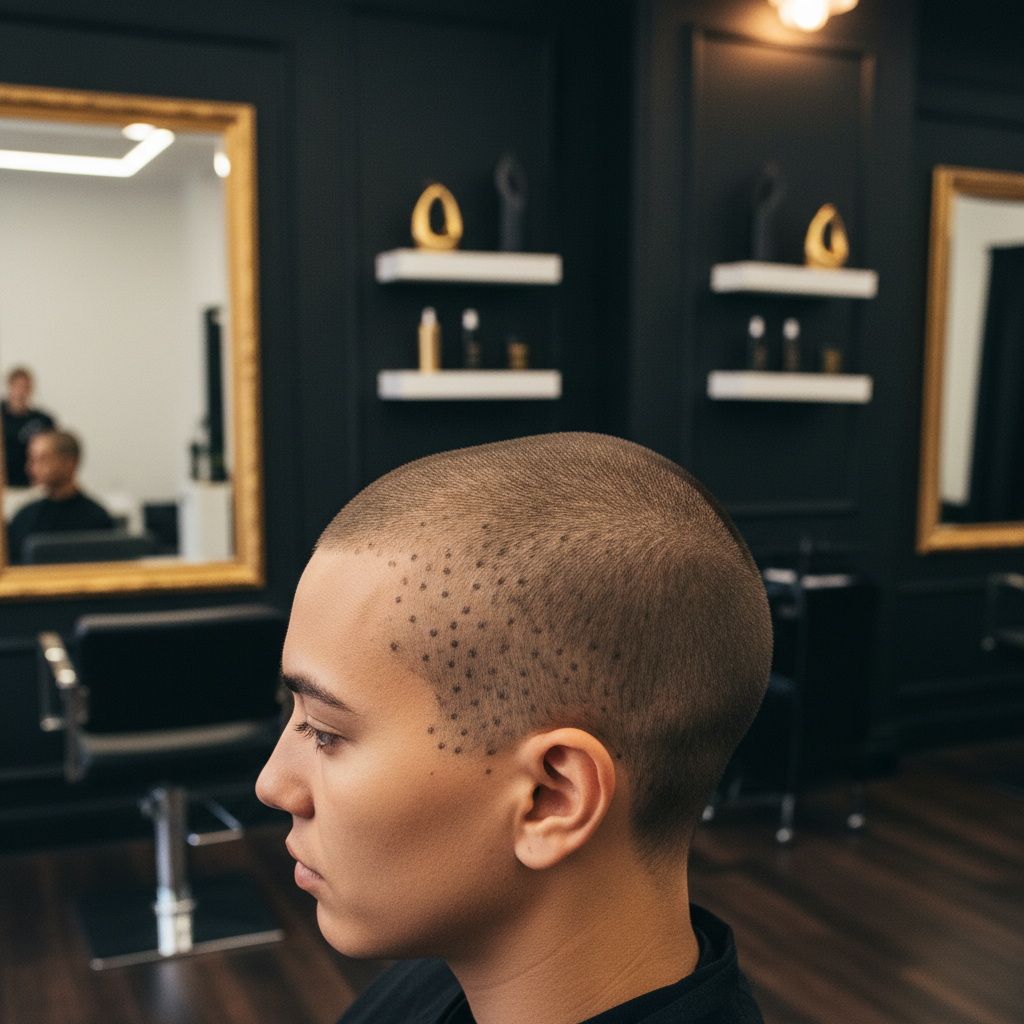
Quick answer: Scalp Micropigmentation for Thinning Hair is an advanced cosmetic tattooing procedure that deposits minute dots of natural pigment into the upper dermis of the scalp. The technique replicates natural follicles to reduce the visual contrast between pale scalp skin and sparse strands, creating an illusion of greater density. Its main limitation is that it cannot grow or restore real hair; it is entirely visual, requires professional touch-ups every three to six years, and cannot prevent ongoing biological hair loss.
Key takeaways
- Scalp micropigmentation (SMP) works as a visual density treatment rather than a biological hair restoration method.
- Practitioners deposit specialist carbon-based pigments 1 to 2 millimetres deep into the upper papillary dermis, which is shallower than standard body tattoos.
- The treatment suits diffuse thinning, receding hairlines, crown thinning, and scarring from previous hair transplant procedures.
- SMP does not damage existing hair follicles because the needle does not reach the follicular bulb, which sits roughly 4 millimetres deep.
- Results typically fade naturally over 3 to 6 years due to ultraviolet exposure, cellular turnover, and natural immune responses, requiring periodic refresh sessions.
Scalp Micropigmentation for Thinning Hair: what the evidence shows
Scalp Micropigmentation for Thinning Hair provides an effective, non-surgical optical illusion of follicle density for people dealing with diffuse thinning, androgenetic alopecia, and alopecia areata. Published clinical observations in dermatological literature, including reports in the Journal of Cutaneous and Aesthetic Surgery, demonstrate high patient satisfaction rates. Patients report a noticeable reduction in the appearance of bare scalp, particularly in bright lighting where thinning hair typically looks most obvious.
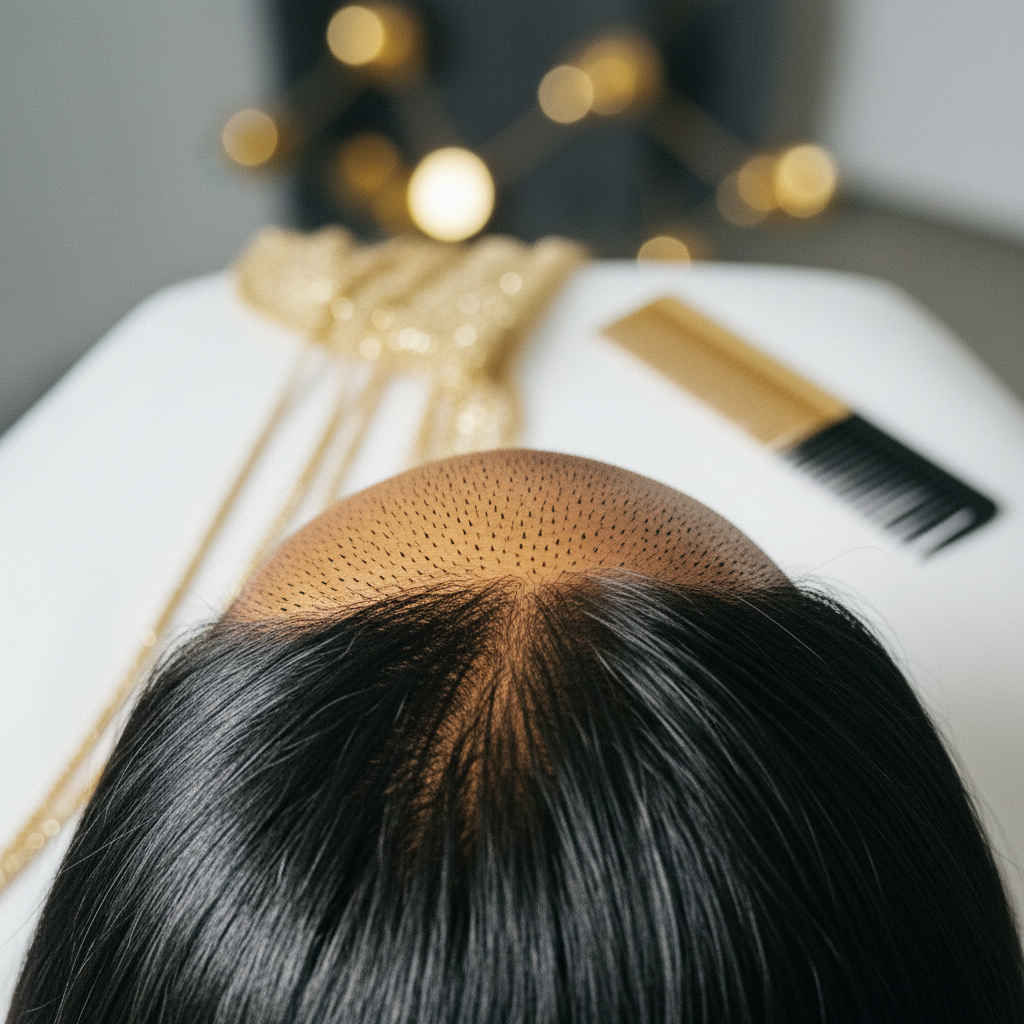
The core mechanism relies on decreasing luminance contrast. When hair thins, bare scalp reflects light, making the thinning immediately noticeable to the naked eye. By placing thousands of microscopic pigment deposits across the thinned regions, the practitioner shades the underlying scalp skin to match the colour of your natural root shadow. This creates a solid visual base, which makes your remaining, longer strands look substantially denser and thicker.
Unlike standard body tattooing, SMP uses specialised micro-needles (often three-point needles measuring around 0.15 to 0.25 millimetres in diameter) and non-metallic, carbon-based pigments. Body tattoo ink contains heavy metals and compounds that can turn blue or green over time. In contrast, SMP pigments are formulated to retain a neutral, grey-black hue that matches natural follicular keratin as they slowly break down.
SMP also serves as a complementary technique alongside surgical hair restoration. Patients who lack adequate donor hair for a full follicular unit extraction (FUE) transplant frequently use SMP to fill in the visual gaps, maximising perceived density without depleting their donor sites.
What the evidence does not show
Scalp micropigmentation does not stimulate hair follicles, correct hormonal imbalances, or prevent progressive pattern baldness. It is purely an aesthetic camouflage technique. It cannot alter the biological course of conditions such as androgenetic alopecia or telogen effluvium.
There is no scientific evidence that SMP damages existing hair follicles when performed correctly by a trained practitioner. Healthy scalp hair follicles originate in the deep reticular dermis and the subcutaneous fat layer, roughly 4 to 5 millimetres below the surface. SMP needles penetrate only 1 to 2 millimetres into the upper papillary dermis. Because the needle does not reach the follicular bulb or the dermal papilla, existing hair continues its normal anagen, catagen, and telogen cycles undisturbed.
Equally, SMP cannot replicate the physical texture, volume, or movement of real hair fibres. If you run your hands through your hair, SMP does not add physical mass or diameter to the individual strands. In areas of complete baldness, SMP only mimics the look of a freshly shaven, buzz-cut follicle, not longer hair.
How the procedure works: the biological mechanism
Scalp micropigmentation requires two to four sessions spaced 10 to 14 days apart to build density gradually. During each session, the practitioner uses a digital rotary tattoo machine set to a precise depth to puncture the epidermis and enter the upper dermis.
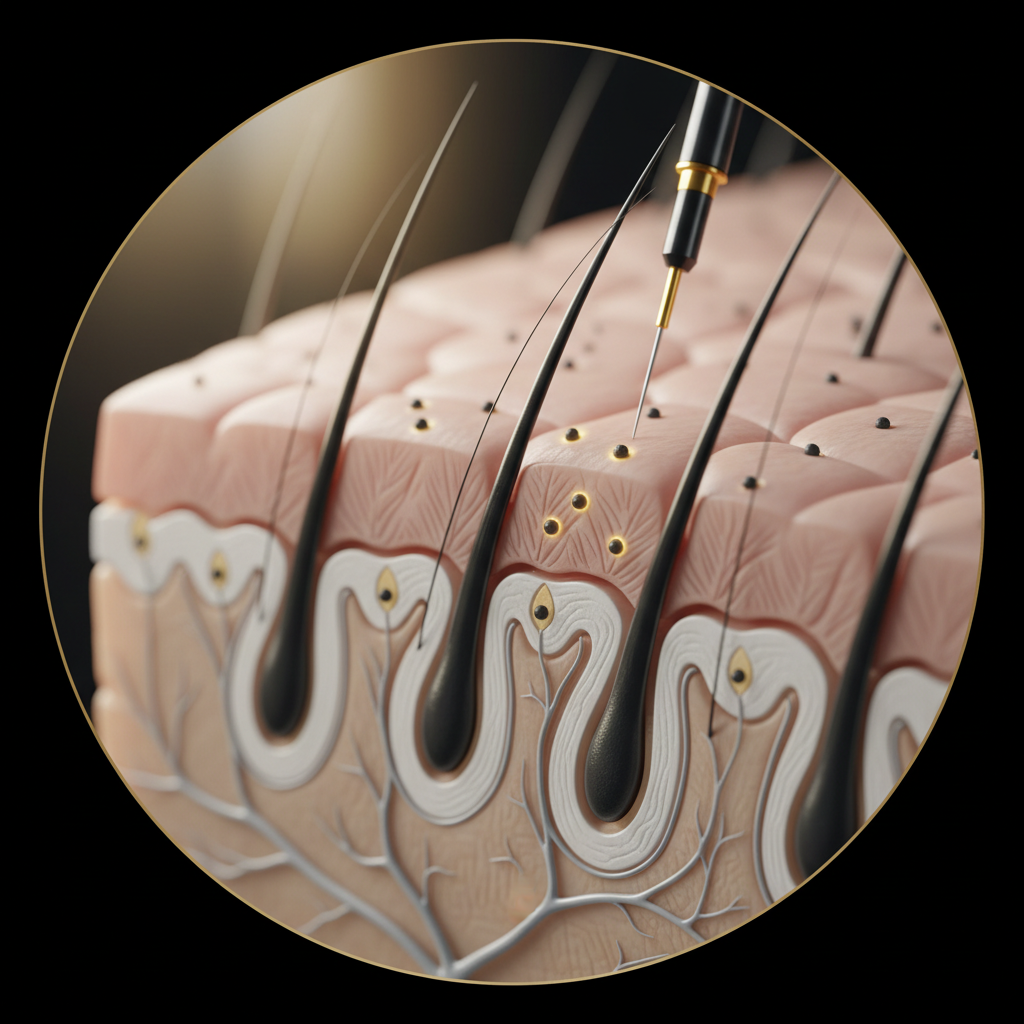
Once the needle deposits the pigment:
- Inflammatory response: The body initiates a mild, acute wound-healing cascade. Macrophages (immune scavenger cells) migrate to the site to engulf the foreign pigment particles.
- Pigment retention: Some particles are transported away via the lymphatic system, which explains why the initial treatment fades by roughly 20 to 40 percent in the first week. However, many pigment particles are too large for macrophages to digest.
- Encapsulation: Fibroblasts and surrounding collagen fibres trap the remaining pigment inside the papillary dermis. The epidermis then closes, locking the pigment beneath a transparent layer of regenerating skin cells.
Because cell turnover constantly sheds the epidermis, depositing pigment into the deeper dermis ensures the dot remains visible without shedding immediately. However, macrophage activity, exposure to ultraviolet rays, and slow dermal remodelling gradually break down the pigment particles over three to six years, which causes the dots to soften and fade naturally.
Comparing visual density solutions for thinning hair
Choosing the right approach depends on whether you need a cosmetic cover-up, a medical intervention, or a surgical restoration. The table below outlines how SMP compares with other common density strategies.
| Feature | Scalp Micropigmentation (SMP) | Keratin Hair Building Fibres | Follicular Unit Extraction (FUE) |
|---|---|---|---|
| Primary Mechanism | Dermal pigment reduces scalp contrast | Electrostatic fibres cling to hair shafts | Surgical relocation of live follicles |
| Longevity | 3 to 6 years before fading | 1 day (washes out in water) | Permanent (subject to natural ageing) |
| Physical Texture | Flat (visual illusion only) | Textured (thickens physical shaft) | Natural growing hair fibre |
| Invasiveness | Minimally invasive (micro-needling) | Non-invasive (topical powder) | Surgical procedure with anaesthetic |
| Maintenance | Periodic touch-ups every few years | Daily application | Ongoing medical hair maintenance |
| Sweat / Water Resistance | Completely waterproof once healed | Can run with heavy rain or sweat | Completely waterproof |
When thinning indicates an underlying biological issue
Thinning hair is not always straightforward genetic pattern hair loss. Before committing to a cosmetic concealment like SMP, you should investigate why your hair is thinning in the first place.
Diffuse thinning across the entire scalp can stem from acute or chronic telogen effluvium, often triggered by severe physical illness, high fever, abrupt nutritional deficiencies (such as low serum ferritin or vitamin D3), or thyroid dysfunction. Patchy, discrete thinning might indicate alopecia areata, an autoimmune condition where T-cells attack the hair bulb.
Thinning accompanied by scalp burning, redness, scaling, or pain can point to scarring alopecias, including frontal fibrosing alopecia or lichen planopilaris. In these conditions, inflammation destroys the hair follicle permanently. Applying tattoo pigments into an actively inflamed, scarring scalp can aggravate the immune response and worsen tissue damage. A dermatologist or trichologist should always evaluate an irritated scalp before you undergo SMP.
Supporting the scalp environment
While SMP creates an immediate visual fix for thinning hair, maintaining the condition of your remaining strands and scalp skin remains essential. A clean, balanced scalp environment supports healthy follicle cycling and prevents skin conditions like seborrhoeic dermatitis, which can cloud the appearance of pigment dots.
Use a gentle, sulphate-free shampoo to cleanse the scalp without stripping its acid mantle, keeping the skin around a healthy pH of 4.5 to 5.5. Products containing caffeine, biotin, rosemary, and niacinamide can invigorate the scalp surface and support hair fibre vitality. Watermans GrowMe shampoo offers a dedicated blend of biotin, caffeine, argan oil, and rosemary extract designed to fortify the feeling of thinning strands while keeping the scalp pristine. Keeping your scalp hydrated and protected with daily broad-spectrum SPF 30 or 50 also extends the lifespan of SMP pigment by shielding it from UV degradation.
Frequently asked questions about Scalp Micropigmentation for Thinning Hair
Does Scalp Micropigmentation for Thinning Hair hurt?
Most people describe SMP discomfort as mild to moderate, rating it significantly lower than traditional body tattooing. The needles are much finer and penetrate only 1 to 2 millimetres deep. The sensation feels like a light scratching or repetitive pinprick. Areas near the temples, crown, and hairline tend to be slightly more sensitive, but numbing creams can be applied beforehand to keep you comfortable throughout the procedure.
Can I wash my hair normally after an SMP treatment?
You must keep the scalp dry for the first four days after each session to let the micro-wounds close and retain the pigment. From day five, you can gently rinse your scalp with lukewarm water and a mild, sulphate-free cleanser without scrubbing. Avoid intense exercise, saunas, chlorine pools, and direct sun exposure for at least ten days post-treatment to prevent early pigment loss and infection.
Will SMP stop my remaining hair from growing?
No, SMP does not impede hair growth. Natural hair follicles reside 4 to 5 millimetres below the surface of the skin, whereas the SMP needle reaches a depth of only 1 to 2 millimetres. The treatment does not puncture or harm the follicle bulb or its blood supply. In fact, many clients report that their existing hair continues to grow at its standard biological rate throughout the treatment cycle.
What happens to the pigment as my hair naturally turns grey?
Skilled practitioners dilute and mix carbon pigments specifically to match your underlying follicle colour, which naturally resembles a soft greyish-charcoal under the skin rather than true jet black. If your hair turns grey, SMP often blends naturally because the cured pigment dots mimic the cool tones of grey and salt-and-pepper follicles. Practitioners can also soften or adjust the shade during subsequent touch-up sessions.
Closing thoughts on cosmetic follicle density
Scalp Micropigmentation for Thinning Hair offers a dependable, non-surgical route to restoring visual density and confidence. By reducing the contrast between scalp and hair, it effectively conceals diffuse loss without interfering with biological hair growth or causing follicle trauma.
To achieve the best outcome, first confirm that your hair thinning does not stem from an active autoimmune or inflammatory scalp condition that needs medical treatment. When applied to a healthy scalp by a qualified, experienced professional, SMP serves as a low-maintenance, waterproof solution that lets you enjoy the look of fuller, denser hair every day.
Sources and references
- Rassman, W. R., Pak, J. P., Kim, J., & Higgins, N. (2015). Scalp micropigmentation: a useful treatment for hair loss. Journal of Cutaneous and Aesthetic Surgery, 8(1), 35 to 42.
- Saed, S., Ibrahim, O., & Bergfeld, W. F. (2017). Hair camouflage: a comprehensive review. International Journal of Women's Dermatology, 3(1), S75, S80.
- British Association of Dermatologists (2021). Alopecia Areata: Patient Information Leaflet. BAD Guidelines.
- National Institute for Health and Care Excellence (NICE) (2022). Alopecia: Clinical Knowledge Summaries. CKS NICE.
Find these ingredients in Watermans products
- Vitamin D: you will find this ingredient in our Hair Vitamins.
- Niacinamide: you will find this ingredient in our Hair Mask.