Scalp Microcirculation and Hair Growth: Biological Mechanisms and Clinical Reality
9 min read ·
Explore the science of Scalp Microcirculation and Hair Growth, uncovering how blood flow impacts follicular health and separating proven biology from marketing myths.

Quick answer: The biological link between Scalp Microcirculation and Hair Growth centres on the dense capillary network surrounding the dermal papilla at the base of every active hair follicle. These tiny blood vessels supply oxygen, amino acids, and essential micronutrients needed for rapid cell division during the anagen growth phase. However, while healthy perfusion is essential for normal follicular function, poor blood flow alone does not cause pattern hair loss, and stimulating circulation cannot reverse genetically driven follicular miniaturisation without addressing the underlying hormonal drivers.
Key takeaways
- Active hair follicles in the anagen phase require high metabolic turnover, supported by an extensive capillary plexus around the dermal papilla.
- Vascular endothelial growth factor (VEGF) regulates angiogenesis during the hair cycle, expanding local microvasculature during growth and regressing during catagen.
- Diminished scalp blood flow is frequently observed in androgenetic alopecia, but research shows this is primarily a secondary consequence of follicle miniaturisation, not the primary cause.
- Mechanical stimulation, such as scalp massage, can transiently increase local perfusion and upregulate mechanical tension genes, but evidence for standalone regrowth remains modest.
- Increasing blood flow cannot overcome the effects of dihydrotestosterone (DHT) or systemic autoimmune attacks without targeted medical therapy.
Scalp Microcirculation and Hair Growth: what the evidence shows
The connection between Scalp Microcirculation and Hair Growth is rooted in the high energy demands of the hair follicle matrix. Matrix cells have one of the fastest proliferation rates in the human body, dividing rapidly to produce the keratinised hair fibre. To sustain this, the dermal papilla acts as an inductive centre, orchestrating the development of a specialised capillary network.
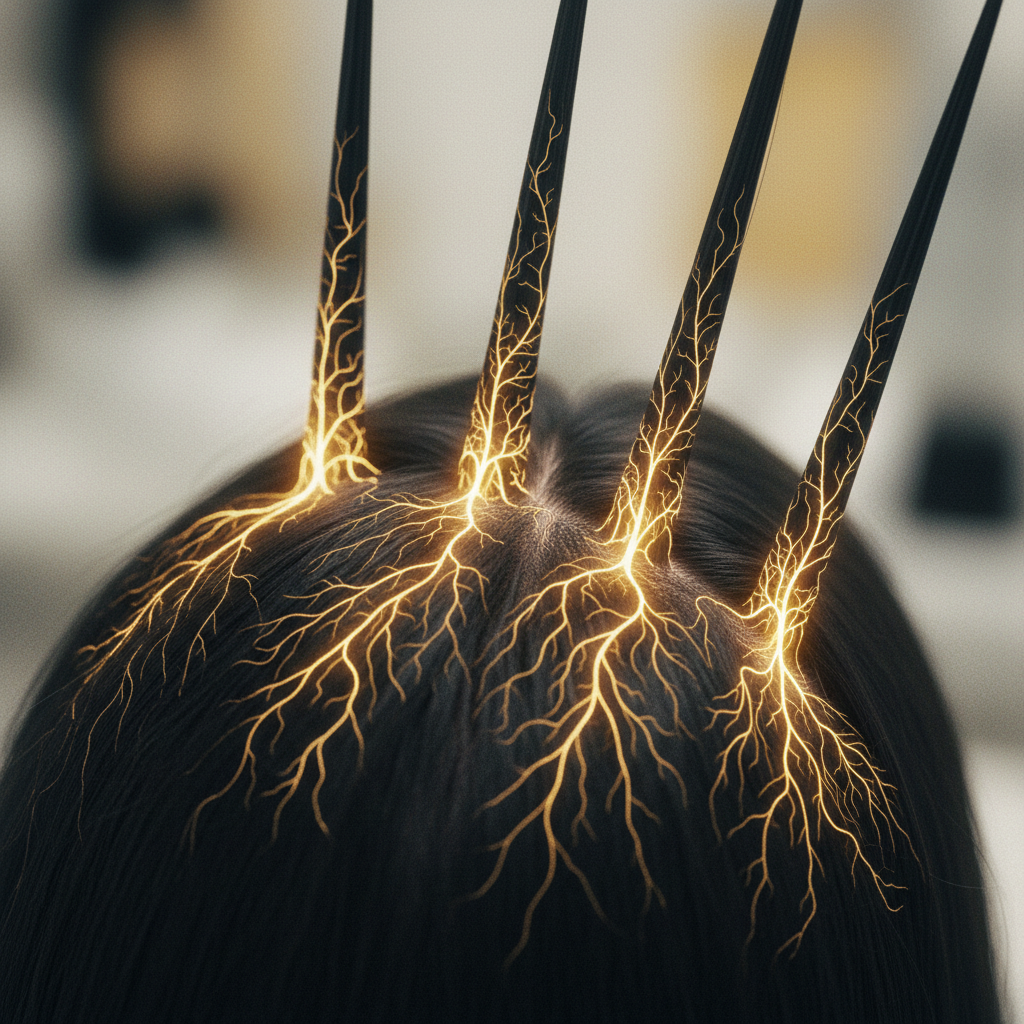
Historical physiological studies published in the Journal of Investigative Dermatology demonstrated that blood flow around active anagen follicles is nearly four times greater than around inactive telogen follicles. When a follicle enters anagen, endothelial cells proliferate to form new capillaries (angiogenesis). As the follicle transitions through catagen and telogen, this vascular bed largely degenerates through programmed cell death.
Research indicates that vascular endothelial growth factor (VEGF), secreted by outer root sheath keratinocytes and dermal papilla fibroblasts, mediates this cyclical vascular expansion. Transgenic animal models with elevated VEGF expression demonstrate accelerated hair regrowth and significantly larger hair follicles, confirming that local perfusion plays an active, supportive role during follicle development.
What the evidence does not show
A persistent myth in commercial haircare is that hair thinning is simply "choked off" blood supply caused by tight scalp muscles, hats, or poor systemic circulation. The evidence does not support this mechanical choking hypothesis.
In androgenetic alopecia (pattern hair loss), researchers have documented reduced subcutaneous blood flow and fewer blood vessels around affected follicles. However, tissue biopsy and physiological studies demonstrate that this vascular reduction is a secondary event. As dihydrotestosterone (DHT) binds to androgen receptors in genetically susceptible dermal papilla cells, the cells produce inhibitory signalling molecules, causing the follicle to miniaturise over successive cycles. Smaller follicles require less oxygen and metabolic fuel, so the surrounding vascular network naturally scales down.
Increasing blood flow alone does not clear DHT from the receptor site or reverse the genetic sensitivity of the tissue. If poor microcirculation were the primary cause of pattern baldness, hair transplanted from the vascularly identical occipital scalp (the back of the head) to the balding crown would wither and fall out. Instead, transplanted follicles retain their original donor characteristics and thrive, proving that intrinsic follicular genetics dictate vascular demand, rather than the reverse.
Mechanisms: how blood vessels sustain the follicle
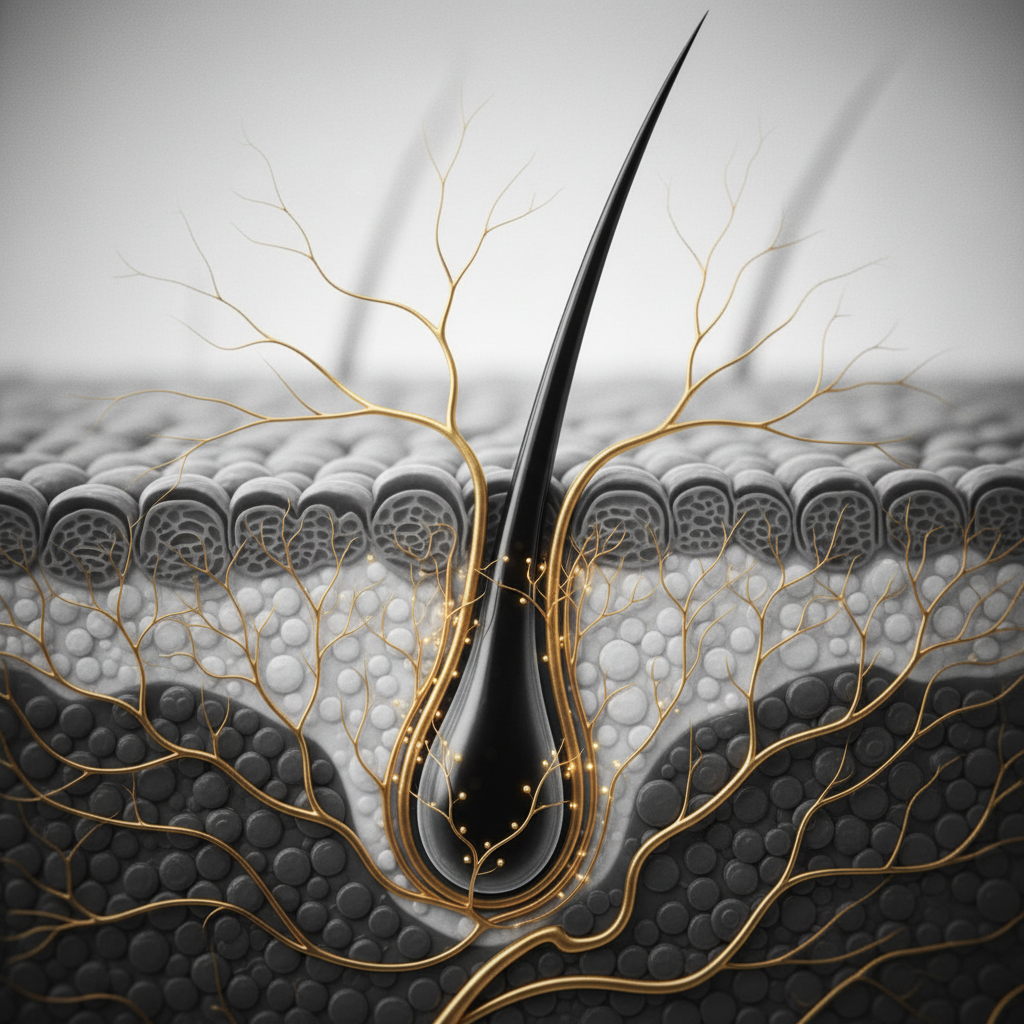
The microvascular system interacts with the hair follicle through several biological mechanisms:
Nutrient and gas exchange
Oxygen and circulating nutrients (including glucose, iron, zinc, and water-soluble vitamins) diffuse across the thin endothelial walls of the perifollicular capillaries into the extracellular matrix of the dermal papilla. Without continuous delivery of ATP substrates, mitotic activity in the hair matrix slows, potentially causing premature catagen entry.
Paracrine signalling from endothelial cells
Perifollicular blood vessels do not merely act as passive plumbing pipes. Vascular endothelial cells actively secrete signalling molecules, called angiocrines, which communicate directly with dermal papilla cells. These signals help sustain stem cell niches located in the follicle bulge.
Thermal regulation and waste removal
Rapid protein synthesis generates cellular metabolic waste products, including lactic acid and free radicals. Efficient venous and lymphatic drainage removes these by-products, maintaining a stable microenvironment and normal physiological pH within the perifollicular dermis.
Comparing interventions that target microcirculation
Different scalp interventions influence microvasculature through distinct physiological pathways.
| Intervention | Mechanism of action on blood vessels | Primary evidence level | Practical impact on hair |
|---|---|---|---|
| Topical Vasodilators (e.g. Minoxidil) | Opens potassium channels, hyperpolarising smooth muscle cells and dilating arterials | High (Multiple double-blind RCTs) | Prolongs anagen, enlarges miniaturised follicles |
| Standardised Scalp Massage | Induces mechanical shear stress, transiently increasing local erythrocyte velocity | Moderate (Small clinical and self-reported studies) | May increase hair thickness via mechanotransduction; modest |
| Low-Level Laser Therapy (LLLT) | Stimulates cytochrome c oxidase, boosting ATP production and nitric oxide release | Moderate to High (Several controlled clinical trials) | Improves hair density and follicle diameter over 16 to 26 weeks |
| Topical Rubefacients / Botanicals (e.g. Capsaicin, Menthol) | Stimulates cutaneous sensory nerves, triggering neurogenic inflammation and local erythema | Low to Moderate (Laboratory and small cohort studies) | Produces temporary warming sensation; limited evidence for long-term density changes |
| Platelet-Rich Plasma (PRP) | Releases concentrated growth factors (VEGF, PDGF, FGF) directly into dermis | Moderate (Multiple independent clinical trials) | Stimulates local angiogenesis and cellular proliferation |
What you can do to support healthy scalp microcirculation
While you cannot remodel your genetic programming purely through circulatory tricks, you can optimise the physiological environment supporting your follicles.
1. Mechanical scalp stimulation
Standardised scalp massage applies direct mechanical stress to dermal cells. A 2016 study published in Eplasty showed that four minutes of daily scalp massage over 24 weeks altered the expression of mechanical tension-related genes in dermal papilla cells, resulting in increased hair thickness. To perform this, use the pads of your fingers (not nails) to apply firm, circular pressure across the scalp for four to five minutes daily.
2. Regular aerobic exercise
Cardiovascular exercise improves endothelial nitric oxide synthase (eNOS) activity throughout the vascular tree. Better systemic vascular elasticity ensures responsive peripheral circulation, including the superficial vascular plexuses of the scalp.
3. Maintain adequate micronutrient levels
Capillaries cannot deliver what the bloodstream does not possess. Deficiencies in ferritin (stored iron), vitamin D, and B12 directly affect cellular oxygenation and division. Correcting clinically verified deficiencies often stabilises excessive telogen shedding.
4. Supporting topical care
Using targeted scalp products can provide an invigorating, clean environment. Watermans products, such as their revitalising shampoos and scalp elixirs, are formulated with cosmetic botanicals, caffeine, and rosemary designed to refresh the scalp, clear follicular debris, and support fuller-looking, resilient hair.
When the cause is something else
Diminished microcirculation is rarely an isolated problem. If you are experiencing sudden diffuse shedding, the issue is more likely telogen effluvium triggered by systemic stress, high fever, rapid weight loss, or thyroid imbalance.
Similarly, if hair loss presents with scalp redness, pustules, severe scaling, burning, or shiny patches where pores are no longer visible, this points toward cicatricial (scarring) alopecia or inflammatory dermatoses like lichen planopilaris or seborrhoeic dermatitis. In these conditions, inflammation damages the stem cell niche directly; focusing on blood flow will not resolve the underlying pathology.
When to seek professional advice
Consult a GP or registered trichologist if you notice:
- Sudden, patchy hair shedding occurring over a few days or weeks.
- Unexplained burning, tenderness, itching, or inflammation of the scalp skin.
- Widening of the central parting or progressive recession at the temples.
- Hair shedding that persists for more than three to four months without signs of stabilisation.
A medical professional can run full blood panels (checking full blood count, ferritin, thyroid stimulating hormone, and inflammatory markers) or perform a dermoscopic scalp examination to deliver an accurate diagnosis.
Frequently asked questions about Scalp Microcirculation and Hair Growth
Can poor scalp microcirculation cause permanent baldness on its own?
No. There is no clinical evidence that poor blood flow alone causes permanent hair loss. While blood flow decreases in balding areas, this is primarily because follicles have miniaturised due to genetics and DHT, which reduces their metabolic demand for oxygen and nutrients.
Does cold water reduce scalp microcirculation and cause hair loss?
Rinsing hair with cold water causes temporary, mild vasoconstriction in superficial capillaries, but this lasts only minutes. It does not compromise follicle nutrition or cause hair shedding. Cold water simply helps smooth the cuticle layer of the hair fibre.
Can brushing your scalp 100 times a day boost microcirculation?
Aggressive brushing does not meaningfully enhance microcirculation and often causes mechanical traction or fibre breakage along the shaft. Gentle scalp massage using the pads of your fingers is far safer and more effective at delivering mechanical stimulation without damaging fragile hair fibres.
How does minoxidil relate to Scalp Microcirculation and Hair Growth?
Minoxidil was originally designed as an oral antihypertensive drug that relaxes vascular smooth muscle. While it does increase cutaneous blood flow by opening potassium channels, its ability to stimulate growth also involves activating follicle stem cells, upregulating VEGF, and prolonging the anagen growth phase.
How long does it take for improved scalp habits to show results?
Because the human hair cycle operates slowly, any intervention designed to support follicular health takes a minimum of three to six months to produce visible changes in fibre quality, shedding reduction, or hair diameter.
Supporting follicular health naturally
Understanding the dynamic relationship between Scalp Microcirculation and Hair Growth helps separate genuine physiological science from aggressive marketing claims. Healthy capillary perfusion provides the non-negotiable fuel lines that keep actively dividing matrix cells supplied with energy and building blocks. Yet microcirculation remains one component of a much larger, complex biological puzzle governed by genetics, hormones, nutrition, and cellular signalling.
By maintaining scalp hygiene, incorporating gentle manual massage, supporting your vascular health through lifestyle habits, and using clarifying topical formulations, you establish the best possible baseline for your hair follicles to complete their natural growth cycles.
Sources and references
- Journal of Investigative Dermatology: Yano, K., Brown, L. F., & Detmar, M. (2001). Control of hair growth and follicle size by VEGF-mediated angiogenesis.
- British Journal of Dermatology: Goldman, B. E., Fisher, D. M., & Rahikainen, M. (1996). Transcutaneous PO2 of the scalp in male pattern baldness.
- Eplasty: Koyama, T., Kobayashi, K., Hama, T., Murakami, K., & Ogawa, R. (2016). Standardized Scalp Massage Results in Increased Hair Thickness by Inducing Stretching Forces to Dermal Papilla Cells in the Subcutaneous Tissue.
- Dermatology and Therapy: Messenger, A. G., & Rundegren, J. (2004). Minoxidil: mechanisms of action on hair growth.
- National Institute for Health and Care Excellence (NICE): Alopecia androgenetica clinical knowledge summaries.
Find these ingredients in Watermans products
- Caffeine: you will find this ingredient in our Hair Growth Shampoo.
- Zinc: you will find this ingredient in our Hair Vitamins.