Scalp Microcirculation and Follicle Nutrition: The Biological Guide
9 min read ·
Discover the science of scalp microcirculation and follicle nutrition, exploring how blood flow, capillary networks, and systemic nutrients fuel healthy hair growth.
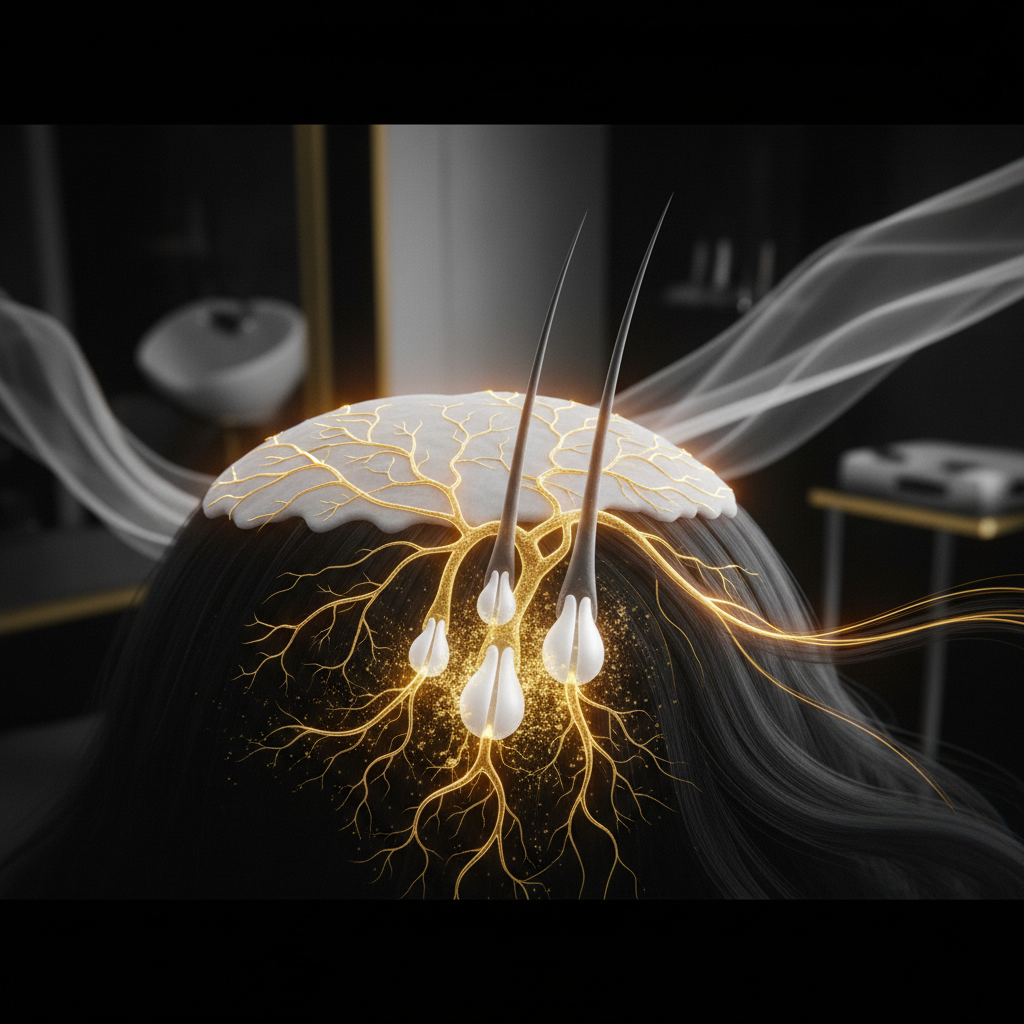
Quick answer: Understanding Scalp Microcirculation and Follicle Nutrition reveals how the body feeds growing hair. Hair follicles are metabolic powerhouses supplied by a tiny capillary network in the dermal papilla, which delivers amino acids, vitamins, oxygen, and hormones essential for the anagen (growth) phase. However, improving blood flow alone cannot overcome genetic hormone sensitivity, nutritional deficiencies, or systemic inflammatory conditions. Microcirculation serves as the delivery pipeline, but it only works when systemic nutrient levels and follicle receptor biology are healthy.
Key takeaways
- Capillary loops in the dermal papilla deliver the systemic nutrients, oxygen, and minerals required to synthesise keratin during active growth.
- Vascular endothelial growth factor (VEGF) regulates the expansion of local capillary networks during the anagen phase of the hair cycle.
- Impaired microcirculation starves the follicle of metabolic fuel, shortening anagen duration and accelerating the transition into catagen.
- Increasing blood flow cannot reverse follicular miniaturisation caused by dihydrotestosterone (DHT) if genetic androgen sensitivity is not addressed.
- Mechanical stimulation, topical caffeine, and a nutrient-dense diet support local perfusion, but severe shedding requires clinical evaluation.
Scalp Microcirculation and Follicle Nutrition: what the evidence shows
Research into Scalp Microcirculation and Follicle Nutrition demonstrates that the hair follicle is one of the most metabolically active tissues in the human body. Every individual hair fibre relies on constant cellular division within the follicle matrix, where keratinocytes multiply rapidly before differentiating into the keratinised hair shaft. This sustained mitotic activity demands a tremendous amount of energy and structural raw materials.
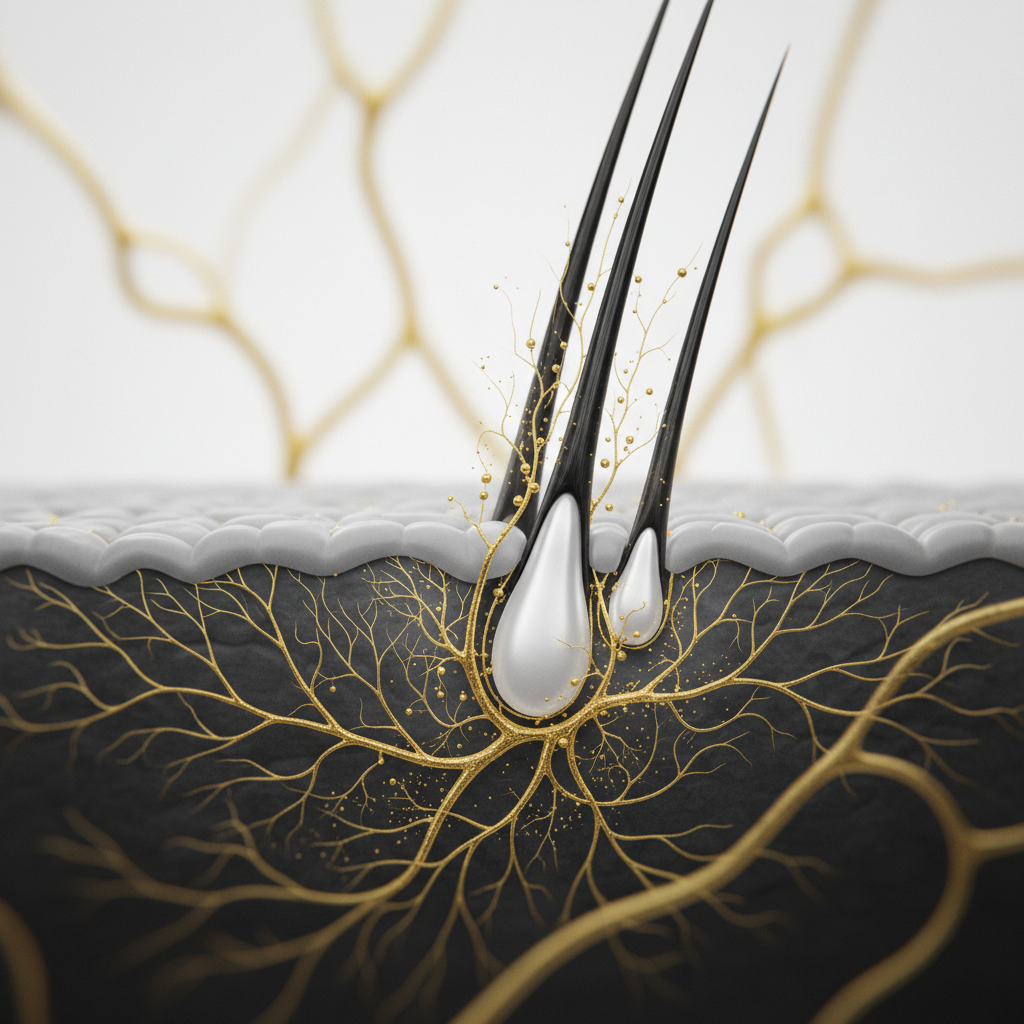
The primary pathway for this delivery is the dermal papilla, located at the base of the hair bulb. The dermal papilla contains a delicate microvascular network consisting of microscopic arterioles, capillaries, and venules. During the anagen (growth) phase, follicles produce high levels of vascular endothelial growth factor (VEGF). This signalling protein stimulates angiogenesis, which is the formation of new capillary loops that wrap directly around the lower follicle bulb.
These capillaries deliver water-soluble vitamins, trace minerals like ferritin and zinc, and essential amino acids such as L-cysteine and L-methionine. Without continuous microvascular perfusion, matrix cells cannot sustain the rapid protein synthesis needed for hair fibre production. When circulation diminishes or capillary walls experience oxidative damage, follicle metabolic activity drops, weakening the structural integrity of the emerging hair fibre.
How microcirculation connects to hair biology
The vascular system within the scalp operates across distinct layers, extending from the subcutaneous arterial plexus up into the dermal layers:
- The Subcutaneous Arterial Plexus: Larger blood vessels travel through the subcutaneous fat layer, providing the baseline arterial pressure needed to supply upper skin tissues.
- The Perifollicular Capillary Network: Fine capillaries branch upward from the deep dermis to sheath the outer root sheath of the hair follicle.
- The Dermal Papilla Capillaries: Inside the papilla core, specialized fenestrated capillary loops allow rapid nutrient exchange directly into the follicular germinative cells.
When the follicle transitions from anagen to catagen (the regression phase), VEGF expression decreases, and the perifollicular capillary network regresses through apoptosis. As the follicle rests in telogen, it detaches from its deep vascular base and sits higher in the dermis, requiring minimal blood flow. When a new cycle begins, reactivation depends on renewed angiogenic signals to rebuild the microvascular bed.
| Parameter | Anagen (Growth Phase) | Catagen / Telogen (Resting Phase) | Miniaturised Follicle (Pattern Hair Loss) |
|---|---|---|---|
| Capillary Density | High, dense perifollicular loops | Significantly reduced or absent | Reduced blood flow; decreased vessel calibre |
| Nutrient Demand | Extreme (rapid cell division) | Minimal (maintenance only) | Subdued due to reduced matrix size |
| VEGF Signalling | Elevated, driving active angiogenesis | Downregulated | Suppressed by local androgen signalling |
| Fibre Output | Thick, fully pigmented terminal hair | Fibre production stops entirely | Thin, weak vellus or intermediate hair |
What the evidence does not show
While microvascular health is vital for cellular survival, popular claims often misrepresent how scalp circulation works.

First, scientific evidence does not show that poor blood circulation is the primary cause of androgenetic alopecia (pattern hair loss). In genetic hair thinning, follicular miniaturisation is driven by local androgen sensitivity, specifically dihydrotestosterone (DHT) binding to androgen receptors in genetically susceptible dermal papilla cells. The reduction in microcirculation observed in miniaturised follicles is largely a consequence of follicle shrinkage rather than its original cause. When a follicle shrinks, its metabolic demand plummets, causing the surrounding capillary bed to regress naturally.
Second, the evidence does not support the idea that boosting blood circulation alone can resurrect completely dormant or fibrosed follicles. If a follicle has undergone scarring or long-term atrophy, no amount of physical massage, vasodilating topicals, or thermal stimulation can regenerate the lost follicular structures.
Signs of poor scalp perfusion and compromised nutrition
Impaired microcirculation and poor nutritional delivery often show clear clinical signs across both the hair fibre and the scalp environment:
- Slowed Linear Growth: Hair grows significantly slower than the normal average of 1 to 1.25 cm per month due to reduced matrix proliferation.
- Reduced Fibre Calibre: Emerging hair fibres feel visibly thinner, weaker, and more fragile before they reach their usual terminal thickness.
- Scalp Pallor and Cold Sensation: Reduced dermal capillary perfusion can leave the scalp feeling cool to the touch and looking pale or dull under trichoscopic light.
- Premature Telogen Shedding: Capillary starvation triggers premature entry into catagen, leading to diffuse shedding (telogen effluvium) across the scalp.
- Prolonged Recovery Times: Post-shedding recovery stalls because dormant follicles lack the nutrient surge required to trigger a robust anagen transition.
What you can do to support microcirculation and nutrient delivery
Supporting your scalp microcirculation involves addressing both external capillary dynamics and the internal nutrient content of your blood.
Targeted mechanical stimulation
Controlled mechanical scalp massage helps increase cutaneous blood flow. Studies using trichoscopy and laser Doppler flowmetry indicate that standard mechanical stretching of dermal tissue stimulates mechanosensitive ion channels. This mechanical force can upregulate genes associated with blood vessel formation and hair thickness. Applying gentle, circular fingertip pressure for four to five minutes daily stimulates local microvascular networks without causing mechanical traction damage to hair fibres.
Evidence-backed topicals
Certain topical cosmetic ingredients support microvascular health and follicle vitality:
- Caffeine: Topical caffeine penetrates the hair follicle sheath within minutes, counteracting barrier resistance. Studies show it helps stimulate cellular metabolism and counteracts local oxidative stress, supporting the follicular microenvironment.
- Niacinamide (Vitamin B3): Applied topically, niacinamide reinforces epidermal barrier integrity, boosts blood flow, and limits local inflammation around the infundibulum.
- Rosemary and Peppermint Botanical Oils: Diluted essential oils have demonstrated mild vasodilatory and anti-inflammatory properties in comparative studies, supporting perifollicular perfusion when applied properly.
Systemic nutritional support
Circulation is only as helpful as the nutrients it carries. If your blood work shows low iron or protein, increasing blood flow simply delivers nutrient-deficient blood faster. Ensure your diet contains:
- Adequate protein to provide L-lysine and L-cysteine, the building blocks of keratin.
- Bioavailable iron to maintain ferritin levels above 50 ug/L, which supports cellular oxygenation.
- Dietary zinc, selenium, and B-complex vitamins, which serve as essential cofactors in enzymatic hair synthesis.
The Watermans approach to follicular support
Topical care works best when it combines scalp comfort with targeted active ingredients. Watermans approaches scalp wellness through formulations designed to invigorate the scalp environment without relying on aggressive pharmaceutical compounds.
By blending topical caffeine, biotin, rosemary extract, niacinamide, and allantoin, Watermans Grow Me Shampoo provides cosmetic support directly to the surface of the scalp. While it does not claim to treat underlying medical alopecias, it cleanses follicle openings of sebum and residue, creates a revitalising tingling sensation that accompanies scalp massage, and leaves emerging hair looking noticeably thicker, denser, and stronger.
When the cause may be systemic or genetic
Changes in hair density often stem from broader health factors rather than isolated scalp circulation issues:
- Endocrine Imbalances: Hypothyroidism, hyperthyroidism, and polycystic ovary syndrome (PCOS) fundamentally alter follicle cycling regardless of local capillary health.
- Telogen Effluvium: Sudden, diffuse shedding two to four months after acute illness, emotional trauma, rapid weight loss, or surgery is a biological cycle reset, not an arterial blockage.
- Autoimmune Alopecia: Alopecia areata involves T-cell immune attacks targeting the hair bulb's immune privilege, which cannot be resolved through circulation changes alone.
- Nutritional Malabsorption: Conditions like coeliac disease, Crohn's disease, or severe caloric restriction starve the hair follicle upstream in the gut.
When to seek professional advice
Consult a GP, dermatologist, or registered trichologist if you notice:
- Sudden, patchy bald spots developing over days or weeks.
- Diffuse shedding exceeding 100 to 150 hairs daily that lasts longer than three months.
- Scalp symptoms including intense burning, pain, redness, scaling, or pustules.
- Visible scarring, smooth skin where follicle openings have vanished, or hair loss accompanied by extreme fatigue and unexplained weight changes.
A clinician can run targeted blood tests (full blood count, serum ferritin, thyroid panel, vitamin D3, zinc) and perform trichoscopy to determine the exact biological drivers behind your hair changes.
Frequently asked questions about Scalp Microcirculation and Follicle Nutrition
How does Scalp Microcirculation and Follicle Nutrition affect hair thickness?
Scalp Microcirculation and Follicle Nutrition directly dictates how many structural resources reach dividing matrix cells in the hair bulb. Robust blood flow through the dermal papilla ensures an uninterrupted supply of amino acids, minerals, and oxygen. This fuel allows the follicle to sustain a broad matrix diameter during anagen, resulting in thicker, stronger hair fibres that resist premature breakage.
Can scalp massage reverse hereditary balding?
Scalp massage increases cutaneous blood flow and encourages mechanical cell stretching, which can support overall hair thickness. However, it cannot alter underlying genetic sensitivity to dihydrotestosterone (DHT) or stop androgen-driven follicle miniaturisation. It serves as a helpful complementary habit rather than a standalone cure for androgenetic alopecia.
Does cold water improve scalp circulation?
Rinsing with cold water causes temporary vasoconstriction, narrowing scalp capillaries, which is followed by reactive vasodilation once the skin warms back up. However, there is no clinical evidence that cold rinses improve long-term follicular nutrition or change hair growth rates. Warm water is far more effective for dissolving scalp sebum and product buildup.
Why does stress impair follicle blood supply?
Severe stress activates the sympathetic nervous system, releasing adrenaline, noradrenaline, and cortisol. These neurochemicals can cause peripheral vasoconstriction, temporarily reducing blood flow through the scalp's fine capillary beds. Stress can also prompt substance P release around the follicle, triggering neurogenic inflammation that pushes hairs prematurely into catagen.
Supporting follicular health over time
Achieving resilient hair growth requires viewing the scalp as a living, metabolically active ecosystem. Sustained Scalp Microcirculation and Follicle Nutrition depends on balancing both systemic health and targeted local care. By combining balanced nutrition, gentle physical scalp stimulation, and clean topical formulas, you create the best possible biological environment for your follicles to thrive throughout their natural cycles.
Sources and references
- British Association of Dermatologists (BAD). Guidelines for the Management of Alopecia Areata. 2020.
- National Institute for Health and Care Excellence (NICE). Alopecia: Clinical Knowledge Summaries. 2021.
- Yano, K., Brown, L. F., & Detmar, M. Control of hair growth and follicle size by VEGF-mediated angiogenesis. Journal of Clinical Investigation, 2001. DOI: 10.1172/JCI11317.
- Fischer, T. W., et al. Effect of caffeine and testosterone on the proliferation of human hair follicles in vitro. International Journal of Dermatology, 2007. DOI: 10.1111/j.1365-4632.2007.03119.x.
- Koyama, T., et al. Standardized Scalp Massage Results in Increased Hair Thickness by Inducing Stretching Forces to Dermal Papilla Cells in the Subcutaneous Tissue. Eplasty, 2016. PMCID: PMC4740347.
Find these ingredients in Watermans products
- Zinc: you will find this ingredient in our Hair Vitamins.
- Niacinamide: you will find this ingredient in our Hair Mask.