Scalp Micro-Inflammation and Hair Thinning: Mechanisms, Signs, and Care
9 min read ·
Scalp micro-inflammation and hair thinning are closely linked. Learn how subclinical inflammation accelerates follicular miniaturisation and how to manage it.
Quick answer: Scalp micro-inflammation and hair thinning are closely linked biological processes where low-grade, often symptomless immune activity around the hair follicle disrupts normal growth cycles. In conditions like androgenetic alopecia, this subtle inflammation accelerates follicular miniaturisation over months and years. While topical cosmetic care and anti-inflammatory hygiene routines support a healthier scalp environment, cosmetic products alone cannot reverse genetic hair loss or cure underlying clinical scalp disorders.
Key takeaways
- Scalp micro-inflammation is a subclinical, low-level inflammatory state concentrated around the infundibulum and bulge of the hair follicle.
- Unlike acute dermatological conditions like severe eczema or psoriasis, micro-inflammation rarely presents with overt redness, severe swelling, or obvious pustules.
- Persistent cellular stress and pro-inflammatory cytokines push follicles out of the active growth phase (anagen) and into premature resting (telogen).
- Micro-inflammation acts as an accelerating co-factor in pattern hair thinning, working alongside dihydrotestosterone (DHT) and genetic susceptibility.
- Managing sebum oxidation, microbial balance, and physical scalp tension helps maintain an optimal environment for hair retention.
Scalp Micro-Inflammation and Hair Thinning: what the evidence shows
Research published across dermatology journals over the past two decades confirms that scalp micro-inflammation and hair thinning frequently co-exist in both men and women experiencing pattern hair loss. Classical teaching once categorised androgenetic alopecia strictly as a non-inflammatory, hormone-driven process. Histological studies examining scalp biopsies have changed that perspective.
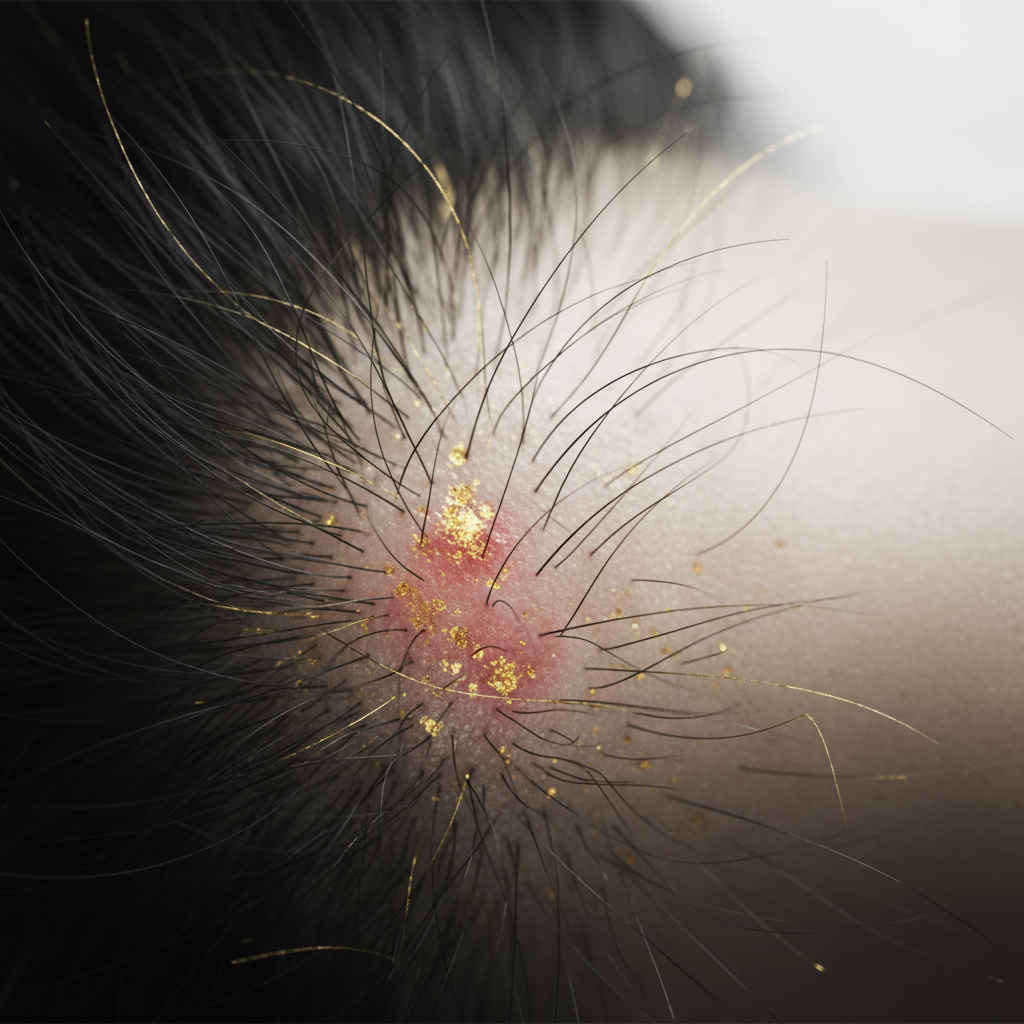
Dermatopathologists routinely observe activated T-cell infiltrates and macrophage accumulation around the upper third of the hair follicle (the infundibulum) in biopsies of thinning scalps. In a landmark study published in the International Journal of Cosmetic Science, researchers found that over one-third of individuals displaying typical pattern hair loss presented with moderate to severe follicular micro-inflammation, despite having no visible clinical erythema on the surface of the skin.
This low-grade immune activation releases inflammatory chemical messengers, notably interleukin-1 (IL-1), tumour necrosis factor-alpha (TNF-alpha), and transforming growth factor-beta (TGF-beta). These cytokines trigger oxidative stress inside the follicular unit, ultimately contributing to perifollicular fibrosis. Over time, the flexible collagen sheath surrounding the lower follicle stiffens into rigid, fibrotic tissue. This rigid connective tissue restricts the follicle's physical space, reducing its blood supply and accelerating the progressive thinning of individual hair fibres.
The biological mechanisms behind follicular micro-inflammation
The shift from a balanced scalp ecosystem to chronic micro-inflammation involves three primary triggers: microbial dysbiosis, sebum peroxidation, and mechanical or environmental stressors.
1. Microbial dysbiosis and Malassezia metabolism
The scalp microbiome relies on a delicate balance between resident bacteria, primarily Cutibacterium acnes and Staphylococcus epidermidis, and lipophilic yeasts from the Malassezia genus. When sebaceous glands overproduce sebum, Malassezia globosa and Malassezia restricta hydrolyse these triglycerides to consume saturated fatty acids. In doing so, they leave behind unsaturated free fatty acids, specifically oleic acid.
Oleic acid irritates the scalp stratum corneum, compromising the skin barrier. This compromised barrier allows irritants to penetrate deeper into the follicular canal, prompting the immune system to dispatch lymphocytes and activate subclinical inflammatory cascades.
2. Lipid peroxidation and oxidative stress
Sebum contains high concentrations of squalene (around 12 to 15 percent of total sebum lipids). While squalene is a natural emollient, it is vulnerable to oxidation when exposed to airborne particulate pollution, ultraviolet (UV) radiation, and ozone.
The resulting squalene monohydroperoxide acts as a potent pro-inflammatory agent. This oxidised lipid directly triggers the release of inflammatory cytokines from keratinocytes lining the hair pore, creating sustained cellular irritation at the follicle opening.
3. Perifollicular fibrosis and tissue remodelling
When micro-inflammation persists over multiple growth cycles, the tissue surrounding the follicle does not resolve cleanly. Instead, fibroblasts deposit excess type I and type III collagen around the follicular sheath.
This perifollicular fibrosis acts as a physical barrier. It impedes microvascular blood flow to the dermal papilla, starving the matrix cells of oxygen and micronutrients. Consequently, each successive anagen phase shortens, and the hair shaft emerges with a noticeably finer diameter.
Clinical scalp inflammation vs scalp micro-inflammation
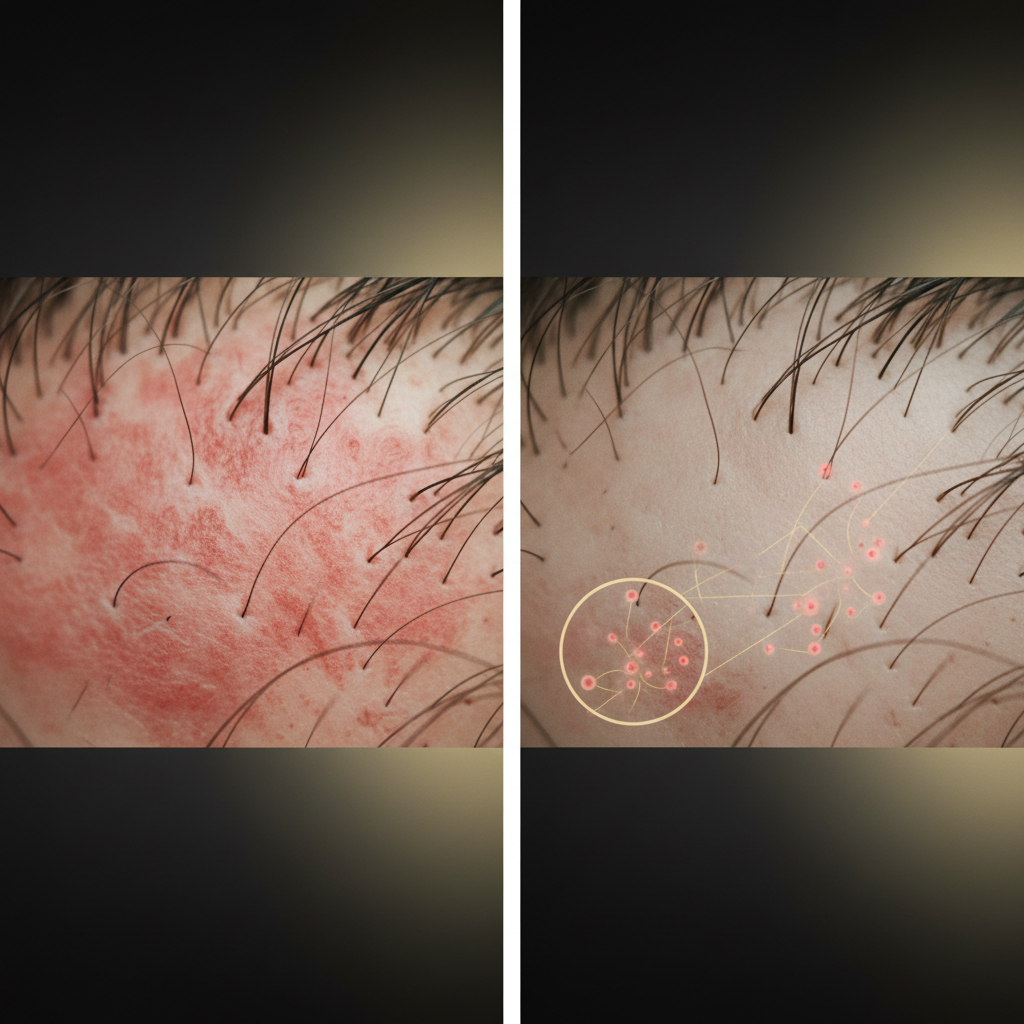
It is essential to distinguish between overt clinical inflammation and the silent micro-inflammation associated with gradual thinning.
| Characteristic | Scalp Micro-Inflammation | Clinical Dermatological Scalp Conditions |
|---|---|---|
| Visible redness (erythema) | Absent to barely perceptible | Noticeable, bright red patches or lesions |
| Physical symptoms | Mild intermittent itch, slight tenderness, or none | Intense itching, burning, soreness, or pain |
| Flaking and scale | Fine, sub-perceptible, or minor dry flakes | Thick, greasy plaques, silver scales, or crusted scabs |
| Primary structural impact | Gradual miniaturisation of the follicular bulb | Acute telogen shedding, hair shedding from scratching, or scarring |
| Common clinical examples | Co-factor in androgenetic alopecia, aged scalp | Seborrhoeic dermatitis, scalp psoriasis, lichen planopilaris |
| Diagnostic method | Dermoscopy (trichoscopy) or punch biopsy | Routine visual clinical examination |
What the evidence does not show
While the connection between micro-inflammation and thinning is solid, it is crucial not to overstate its role or misunderstand its boundaries:
- Micro-inflammation is rarely the sole cause of pattern baldness. It acts primarily as an accelerating cofactor. Androgen sensitivity and dihydrotestosterone (DHT) binding at the androgen receptor remain the primary genetic drivers of androgenetic alopecia.
- Anti-inflammatory measures alone do not regrow miniaturised follicles. Calming micro-inflammation creates a supportive environment that protects existing hair, but it cannot revive long-dormant or fully fibrosed follicles on its own.
- Washing less does not soothe micro-inflammation. A common misconception is that frequent washing dries out the scalp and creates irritation. In reality, under-washing allows sebum and squalene to pool, feeding microbial overgrowth and driving lipid peroxidation.
Signs that micro-inflammation may be affecting your scalp
Because micro-inflammation is subclinical, you will not see fiery red plaques in the mirror. However, subtle indicators often point to its presence:
- Trichodynia (scalp tenderness): A persistent burning, tingling, or aching sensation when moving your hair or touching the scalp, driven by local neurogenic inflammation and substance P release.
- Peripilar signs on trichoscopy: A qualified trichologist or dermatologist using a dermatoscope may spot peripilar signs, which appear as subtle brownish or grey halos around the exit point of the hair shaft.
- Premature hair shedding: An increase in hairs shedding with smaller, narrower bulbs, indicating the follicular growth phase is ending early.
- Rapid accumulation of oily residue: Scalp sebum that oxidises quickly, leaving the roots feeling greasy or heavy within 24 hours of washing.
Supporting the scalp: practical care strategies
Managing micro-inflammation requires a steady, dual-track approach focused on barrier support and sebum management.
- Cleanse on a consistent schedule: Wash your scalp at least every two days, or daily if you have an oily scalp or exercise intensely. This prevents sebum build-up and limits squalene peroxidation.
- Maintain the acid mantle: Use cleansers formulated within a healthy scalp pH range (pH 4.5 to 5.5). Alkaline soaps and harsh surfactants disrupt the barrier, allowing microbes to penetrate the follicle neck.
- Introduce targeted botanical topicals: Formulations containing caffeine, niacinamide, rosemary oil, and zinc PCA have demonstrated mild anti-inflammatory, antioxidant, and barrier-supporting properties in laboratory and clinical evaluations.
- Protect against UV radiation: Scalp tissue, particularly along exposed partings and thinning crowns, is susceptible to UV-induced oxidative stress. Wear headwear during extended outdoor exposure.
Topical scalp support: Watermans
When addressing scalp comfort and creating an optimal foundation for thinning hair, functional daily topical care plays an important complementary role. Watermans products are formulated to support the scalp barrier and foster an environment where hair feels denser and healthier.
Incorporating caffeine, rosemary, biotin, and niacinamide, Watermans Grow Me Shampoo and Scalp Serum provide gentle cleansing without stripping natural moisture. By sweeping away oxidised surface sebum, pollutants, and debris, they help refresh the scalp surface, soothe everyday tightness, and keep hair feeling revitalised. These cosmetic solutions do not cure medical hair conditions or alter genetic pathways, but they serve as an effective daily routine for maintaining baseline scalp hygiene.
When the cause may be something else
Hair thinning does not always stem from the interaction of micro-inflammation and androgenetic alopecia. It is vital to rule out alternative or overlapping causes:
- Telogen effluvium: Sudden, diffuse shedding occurring two to four months after a significant metabolic stressor, high fever, surgery, severe nutritional deficiency, or hormonal crash.
- Scarring (cicatricial) alopecias: Autoimmune conditions such as frontal fibrosing alopecia (FFA) or lichen planopilaris (LPP) directly attack the follicular stem cells. These require urgent medical intervention from a consultant dermatologist to prevent permanent loss.
- Thyroid dysfunction: Both hyperthyroidism and hypothyroidism disrupt the metabolic turnover of follicular matrix cells, leading to dry, brittle, diffusely thinning hair across the entire scalp.
When to seek professional advice
Consult a GP, dermatologist, or qualified trichologist if:
- You experience intense burning, pain, or visible swelling across the scalp.
- You notice bald patches appearing in circular, patchy shapes rather than diffuse thinning.
- Your scalp exhibits thick, adherent yellow crusts, oozing pustules, or bleeding.
- Hair is shedding in handfuls (over 150 to 200 hairs daily) for more than eight consecutive weeks without signs of slowing.
Frequently asked questions about Scalp Micro-Inflammation and Hair Thinning
Can scalp micro-inflammation cause sudden bald patches?
No. Scalp micro-inflammation and hair thinning develop gradually over months and years, contributing to the progressive narrowing of hair strands. Sudden, smooth, coin-sized circular bald patches usually indicate alopecia areata, an autoimmune condition where the body's T-cells target the hair bulb. Alopecia areata requires a formal medical diagnosis and specific clinical management.
How do dermatologists diagnose scalp micro-inflammation?
Dermatologists and trichologists identify micro-inflammation using high-magnification trichoscopy. They look for peripilar signs, which appear as faint brown or yellowish halos around the follicular openings. If the diagnosis is unclear, a 4mm punch biopsy evaluated under a microscope can confirm the presence of lymphocytes and early perifollicular fibrosis.
Does washing hair daily worsen scalp inflammation?
Daily washing does not worsen micro-inflammation, provided you use a gentle, pH-balanced cleanser. In fact, washing regularly is beneficial for oily or dandruff-prone scalps. It removes excess sebum, environmental pollutants, and cellular debris that would otherwise oxidise and trigger further immune irritation around the hair follicle.
Can an anti-inflammatory diet reverse hair thinning?
While eating a nutrient-rich diet with omega-3 fatty acids and antioxidants supports overall health, diet alone cannot reverse genetic hair thinning. A balanced diet helps lower systemic inflammation, but localized micro-inflammation in the scalp is heavily influenced by local microbial activity, sebum oxidation, and hormonal sensitivity at the follicle.
Conclusion
Understanding the link between scalp micro-inflammation and hair thinning has reshaped modern hair preservation. Thinning is rarely just an issue of hormonal signals operating in isolation; it is deeply influenced by the health and stability of the follicular environment. By controlling surface sebum oxidation, respecting the acid mantle, and addressing early signs of scalp distress with structured hygiene routines, you create the best possible conditions for retaining healthy, fuller-looking hair.
Sources and references
- International Journal of Cosmetic Science, "Follicular micro-inflammation in androgenetic alopecia: an overview", 2004.
- British Association of Dermatologists, "Androgenetic Alopecia Clinical Guidelines", 2021.
- Journal of the American Academy of Dermatology, "Scalp microbiome and its role in inflammatory scalp disorders", 2018.
- Experimental Dermatology, "The role of oxidative stress and lipid peroxidation in hair follicle biology", 2020.
- Journal of Investigative Dermatology Symposium Proceedings, "The role of inflammation in pattern hair loss", 2003.
Find these ingredients in Watermans products
- Zinc: you will find this ingredient in our Hair Vitamins.
- Oleic Acid: you will find this ingredient in our Camellia & Black Castor Hair & Body Oil.
- Niacinamide: you will find this ingredient in our Hair Mask.