Scalp Massage for Hair Growth: Evidence and Benefits
2 min read ·
Explore the evidence behind scalp massage for hair growth, its mechanisms, and what you can realistically expect.
Quick answer: Scalp Massage for Hair Growth involves stimulating the scalp through manual pressure, and some studies suggest it can promote thicker hair by increasing blood flow, stretching hair follicle cells, and reducing stress. However, it's important to note that while anecdotal evidence is strong, controlled research establishing a direct, significant increase in new hair growth is still developing and often focuses on existing hair thickening rather than new hair generation. It's not a cure for hair loss conditions like alopecia, but a supportive practice for scalp health.
Key takeaways
- Scalp massage can improve scalp health by boosting blood circulation to hair follicles.
- It may help increase hair fibre thickness and strength over time, making existing hair appear fuller.
- The benefits extend to stress reduction, which can indirectly support a healthier hair growth cycle.
- Regular, gentle technique is crucial to avoid irritation or potential damage to hair and scalp.
- Scalp massage is a complementary practice, not a primary treatment for significant hair loss conditions.
- Consistency, typically daily for several minutes, is key to potentially seeing any benefits.
Scalp Massage for Hair Growth: what the evidence shows
Scalp massage has long been anecdotally associated with improved hair health and growth, with a growing body of evidence beginning to explore its potential mechanisms. The core idea behind Scalp Massage for Hair Growth is that mechanical stimulation can positively influence the physiological processes within the scalp that support hair.
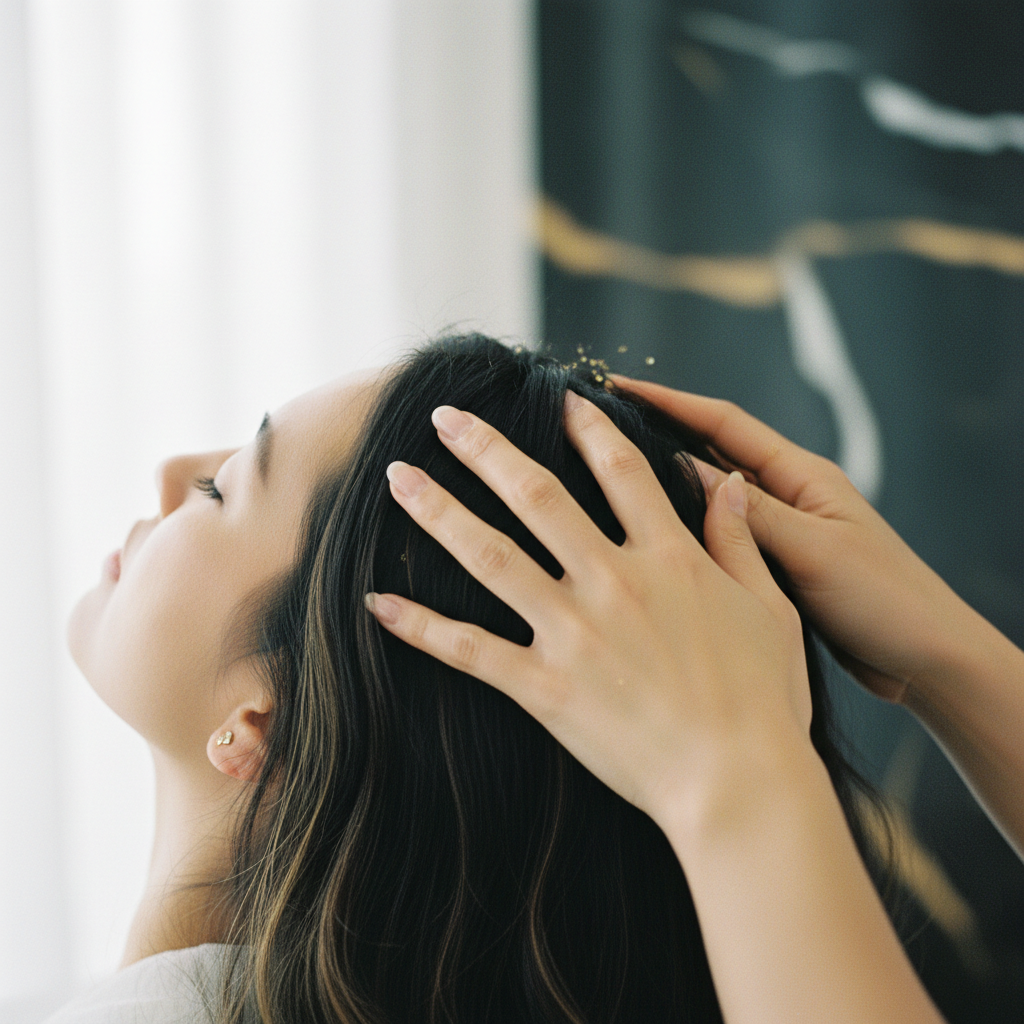
Research has indicated that regular scalp massage can increase blood flow to the scalp. A small study published in 2016 in the Journal of Dermatological Treatment involved nine men who received a 4-minute standardised scalp massage daily for 24 weeks. The study found an increase in hair thickness, though not necessarily an increase in hair count, suggesting that existing hair became stronger and less prone to breakage. This change in thickness is thought to be related to the stretching of dermal papilla cells, which are critical for hair follicle function and hair production. Stretching these cells, through massage, has been shown in some laboratory settings to upregulate gene expression associated with hair growth.
Beyond blood flow, scalp massage may also influence the expression of certain genes involved in the hair growth cycle. Studies on cultured human dermal papilla cells have suggested that mechanical stimulation can lead to increased expression of genes like those for hair growth-promoting factors. This suggests a potential biological pathway through which massage could contribute to a more robust hair growth environment.
However, it
Where Watermans fits
If you want a routine built around the science above, these are the products from the range that apply here: