Scalp Health vs Hair Fibre Health: An Evidence-Based Reference
11 min read ·
Understand the biological differences in Scalp Health vs Hair Fibre Health. Learn why living skin and dead keratin require fundamentally different care routines.
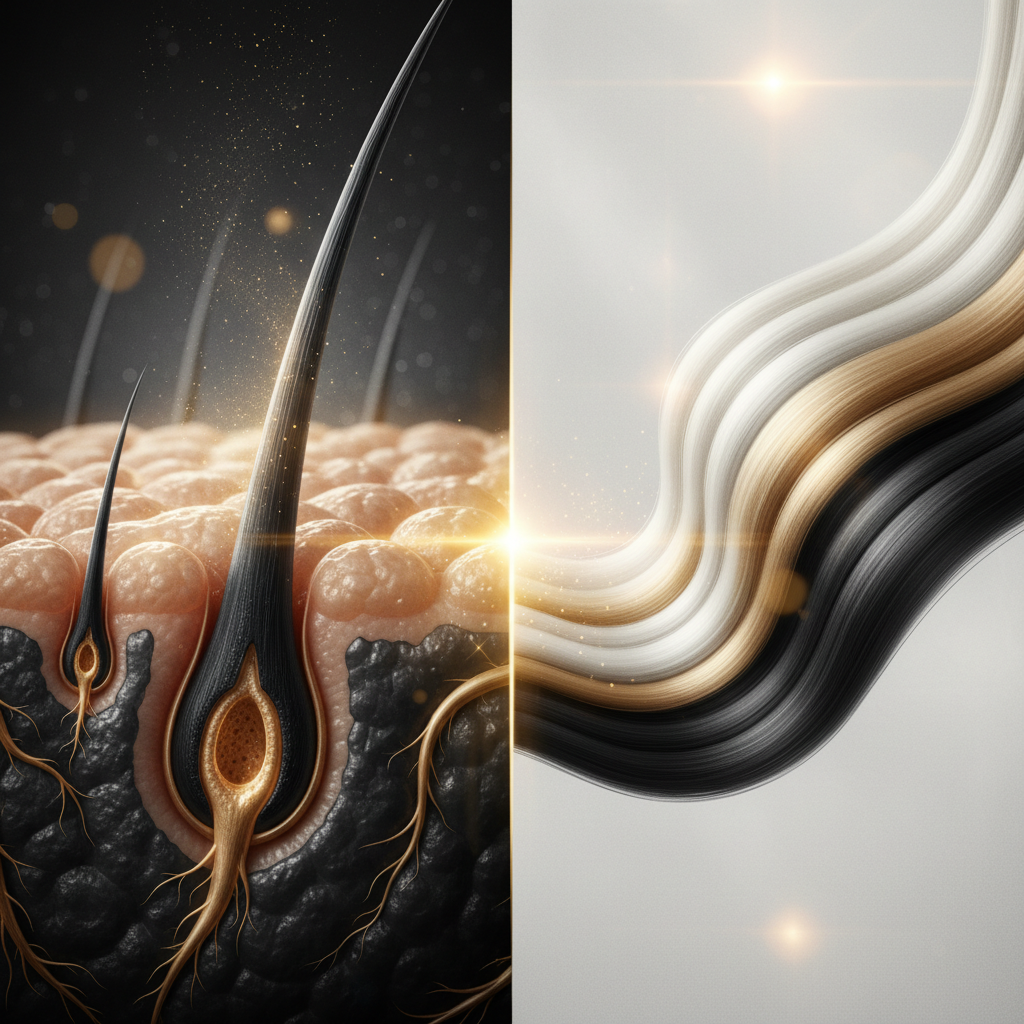
Quick answer: The core distinction in Scalp Health vs Hair Fibre Health lies in biology versus material science. Scalp health refers to a living ecosystem comprising living skin cells, blood vessels, sebaceous glands, and a delicate microbiome that dictates follicular growth. Hair fibre health concerns a non-living, keratinised protein filament subject to physical and chemical degradation. While a balanced scalp produces strong hair, treating the scalp cannot repair structural fibre weathering, and deep-conditioning your ends does nothing for your follicles.
Key takeaways
- The scalp is living biological tissue with active cellular turnover, while the hair fibre is biologically dead keratin that cannot regenerate itself once damaged.
- Poor scalp conditions such as seborrhoeic dermatitis or oxidative stress can impair hair matrix cell division, leading to weakened cuticle formation from the root.
- Split ends, breakage, and surface roughness are fibre-level mechanical and chemical issues, completely separate from scalp biology.
- Effective haircare demands distinct interventions: dermatological care (clarifying, soothing, barrier support) for the scalp, and cosmetic conditioning (lubrication, protein deposition, lipid replenishment) for the lengths.
- Never treat hair shedding (a follicular or systemic issue) with heavy hair fibre oils, which can congest the scalp and exacerbate fungal imbalances.
Scalp Health vs Hair Fibre Health: what the evidence shows
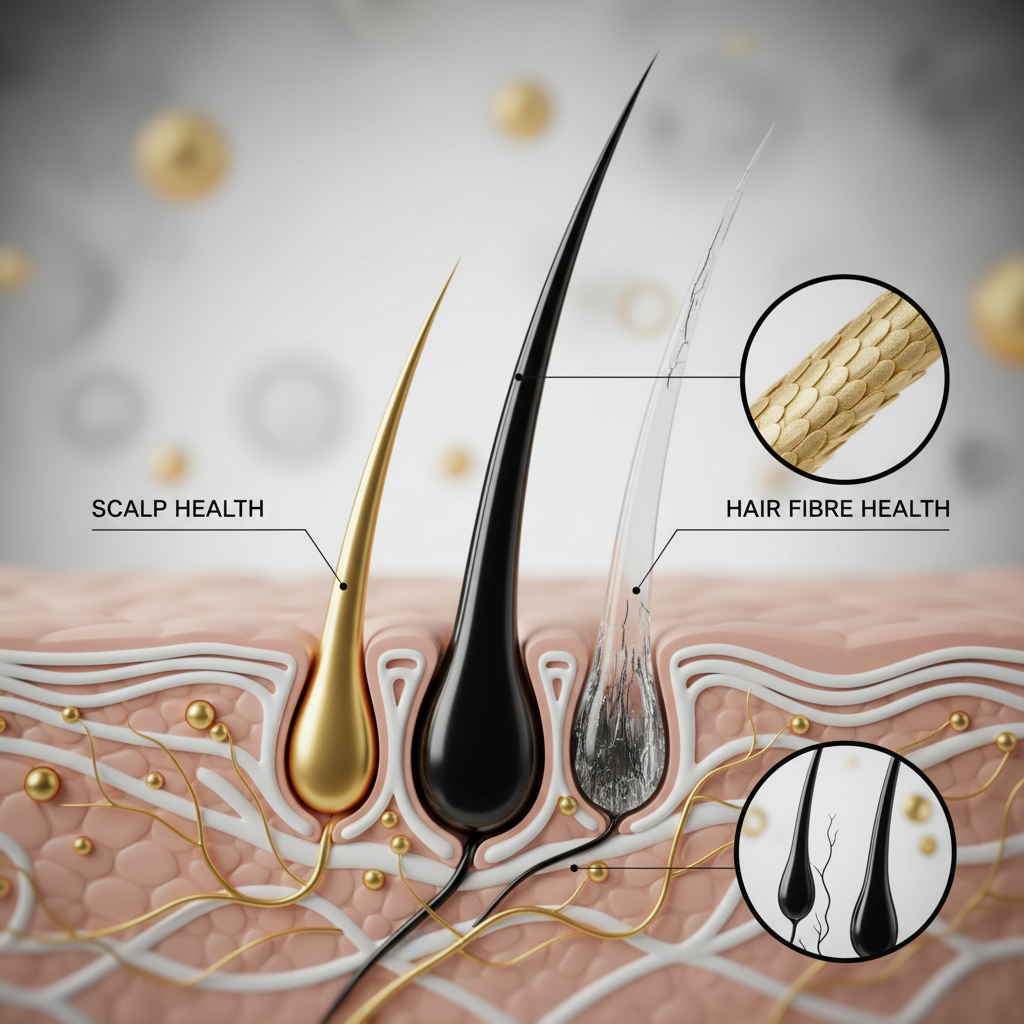
Understanding Scalp Health vs Hair Fibre Health requires viewing the head as two radically different structures coexisting in the same space. The scalp is an extension of facial skin, containing roughly 100,000 hair follicles, thousands of sebaceous glands, and an acid mantle with a natural pH of roughly 4.5 to 5.5. In contrast, the hair fibre that emerges from the follicle is non-vital tissue made of 85 to 90 percent keratin protein, structured into a protective outer cuticle, a structural cortex, and sometimes an inner medulla.
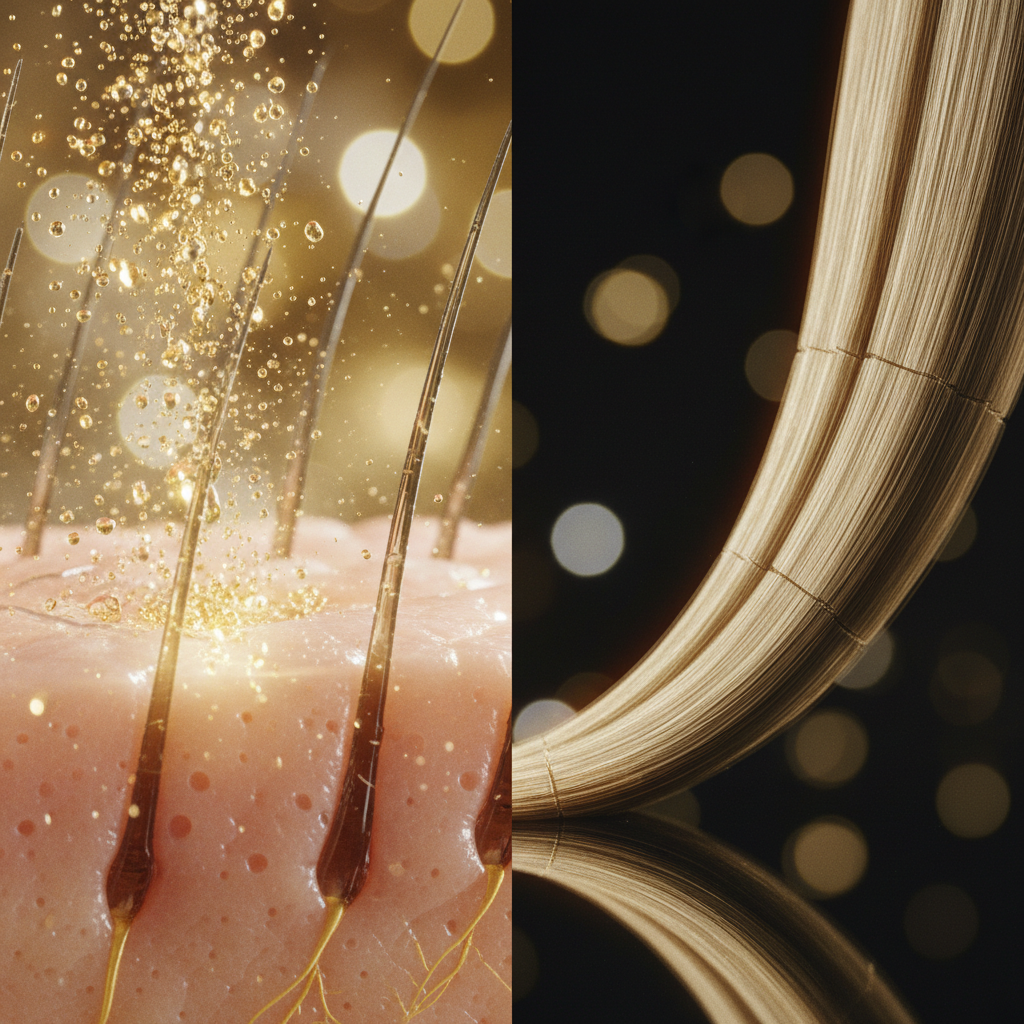
Clinical dermatology confirms that the physiological state of the scalp directly dictates pre-emergent hair quality. Research published in the International Journal of Trichology and the British Journal of Dermatology demonstrates that scalp inflammation, Malassezia yeast overgrowth, and oxidative stress disrupt normal keratinisation inside the follicle. When the scalp environment suffers from chronic inflammation, emerging fibres exhibit altered surface architecture, abnormal cuticle formation, and reduced tensile strength before they even emerge into the light.
However, once that fibre grows past the scalp surface, it is entirely on its own. It has no biological repair mechanisms, no cellular communication, and no access to blood supply. Consequently, daily mechanical grooming, ultraviolet radiation, and chemical services degrade the fibre over time. A person can have a perfectly balanced, disease-free scalp while suffering from severely broken, chemically destroyed lengths. Conversely, an individual with severe scalp psoriasis or dandruff may boast virgin, glossy mid-lengths if they have treated their fibre with care.
| Characteristic | Scalp Health | Hair Fibre Health |
|---|---|---|
| Biological status | Living tissue with active cellular turnover | Biologically non-living, keratinised structure |
| Primary components | Epidermis, follicles, blood vessels, sebum, microbes | Keratin proteins (85 to 90%), water, structural lipids (18-MEA) |
| Normal pH range | 4.5 to 5.5 (cutaneous acid mantle) | 3.67 (isoelectric point of hair keratin) |
| Typical problems | Dandruff, itch, seborrhoeic dermatitis, folliculitis | Cuticle lifting, split ends, tensile breakage, porosity |
| Response to damage | Self-healing via immune response and cell turnover | Irreversible structural degradation; requires temporary cosmetic patching |
| Target treatments | Scalp tonics, exfoliation, antifungal agents, mild surfactants | Conditioners, cationic surfactants, silicones, hydrolysed proteins |
What the evidence does not show
Common haircare myths frequently blur the lines between living skin and dead fibre. Scientific evidence firmly refutes several popular beliefs:
First, applying nutrient-rich oils or botanical extracts directly to the hair shaft does not feed the hair. Because hair fibre is dead, it cannot absorb vitamins, minerals, or hormones into a metabolic pathway. Ingredients like biotin applied to damaged ends will not strengthen future growth or trigger biological repair.
Second, scalp treatments do not mend existing split ends or repair heat damage. While stimulating topicals or targeted shampoos can foster a supportive environment for future follicular output, they have zero restorative influence on the lengths you grew three years ago.
Third, frequent washing does not dry out the hair fibre if proper conditioning protocols are followed. While aggressive surfactants can strip hair lipids, leaving scalp sebum to accumulate indefinitely disrupts the scalp microbiome, feeding Malassezia species and triggering shedding without improving hair fibre integrity.
The mechanisms: how each structure functions
To understand the practical care required for each, we must examine the separate mechanisms driving their condition.
The scalp: an active metabolic barrier
The scalp epidermis replaces itself roughly every 28 days through basal cell proliferation. Sebaceous glands secrete a complex blend of triglycerides, wax esters, squalene, and free fatty acids. This sebum lubricates the skin and maintains an acidic mantle that discourages pathogenic microbial colonisation.
Surrounding each follicle is a rich capillary network that supplies oxygen, amino acids, and micronutrients to the hair bulb. If microcirculation falters, or if chronic inflammation floods the area with inflammatory cytokines, the anagen (growth) phase of the hair cycle can be truncated, leading to diffuse shedding. Furthermore, lipid peroxidation caused by UV light and pollution oxidises scalp sebum, generating squalene peroxides that trigger follicular micro-inflammation.
The hair fibre: a finite composite material
The hair fibre relies on its cuticle: 6 to 10 overlapping layers of flat cells coated in a hydrophobic lipid layer known as 18-methyleicosanoic acid (18-MEA). This lipid barrier gives virgin hair its water-repellent, low-friction quality.
Inside the cuticle sits the cortex, comprised of crystalline keratin macrofibrils held together by disulphide bonds, hydrogen bonds, and salt linkages. Mechanical friction (brushing), thermal tools (above 150 degrees Celsius), and chemical treatments (bleach, permanent colour, relaxers) deplete 18-MEA and break disulphide bonds. Once the cuticle chips away, the cortex is exposed, porosity spikes, moisture regulation fails, and the fibre snaps.
Signs to look for: diagnosing your hair issues
Recognising whether your primary concern stems from the scalp or the fibre prevents you from misapplying products.
Warning signs of compromised scalp health
- Persistent flaking, whether fine and dry or greasy and yellowish
- Localised tenderness, burning sensations, or intense itching
- Visible redness around follicular openings (perifollicular erythema)
- Bumps, pustules, or acne-like breakouts along the hairline and crown
- Sudden, diffuse shedding from the root (characterised by a visible white bulb on shed strands)
- Excessive, rapid sebum production within hours of cleansing
Warning signs of compromised hair fibre health
- Single strands snapping cleanly when subjected to gentle tension
- Split ends (trichoptilosis) and visible white dots along the shaft (trichorrhexis nodosa)
- Extreme tangling, matting, and high friction when wet or dry
- Rapid water absorption combined with prolonged drying times (high porosity)
- Dull, lacklustre appearance caused by uneven light reflection off lifted cuticles
- Uneven thickness, where hair is significantly thinner at the ends than at the roots without follicular thinning
What you can do: a dual-action regimen
Because both systems operate under different biological rules, your haircare routine must treat them independently.
Caring for the scalp
- Cleanse according to scalp sebum production: If your scalp is oily, wash daily or every other day using a surfactant balance that clears sebum without stripping the skin barrier.
- Clarify regularly: Use an exfoliating or clarifying shampoo once a week to clear environmental pollutants, dead skin accumulation, and styling polymers from follicular openings.
- Incorporate targeted topicals: Utilise lightweight, water-based serums containing ingredients like caffeine, rosemary extract, niacinamide, or piroctone olamine. Avoid heavy culinary oils on the scalp, as oleic acid feeds dandruff-causing yeasts.
- Protect from oxidative stress: Wear hats in direct sunlight to avoid UV-induced lipid peroxidation on the scalp.
Caring for the hair fibre
- Reduce mechanical and thermal friction: Always apply a heat protectant containing silicones or conditioning polymers prior to blow-drying or heat styling. Use wide-tooth combs on wet hair, starting from the tips and working upward.
- Restore lubricity: Condition after every wash using cationic surfactants (such as behentrimonium methosulfate) and fatty alcohols (cetyl and stearyl alcohol). These smooth the cuticle and replace lost surface hydrophobicity.
- Use hydrolysed proteins for high-porosity hair: If your hair is bleached or heat-damaged, incorporate treatments formulated with hydrolysed wheat, soy, or keratin proteins to temporarily fill microscopic voids in the cortex.
- Seal with lightweight film formers: Apply dimethicone, amodimethicone, or argan oil strictly to the mid-lengths and ends to lock down cuticles and reduce daily grooming wear.
The supportive role of Watermans in your routine
When structuring a routine that respects the biological differences between living skin and dead fibre, comprehensive formulations simplify daily care. Watermans approaches hair wellness through this exact division. Their GrowMe Shampoo is formulated to nurture the scalp environment, delivering rosemary, caffeine, biotin, and niacinamide directly to the skin to encourage a refreshed, revitalised baseline.
For the lengths, Watermans ConditionMe relies on cholesterol, hydrolysed lupin protein, and softening emollients designed specifically to smooth the hair cuticle, reduce mechanical breakage, and boost tensile resilience without coating the scalp in greasy residue. Treating the roots with revitalising bio-actives while shielding the mid-lengths with structural conditioning delivers the dual support your hair needs.
When the cause may be something else
If you are experiencing true hair shedding rather than fibre breakage, the primary driver often sits deeper than topical products. Telogen effluvium is triggered by systemic disturbances such as severe psychological stress, acute viral illness, rapid weight loss, thyroid dysfunction, or iron deficiency (ferritin levels dropping below clinical thresholds).
Pattern hair loss (androgenetic alopecia) is driven by genetic sensitivity to dihydrotestosterone (DHT) inside the follicle, not by hair styling practices or split ends. Conversely, if your hair is breaking off in short fragments, evaluate your mechanical styling habits, chemical service frequency, and water mineral content before assuming an internal health issue.
When to get professional advice
Cosmetic adjustments have limits. You should book an appointment with a dermatologist or a registered trichologist if you notice:
- Bald patches that appear suddenly or expand rapidly (potential alopecia areata)
- Scalp pain, crusted lesions, or scarring where follicles disappear entirely
- Persistent scaling and erythema that fail to respond to over-the-counter therapeutic shampoos
- Severe hair shedding lasting longer than six consecutive months
- Sudden texture changes across your entire head without any history of chemical processing
Frequently asked questions about Scalp Health vs Hair Fibre Health
What is the most critical difference in Scalp Health vs Hair Fibre Health?
The most critical difference in Scalp Health vs Hair Fibre Health is that the scalp is living, metabolic tissue capable of self-healing and regeneration, whereas the hair fibre is a dead, biological polymer that cannot repair its own structural damage. Scalp care focuses on cellular hygiene, inflammation reduction, and follicular support; fibre care focuses on surface coating, cuticle protection, and mechanical preservation.
Can an unhealthy scalp cause hair fibre breakage?
An unhealthy scalp does not directly break hair mid-shaft, but it can lead to poorly formed fibres. Severe scalp inflammation or fungal overgrowth alters pre-emergent hair formation inside the follicle, producing hair shafts with irregular cuticle layers and lower tensile strength. These compromised fibres break far more easily once exposed to everyday brushing and styling.
Should I put deep conditioner on my scalp?
Generally, no. Deep conditioners are formulated with high concentrations of cationic surfactants, fatty alcohols, and heavy emollients designed to cling to negative charges on damaged, non-living hair fibres. Applying these rich, coating agents directly to the scalp can disrupt skin shedding, clog follicular openings, and aggravate conditions like seborrhoeic dermatitis. Keep intensive conditioners to your mid-lengths and ends.
Why is my hair shedding even though my hair fibre is strong?
Shedding occurs at the root inside the follicle and is dictated by biological cycles, systemic health, and scalp conditions. You can have thick, virgin, undamaged hair fibres that shed in high volumes if your body experiences a physiological stressor like telogen effluvium or hormonal changes. Shedding is a follicular event, entirely separate from the structural strength of your hair shaft.
Can scalp oils repair damaged hair ends?
No. Scalp oils and sebum cannot regenerate or seal damaged ends. While certain plant oils applied to the ends can temporarily reduce friction and coat raised cuticles, they do not repair broken disulphide bonds or restore split ends. Split ends can only be managed cosmetically with temporary polymer binding or removed permanently with scissors.
A balanced approach to complete hair wellness
Managing your hair successfully requires abandoning the idea of a single all-in-one remedy. When you evaluate Scalp Health vs Hair Fibre Health, you realise that beautiful, resilient hair is the result of two distinct strategies working together. By treating your scalp with the same targeted, barrier-conscious care you give your facial skin, you create the optimal physiological conditions for healthy, robust hair to emerge. Simultaneously, by treating your hair fibres like delicate, non-renewable cashmere, you protect those strands from mechanical wear, heat, and chemical erosion throughout their lifespan. Nurture the root, protect the length, and your hair will thrive at every stage.
Sources and references
- British Journal of Dermatology, "The role of oxidative stress in scalp condition and hair growth", 2018.
- International Journal of Trichology, "Scalp condition impacts hair growth and retention via oxidative stress", 2018.
- Journal of the American Academy of Dermatology, "Seborrhoeic dermatitis and its impact on the hair follicle", 2019.
- Robbins, C.R., "Chemical and Physical Behavior of Human Hair", 5th Edition, Springer, 2012.
- Clinical, Cosmetic and Investigational Dermatology, "Hair shaft damage from environmental and chemical sources", 2015.
Find these ingredients in Watermans products
- Oleic Acid: you will find this ingredient in our Camellia & Black Castor Hair & Body Oil.
- Niacinamide: you will find this ingredient in our Hair Mask.