Scalp Health and the Hair Growth Cycle: The Biological Link
11 min read ·
Discover the physiological connection between Scalp Health and the Hair Growth Cycle, and learn how inflammation, sebum, and microcirculation impact shedding.
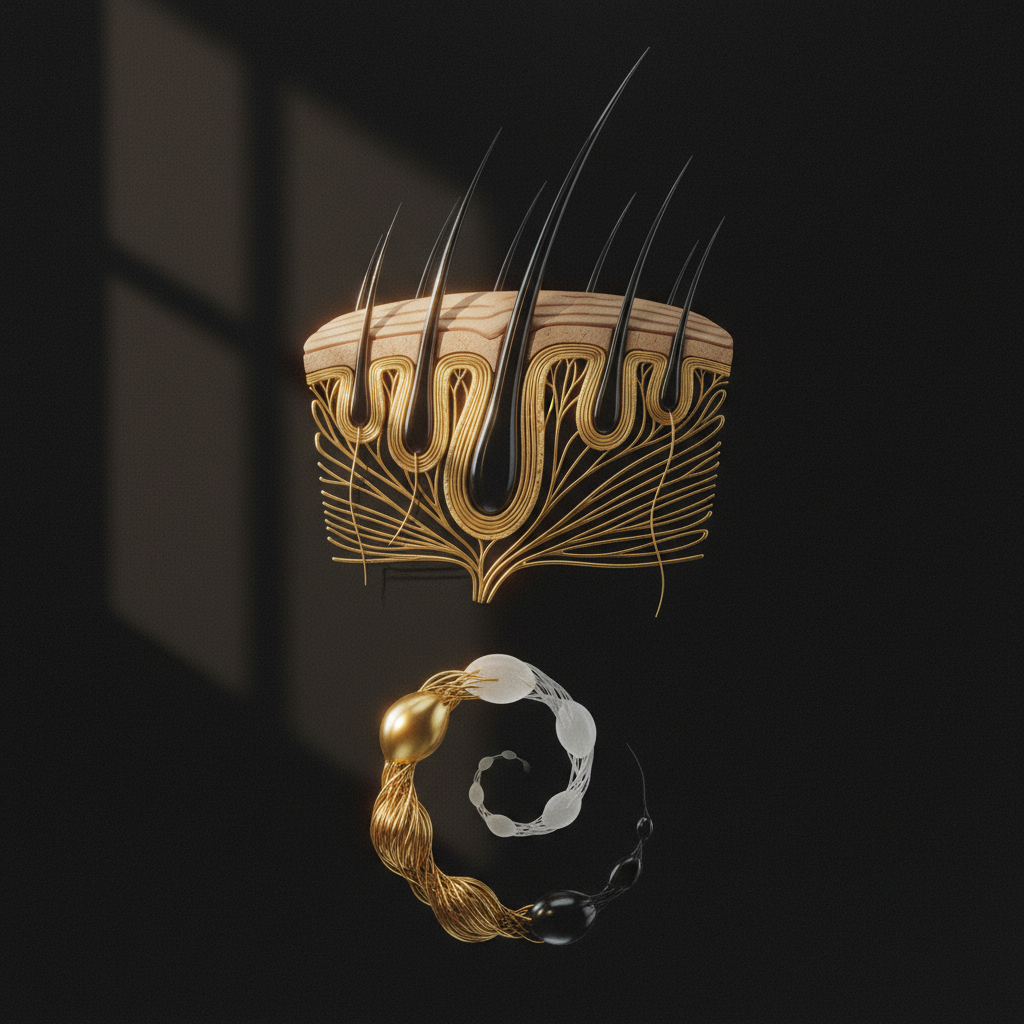
Quick answer: Scalp Health and the Hair Growth Cycle are inextricably linked because the hair follicle relies entirely on the surrounding scalp tissue for blood supply, cellular signalling, and anchorage. Chronic scalp inflammation, microbial dysbiosis, or oxidative stress can disrupt normal follicular transitions, triggering premature catagen and excessive telogen shedding. However, while optimising the scalp environment creates the ideal foundation for strong hair production, topical scalp care alone cannot alter underlying genetic hair loss or correct systemic hormonal and nutritional deficiencies.
Key takeaways
- The hair follicle is an active metabolic organ embedded deep within the scalp dermis, relying on microcirculation to fuel rapid cell division during the anagen phase.
- Chronic scalp conditions like seborrhoeic dermatitis, psoriasis, and oxidative stress cause micro-inflammation that can push growing hairs prematurely into the resting and shedding phases.
- Healthy scalp skin maintains a mildly acidic barrier (pH 4.5 to 5.5) and a balanced microbiome dominated by Cutibacterium acnes and Staphylococcus epidermidis.
- Scalp care supports retention, cuticle integrity, and optimal growth conditions, but it cannot cure genetic pattern hair loss (androgenetic alopecia).
- Differentiating between shedding (bulbs intact), breakage (snapped fibres without bulbs), and genuine follicular miniaturisation is essential for choosing the right treatment strategy.
Scalp Health and the Hair Growth Cycle: what the evidence shows
Understanding Scalp Health and the Hair Growth Cycle begins with the biological architecture of the scalp. The human scalp contains roughly 100,000 hair follicles, each functioning as an autonomous mini-organ. Every follicle repeatedly progresses through four distinct phases: anagen (active growth, lasting 2 to 7 years), catagen (regression, lasting 2 to 3 weeks), telogen (resting, lasting 2 to 3 months), and exogen (active shedding of the club hair).
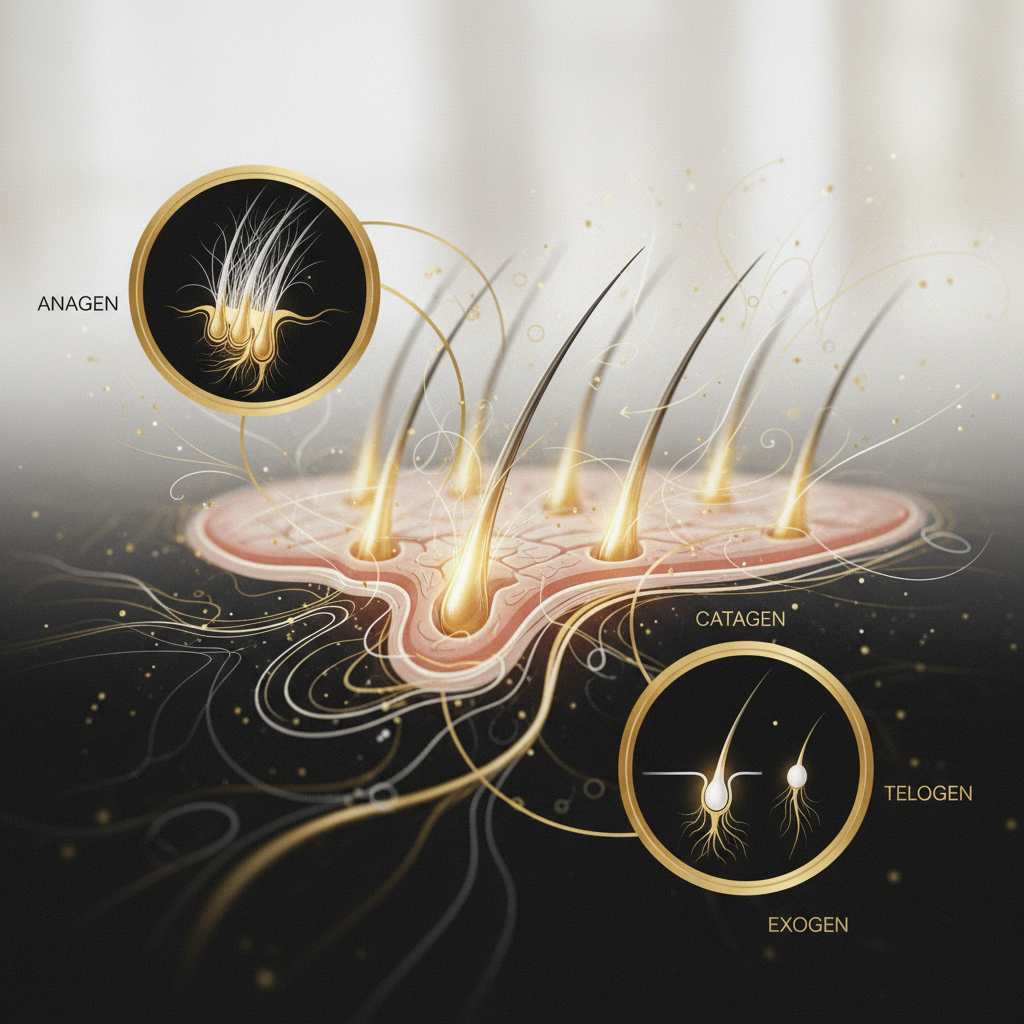
Under normal physiological conditions, approximately 85 to 90 percent of scalp hairs are in the anagen phase, with roughly 10 percent in telogen, resulting in a normal daily loss of 50 to 100 hairs. Research published in the International Journal of Trichology and the British Journal of Dermatology demonstrates that the quality of the hair fibre produced during anagen is directly influenced by the physiological state of the scalp tissue.
When the scalp suffers from chronic oxidative stress, lipid peroxidation, or inflammatory dermatoses, the follicular microenvironment is degraded. Oxidative stressors, including ultraviolet radiation, pollution, and the metabolic by-products of excessive Malassezia yeast colonisation, generate reactive oxygen species (ROS). These molecules damage the cellular machinery of the follicular dermal papilla, weakening the anchoring extracellular matrix and leading to premature termination of the anagen phase.
+-----------------------------------------------------------------------------------+
| THE FOUR PHASES OF HAIR GROWTH |
| |
| [ ANAGEN ] --------> [ CATAGEN ] --------> [ TELOGEN ] --------> [ EXOGEN ] |
| Active growth Follicle shrinks Resting phase Club hair sheds |
| 2 to 7 years 2 to 3 weeks 2 to 3 months Daily loss |
| (85-90% of hairs) (1% of hairs) (10-15% of hairs) (50-100 hairs) |
+-----------------------------------------------------------------------------------+
How scalp conditions disrupt follicular phases
A compromised scalp alters follicular dynamics in predictable biological ways. The primary driver of scalp-mediated shedding is inflammation, often called micro-inflammation when it occurs sub-clinically around the infundibulum.
Seborrhoeic dermatitis and microbial imbalance
The scalp microbiome relies on a delicate balance between bacteria (Cutibacterium, Staphylococcus) and lipid-dependent yeasts (Malassezia species). When sebum production rises or the barrier is breached, Malassezia restricta and Malassezia globosa proliferate. These yeasts hydrolyse sebum triglycerides into free fatty acids, notably oleic acid. In susceptible individuals, oleic acid penetrates the stratum corneum, causing barrier disruption, epidermal hyperproliferation (flaking), itching, and inflammatory cytokine release. This localised inflammation can induce an early transition from anagen to catagen, producing diffuse telogen shedding.
Follicular occlusion and sebum accumulation
Sebum, environmental debris, styling polymers, and desquamated corneocytes can accumulate around the follicular ostium. While clean follicles do not guarantee rapid hair growth, heavy build-up creates an anaerobic environment that fosters pathogenic microbial shifts and fuels perifollicular inflammation. Over time, persistent inflammation around the upper follicle can degrade the surrounding collagen sheath.
Oxidative stress and premature catagen
The scalp skin produces high levels of sebum that oxidises rapidly when exposed to environmental pollutants and UV light. Squalene, a major lipid component of sebum, is especially vulnerable to peroxidation. Oxidised squalene causes direct cytotoxicity to keratinocytes and fibroblasts in the follicular bulb. Clinical studies demonstrate that individuals experiencing active telogen shedding consistently show elevated levels of lipid peroxides and reduced endogenous antioxidant markers (such as superoxide dismutase) on the scalp surface compared to healthy controls.
Comparison: scalp conditions and their follicular impact
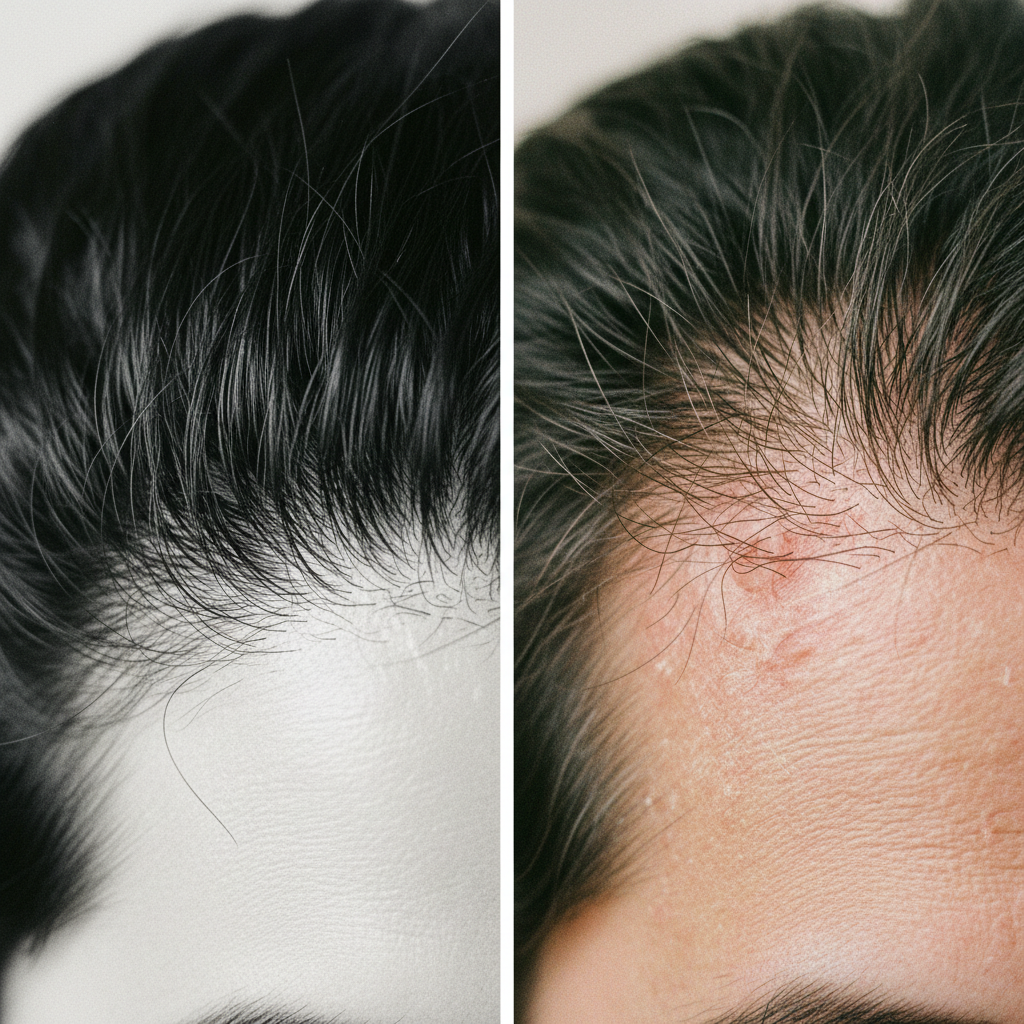
The table below outlines common scalp states, their primary mechanisms of action, and how they alter the hair cycle.
| Scalp condition | Primary biological mechanism | Impact on hair growth cycle | Primary visible signs |
|---|---|---|---|
| Healthy scalp | Intact acid mantle (pH 4.5 to 5.5), balanced microbiome, steady microcirculation | Normal anagen duration (2 to 7 years); less than 10% in telogen | Supple skin, clear follicular openings, no erythema or scaling |
| Seborrhoeic dermatitis | Malassezia overgrowth, oleic acid irritation, barrier permeability | Triggers premature catagen; temporary telogen effluvium | Greasy yellow scales, persistent itching, pink or red erythema |
| Pityriasis capitis (dandruff) | Mild barrier disruption, sub-clinical inflammation, accelerated desquamation | Minor shortening of anagen; mild increase in shedding | Fine, dry, white flakes loosely distributed through hair |
| Scalp psoriasis | Autoimmune epidermal hyperproliferation, thick plaques | Mechanical shedding from scale entrapment; premature catagen | Well-demarcated silvery-white plaques, bleeding when lifted |
| Folliculitis | Bacterial or fungal infection of the upper follicle (S. Aureus) | Destructive follicular inflammation; potential permanent loss | Erythematous papules or pustules centred on hair follicles |
What the evidence does not show
It is vital to draw clear boundaries around what topical scalp care can achieve. Commercial products often claim that purifying the scalp will reverse all forms of thinning. The scientific literature does not support these claims.
Topical scalp health measures cannot reverse androgenetic alopecia on their own. Pattern hair loss is driven by the genetic sensitivity of follicular androgen receptors to dihydrotestosterone (DHT), which causes progressive follicular miniaturisation. While scalp micro-inflammation frequently coexists with pattern loss and accelerates it, clearing dandruff or unblocking pores will not alter genetic androgen sensitivity.
Similarly, topical treatments cannot resolve systemic causes of hair shedding. Telogen effluvium triggered by severe physiological stress, thyroid disease, ferritin deficiency (iron stores below 30 to 50 ug/L), or rapid post-partum hormone drops occurs because of systemic endocrine and metabolic shifts, not an unhealthy scalp surface.
Finally, vigorous scalp stimulation does not multiply follicle numbers. You are born with all the hair follicles you will ever have (roughly 5 million across the body). Physical massage can temporarily increase cutaneous blood perfusion, but it cannot generate new follicles or restore follicles that have completely scarred over.
Actionable steps for supporting your scalp and hair cycle
Creating an optimal scalp environment requires consistent, science-backed maintenance focused on barrier preservation, regular cleansing, and inflammation reduction.
- Cleanse regularly based on sebum production: Washing frequency should match your scalp type rather than arbitrary rules. A greasy scalp requires daily or alternate-day washing with a balanced surfactant system to prevent the accumulation of oxidised lipids and yeast overgrowth. Dry or afro-textured hair may need less frequent washing (once or twice weekly), using co-washes or gentle cleansers to preserve natural moisture while keeping the skin clean.
- Respect the scalp's acid mantle: Healthy scalp skin has an acidic pH between 4.5 and 5.5. Cleansers with an alkaline pH (above 6.5) swell the cuticle and disrupt the cutaneous lipid matrix, making the skin vulnerable to microbial colonization. Choose pH-balanced formulas.
- Incorporate scalp-friendly botanical and clarifying actives: Ingredients such as caffeine, rosemary oil, niacinamide, and piroctone olamine have documented benefits for the scalp environment. Caffeine penetrates the follicular infundibulum to support local microcirculation, while piroctone olamine controls Malassezia without stripping the skin.
- Exfoliate gently and sparingly: If you experience build-up, use chemical exfoliants like salicylic acid (a lipophilic beta-hydroxy acid that penetrates sebum-filled pores) rather than harsh physical scrubs, which can cause micro-tears in the scalp epidermis. Limit exfoliation to once weekly or fortnightly.
- Protect the scalp from solar radiation: The parting and crown are common sites for UV-induced erythema and oxidative stress. Wear a hat or use broad-spectrum scalp UV protectants when outdoors for extended periods.
The Watermans approach to follicular support
For those looking to maintain a balanced scalp environment alongside healthy hair growth, Watermans provides formulated cosmetic solutions that align with scalp biology. Watermans GrowMe shampoo contains a blend of biotin, caffeine, rosemary extract, niacinamide, and argan oil.
While no topical cosmetic shampoo replaces medical interventions for clinical alopecia, this formulation is engineered to cleanse the scalp without stripping its essential lipids, clear follicular build-up, and supply topical nutrients directly to the skin surface. Supporting microcirculation and soothing the scalp barrier helps create the clean, balanced conditions necessary for your natural hair cycle to thrive.
When the cause is something else
If your scalp feels entirely comfortable, clear, and flake-free, but you are experiencing rapid hair thinning, the root cause sits beyond the scalp surface.
- Pattern thinning (Androgenetic alopecia): If you notice a gradual widening of your parting, thinning at the crown, or a receding frontal hairline, the driver is androgen-mediated miniaturisation rather than scalp dermatitis.
- Sudden diffuse loss (Acute telogen effluvium): If hair comes out in large clumps across the entire scalp two to three months after a high fever, surgery, crash diet, or severe psychological shock, the follicle has been shock-shifted by systemic factors.
- Smooth, circular bare patches (Alopecia areata): This is an autoimmune condition where T-lymphocytes cluster around the hair bulb, halting production without any surface scalp redness or scaling.
- Mid-shaft breakage: Snapping hair with no white bulb attached is a structural fibre problem caused by chemical processing, heat styling, or mechanical friction, not an issue with the scalp or follicular cycle.
When to seek professional advice
Consult a GP, dermatologist, or qualified trichologist if you encounter:
- Persistent itching, burning, soreness, or tenderness that does not respond to over-the-counter medicated shampoos.
- Pustules, crusting, or oozing lesions on the scalp.
- Hair loss accompanied by scarring, smooth shiny skin where follicular pores have disappeared, or patchy hair loss with intense redness (possible signs of scarring alopecias like lichen planopilaris or frontal fibrosing alopecia, which require immediate medical treatment).
- Rapid, unexplained shedding that persists for more than three to six months.
- Known signs of systemic disease, such as extreme fatigue, heat/cold intolerance, unexplained weight fluctuations, or heavy menstrual cycles.
Frequently asked questions about Scalp Health and the Hair Growth Cycle
Can an unhealthy scalp cause permanent hair loss?
Most hair shedding driven by poor scalp health is non-cicatricial (non-scarring), meaning the follicles remain alive and hair regrows once inflammation subsides. However, severe, untreated infections or chronic destructive conditions like folliculitis decalvans and lichen planopilaris can destroy follicular stem cells, leading to permanent, scarring hair loss. Prompt evaluation of painful, inflamed, or crusting lesions is essential.
How does dandruff interfere with the hair cycle?
Dandruff itself is a cosmetic symptom of accelerated epidermal turnover driven by Malassezia yeast and mild barrier disruption. While mild dandruff rarely causes noticeable hair loss, the associated micro-inflammation and chronic scratching can injure the scalp surface, disrupt the anchoring root sheath, and force follicles into premature catagen, leading to increased daily shedding.
Does a dry scalp slow down the hair growth rate?
A dry scalp lacks adequate intercellular lipids and moisture in the stratum corneum, causing tight, flaky skin. While dryness rarely slows the cellular division rate within the deep hair matrix (which runs on blood-borne nutrients), severe dryness can weaken the cuticle of emerging hairs and cause inflammation that interferes with optimal cycling.
How often should you wash your hair to maintain Scalp Health and the Hair Growth Cycle?
There is no universal rule for washing frequency. You should wash your hair whenever sebum, sweat, and environmental residue begin to accumulate on the skin. For fine, oily scalps, this often means daily or alternate-day cleansing. For coarse, dry, or afro hair types, washing every 5 to 7 days is usually sufficient. Keeping the follicular openings free of inflammatory build-up is the primary goal.
Can scalp massage increase hair growth?
Scalp massage increases cutaneous blood flow and stretches the dermal papilla cells mechanically. Small preliminary studies suggest this mechanical stimulation may upregulate certain genes associated with growth factors. However, massage cannot overcome genetic hormonal miniaturisation or nutritional deficiencies, and aggressive friction can cause mechanical breakage along fragile hair shafts.
Managing Scalp Health and the Hair Growth Cycle for lasting results
Maintaining a balanced relationship between Scalp Health and the Hair Growth Cycle comes down to consistent, evidence-based skin management. The scalp is living skin, serving as the biological incubator for every strand of hair you produce. By managing surface microbes, protecting the acidic lipid barrier, minimizing oxidative stress, and addressing inflammatory conditions promptly, you ensure your follicles have the physiological support needed to remain in anagen for their full natural duration. Treat your scalp with the same care and discernment you would give your facial skin, and seek professional clinical advice whenever unusual shedding or persistent discomfort occurs.
Sources and references
- British Association of Dermatologists. Guidelines for the management of alopecia areata. Br J Dermatol. 2012.
- Trueb RM. Oxidative stress in ageing of hair. Int J Trichology. 2009;1(1):6-14.
- Schwartz JR, et al. A comprehensive pathophysiology of dandruff and seborrheic dermatitis - towards a more precise definition of scalp health. Acta Derm Venereol. 2013;93(2):131-137.
- Ro BI, Dawson TL. The role of sebaceous gland activity and scalp microfloral metabolism in the etiology of seborrheic dermatitis and dandruff. J Investig Dermatol Symp Proc. 2005;10(3):194-197.
- National Institute for Health and Care Excellence (NICE). Alopecia androgenetica: Scenario: Management. NICE Clinical Knowledge Summaries. 2021.
- Sinclair R. Healthy hair: what is it? J Investig Dermatol Symp Proc. 2007;12(2):2-5.
Find these ingredients in Watermans products
- Oleic Acid: you will find this ingredient in our Camellia & Black Castor Hair & Body Oil.
- Niacinamide: you will find this ingredient in our Hair Mask.