Scalp Barrier Health and Sebum Regulation: The Complete Scientific Guide
8 min read ·
Explore the biology of scalp barrier health and sebum regulation. Learn how acid mantle balance, lipids, and proper cleansing prevent flakes and reactive oiliness.

Quick answer: Scalp barrier health and sebum regulation depend on a balanced stratum corneum, an intact acid mantle (pH 4.5 to 5.5), and controlled lipid production from sebaceous glands. When the physical barrier is stripped by harsh detergents or mechanical stress, transepidermal water loss spikes, triggering micro-inflammation and reactive oiliness or flaking. Achieving optimal scalp barrier health and sebum regulation requires gentle cleansing and physiological hydration, though cosmetic routines cannot override underlying genetic, hormonal, or clinical dermatological conditions.
Key takeaways
- The scalp stratum corneum is thinner and contains more sebaceous glands per square centimetre than facial skin, making it uniquely vulnerable to barrier disruption.
- Sebum is not dirt; it is a vital mixture of squalene, triglycerides, wax esters, and free fatty acids that seals in moisture and maintains the acid mantle.
- Over-cleansing strips protective structural lipids (ceramides, cholesterol, fatty acids), prompting barrier breakdown rather than solving oiliness.
- An impaired barrier creates a cycle where opportunistic microbes such as Malassezia hydrolyse triglycerides into irritating free fatty acids, fuelling inflammation.
- Restoring balance requires pH-balanced, surfactant-conscious formulas and avoiding aggressive physical exfoliants that cause micro-fissures.
Scalp Barrier Health and Sebum Regulation: what the evidence shows
Clinical dermatology demonstrates that scalp barrier health and sebum regulation are fundamentally interlinked systems rather than separate cosmetic concerns. The scalp barrier functions as an architectural brick-and-mortar structure. The "bricks" are corneocytes (flattened, keratin-rich dead cells), while the "mortar" is an intercellular lipid matrix composed roughly of 50% ceramides, 25% cholesterol, and 15% free fatty acids.
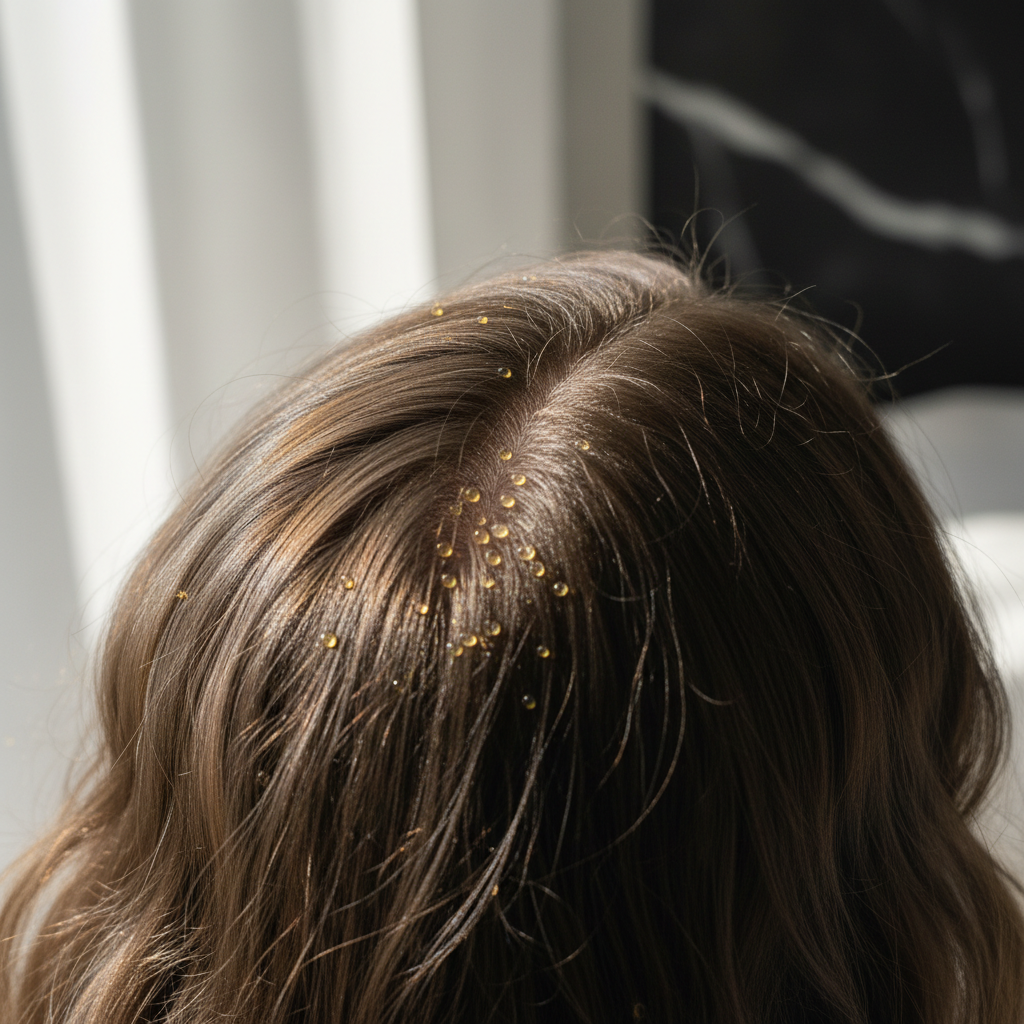
Resting on top of this physical barrier is the hydrolipidic film, an emulsion of sebum and sweat that maintains an acidic surface pH between 4.5 and 5.5. Research shows that this acidic environment is mandatory for two critical reasons:
- It activates lipid-processing enzymes (such as beta-glucocerebrosidase) that assemble and repair the barrier matrix.
- It inhibits pathogenic colonisation while sustaining normal commensal microflora.
Sebum regulation is controlled primarily at the follicular level by androgen hormones (specifically dihydrotestosterone acting on sebocyte receptors). Sebaceous glands produce a specialised lipid profile: approximately 57% triglycerides and free fatty acids, 26% wax esters, 12% squalene, and around 1% to 2% cholesterol.
When the stratum corneum barrier remains intact, sebum spreads across the scalp surface, working synergistically with intercellular lipids to limit transepidermal water loss (TEWL) to baseline levels (typically 5 to 10 g/m²/h on a healthy scalp). When the barrier degrades, water loss escalates rapidly, compromising the skin's structural integrity.
The biological mechanism of barrier disruption and lipid rebound
Barrier breakdown typically begins with surfactant misuse, environmental stress, or alkaline water. Strong anionic detergents with high charge densities can penetrate the stratum corneum and denature structural keratin proteins. Crucially, they solubilise and extract the intercellular ceramides and cholesterol that keep the corneocytes sealed together.
Once the intercellular lipids wash away, several physiological events occur in rapid succession:
Surfactant Overuse / High pH
 │
 ▼
Loss of Intercellular Lipids (Ceramides)
 │
 ▼
Elevated Transepidermal Water Loss (TEWL)
 │
 ▼
Corneocyte Desquamation Failure & Micro-cracks
 │
 ▼
Penetration of Microbial Metabolites (e.g., Oleic Acid)
 │
 ▼
Sub-clinical Follicular Inflammation & Compensatory Sebum Flux
When the barrier is permeable, oleic acid (a metabolite produced when resident Malassezia yeasts consume sebum triglycerides) penetrates directly into the living epidermis. This triggers keratinocytes to release pro-inflammatory cytokines, specifically interleukin-1 alpha (IL-1α).
This sub-clinical inflammation disrupts normal epidermal turnover. Cells rush to the surface in 7 to 14 days instead of the normal 28-day cycle, creating visible clusters of poorly differentiated flakes. Concurrently, sensory nerve endings fire, causing itching, tightness, and redness. Many individuals mistake this sensation for simple "greasiness" or unwashed buildup, washing more frequently with aggressive clarifying shampoos and worsening the cycle.
Signs of an impaired scalp barrier versus balanced sebum flow
Distinguishing between natural sebum production and barrier damage is essential for targeted care.

| Observable Feature | Healthy Scalp Barrier | Impaired Scalp Barrier (Reactive) | True Seborrhoeic Dermatitis |
|---|---|---|---|
| Surface Sensation | Comfortable, neutral, no pulling | Tight, stinging, itchy, tender to touch | Pruritic, persistent burning or crawling |
| Oil Distribution | Even sheen 24 to 48 hours post-wash | Rapid oiliness at roots paired with dry tips | Heavy, waxy sebum within hours |
| Flaking Type | Minimal to none | Fine, dry, white, powdery flakes | Thick, yellowish, greasy, adherent scales |
| Redness / Erythema | Pale, normal skin tone | Diffuse pinkness or blotchiness | Distinct red plaques around hairline/crown |
| Response to Cleansing | Clean, supple feel | Immediate tight feeling followed by rapid grease | Temporary relief, rapid recurrence of scale |
What the evidence does not show
It is critical to separate physiological facts from commercial marketing claims:
- Cleansing does not change your baseline sebocyte genetics: Washing less does not permanently "train" sebaceous glands to produce less oil. Sebaceous gland size and basal secretion rates are primarily dictated by genetics, androgen levels, and systemic hormones, not wash frequency.
- Sebum does not suffocate follicles to cause genetic hair loss: While excess oxidised sebum and barrier-induced inflammation can exacerbate shedding or worsen telogen effluvium, sebum itself does not "choke" the hair follicle or generate androgenetic alopecia. Pattern hair loss is driven by androgen sensitivity within the dermal papilla, not an external layer of natural lipids.
- Natural oils cannot replace the skin barrier: Applying heavy single-ingredient oils (such as coconut or olive oil) does not recreate the precise physiological 3:1:1:1 molar ratio of ceramides, cholesterol, and fatty acids required to repair the stratum corneum. In fact, olive oil contains high concentrations of oleic acid, which clinical studies have shown can disrupt the barrier further.
Practical steps to restore scalp barrier health and sebum regulation
Rebuilding an impaired scalp barrier requires a dual approach: preserving surface lipids and actively supporting cellular hydration.
1. Match shampoo chemistry to physiological pH
Choose cleansers formulated at pH 4.5 to 5.5. Alkaline shampoos (pH 6.5 and above) swell the hair cuticle and degrade the acid mantle, swelling corneocytes and deactivating lipid-synthesis enzymes. Look for gentle surfactant systems based on amphoteric or non-ionic surfactants (such as betaines, glucosides, and isethionates) that lift dirt without stripping structural ceramides.
2. Regulate wash frequency based on environment, not arbitrary rules
There is no universal washing schedule. If you live in an urban environment with high particulate matter or exercise heavily, leaving sweat and oxidised sebum on the scalp triggers barrier inflammation. Wash as frequently as necessary to keep the scalp clean, but ensure the formula is mild enough not to strip barrier lipids.
3. Incorporate biomimetic barrier ingredients
Look for formulations containing humectants (glycerin, panthenol, hyaluronic acid) to draw water into dehydrated corneocytes, alongside niacinamide to stimulate natural ceramide synthesis. Botanical antioxidants such as caffeine and rosemary extract help reduce lipid peroxidation without drying the surface.
4. Cease aggressive mechanical peeling
Coarse physical scrubs and hard silicone scrubbers can cause micro-fissures in an already compromised stratum corneum. If chemical exfoliation is needed for scaling, use low-concentration salicylic acid (0.5% to 1.5%), which is lipophilic and clears follicular junctions without tearing surface cells.
Exploring targeted scalp care: Watermans
When formulating a balanced routine for scalp barrier health and sebum regulation, Watermans offers targeted, microbiome-conscious formulations designed to respect the scalp's delicate ecosystem. Watermans GrowMe Shampoo is formulated to cleanse the scalp without harsh, stripping sulphates, delivering nourishing ingredients such as biotin, rosemary, caffeine, and niacinamide directly to the follicular environment.
Complementing this, Watermans ConditionMe Conditioner and the leave-in Grow More Scalp Elixir provide lightweight, targeted hydration that supports surface comfort and vitality without leaving heavy, pore-clogging occlusives that disrupt natural sebum dispersal.
When to seek professional advice
A compromised barrier usually improves within 2 to 4 weeks of adopting a mild, pH-balanced routine. However, cosmetic adjustments cannot cure clinical skin conditions. You should consult a GP or trichologist if you notice:
- Thick, stubborn, yellow crusts that bleed or weep when lifted.
- Intense erythema (redness) that spreads past the hairline onto the forehead, ears, or eyebrows.
- Discrete, patchy hair loss (alopecia areata) or widening parts accompanied by burning or pain (potential scarring alopecias like lichen planopilaris).
- No improvement in flaking or severe itch after 4 weeks of targeted barrier support.
Frequently asked questions about Scalp Barrier Health and Sebum Regulation
How does the skin's pH affect scalp barrier health and sebum regulation?
The scalp's natural pH sits between 4.5 and 5.5. This mild acidity keeps the stratum corneum tight, activates ceramide-synthesising enzymes, and holds resident microbes in check. Alkaline cleansers disrupt this mantle, causing moisture loss and triggering reactive oiliness.
Can you "train" your scalp to produce less sebum by washing it less?
No. Sebaceous gland activity is governed primarily by genetics and androgenic hormones, not your washing frequency. While washing less with harsh shampoos reduces surface irritation, it does not retrain sebocyte output. Leaving oxidised sebum on your scalp for days can actually inflame the barrier.
Is an oily scalp always a sign of over-cleansing?
Not always. A naturally high sebum excretion rate is common and largely determined by biology. However, if your scalp feels tight, stinging, or itchy alongside sudden surface oiliness, it is likely compensating for an impaired epidermal barrier caused by harsh products or excessive scrubbing.
What ingredients support scalp barrier repair?
Look for physiological humectants like glycerin, sodium PCA, and panthenol (provitamin B5) to rehydrate corneocytes. Niacinamide (vitamin B3) helps stimulate native ceramide production, while mild, non-ionic surfactants prevent the extraction of natural lipid matrices during routine cleansing.
Summary
Maintaining scalp barrier health and sebum regulation is an active balance of biological chemistry, gentle hygiene, and moisture retention. Rather than stripping natural oils in an aggressive bid for cleanliness, a protective routine preserves the stratum corneum, normalises surface pH, and keeps the cutaneous microbiome in equilibrium. When you support the scalp barrier as living tissue, balanced sebum distribution and long-term follicular comfort naturally follow.
Sources and references
- British Association of Dermatologists. Seborrhoeic Dermatitis Guidelines and Management. 2020.
- Journal of Investigative Dermatology. The Role of Stratum Corneum Lipids in Cutaneous Barrier Function. 2018.
- International Journal of Cosmetic Science. Scalp Condition Impacts Hair Growth and Retention via Oxidative Stress. 2018.
- American Academy of Dermatology. Dandruff: Diagnosis and Treatment Approaches. 2021.
- World Trichology Society. Sebaceous Gland Physiology and the Acid Mantle. 2019.
Find these ingredients in Watermans products
- Oleic Acid: you will find this ingredient in our Camellia & Black Castor Hair & Body Oil.
- Niacinamide: you will find this ingredient in our Hair Mask.
- Panthenol (Provitamin B5): you will find this ingredient in our Heat Protection Spray.