Scalp Barrier and Acid Mantle Health: The Definitive Reference
9 min read ·
A detailed guide to Scalp Barrier and Acid Mantle Health, covering stratum corneum lipid biology, physiological pH, barrier restoration, and hair follicle protection.
Quick answer: Scalp Barrier and Acid Mantle Health refers to the integrity of the stratum corneum and its acidic surface film (pH 4.5 to 5.5), which protects against pathogens, retains moisture, and supports follicular function. When this barrier is disrupted by harsh surfactants, alkaline water, or over-exfoliation, the scalp experiences transepidermal water loss, irritation, and microbial imbalance. However, maintaining a healthy barrier cannot reverse genetic hair loss, and persistent inflammatory symptoms require formal dermatological evaluation.
Key takeaways
- The scalp's acid mantle maintains a natural pH range between 4.5 and 5.5, creating an inhospitable environment for pathogenic microbes.
- The physical scalp barrier consists of dead corneocyte cells bound together by a lipid matrix rich in ceramides, cholesterol, and free fatty acids.
- Disruption of the acid mantle elevates scalp pH, prompting increased transepidermal water loss (TEWL) and barrier permeability.
- Alkaline cleansing agents and harsh mechanical scrubbing degrade surface lipids, triggering dryness, erythema, and flaking.
- A compromised scalp environment exacerbates inflammatory conditions like seborrhoeic dermatitis, though it does not directly cause androgenetic alopecia.
Scalp Barrier and Acid Mantle Health: what the evidence shows
Understanding Scalp Barrier and Acid Mantle Health requires examining the surface biology of the human head. The skin covering your cranium features a high density of terminal hair follicles and active sebaceous glands. These glands secrete sebum, an oily mixture of triglycerides, wax esters, squalene, and free fatty acids. When sebum combines with acidic sweat from eccrine glands and cellular breakdown products, it forms the acid mantle.

The acid mantle maintains an average surface pH between 4.5 and 5.5. Peer-reviewed dermatological studies confirm that this physiological acidity is vital for two distinct reasons: antimicrobial defence and biochemical regulation.
First, an acidic pH inhibits the proliferation of pathogenic bacteria like Staphylococcus aureus, while encouraging commensal organisms such as Cutibacterium acnes and non-pathogenic strains of Malassezia yeasts to remain in balance. When the surface pH rises toward neutrality (pH 7.0) or alkalinity, the activity of pathogenic strains surges, generating metabolic by-products that trigger cutaneous inflammation.
Second, the enzymes responsible for synthesising your physical lipid barrier require an acidic environment to function. Beta-glucocerebrosidase and acid sphingomyelinase, which convert precursor molecules into moisture-locking ceramides, show peak activity at an acidic pH. When the scalp is repeatedly exposed to alkaline formulas, these critical enzymes slow down, leading to structural gaps within the intercellular lipid matrix of the stratum corneum.
| Characteristic | Healthy Scalp Barrier & Acid Mantle | Compromised Scalp Barrier |
|---|---|---|
| Surface pH Range | 4.5 to 5.5 | 6.5 to 8.0+ |
| Transepidermal Water Loss (TEWL) | Low (balanced moisture retention) | High (rapid dehydration) |
| Microbiome Status | Balanced commensal flora | Microbial dysbiosis (opportunistic overgrowth) |
| Visible Symptoms | Calm skin, natural shine, no flakes | Redness, tight sensation, dry powdery or waxy flakes |
| Follicular Impact | Stable anchorage, reduced inflammatory stress | Micro-inflammation, potential shedding, fibre brittleness |
The biological mechanisms behind barrier breakdown
The physical barrier of the scalp operates on a classic "bricks and mortar" model. The corneocytes (flattened, keratin-packed cells) represent the bricks, while the lipid bilayer (ceramides, cholesterol, and free fatty acids in an approximate 1:1:1 equimolar ratio) forms the mortar.
When you apply a high-pH or excessively aggressive surfactant to your scalp, it strips away these intercellular lipids. Surfactants with high critical micelle concentrations penetrate beyond the loose outer layers of the stratum corneum, swelling the keratin fibres and washing away naturally occurring humectants collectively known as Natural Moisturising Factor (NMF).
Once NMF is depleted and lipid bilayers are disordered, transepidermal water loss spikes. The scalp loses its internal hydration quickly. As moisture drops below the critical threshold of 10% in the stratum corneum, normal desquamation halts. Instead of shedding invisibly as single microscopic cells, corneocytes clump together and peel off in visible clusters, appearing as dry flakes.
Concurrently, a disturbed pH activates serine proteases, specifically kallikrein-related peptidases (KLKs). These enzymes degrade desmosomes (the protein rivets holding skin cells together) too quickly, resulting in micro-fissuring, stinging, and heightened susceptibility to environmental irritants and allergens.
Common signs of a compromised scalp barrier
Recognising barrier damage early helps prevent chronic inflammation. Stylists and clients should look for specific clinical indicators:
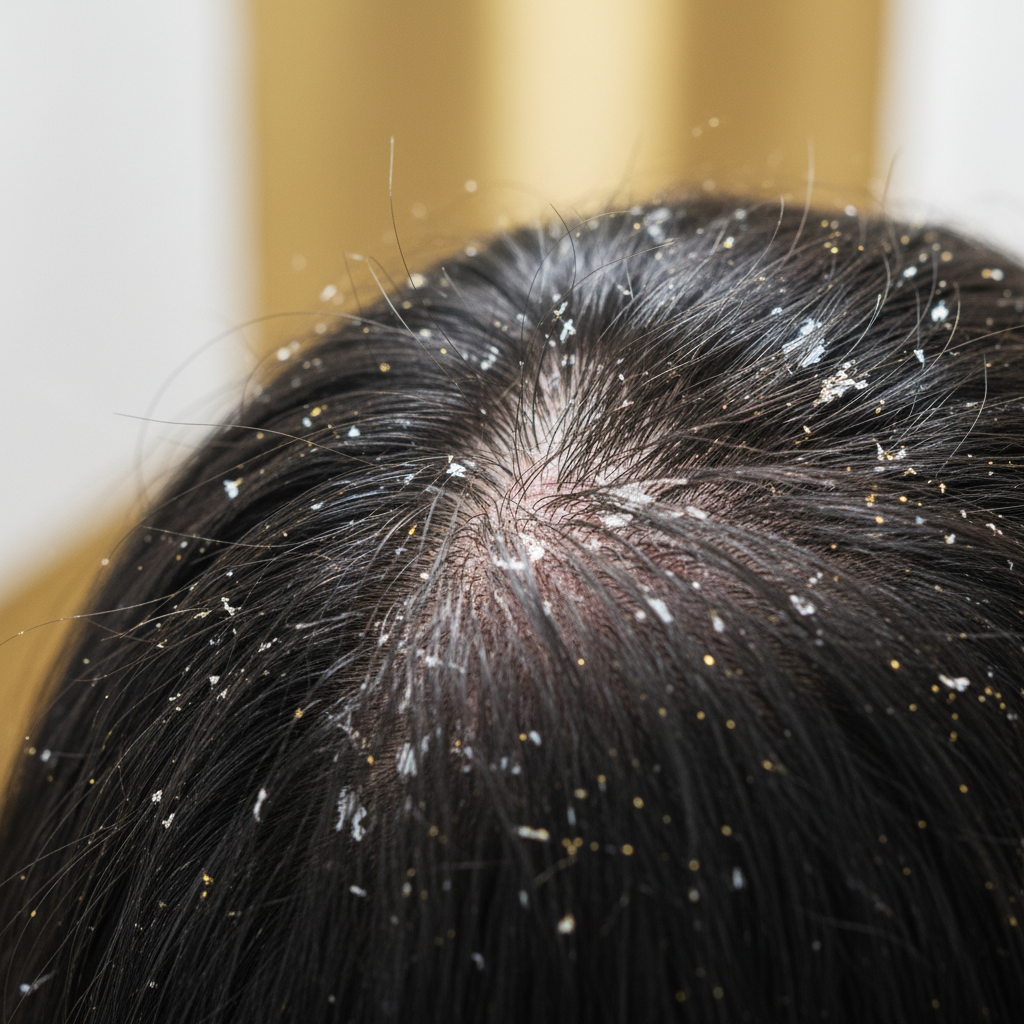
- Persistent tightness and stinging: A sensation of pulling or prickling, especially after washing or swimming.
- Paradoxical oiliness: The scalp feels dehydrated and tight, yet produces excessive oil within 24 hours as a compensatory mechanism.
- Fine, powdery flaking: Unlike thick, yellow, greasy flakes, barrier-damaged flaking is often white, fine, and distributed across the crown and hairline.
- Diffuse erythema: Pink or red patches across the scalp surface that show no signs of distinct fungal plaques.
- Increased sensitivity: Common styling products, leave-in tonics, or changes in water temperature cause immediate discomfort or burning.
What the evidence does not show
It is critical to distinguish between scientific consensus and widespread cosmetic claims. A compromised acid mantle does not directly cause patterned hair loss (androgenetic alopecia). While sustained micro-inflammation around the upper follicle can increase telogen shedding (telogen effluvium) or worsen hair fibre quality, it does not alter androgen receptor sensitivity or miniaturise follicles via dihydrotestosterone (DHT).
Furthermore, the evidence does not show that topical oils can independently rebuild a damaged barrier. Pure oils like coconut, olive, or argan contain fatty acids, but they lack the precise equimolar balance of ceramides, cholesterol, and free fatty acids required to reconstitute disordered human lipid lamellae. In some cases, applying heavy oils to a compromised scalp feeds Malassezia species, worsening barrier dysfunction through the generation of irritating oleic acid.
Practical steps to restore scalp barrier and acid mantle health
Rebuilding the barrier requires reducing environmental insults while restoring moisture and physiological acidity.
- Select pH-balanced formulations: Always wash your hair with cleansers buffered to a pH between 4.5 and 5.5. Avoid traditional bar soaps, which are naturally alkaline (pH 9.0 to 10.0) and strip barrier lipids instantly.
- Moderate wash temperature: Wash your hair with lukewarm water. High water temperatures melt protective lipid bilayers and speed up the extraction of natural humectants.
- Limit physical and chemical exfoliation: Cease the use of harsh mechanical scrubs, salt pastes, and leave-on exfoliating acids (such as glycolic or salicylic acid above 2%) until all stinging and erythema subside.
- Introduce biomimetic humectants: Use tonics and conditioners containing ingredients that mimic the scalp's Natural Moisturising Factor, such as glycerin, panthenol (provitamin B5), sodium PCA, and amino acids.
- Protect against hard water: High concentrations of calcium and magnesium in municipal water can bind to natural fatty acids, forming insolubles that irritate the skin and disrupt barrier repair. Installing a shower filter or using a chelating rinse can help in hard water regions.
The Watermans approach to balanced scalp care
When formulating topical treatments, maintaining an optimal physiological environment is paramount. Watermans products are developed with this delicate equilibrium in mind. Formulas such as Watermans Grow Me Shampoo and Condition Me Conditioner are carefully pH-balanced to respect the natural acid mantle, avoiding the harsh alkaline stripping common in generic cleansers.
By integrating supportive, scalp-friendly ingredients like biotin, rosemary, allantoin, and hydrolysed lupin protein alongside gentle cleansing agents, the range provides a clean, moisturised base without disrupting the fragile lipid matrix. This ensures the surface remains resilient, hydrated, and receptive to regular washing routines.
When the cause may be something else
Not all scalp discomfort stems from simple acid mantle disruption. Several distinct dermatological conditions present with identical symptoms:
- Seborrhoeic dermatitis: Driven by an inflammatory reaction to Malassezia yeast metabolites, presenting as greasy, yellowish scales over erythematous patches.
- Scalp psoriasis: An autoimmune condition causing hyperproliferation of skin cells, leading to thick, silvery-white plaques with clearly defined margins.
- Contact dermatitis: An allergic or irritant response to hair dyes (such as paraphenylenediamine or PPD), preservatives, or fragrances, presenting with intense pruritus, swelling, or vesicular lesions.
- Cicatricial (scarring) alopecia: Inflammatory disorders that permanently destroy hair follicles, often preceded by severe burning, perifollicular erythema, and pustules.
When to seek professional advice
If your scalp shows signs of bacterial infection (such as honey-coloured crusting, weeping, or painful pustules), you must see a doctor promptly. Similarly, if your flaking, redness, or tenderness does not improve after four weeks of mild, pH-balanced care, seek a consultation with a dermatologist or a registered trichologist. Any sudden patches of baldness, extreme tenderness, or severe scaling require clinical evaluation and prescription therapy rather than cosmetic adjustment.
Frequently asked questions about Scalp Barrier and Acid Mantle Health
How long does it take to repair a damaged scalp barrier?
Depending on the severity of the disruption, the stratum corneum typically takes between two and four weeks to complete a full cell turnover cycle. By eliminating harsh alkaline cleansers, hot water, and friction, noticeable improvements in comfort and reduction in flaking usually emerge within 10 to 14 days of dedicated barrier-supportive care.
Can tap water damage my scalp's acid mantle?
Yes. Tap water in the UK generally carries a neutral to slightly alkaline pH, often between 7.0 and 8.5, to prevent pipe corrosion. In hard water areas, dissolved calcium and magnesium ions can raise skin pH transiently and leave mineral residues, impairing the natural repair of Scalp Barrier and Acid Mantle Health.
Does an unhealthy acid mantle cause hair thinning?
A disrupted acid mantle does not cause follicular miniaturisation or genetic pattern baldness. However, the chronic micro-inflammation and intense itching associated with barrier breakdown can lead to mechanical trauma from scratching, resulting in hair breakage and premature telogen shedding across the scalp.
What is the ideal pH for scalp haircare products?
Formulations intended for scalp contact should be mildly acidic, ideally sitting between pH 4.5 and 5.5. Products in this range preserve the lipid synthesis enzymes of the stratum corneum, prevent cuticular swelling on the hair fibre, and suppress the overgrowth of opportunistic, alkaline-preferring micro-organisms.
Protecting your scalp ecosystem
Maintaining Scalp Barrier and Acid Mantle Health requires treating the skin of your head with the same consideration usually reserved for facial skin. By prioritising a physiological pH between 4.5 and 5.5, moderating physical and chemical stressors, and nourishing the lipid matrix with balanced humectants and emollients, you establish a resilient protective shield. While a healthy acid mantle cannot alter your genetics, it creates the calm, balanced foundation required for optimal follicular performance and resilient hair fibres.
Sources and references
- Ali, S. M., & Yosipovitch, G. (2013). Skin pH: from basic science to basic skin care. Acta Dermato-Venereologica, 93(3), 261-267.
- Gavazzoni Dias, M. F., de Almeida, A. M., Cecato, P. R., Adriano, A. R., & Pichler, J. (2014). The Shampoo pH can Affect the Hair: Myth or Reality? International Journal of Trichology, 6(3), 95-99.
- Proksch, E. (2018). PH in nature, humans and skin. The Journal of Dermatology, 45(9), 1044-1052.
- Elias, P. M. (2005). Stratum corneum defensive functions: an integrated view. Journal of Investigative Dermatology, 125(2), 183-200.
- British Association of Dermatologists. (2022). Seborrhoeic Dermatitis Patient Information Leaflet. BAD Guidelines.
Find these ingredients in Watermans products
- Oleic Acid: you will find this ingredient in our Camellia & Black Castor Hair & Body Oil.
- Panthenol (Provitamin B5): you will find this ingredient in our Heat Protection Spray.