Safe Detangling Techniques: Evidence-Based Methods for Minimising Hair Breakage
8 min read ·
Master safe detangling techniques to prevent hair breakage and protect the cuticle. Learn evidence-based wet vs dry methods, proper tools, and slip strategies.
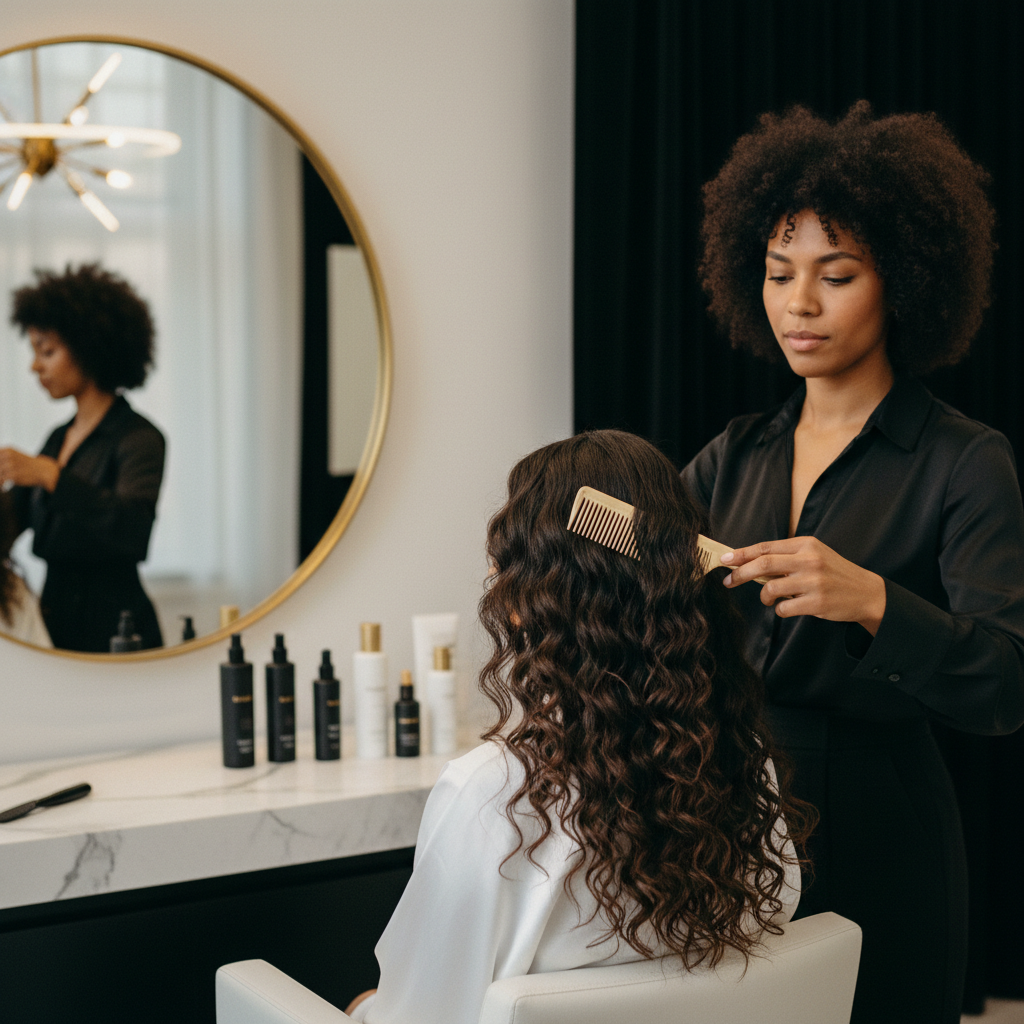
Quick answer: Safe detangling techniques protect the hair cuticle from irreversible mechanical trauma while clearing knots. Effective detangling requires working in small, manageable sections from the ends upward toward the roots, using high-slip conditioning lubricants and wide-toothed tools. While safe detangling techniques dramatically reduce friction and prevent shaft breakage, they cannot reverse existing split ends, repair an already disintegrated cortex, or halt biological shedding originating inside the hair follicle.
Key takeaways
- Mechanical force is a leading cause of hair breakage; safe detangling minimises cuticle peeling and cortex fracture.
- Wet hair is weaker than dry hair in tensile strength because hydrogen bonds are broken, but curly and coily hair types benefit from detangling damp hair coated with slip-inducing conditioner.
- Straight or fine hair is often best detangled when dry or semi-dry with a flexible paddle brush to prevent over-stretching the fibre.
- Always begin detangling at the bottom 2 inches of the hair shaft, gradually moving upward toward the scalp to prevent compacting knots.
- Detangling removes hairs already shed during the telogen phase; this is natural shedding, not sudden hair loss.
Safe detangling techniques: what the evidence shows
Scientific research on cosmetic trichology demonstrates that safe detangling techniques preserve the structural integrity of the hair shaft by managing friction and tensile strain. Hair fibres possess an outer protective sheath called the cuticle, formed of overlapping shingles rich in 18-methyleicosanoic acid (18-MEA), a natural lipid layer that provides surface hydrophobicity.

When you drag a fine-toothed comb through tangled hair, friction strips this lipid layer, chips the cuticular edges, and can stretch the inner cortex beyond its elastic limit. A healthy human hair fibre can stretch roughly 30 percent of its dry length before breaking, but when wet, the cortex absorbs water, disrupting temporary hydrogen bonds. While wet hair stretches further (up to 50 percent), its tensile break strength drops substantially. Safe detangling techniques rely on lubricating agents (such as silicones, fatty alcohols, and plant oils) that reduce the comb-force coefficient, lowering the shear stress required to separate entangled fibres.
The mechanical difference: wet vs dry detangling
The optimal method depends on fibre diameter, cuticle geometry, and curl pattern. Straight (Type 1) and wavy (Type 2) strands feature round or oval cross-sections with relatively uniform cuticle distribution. Curly (Type 3) and coily (Type 4) hair fibres have elliptical cross-sections with natural twists where the cuticle is naturally thinner and more vulnerable.
| Hair Type | Recommended State | Primary Detangling Tool | Lubrication Strategy |
|---|---|---|---|
| Straight / Fine (Type 1) | Dry or slightly damp | Wide-tooth comb or flexible bristle brush | Light leave-in spray or dry oil on mid-lengths |
| Wavy / Medium (Type 2) | Damp with conditioner | Wide-tooth seamless comb | Hydrating rinse-out conditioner |
| Curly (Type 3) | Wet and saturated | Detangling brush with flexible rows | Rich conditioner or deep treatment mask with high slip |
| Coily / Afro (Type 4) | Wet and fully conditioned | Fingers first, followed by wide-tooth rake | Heavy leave-in, rich conditioner, or botanical oil |
Step-by-step safe detangling protocol
Practising safe detangling techniques requires patience, the right tools, and an understanding of hair biomechanics. Follow these operational steps to minimise mechanical damage:
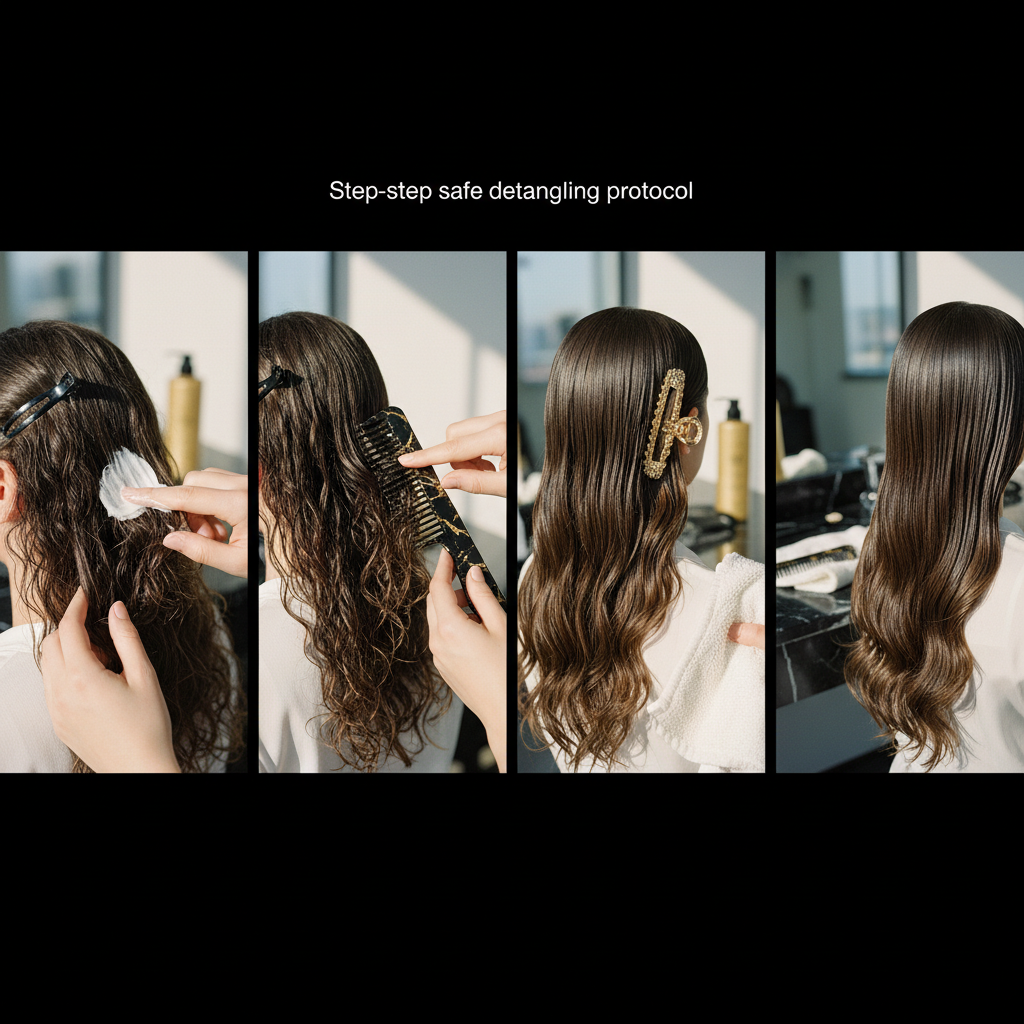
1. Section the hair thoroughly
Never attempt to detangle a full head of hair at once. Divide the hair into four to eight clean sections using non-snag clips. Working with smaller sub-sections ensures that tension remains distributed evenly rather than concentrated on a dense knot.
2. Apply adequate slip
Dry friction causes the cuticle to lift and tear. For wet detangling, saturate the hair with water and apply a generous coat of a conditioner rich in cetyl alcohol, behentrimonium methosulfate, or botanical emollients. If detangling dry straight hair, mist lightly with a conditioning spray or smooth a few drops of lightweight oil across the surface to buffer contact.
3. Finger-detangle first
Before introducing a comb, use your fingers to gently separate major tangles. Your fingers can feel knot tension far better than plastic or wood, allowing you to tease apart shed hairs that have wrapped around neighbouring strands without snapping them.
4. Work strictly from ends to roots
Start combing at the bottom 2 to 3 inches of the hair fibre. Once that zone is clear of tangles, move the comb an inch higher and stroke downward through the already cleared area. Combing straight from the scalp downward forces multiple minor tangles into a single, compacted knot that often cannot be untangled without snapping the cortex.
5. Keep tool tension neutral
If your tool meets sudden resistance, stop immediately. Do not yank or force the comb through. Remove the tool, separate the knot manually with your fingertips, and resume with gentle, light strokes.
What the evidence does not show
Safe detangling techniques cannot restore cuticles that have already sheared away from the cortex, nor can they fuse split ends (trichoptilosis). Once the cortex is fractured, only a trim can remove the damage.
Furthermore, detangling techniques do not influence the biological hair cycle inside the scalp. Daily human shedding averages 50 to 100 hairs per day from follicles entering the telogen phase. If hair is worn in protective styles, braids, or tight buns for several days, those naturally shed hairs remain trapped in the web of the hair. When you finally detangle, all accumulated shed fibres come out simultaneously. This normal mechanical release is frequently mistaken for acute hair loss, but it is simply shed hair leaving the pack.
Common signs of mechanical detangling damage
Examine your comb and your fallen strands to determine whether your technique is causing harm:
- White dots along the hair shaft: Known clinically as trichorrhexis nodosa, these tiny nodes represent points where the cuticle has been stripped away and cortex fibres have frayed outward like two brooms pushed together.
- Short, uneven hair fragments: If you find 1- to 3-inch hair fragments without a white bulb at the root on your counter, your hair is snapping from mechanical tension rather than shedding from the follicle.
- Rough, velcro-like sound during combing: A raspy sound indicates elevated surface friction and peeling cuticle scales.
- Loss of natural curl definition: Over-stretching hair fibres while wet permanently deforms the alpha-keratin coils, turning resilient spirals into limp, frizzy strands.
When breakage is caused by something else
If you adhere to safe detangling techniques but continue to experience excessive breakage, underlying chemical or structural factors may be compromising your fibre strength:
- High-lift bleaching and chemical processing: Chemical relaxers and bleaching oxidise disulphide bonds within the cortex, drastically reducing structural strength. Even the gentlest detangling can break chemically compromised hair.
- Heat degradation: Frequent use of heated styling tools above 185°C denatures keratin proteins and boils residual moisture within the shaft, causing bubble hair deformity.
- Hard water mineral scale: Heavy deposits of calcium and magnesium carbonate create a brittle, rigid crust on the cuticle, vastly increasing inter-fibre friction.
If you notice diffuse thinning across the scalp, widening parts, or smooth bald patches, the issue is follicular hair loss or shedding, not mechanical breakage. In these situations, consult a qualified trichologist or dermatologist for clinical assessment.
Supporting hair resilience with Watermans
Detangling is considerably easier when hair strands possess natural lubricity and structural balance. While safe mechanical handling protects the hair shaft externally, a nourished scalp creates the foundation for healthy-looking growth. Incorporating a nutrient-rich routine like Watermans Grow Me Shampoo and Condition Me Conditioner delivers hydrolysed lupin protein, caffeine, and softening emollients directly to the fibre and scalp. Condition Me provides exceptional slip, helping combs glide smoothly through dense sections, reducing friction-induced breakage and leaving hair feeling visibly stronger and more manageable.
Frequently asked questions about Safe Detangling Techniques
What tools are best for safe detangling techniques?
The best tools are wide-toothed seamless combs made from carbon, bone, or carved resin, as well as flexible paddle brushes with widely spaced, ball-free bristles. Avoid cheap moulded plastic combs that feature rough central seams, as these micro-ridges slice and abrade the cuticle scales during every stroke.
Should I detangle hair wet or dry?
It depends on your hair pattern. Curly and coily hair types should always be detangled wet and generously coated with a slippery conditioner to prevent cuticle tear. Straight, fine, and chemically bleached hair is at its lowest tensile strength when wet, so it is safer to detangle when completely dry or lightly conditioned.
Does detangling pull out hair at the root?
Proper safe detangling techniques do not pull out active anagen hairs. When performed correctly, detangling merely lifts away telogen hairs that have already detached from the dermal papilla naturally. However, aggressive pulling and unyielding tension can cause traction stress and premature follicle loss.
Can using oil replace conditioner for slip during detangling?
Plant oils (such as jojoba or argan) provide surface lubrication, but they do not hydrate the hair fibre. Conditioning emulsions containing water, cationic surfactants, and fatty alcohols deliver far superior slip and inter-fibre separation, making conditioner significantly more effective than pure oil for detangling.
Maintaining fibre health over time
Adopting consistent, gentle detangling habits preserves the outer cuticle layers, retains natural moisture, and prevents avoidable shaft breakage. Treating your hair as a delicate textile by using slippery conditioning formulas, working methodically from bottom to top, and respecting its wet-versus-dry physical limits ensures your lengths stay thick and resilient over time. Mastering safe detangling techniques is one of the most effective non-chemical strategies for maintaining long-term hair strength.
Sources and references
- Journal of Cosmetic Science, "The mechanical properties of hair and its response to moisture and cosmetic treatments", 2009.
- British Association of Dermatologists, "Hair Shaft Fragility and Mechanical Damage", 2018.
- International Journal of Trichology, "Hair cosmetics: An overview of mechanical, chemical and thermal properties", 2015.
- Clinical and Experimental Dermatology, "Trichorrhexis nodosa and the role of physical trauma in hair breakage", 2017.
Find these ingredients in Watermans products
- Caffeine: you will find this ingredient in our Hair Growth Shampoo.