Best Detangling Brushes: The Science of Low-Stress Hair Detangling
9 min read ·
Discover how the Best Detangling Brushes work to minimise mechanical breakage, preserve cuticle health, and protect vulnerable hair fibres across all textures.
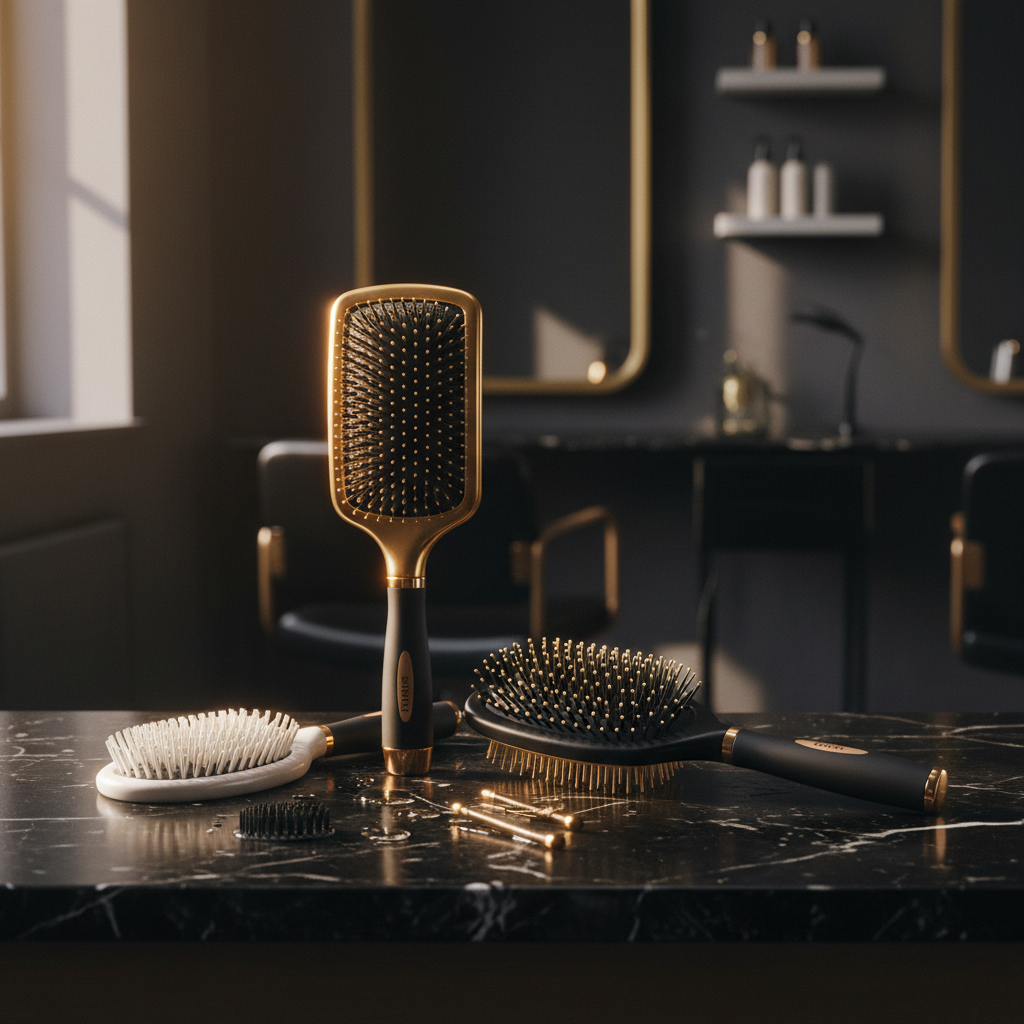
Quick answer: The Best Detangling Brushes are engineered tools designed to separate knotted hair fibres while minimising tensile stress, cuticle abrasion, and mechanical breakage. They feature flexible bristles of varying heights, widely spaced pins, and cushioned or vented bases that yield under resistance rather than snapping the hair shaft. However, even the most advanced brush cannot repair existing split ends or bypass the fundamental rule of detangling: hair must be lubricated with water and slip-enhancing conditioning agents before mechanical manipulation.
Key takeaways
- Detangling brushes rely on bristle deflection, variable pin lengths, and cushioned beds to reduce peak mechanical load on the hair shaft.
- Wet hair has high elasticity but lowered tensile strength, stretching up to 30 to 50 percent before snapping; excessive force causes irreversible elongation.
- Rigid nylon bristles with rough seams strip the protective F-layer (18-methyleicosanoic acid) of the hair cuticle, accelerating porosity and future tangling.
- The most effective detangling protocol begins at the ends and moves upward in small sections, always paired with a conditioning lubricant.
- Mechanical breakage differs fundamentally from follicular shedding; a brush cannot treat underlying physiological hair loss.
Best Detangling Brushes: what the evidence shows
Scientific evaluation of detangling tools focuses on tribology (the study of friction, lubrication, and wear) and mechanical tensile testing. The Best Detangling Brushes succeed because their design accounts for the physical properties of keratin fibres under stress.
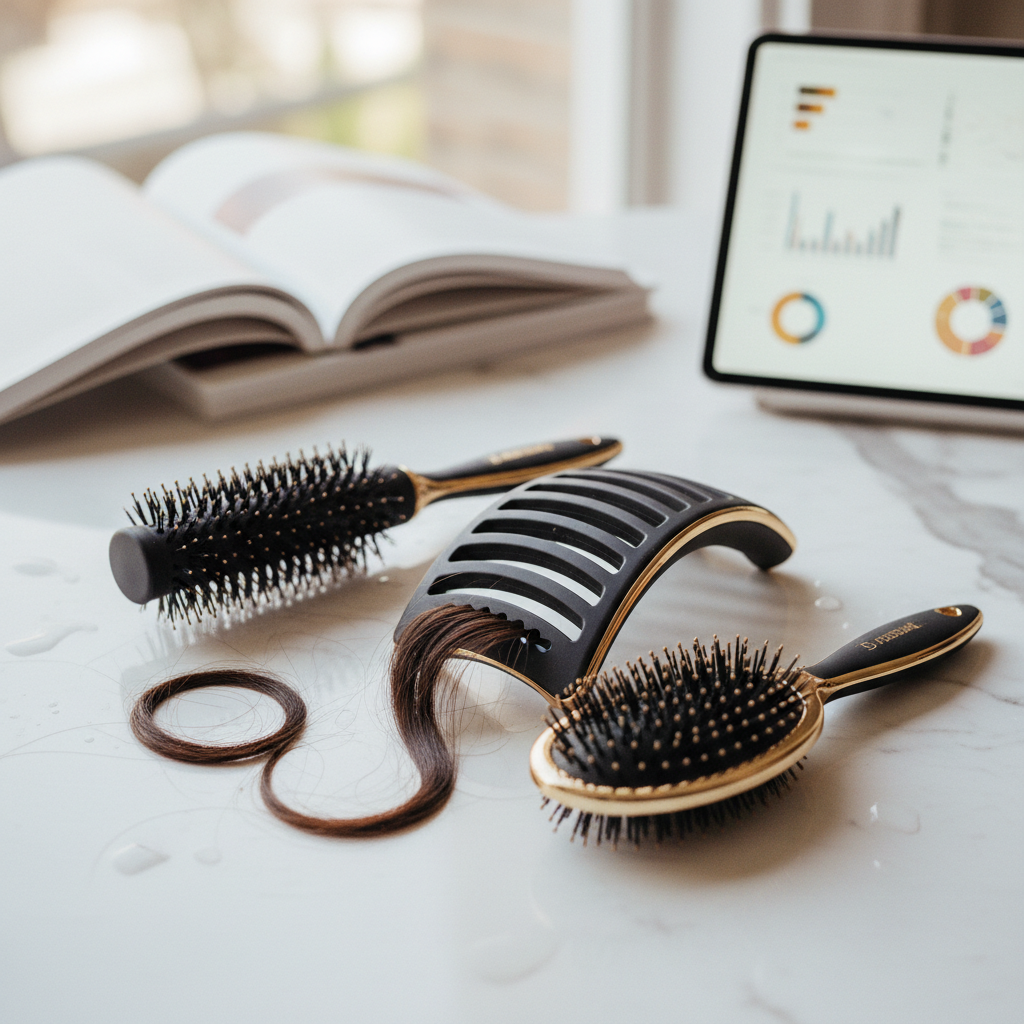
When hair tangles, adjacent strands cross at acute angles. Forcing a rigid object through these intersections creates an exponential spike in friction. In cosmetic science, this is measured using specialised tensile testing machines that pull combs and brushes through hair tresses to record the peak detangling force (measured in Newtons).
Studies evaluating mechanical hair damage demonstrate that flexible, multi-tiered bristles dramatically lower peak friction. Instead of meeting a knot with unyielding resistance, flexible bristles bend, releasing their grip on the snag before the tensile force exceeds the elastic limit of the fibre. Shorter bristles work the perimeter of the knot, while longer bristles gently separate deeper strands. Over multiple gentle passes, the knot untangles gradually without fracturing the cuticle scales or snapping the cortex.
Brushes featuring ball-tipped bristles require careful consideration. While smooth, moulded ball ends protect the scalp from scratching, poorly manufactured pins with seams or glued tips can snag delicate strands. Stylists often prefer seamless, polished synthetic bristles or ultra-flexible paddle pins for high-density, coily, or chemically processed textures.
The mechanical difference: wet vs dry detangling
Understanding hair biology is essential when selecting and using detangling tools. The physical behaviour of hair changes dramatically depending on moisture levels:
Dry hair
Dry hair exhibits higher tensile strength (the force required to snap the fibre), but lower elasticity (it stretches roughly 15 to 20 percent before breaking). Inter-fibre friction is relatively low if the cuticle is intact. However, forcing a brush through dry curls, coils, or severely knotted straight hair generates static electricity and mechanical shock. This can strip the hydrophobic lipid layer (the F-layer) from the cuticle, leaving hair rough, dull, and prone to repeated knotting.
Wet hair
When hair is wet, water molecules penetrate the porous cortex and disrupt temporary hydrogen bonds between keratin chains. This increases hair elasticity significantly (allowing it to stretch 30 to 50 percent), but cuts its tensile strength by roughly one third. Wet hair is far more vulnerable to plastic deformation. If a detangling brush pulls wet hair beyond its elastic recovery limit, the strand deforms permanently, thins out, and eventually snaps.
For straight and loosely wavy hair, light dry detangling or brushing damp hair with adequate slip is often safest. For curly, coily, and afro-textured hair, dry brushing disrupts natural curl clumping and causes severe friction. Textured hair must always be detangled wet or damp, heavily saturated with conditioner to provide liquid lubrication.
Choosing the right design for your hair profile
No single brush design serves every hair type. Porosity, curl pattern, and strand diameter dictate how much bristle flexibility and row spacing you require.
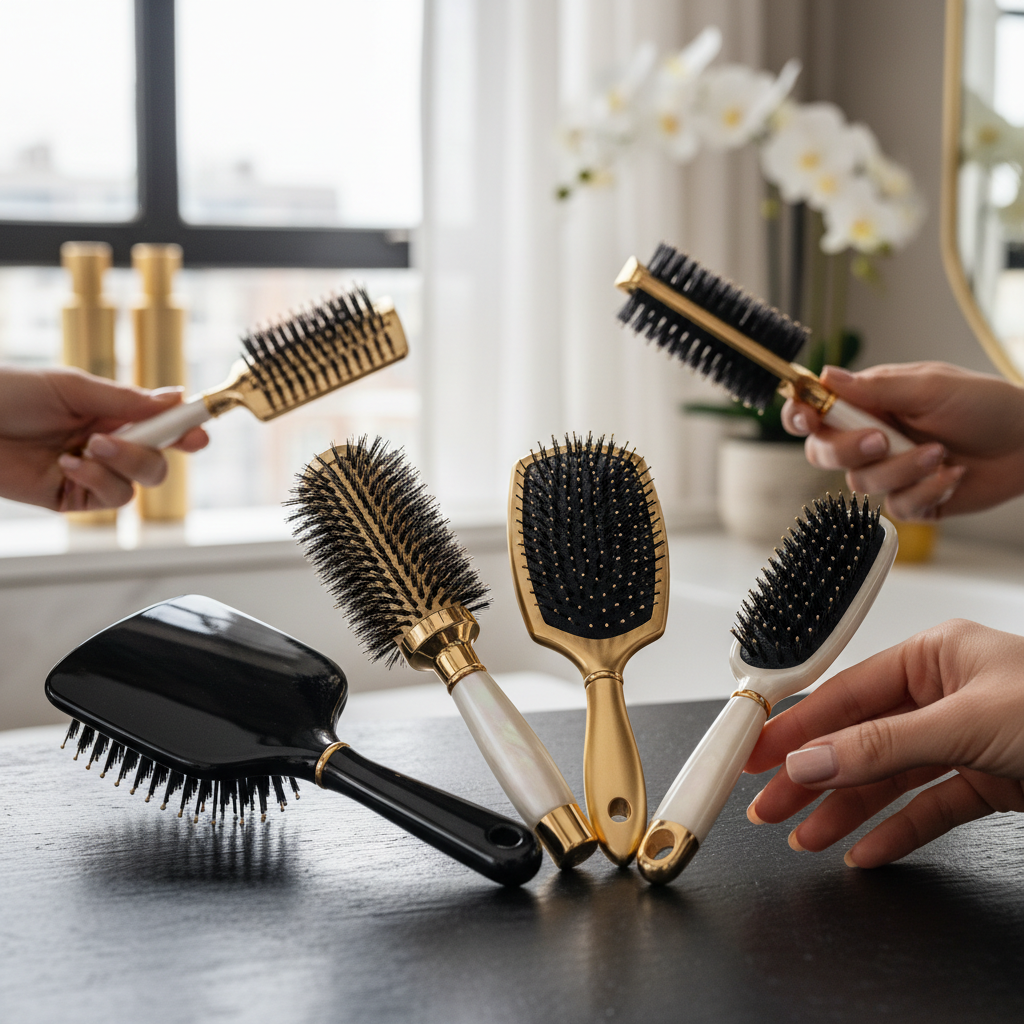
| Design Feature | Best Suited For | Mechanical Advantage | Potential Drawback |
|---|---|---|---|
| Multi-Tiered Flexible Bristles | Fine, fragile, straight to wavy hair | Bends on contact; avoids snapping low-diameter fibres | May not penetrate dense, highly compact root zones |
| Separated Flexi-Arm / Open Rows | Type 3 and 4 curls and coils | Arms move independently to accommodate curl clumps | Requires controlled tension to avoid flipping sections |
| Padded Cushion with Nylon Pins | Medium to thick, long straight or wavy hair | Cushion absorbs pressure spikes; pins reach through bulk | Difficult to clean if water gets trapped behind the cushion |
| Vented Ergonomic Curved Back | Blow-drying, damp styling, all hair densities | Allows airflow; follows scalp contour for even distribution | Rigid plastic variants can catch on fine, fragile ends |
| Wide-Spaced Loop Bristles | Hair extensions, fragile weaves, vulnerable lengths | Loops lack sharp ends; glide over extension bonds | Less effective at teasing apart microscopic single-strand knots |
What detangling brushes cannot do
While selecting from among the Best Detangling Brushes will drastically cut down on styling friction, no mechanical tool can alter hair biology or reverse structural decay:
- They cannot fix split ends: Once the cuticle is stripped and the cortical fibres split (trichoptilosis), no brush can fuse them back together. Shearing forces from brushing will only travel up the strand. The only remedy for split ends is trimming.
- They cannot stop biological hair shedding: Brushes gather loose hair. A healthy scalp sheds 50 to 100 hairs daily through normal telogen cycling. If you detangle every few days, seeing a dense ball of shed hair inside your brush is normal, as these loose strands were held in place by adjacent hairs. However, a brush cannot treat underlying conditions like telogen effluvium or androgenetic alopecia.
- They cannot replace chemical conditioning: Brushes provide mechanical separation, but conditioners provide physical slip. Conditioners contain cationic surfactants (like behentrimonium chloride) and fatty alcohols that neutralise negative electrostatic charges on damaged hair, flattening the cuticle and reducing friction by up to 60 percent.
Best practice technique: how to detangle without breakage
Using the right tool with poor technique will still break hair. Follow this stylist-approved routine to protect your fibres:
- Section the hair: Never tackle the entire head at once. Divide hair into four to eight manageable sections using sectioning clips.
- Provide lubrication: Apply a generous amount of rinse-out conditioner, leave-in spray, or natural oil to damp hair. The brush should slide smoothly, not drag.
- Start at the ends: Place the brush 5 cm from the tips and brush gently downward. Once that bottom section is clear, move the brush 10 cm up the shaft and work downward through the cleared section. Continue working your way up to the roots.
- Hold the hair above the brush: Grip the hair shaft above the section you are detangling. This isolates the pulling force to your hand, preventing unnecessary stress on the hair follicle and scalp.
- Clean your tools: Keratin debris, sebum, and dried styling polymers collect on bristles over time. Wash your detangling brushes weekly with warm water and a clarifying shampoo to keep pins smooth and hygienic.
When breakage indicates a deeper issue
If your detangling brush continually fills with short, snapped fragments of hair lacking a white follicular bulb, you are dealing with mechanical breakage rather than normal shedding.
Excessive breakage during detangling is rarely caused by the brush alone. Common culprits include:
- Chemical over-processing: Bleaching, relaxers, and perms break the structural cystine disulfide bonds inside the cortex, leaving the hair brittle.
- Thermal degradation: Frequent heat styling above 185°C denatures keratin proteins and boils residual moisture within the fibre (bubble hair deformity).
- Hard water buildup: High concentrations of calcium and magnesium in domestic tap water bind to hair proteins, making fibres stiff and brittle.
- Protein-moisture imbalance: Overuse of heavy protein treatments without adequate emollients leaves fibres rigid, causing them to snap easily under the brush.
If hair breaks across the mid-lengths despite gentle brushing and deep conditioning, consult a qualified trichologist or dermatologist to evaluate hair tensile strength and scalp health.
Supporting hair resilience with Watermans
Detangling tools work at the surface level, but resilient hair begins at the scalp. Minimising daily breakage requires strong hair fibres capable of handling routine styling stresses.
Watermans focuses on non-invasive scalp wellness and fibre conditioning. Watermans GrowMe Shampoo delivers a nutrient-rich formula containing biotin, rosemary extract, caffeine, niacinamide, argan oil, and hydrolysed lupin protein. Used regularly, it cleanses the scalp environment of sebum buildup while leaving lengths feeling stronger and more manageable. Pairing it with a high-slip, moisturising treatment like Watermans ConditionMe Conditioner provides the surface lubricity and softness needed to let the Best Detangling Brushes glide through damp lengths with minimal resistance.
Frequently asked questions about Best Detangling Brushes
What makes the Best Detangling Brushes different from standard hairbrushes?
The Best Detangling Brushes feature ultra-flexible bristles, staggered pin lengths, and pressure-absorbing bases designed specifically to yield when encountering friction. Standard brushes, particularly those with stiff boar bristles or rigid nylon rows, pull relentlessly against knots, placing extreme tensile stress on the hair shaft that can snap the cortex and tear the cuticle.
Should I detangle my hair when it is wet or dry?
It depends on your hair pattern. Naturally curly, coily, and afro-textured hair should almost always be detangled wet or damp, saturated with a conditioner to provide slip and prevent friction. Fine, straight, or chemically fragile hair is often safer to detangle when damp or dry, as wet keratin has lower tensile strength and is more susceptible to stretching and snapping.
Why do I lose so much hair when using a detangling brush?
Most hair seen in your brush is normal telogen shedding (the 50 to 100 hairs lost daily). In textured or styled hair, shed strands cannot fall freely and remain trapped until detangled. However, check the strands: if they have a tiny white bulb at the root, they shed naturally from the follicle. If they are short with blunt ends and no bulb, they represent mechanical breakage.
Can using the wrong detangling brush cause permanent hair loss?
A poor brush does not cause follicular hair loss or alopecia unless you pull so violently and repeatedly that you cause traction-related inflammation at the root. The primary damage from improper brushes is cosmetic and mechanical: cuticle weathering, split ends, and mid-shaft breakage.
How often should I replace my detangling brush?
Inspect your brush every 6 to 12 months. Replace it immediately if the bristles become bent, misshapen, sharp, or if protective ball ends peel off. Damaged, rough pins act like microscopic blades against the hair cuticle, creating friction and causing micro-tears along the hair fibre.
Conclusion
Finding and using the Best Detangling Brushes is an essential part of preserving your hair's structural integrity over time. Healthy hair maintenance is rooted in tribology: decreasing friction, respecting the structural limits of wet keratin fibres, and applying gentle, incremental tension from tips to roots. By combining high-quality flexible tools with generous slip, mindful technique, and a healthy scalp regimen, you can detangle your lengths smoothly while keeping mechanical breakage to an absolute minimum.
Sources and references
- Robbins, C. R. (2012). Chemical and Physical Behavior of Human Hair (5th ed.). Springer-Verlag.
- Evans, T. A., & Wickett, R. R. (2012). Practical Modern Hair Science. Allured Business Media.
- Dawber, R. (1996). Hair: Its structure and response to cosmetic preparations. Clinics in Dermatology, 14(1), 105-112.
- Swift, J. A. (1999). The mechanics of fracture of human hair. International Journal of Cosmetic Science, 21(4), 227-239.
- National Health Service (NHS). (2023). Hair loss (alopecia). Nhs.uk.
Find these ingredients in Watermans products
- Biotin: you will find this ingredient in our Hair Growth Shampoo.
- Niacinamide: you will find this ingredient in our Hair Mask.