Safe Detangling Methods: Evidence-Based Techniques for Healthy Hair
8 min read ·
Master safe detangling methods to eliminate mechanical breakage, protect hair cuticles, and retain fibre strength across straight, wavy, and afro-textured hair.
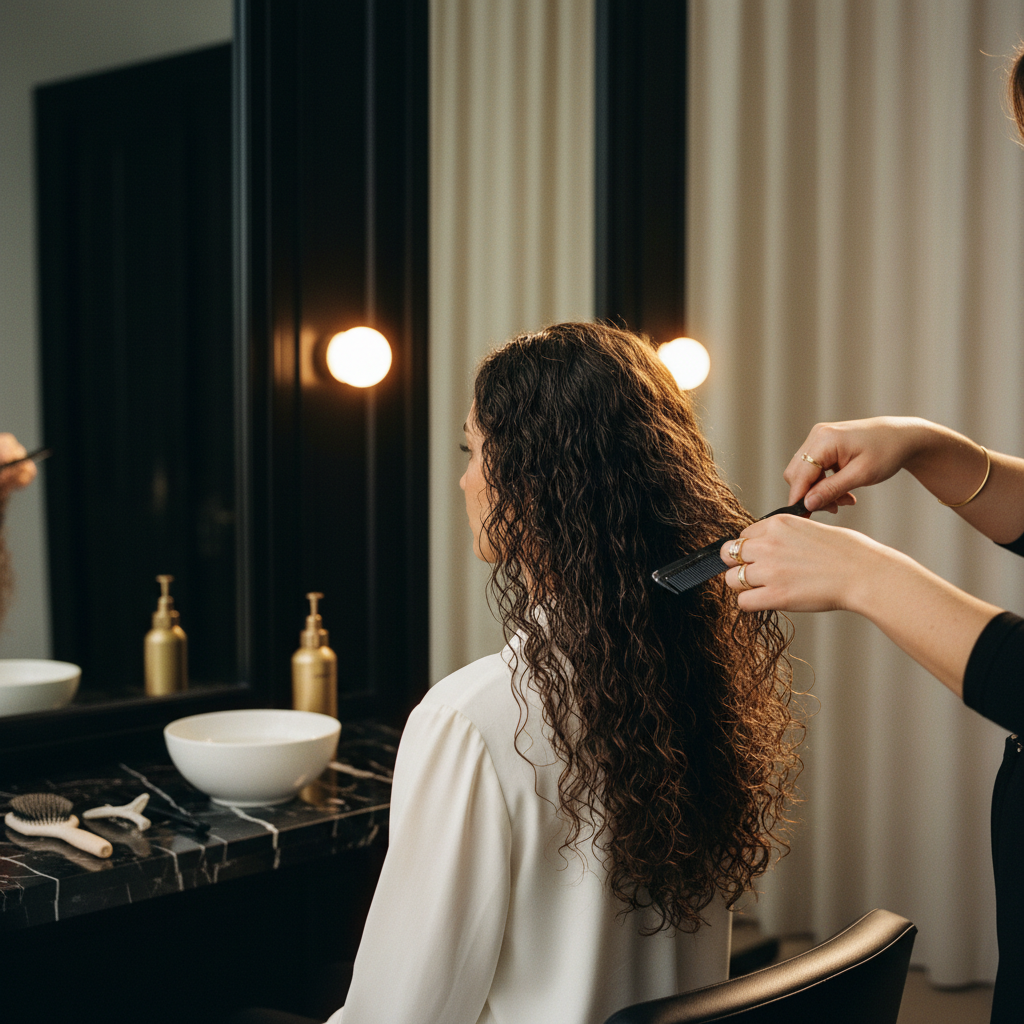
Quick answer: Safe detangling methods protect the hair shaft from excessive tensile stress, cuticular peeling, and mechanical fracture during styling. By lubricating the fibres with slip-enhancing conditioners, working in small sections from ends to roots, and selecting tools with flexible, seamless bristles or wide teeth, you minimise frictional resistance. The main limitation is that safe detangling cannot rebuild already broken keratin bonds or reverse split ends; it preserves structural integrity rather than repairing existing structural fractures.
Adopting safe detangling methods prevents unnecessary hair breakage, ensuring you retain fibre length while keeping the cuticle layer smooth and intact.
Key takeaways
- Hair fibres are up to 30 to 50 percent weaker when swollen with water, making mechanical technique critical during wet manipulation.
- Always detangle progressively from the tips upward to the roots to prevent compacting knots into dense, impenetrable snarls.
- Ample slip from water, cationic surfactants, or natural oils reduces inter-fibre friction and protects the delicate outer cuticle scale layer.
- Mechanical breakage from aggressive brushing is entirely distinct from telogen shedding or follicular hair loss.
- Choosing tools without moulding seams or rough ball tips stops the micro-tearing of cuticles during resistance phases.
Safe Detangling Methods: what the evidence shows
Research in cosmetic trichology demonstrates that hair fibres behave as complex viscoelastic materials. When external forces exceed the yield point of the hair shaft (typically around 20 to 30 percent elongation for healthy dry hair), permanent structural deformation occurs. Incorporating safe detangling methods reduces this tensile strain before the hair reaches its irreversible breaking point.
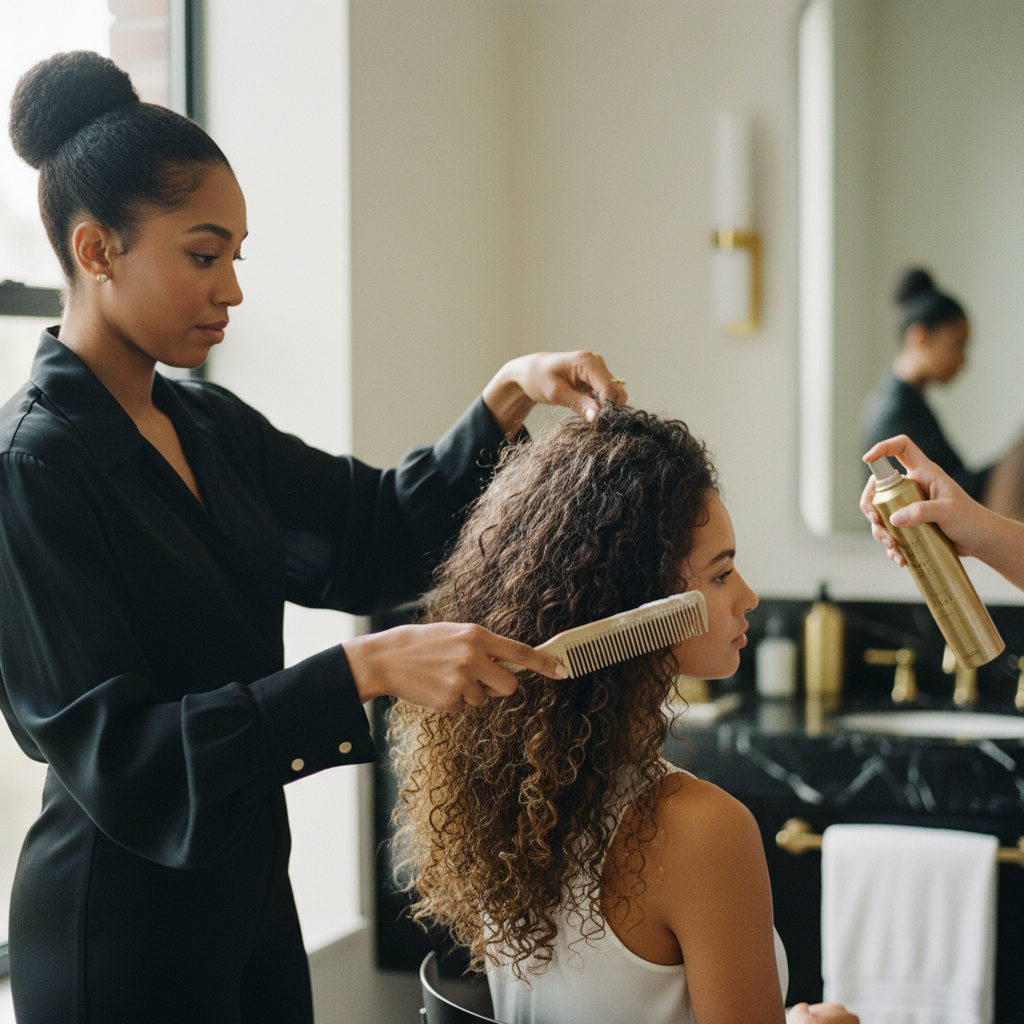
Cosmetic scientists evaluate detangling efficiency using combability assays, which measure the mechanical work (in joules or gram-force) required to pass a comb through a hair tress. Studies published in the Journal of Cosmetic Science confirm that untreated wet hair generates substantially higher combing friction than dry hair because hydrogen bonds are broken, water swells the cortex, and softened cuticle scales easily catch on adjacent fibres.
However, dry detangling presents its own physical challenges, particularly for tight curl patterns. When curly or coily hair is detangled dry without lubrication, the high degree of inter-fibre friction and geometric curl intertwining generates severe shear stress, resulting in mid-shaft transverse fractures. Consequently, safe detangling methods must be adapted based on fibre diameter, degree of chemical processing, and curl classification.
The biomechanics of knotting and hair breakage
Knots originate from loose shed hairs curling around adjacent anchored fibres, combined with lifted, chipped cuticle scales interlocking like microscopic fasteners.
Normal scalp shedding releases between 50 and 100 telogen hairs per day. In straight or loose-wavy textures, these fibres slide freely to the floor. In wavy, curly, or coily textures, these shed strands remain trapped within the hair canopy. If left unmanaged, routine movement tightens these loose strands around living fibres, creating fairy knots (trichonodosis) or multi-strand tangles.
When a comb strikes an unyielding tangle, two mechanical failures can occur:
- Cuticle stripping: The comb tooth scrapes off the outer layer of overlapping scales, exposing the fibrous cortex beneath.
- Tensile snap: If the mechanical force applied by the hand exceeds the tensile strength of the fibre, the hair snaps cleanly along the shaft, creating a ragged split tip.
Safe detangling methods minimise both forms of damage by using external slip to ease knot separation without exceeding the hair's elastic limit.
Tools, lubricants, and technique: a comparative overview
Choosing the right mechanical detangling approach depends heavily on your fibre curl pattern and porosity.

| Method | Best suited for | Key mechanical benefit | Potential limitation |
|---|---|---|---|
| Finger detangling | Fragile, bleached, or tight coils (Types 3c to 4c) | Highest tactile feedback; eliminates mechanical tool tears | Slower; less effective at removing tiny shed lint or shed hairs |
| Wide-tooth comb detangling | Wavy to loose curly hair (Types 2a to 3b) | Wide spacing prevents forced cuticle scraping | Can miss tight fairy knots if teeth are too widely spaced |
| Flexible-bristle wet brush | Straight to medium wavy hair (Types 1 to 2c) | Bristles bend rather than snap hair when encountering tension | Inferior bristles can snag if seams are rough |
| Conditioner-assisted detangling | High-porosity or chemically treated hair | Quaternary compounds neutralise negative charges, boosting slip | Requires immediate wash routine; can weigh down ultra-fine hair |
Practical steps for safe detangling
Executing safe detangling methods consistently ensures your hair cuticles stay intact, reducing frizz and eliminating unnecessary mechanical breakage.
1. Section the hair
Never attempt to comb or brush hair as a single, uniform mass. Divide the hair into four to eight manageable quadrants using smooth sectioning clips. Working with smaller sections gives you direct control over the tension applied to the root and mid-lengths.
2. Apply lubrication and slip
Ensure the hair is properly coated. If detangling wet, saturate the hair with warm water and a generous amount of conditioner rich in behentrimonium chloride or cetrimonium chloride. These cationic surfactants deposit a microscopic lubricating film over the cuticle, radically lowering the coefficient of friction. If detangling dry or damp hair, apply a light silicone serum or plant-based oil to create an inter-fibre barrier.
3. Anchor the hair base
Hold the section firmly with your non-dominant hand just above where you intend to comb. This isolates the pulling force to the lower shaft, shielding the sensitive hair follicle at the scalp from excessive traction.
4. Work from ends to roots
Place your tool 2 to 3 centimetres from the ends and gently work downward until the comb glides freely. Move up the hair shaft incrementally, resolving small knots in sequence. If you begin at the scalp, you push multiple small tangles together, compacting them into a tight knot that often requires cutting or forceful tearing to remove.
5. Separate stubborn knots by hand
When your tool meets firm resistance, stop immediately. Never yank or force the tool through the snarl. Set the comb aside and use your fingertips to gently tease apart the intertwined strands horizontally before resuming light strokes.
Common misconceptions: what detangling cannot do
Detangling is purely a preventative mechanical protocol. It is vital to separate what these methods can achieve from what they cannot:
- Detangling does not stop shedding: Many people observe a handful of hair in their brush and assume their detangling technique is pulling their hair out. If the fallen fibre has a tiny white bulb on the end, it was already shed naturally from the follicle via the normal telogen cycle. Safe detangling simply catches these shed hairs; it does not cause or cure telogen shedding.
- Detangling cannot heal split ends: Once mechanical or chemical damage splits the hair shaft (trichoptilosis), safe detangling methods merely prevent the tear from racing further up the shaft. Only regular trims physically remove split ends.
- Detangling cannot fix chemical over-processing: Bleached or heavily relaxed hair suffers from broken disulphide bonds and elevated porosity. While safe detangling reduces the risk of snapping compromised hair, it cannot restore the cortex's lost structural integrity.
When hair breakage signals another issue
If you practice safe detangling methods diligently but still see short, broken pieces of hair littering your sink, your hair fibre strength may be compromised by other factors.
Severe protein loss from chemical lifting, heat tool overuse (above 185 degrees Celsius), or chronic UV exposure drastically lowers hair's elastic limit. Additionally, internal nutritional deficiencies (such as severe iron deficiency anaemia or inadequate dietary protein) produce a thinner, fragile hair fibre that snaps under the gentlest manipulation.
If your scalp shows signs of tenderness, patchy hair loss, or sudden, diffuse thinning across the entire head, consult an NHS general practitioner, dermatologist, or qualified trichologist. Safe detangling addresses external mechanical forces, but internal follicular health requires medical evaluation.
Supporting hair resilience with Watermans
While detangling techniques govern mechanical manipulation, starting with healthy hair growth creates resilient strands that better withstand daily styling. Watermans GrowMe Shampoo is formulated to support a healthy scalp environment with ingredients like biotin, caffeine, argan oil, and rosemary extract, complemented by hydrolysed lupin protein that reinforces hair texture. Following this with a slip-rich conditioner provides the essential surface glide necessary to execute safe detangling methods without unnecessary snagging or friction.
Frequently asked questions about Safe Detangling Methods
Should hair be wet or dry when detangling?
It depends entirely on your natural hair texture. Fine, straight, or chemically fragile hair is often best detangled when dry or lightly damp, as wet fibres are weaker and stretch to breaking point more easily. Conversely, tight curls and coils (Type 3 and 4) should always be detangled wet and saturated with conditioner to provide the slip necessary to prevent severe frictional breakage.
What is the best tool for safe detangling methods?
The best tool is either your own fingers or a wide-tooth comb with seamless, saw-cut teeth. Many mass-manufactured plastic combs possess sharp, microscopic moulding ridges along the inner teeth that cut and scrape hair cuticles with every pass. Seamless combs or detangling brushes featuring flexible, bendable bristles ensure the tool gives way before the hair fibre snaps.
How often should I detangle my hair?
Detangling frequency should match your hair type and styling routine. Straight to loose wavy hair can be detangled daily or every other day to prevent shed hairs from settling into knots. Curly, coily, or textured hair styled in wash-and-go sets or protective styles typically only requires thorough detangling on wash days, which may be once or twice per week.
Why does detangling pull out so much hair?
Most hair collected during detangling consists of normal shed strands that naturally detached from the scalp days earlier. The average human sheds 50 to 100 telogen hairs each day. In curly or coiled textures, these loose hairs cannot fall free and remain trapped in the canopy until your next detangling session, creating the illusion of sudden, heavy hair loss.
Final recommendations for healthy hair
Adopting safe detangling methods is one of the most effective mechanical habits you can build to preserve hair length, maintain a smooth cuticle surface, and prevent split ends. By using abundant slip, working patiently in small sections, moving progressively from ends to roots, and selecting seamless tools, you protect the hair fibre from reaching its mechanical yield point. Consistent, gentle care ensures hair stays strong, resilient, and manageable.
Sources and references
- Journal of Cosmetic Science, "The mechanical properties of human hair: A review," 2007.
- International Journal of Trichology, "Hair cosmetics: An overview," 2015.
- British Association of Dermatologists, "Hair breakage and cosmetic hair damage guidelines," 2021.
- American Academy of Dermatology, "How to stop damaging your hair," 2022.
Find these ingredients in Watermans products
- Biotin: you will find this ingredient in our Hair Growth Shampoo.