Hair Porosity Mechanics: The Science of Cuticle Structure and Moisture Flow
8 min read ·
Learn how Hair Porosity Mechanics control moisture absorption and cuticle integrity. Discover evidence-based care strategies for low, medium, and high porosity hair.
Quick answer: Hair Porosity Mechanics describe how the physical and chemical state of the hair cuticle controls the passage of moisture and cosmetic agents in and out of the cortex. Driven by cuticle scale integrity, the 18-methyleicosanoic acid (18-MEA) lipid layer, and cortical keratin bonds, porosity dictates how hair absorbs water, swells, and loses hydration. The main limitation is that porosity cannot be permanently fixed; damaged, porous fibres lack living cells and require continuous cosmetic management to control moisture flux.
Key takeaways
- Hair porosity is governed by the overlap of cuticle scales, cell membrane complex lipids, and cortical protein structure.
- Low porosity hair possesses tightly packed cuticle layers and intact hydrophobic lipids, resisting water uptake.
- High porosity hair has lifted, chipped, or missing cuticle scales, absorbing water rapidly but losing it just as fast.
- The widely publicised "float test" is unreliable because surface tension, residual oils, and product buildup skew the results.
- Porosity alterations from heat or bleaching represent structural protein degradation that requires film-forming cosmetics rather than permanent biological repair.
Hair Porosity Mechanics: what the evidence shows
Hair Porosity Mechanics centre on the microscopic architecture of the hair shaft. A single human hair fibre comprises an outer cuticle (typically 5 to 10 overlapping cellular layers), an inner cortex of keratin intermediate filaments, and an occasional central medulla. Under healthy physiological conditions, the outermost cuticle surface is coated with an ultra-thin layer of fatty acids, predominantly 18-methyleicosanoic acid (18-MEA). This layer creates a naturally hydrophobic barrier.
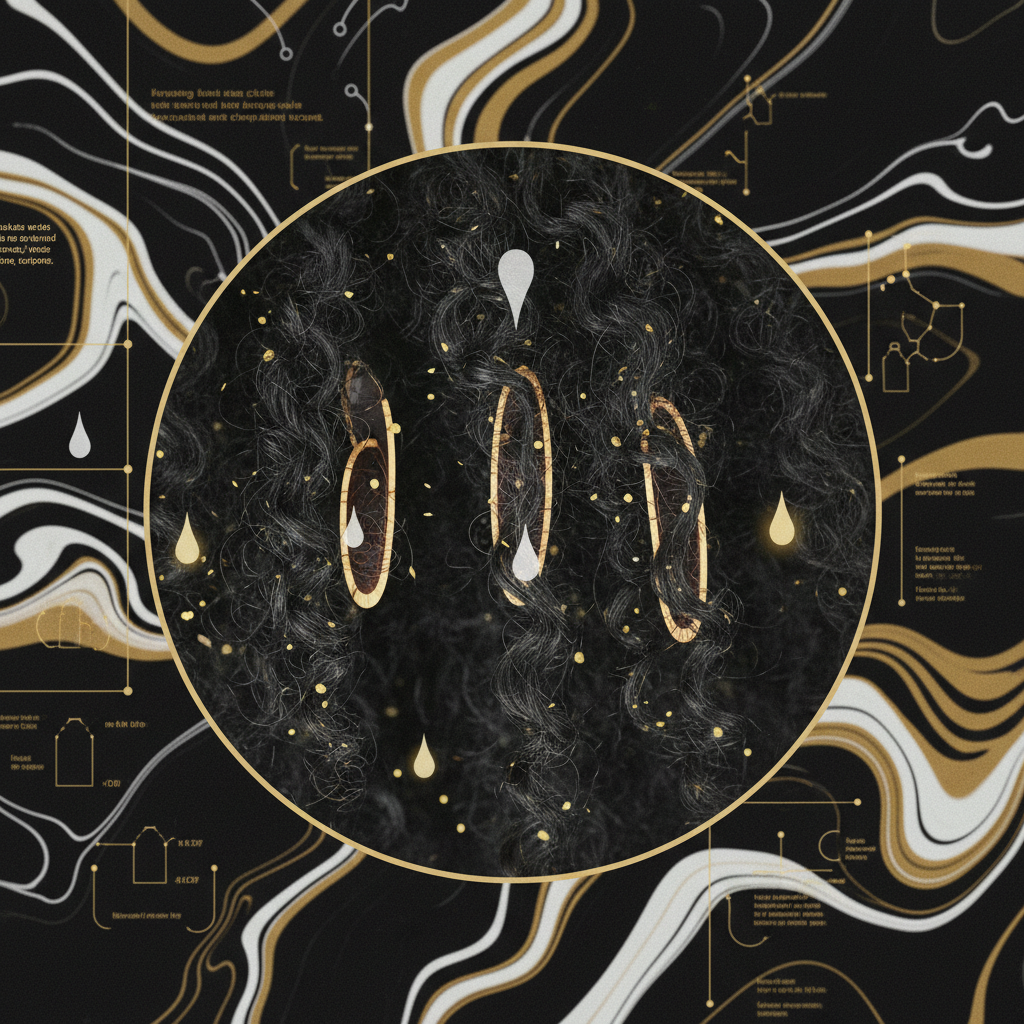
When water encounters virgin hair, this lipid shield retards wetting. Water slowly diffuses through the cell membrane complex between cuticle scales. In chemically processed or UV-damaged hair, this hydrophobic layer is stripped away, and the underlying keratin undergoes oxidation. Cysteic acid levels rise, creating a net negative electrostatic charge. Cuticle scales lift, crack, or break away entirely.
Research published in cosmetic and dermatological literature demonstrates that high porosity hair absorbs up to 30 to 45 percent of its dry weight in water during immersion, whereas low porosity hair absorbs significantly less and at a far slower rate. However, high porosity fibres suffer from accelerated desorption. Because the cuticle cannot close down over the swollen cortex, internal hydration evaporates quickly, leaving the fibre brittle, rough, and susceptible to mechanical failure.
The biophysical spectrum: low, medium, and high porosity
Porosity exists along a continuous physical spectrum rather than three neat boxes, but classifying hair into mechanical states helps identify suitable formulation strategies.
| Mechanical state | Cuticle architecture | Lipid integrity | Water uptake rate | Desorption rate | Common signs |
|---|---|---|---|---|---|
| Low porosity | Tightly tiled, smooth scales | Intact 18-MEA layer; strongly hydrophobic | Very slow (resists wetting) | Slow (retains core moisture) | Products sit on surface; long drying times; bead formation under mist |
| Medium porosity | Intact alignment with minor cosmetic wear | Partially worn lipid layer; balanced surface | Moderate, controlled diffusion | Balanced | Hair holds styling well; accepts colour predictably |
| High porosity | Lifted, fractured, or missing cuticle layers | Stripped lipids; high cysteic acid; hydrophilic | Rapid (swells quickly) | Rapid (dries prematurely brittle) | Tangles easily; dull appearance; absorbs colour unevenly; frizzes in humidity |
Mechanisms of cuticle damage and moisture flux
The primary mechanical driver of altered porosity is the breakdown of the cell membrane complex and cuticle scales. Chemical services, such as bleaching, permanent waving, and alkaline relaxers, raise the pH of the hair fibre above its natural isoelectric point (around pH 3.67). At elevated pH levels, the hair fibre swells, lifting the protective cuticles so chemical agents can penetrate the cortex. While necessary for cosmetic alteration, this process hydrolyses peptide bonds and cleaves disulphide bridges.
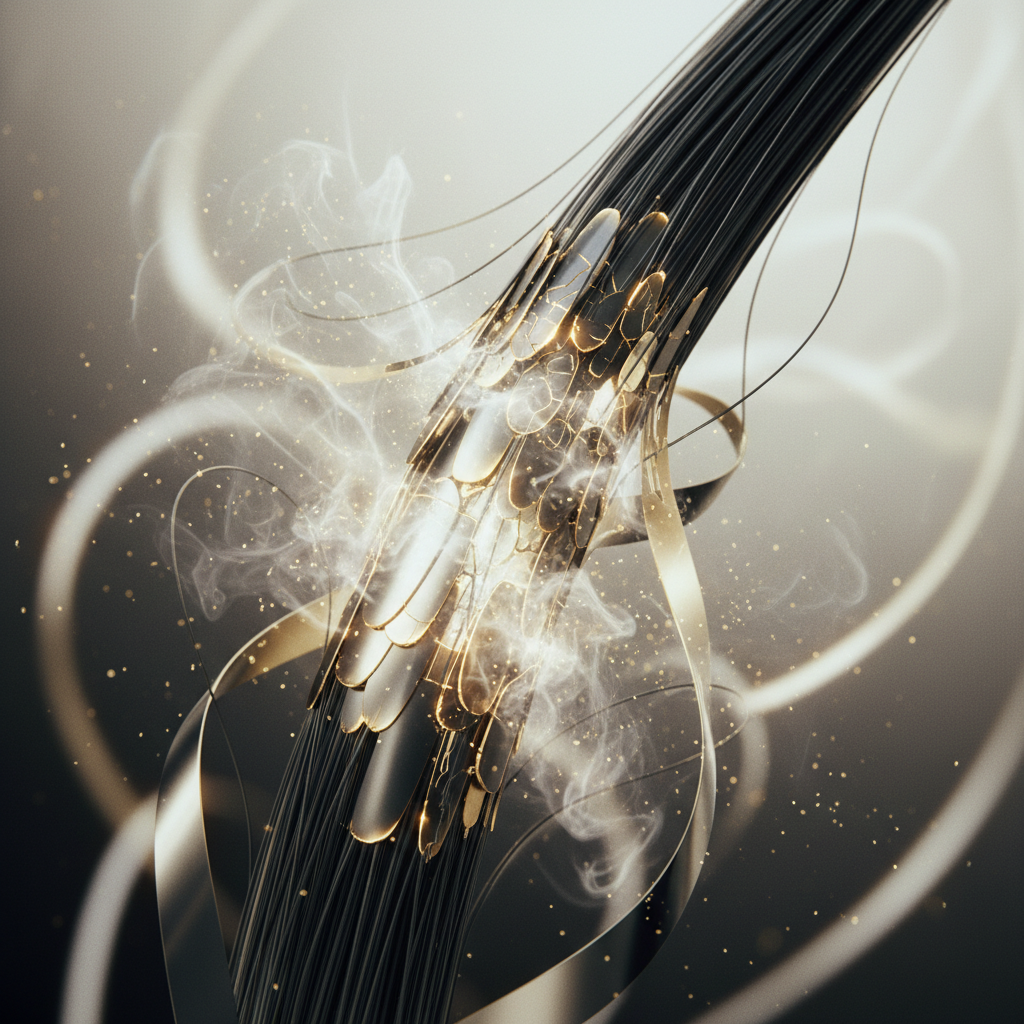
Thermal styling presents another disruptive mechanism. Temperatures exceeding 180°C decompose tryptophan, degrade keratin proteins, and boil moisture trapped inside the cortex, causing micro-voids known as bubble hair.
Environmental exposure also plays a measurable role. Solar radiation, specifically ultraviolet wavelengths (UVA and UVB), degrades amino acids like cystine and methionine on the outer cuticle. The loss of these structural bonds reduces the cuticle's mechanical stiffness, leaving it unable to remain flat against the shaft. Consequently, moisture ingress and egress become unregulated, leading to hygral fatigue, where repeated excessive swelling and shrinking weakens the fibre over time.
What the evidence does not show: the glass of water myth
Online communities frequently promote the "glass of water test" to determine porosity. This test suggests that placing a shed hair strand into a cup of water reveals its porosity: floating signifies low porosity, sinking signifies high porosity.
Physical chemistry invalidates this method for several reasons:
- Surface tension: Liquid water possesses strong surface tension (roughly 72 mN/m at 20°C). A lightweight hair fibre can rest on top of water indefinitely simply because its weight does not breach the surface film, regardless of cuticle health.
- Sebum and product buildup: Residual silicones, polyquaterniums, or natural scalp sebum coat the hair strand in a hydrophobic film. A severely damaged, high-porosity strand coated in silicone will float because the water cannot wet the surface.
- Fibre diameter: Coarse hair has higher mass per unit length than fine hair, making it more likely to breach surface tension irrespective of porosity.
Reliable assessment of porosity relies on professional tactile examination (running fingers backwards along the strand to feel cuticle resistance), dynamic vapour sorption (DVS) in laboratory settings, or measuring wet-comb friction.
Signs of abnormal porosity and what you can do
Identifying where your hair falls on the porosity continuum allows you to adjust your routine with targeted formulations.
Managing low porosity hair
Low porosity hair tends to accumulate product buildup quickly. Because cuticles are tightly sealed, rich butters and heavy oils cannot penetrate and instead form a greasy exterior coat.
- Use low-weight humectants: Opt for glycerin, propylene glycol, or panthenol in dilute aqueous bases.
- Apply mild warmth during conditioning: Controlled warmth (such as a warm towel or steamer at around 40°C) slightly relaxes the cuticles to aid cosmetic absorption.
- Clarify periodically: Use an anionic clarifying shampoo every few weeks to remove surface residues that block hydration.
Managing high porosity hair
High porosity hair requires restructuring support and surface sealing to mimic the missing lipid envelope.
- Formulate at acidic pH: Conditioners formulated around pH 3.5 to 4.5 help contract the keratin matrix and flatten accessible cuticle scales.
- Use hydrolysed proteins: Small molecular weight peptides (such as hydrolysed wheat, soy, or keratin proteins) can temporarily deposit within cortical fissures, offering structural support.
- Seal with film-formers: Emollients, silicones (such as amodimethicone), and plant oils create an artificial barrier that slows down water evaporation and reduces hygral fatigue.
When the cause may be something else
Poor hair condition is not always a consequence of porosity mechanics.
- Hard water mineral buildup: Calcium and magnesium ions bind to hair proteins, leaving a stiff, brittle film that mimics high-porosity damage. Chelating shampoos solve this issue without protein treatments.
- Hair shedding vs breakage: If hair is coming out from the scalp with a small white bulb at the end, this is shedding (telogen effluvium or natural turnover), not porosity-driven breakage along the shaft.
- Seborrheic dermatitis: Flaking and dull hair are frequently caused by scalp microbiome imbalances rather than hair shaft porosity issues.
Supporting the hair fibre with Watermans
When managing hair that shows signs of porous distress, supporting both the scalp environment and the fibre surface is essential. The Watermans range focuses on balancing cleansing with conditioning agents. Watermans GrowMe shampoo cleanses the scalp and fibre without stripping natural lipid reserves, preparing the strand for targeted hydration. Pairing this with Watermans ConditionMe conditioner delivers film-forming agents and conditioning emollients designed to smooth rough cuticle boundaries, improve wet combability, and reduce the physical breakage associated with altered porosity.
Frequently asked questions about Hair Porosity Mechanics
What causes a change in Hair Porosity Mechanics?
Hair Porosity Mechanics shift primarily due to chemical treatments like bleaching, perm solutions, and relaxers, alongside thermal styling above 180°C. These factors strip the outer protective 18-MEA lipid layer and degrade keratin proteins, lifting the cuticles and increasing water permeability.
Can you permanently alter high porosity hair back to low porosity?
No. Hair is non-living biological tissue. Once cuticle scales break off or the 18-MEA lipid layer is removed, the strand cannot biologically regenerate. You can only manage porosity through cosmetic film-formers, hydrolysed proteins, and low-pH sealants.
Why does high porosity hair dry so quickly?
High porosity hair absorbs water quickly, but its damaged cuticle layer cannot prevent evaporation. As soon as the surrounding air drops in relative humidity, internal moisture escapes rapidly, leaving the hair feeling dry, stiff, and rough within minutes.
Does low porosity hair require more protein treatments?
Low porosity hair generally requires less protein. Because its cuticle structure is intact and dense, protein treatments can accumulate on the surface rather than penetrating, making the hair feel stiff, brittle, and prone to mechanical breakage.
How does weather affect high porosity hair?
In high humidity, high porosity hair pulls excessive moisture from the atmosphere, swelling the cortex and causing immediate frizz. In dry winter air, moisture evaporates out of the fibre just as quickly, resulting in chronic dryness.
Summary of Hair Porosity Mechanics
Hair Porosity Mechanics dictate how your hair interacts with moisture, heat, and cosmetic formulations. By moving past flawed assessments like the water float test and understanding the cuticle lipid layer, you can tailor your routine to your hair's true structural condition. Acidic conditioners, film-forming sealants, and cautious heat management allow even high porosity hair to maintain resilience and shine.
Sources and references
- International Journal of Cosmetic Science, "Chemical and physical properties of hair related to cuticle damage", 2018.
- Journal of the Society of Cosmetic Chemists, "Secondary ion mass spectrometric investigation of the 18-MEA lipid layer of human hair", 2004.
- Robbins, C. R., Chemical and Physical Behavior of Human Hair, 5th Edition, Springer, 2012.
- Textile Research Journal, "Diffusion of Water Vapor through Keratin Fibers", 2016.
Find these ingredients in Watermans products
- Panthenol (Provitamin B5): you will find this ingredient in our Heat Protection Spray.