The Role of 18-MEA in Cuticle Health: The Hair's Natural Shield
9 min read ·
Understand the role of 18-MEA in cuticle health. Learn how this lipid barrier defends hair from friction, why chemical treatments destroy it, and how to protect hair.
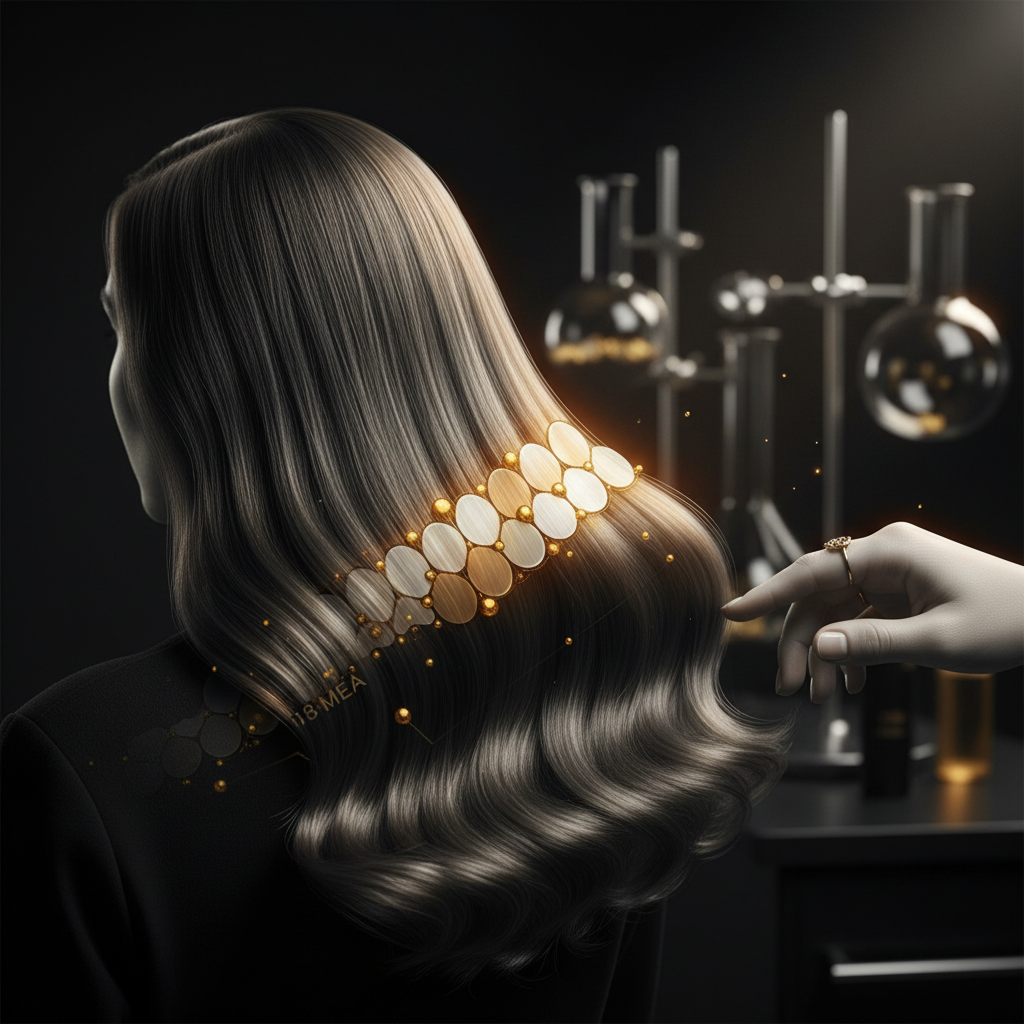
Quick answer: The Role of 18-MEA in Cuticle Health centres on maintaining hair's natural hydrophobic shield. 18-methyleicosanoic acid (18-MEA) is a branched fatty acid covalently bound to the outermost epicuticle, repelling ambient moisture, reducing inter-fibre friction, and shielding the cortex from mechanical wear. The main limitation is biological: once chemical services like bleaching, permanent colouring, or alkaline perms strip this lipid layer, hair follicles cannot regrow or regenerate 18-MEA along existing hair shafts, requiring cosmetic biomimetics to simulate its protective function.
Key takeaways
- 18-MEA forms the f-layer, a primary lipid barrier covalently bonded via thioester linkages to the epicuticle.
- It makes virgin hair naturally water-repellent (hydrophobic), resisting environmental humidity and swelling.
- A single bleaching or high-lift colouring session can strip up to 80% or more of natural 18-MEA from the fibre.
- The body cannot replace 18-MEA on existing hair; only newly grown hair at the root emerges with its lipid shield intact.
- Lost 18-MEA exposes the cuticle to increased friction, tangling, moisture absorption, and subsequent mechanical breakage.
- Conditioners containing synthetic 18-MEA, quaternised fatty acids, and specific plant lipids can cosmetically mimic its conditioning properties.
The Role of 18-MEA in Cuticle Health: what the evidence shows
The role of 18-MEA in cuticle health is fundamentally structural and protective. Hair researchers have demonstrated that 18-methyleicosanoic acid accounts for roughly 40% to 50% of the total bound fatty acids found on the outer surface of human hair fibres. It is uniquely attached to the cysteine-rich proteins of the epicuticle through strong covalent thioester bonds.
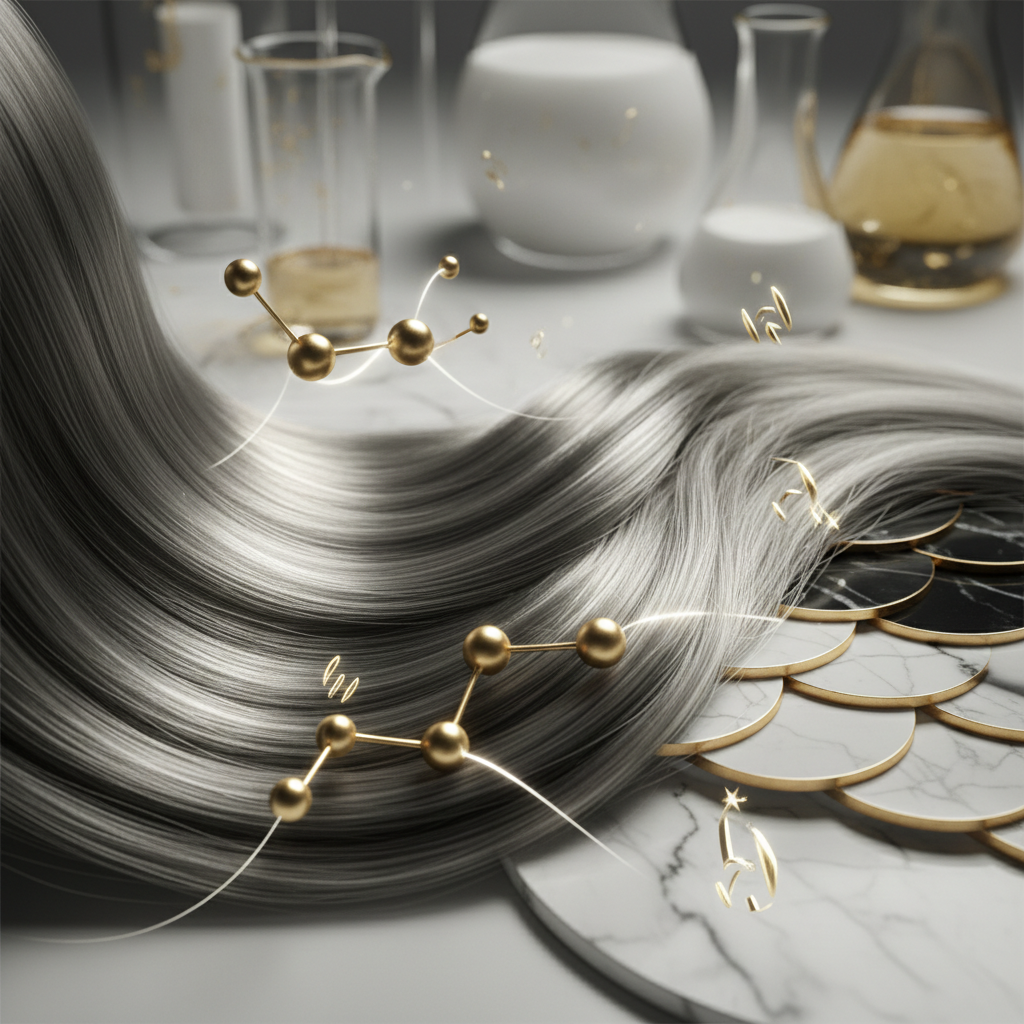
In virgin hair, this microscopic fatty layer is known as the "f-layer". The f-layer orientates its hydrophobic carbon tails outward toward the environment. This molecular alignment produces an energetic barrier with a high water contact angle (typically exceeding 90 to 100 degrees). Water beads on virgin hair precisely because of this lipid orientation.
Beyond water repellency, peer-reviewed cosmetic dermatology research shows that 18-MEA serves as the hair fibre's primary dry lubricant. By lowering the surface energy and inter-fibre friction, 18-MEA enables individual hair strands to glide past each other cleanly during brushing, combing, and styling. When hair maintains its normal 18-MEA profile, the force required to comb through wet or dry hair remains low, minimising physical stress on the fibre.
Virgin Fibre Surface:
[ Water Repelled ] <--- Hydrophobic Tails (18-MEA Fatty Acid)
================== <--- Thioester Bonds (Covalent)
------------------ <--- Epicuticle (Protein-rich layer)
================== <--- Exocuticle & Endocuticle
The biochemical mechanism: why 18-MEA is lost
18-MEA is remarkably durable against plain water and mild surfactants, but it is vulnerable to alkaline chemical reactions. The thioester bond anchoring 18-MEA to hair keratin is susceptible to alkaline hydrolysis and oxidative cleavage.
When hair undergoes chemical treatments, such as bleaching (hydrogen peroxide and persulphates at pH 9.0 to 11.0), permanent colouring (ammonia or MEA at alkaline pH), or chemical relaxers (sodium hydroxide or calcium hydroxide at pH 12.0 to 14.0), the chemical environment dissolves the thioester linkage.
Spectroscopic studies indicate that a single standard bleaching process strips the majority of bound 18-MEA from the cuticle surface. Once these bonds break, the fatty acid washes down the drain. This loss converts the hair's surface chemistry from hydrophobic (water-repelling) to hydrophilic (water-attracting).
Without 18-MEA, the cuticle absorbs water rapidly. Hair swells excessively when wet, lifting the edges of the overlapping cuticle scales. When hair dries, it desorbs water unevenly, creating raised, jagged cuticle edges that catch on neighbouring hairs.
| Characteristic | Virgin Hair with Intact 18-MEA | Damaged Hair Depleted of 18-MEA |
|---|---|---|
| Surface Nature | Hydrophobic (water-repellent) | Hydrophilic (water-attracting) |
| Water Contact Angle | High (> 95 degrees) | Low (< 60 degrees) |
| Cuticle Condition | Flat, sealed, smooth edges | Raised, chipped, or stripped |
| Inter-Fibre Friction | Low (hair glides easily) | High (frequent knots and snags) |
| Hygral Fatigue Risk | Low (controlled water absorption) | High (rapid, unchecked swelling) |
| Porosity | Normal / Low | High |
| Static & Flyaways | Minimised by natural lipid barrier | Elevated due to exposed surface charges |
What the evidence does not show
Understanding The Role of 18-MEA in Cuticle Health requires separating cosmetic science from marketing exaggerations:

- Topical products cannot chemically re-graft 18-MEA permanently. Some cosmetic products list 18-MEA (such as quaternium-33) on their ingredient labels. While these ingredients adhere effectively through ionic (electrostatic) bonds, they do not reform the original covalent thioester bonds. They deposit on the surface and wash off over subsequent cleanses.
- 18-MEA loss does not cause follicle-level hair loss. The shedding of 18-MEA is entirely an external, shaft-level phenomenon. It does not cause telogen effluvium, nor does it play any role in androgenetic alopecia (pattern baldness). Depletion leads to hair shaft breakage, which reduces overall hair density without affecting the follicle.
- Internal dietary fats do not restore the f-layer on existing hair. Eating healthy fatty acids (such as omega-3 or omega-6) supports general follicle metabolism during hair creation, but no dietary fat can travel down an already erupted hair shaft to replenish degraded cuticles.
Signs your hair has lost its 18-MEA layer
You can often identify a depleted 18-MEA barrier without laboratory instruments:
- Instant wetting: Virgin hair resists water for several seconds when submerged or sprayed. Hair lacking 18-MEA wets through almost immediately because the hydrophilic protein core is exposed.
- Prolonged drying times: Damaged hair holds excess water inside the porous cortex, taking substantially longer to air-dry.
- Severe wet tangles: As soon as water hits the hair, strands seize, mat, and form micro-knots that resist gentle fingers or wide-tooth combs.
- Rough, raspy tactile feel: Sliding your fingers backwards up the hair shaft (from tip to root) feels noticeably rough, sandpaper-like, or squeaky.
- Chronic frizz in humid environments: Because the barrier is gone, ambient humidity readily penetrates the cortex, disrupting hydrogen bonds and collapsing your styled shape.
Restoring protective function: what you can do
Because biological regeneration cannot occur along the shaft, your strategy must focus on cosmetic replenishment and physical preservation.
1. Apply biomimetic conditioning agents
Look for formulations containing quaternised 18-MEA (frequently listed in cosmetic ingredient lists as Quaternium-33). Because depleted cuticles carry an overall negative electrical charge, positively charged (cationic) Quaternium-33 bonds electrostatically to the damaged sites. While this ionic bond is temporary, it temporarily restores hydrophobicity, flattens the cuticle, and cuts combing friction.
2. Seal the cuticle with lipid analogues
Plant lipids with high concentrations of palmitic, oleic, or behenic acids can coat the hair fibre, standing in for the missing lipid layer. Cetyl and stearyl alcohols, alongside silicones like amodimethicone or dimethicone, physically mimic the low-friction properties of the original f-layer until the next wash.
3. Maintain an acidic routine
Virgin hair has an isoelectric point around pH 3.67, and cuticles lie flat in an acidic range of 4.5 to 5.5. Using shampoos, conditioners, and leave-in rinses formulated within this slightly acidic window keeps cuticle scales compressed, protecting underlying cortex structures from friction even if 18-MEA is compromised.
4. Minimise mechanical stress when wet
Depleted hair has lost its dry and wet lubrication. Never aggressively towel-rub damp hair. Squeeze gently with a microfibre towel, apply a leave-in conditioner with slip, and detangle using a flexible-bristle brush, starting at the tips and working upward to the root.
Watermans: supporting fibre resilience
When hair cuticles lose their natural 18-MEA shield, the shaft becomes susceptible to mechanical breakage from ordinary styling. Watermans haircare formulations are engineered to support fibre resilience and scalp vitality. Watermans GrowMe Shampoo and ConditionMe Conditioner deliver targeted conditioning agents that help smooth the cuticle surface, improve slip, and reduce the mechanical snap that often follows chemical lipid loss. By reinforcing hair manageability and scalp balance without harsh stripping agents, these formulas help hair feel stronger and look fuller from root to tip.
When the cause may be something else
If you notice rapid changes in hair texture, chronic tangling, or sudden brittleness, evaluate other contributing factors:
- Hard water buildup: High concentrations of calcium and magnesium in domestic tap water can bind to the hair shaft. This creates a brittle, coated feel that mimics cuticle lipid loss. A clarifying or chelating treatment removes mineral scale.
- Protein overload or deficiency: An imbalance between moisture and structural protein treatments can leave hair either stiff and brittle (excess protein) or mushy and stretchy when wet (excess hydration/moisture).
- Thermal degradation: Flat irons and curling wands used above 185°C denature cuticle proteins and scorch remaining lipids, leading to distinct heat damage that requires structural repair rather than simple surface conditioning.
Frequently asked questions about The Role of 18-MEA in Cuticle Health
What does 18-MEA stand for in hair science?
18-MEA stands for 18-methyleicosanoic acid. It is an unusual, branched-chain fatty acid consisting of a 21-carbon backbone. It forms an integral component of the epicuticle, creating the outer f-layer that serves as the natural moisture barrier and lubricant for human hair fibres.
Can 18-MEA grow back once hair is damaged?
No, 18-MEA cannot regenerate on existing hair. Hair fibre is biologically non-living tissue once it exits the scalp follicle. When chemical processing or weathering breaks the covalent bonds holding 18-MEA to the cuticle, it is gone permanently from that section of hair. Only new growth emerging from the scalp will possess intact 18-MEA.
How does The Role of 18-MEA in Cuticle Health affect coloured hair?
The Role of 18-MEA in Cuticle Health is critical for coloured hair because permanent dyes require an alkaline developer to open the cuticle, which breaks the thioester bonds anchoring 18-MEA. Without this lipid layer, coloured hair becomes hydrophilic, porous, and prone to rapid colour fading, as washing allows water molecules to flush pigment molecules out of the cortex.
Is Quaternium-33 the same thing as natural 18-MEA?
Quaternium-33 is a synthetic, cationic quaternary ammonium salt derived from 18-MEA. While natural 18-MEA is covalently bonded to the hair protein, Quaternium-33 binds electrostatically (via opposing magnetic-like charges) to the negatively charged, damaged hair surface. It replicates the slip, hydrophobicity, and shine of natural 18-MEA, but washes out over time.
Does heat styling remove the 18-MEA layer?
Direct, high-temperature heat styling (above 180°C to 200°C) can oxidise and degrade surface lipids, including 18-MEA, especially if hair is unshielded. While chemical processing is the fastest way to strip 18-MEA, repeated hot-tool use steadily burns away the lipid barrier, leaving hair dry, rough, and vulnerable to split ends.
Preserving your hair's natural barrier
Understanding The Role of 18-MEA in Cuticle Health transforms how you manage everyday hair routines. This microscopic, single-layer fatty acid is your hair's primary defence against moisture loss, friction, and environmental damage. While chemical processing inevitably strips these vital bonds, adopting biomimetic conditioners, maintaining acidic pH products, and treating wet hair with gentle care helps bridge the gap, protecting hair integrity until new, healthy growth emerges.
Sources and references
- Journal of Cosmetic Science: "The surface lipid of human hair: a review" (2004).
- International Journal of Cosmetic Science: "The chemical and physical properties of the hair cuticle and their relation to hair condition" (2010).
- Society of Cosmetic Chemists: "Structure and chemical composition of the human hair fibre" (Monograph series).
- PubMed: "Lipids of the human hair: structure and function" (PMID: 15724344).