Repairing Chemically Damaged Hair: The Evidence-Based Guide
10 min read ·
Learn the science of repairing chemically damaged hair. Discover how chemical processing alters hair fibres, how to restore strength, and how to stop breakage.
Quick answer: Repairing chemically damaged hair requires a targeted strategy of structural reinforcement, lipid replacement, and protective styling because hair fibre is non-living tissue that cannot biologically regenerate. While broken disulphide bonds and stripped protective cuticles cannot heal on their own, cosmetic repair can restore tensile strength, reduce porosity, and minimise breakage. True management of chemical damage combines hydrolysed proteins, pH-balanced conditioning agents, and bond-building chemistry to prevent further mechanical snapping until healthy new growth emerges from the scalp.
Key takeaways
- Hair is non-living biological material; repairing chemically damaged hair means cosmetically patching the keratin matrix, not regrowing cellular tissue.
- Chemical processes like bleaching, perming, relaxing, and permanent colour strip the protective 18-methyleicosanoic acid (18-MEA) lipid layer and oxidise disulphide bonds.
- Chemical breakage must be differentiated from biological shedding; breakage snaps along the shaft, whereas shedding releases intact fibres with their bulbs from the follicle.
- Effective restoration relies on a careful balance between structural protein treatments (hydrolysed keratin or wheat protein) and emollients to prevent brittleness.
- Regular micro-trims remain essential because split ends cannot be permanently sealed once structural integrity degrades beyond a certain threshold.
Repairing chemically damaged hair: what the evidence shows
Repairing chemically damaged hair involves addressing structural alterations within the cortex and cuticle layers. The International Journal of Cosmetic Science notes that alkaline chemical treatments, such as bleaching or chemical relaxing, raise the hair shaft pH (often exceeding pH 9.0 to 11.0). This alkaline swelling lifts the outer overlapping cuticle scales to allow active ingredients to penetrate the cortex.
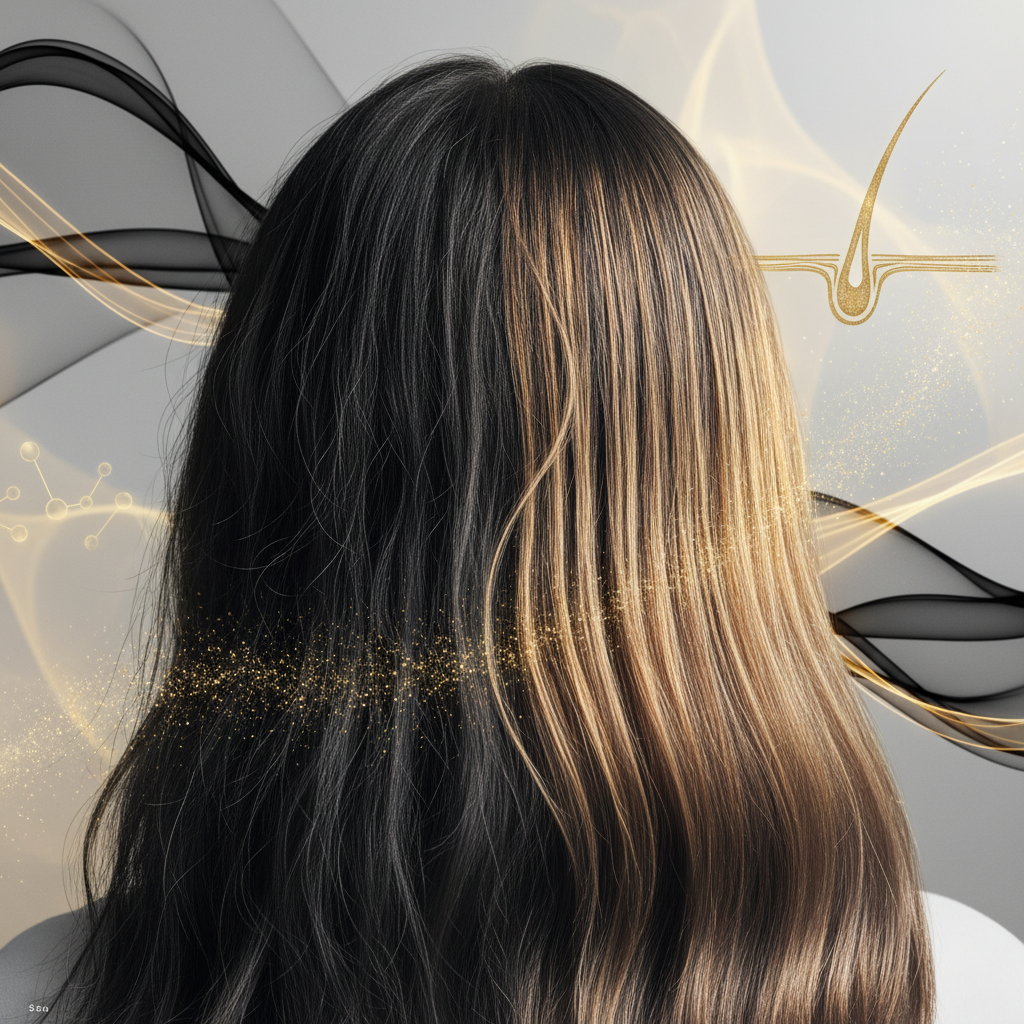
During this process, two permanent disruptions occur:
First, the natural protective lipid coating known as 18-methyleicosanoic acid (18-MEA) is permanently oxidised and removed. This lipid layer gives healthy virgin hair its hydrophobicity, or water-repelling property. Without it, the fibre becomes hydrophilic (water-absorbing), leading to extreme cuticle swelling when wet and severe friction when dry.
Second, the structural disulphide bonds formed by the amino acid cystine are oxidised into cystic acid. This cleavage drastically lowers the hair tensile strength. Research demonstrates that chemically bleached hair can lose up to 30 to 50 percent of its natural dry elasticity and even more when wet. While bond-building cosmetics and hydrolysed proteins can reform ionic interactions or bridge broken networks, they do not permanently restore the virgin cystine structure.
What the evidence does not show
The science does not support claims that topical cosmetics can permanently "cure" chemical damage. No cosmetic shampoo, masque, or salon treatment can fuse a severely split end back together indefinitely. Products marketed as bond builders do cross-link certain chemical groups or bridge weakened keratin sites, but these results slowly wash out or degrade under normal mechanical friction and shampooing.
Furthermore, evidence does not show that natural, heavy kitchen oils such as olive, castor, or raw coconut oil can reconstruct the internal protein cortex of chemically treated hair. While pure coconut oil contains lauric acid, which penetrates the shaft and limits protein loss during washing, it does not re-link severed disulphide bonds or restore missing 18-MEA lipids.
Finally, chemically induced fibre damage should never be conflated with follicular hair loss. Bleach or relaxer burns on the scalp can cause temporary or scarring alopecia, but standard shaft breakage is purely mechanical degradation, not a follicular failure.
The mechanism of chemical processing
Understanding chemical damage requires looking at how standard salon services alter hair architecture:
Alkaline lifting and the cuticle
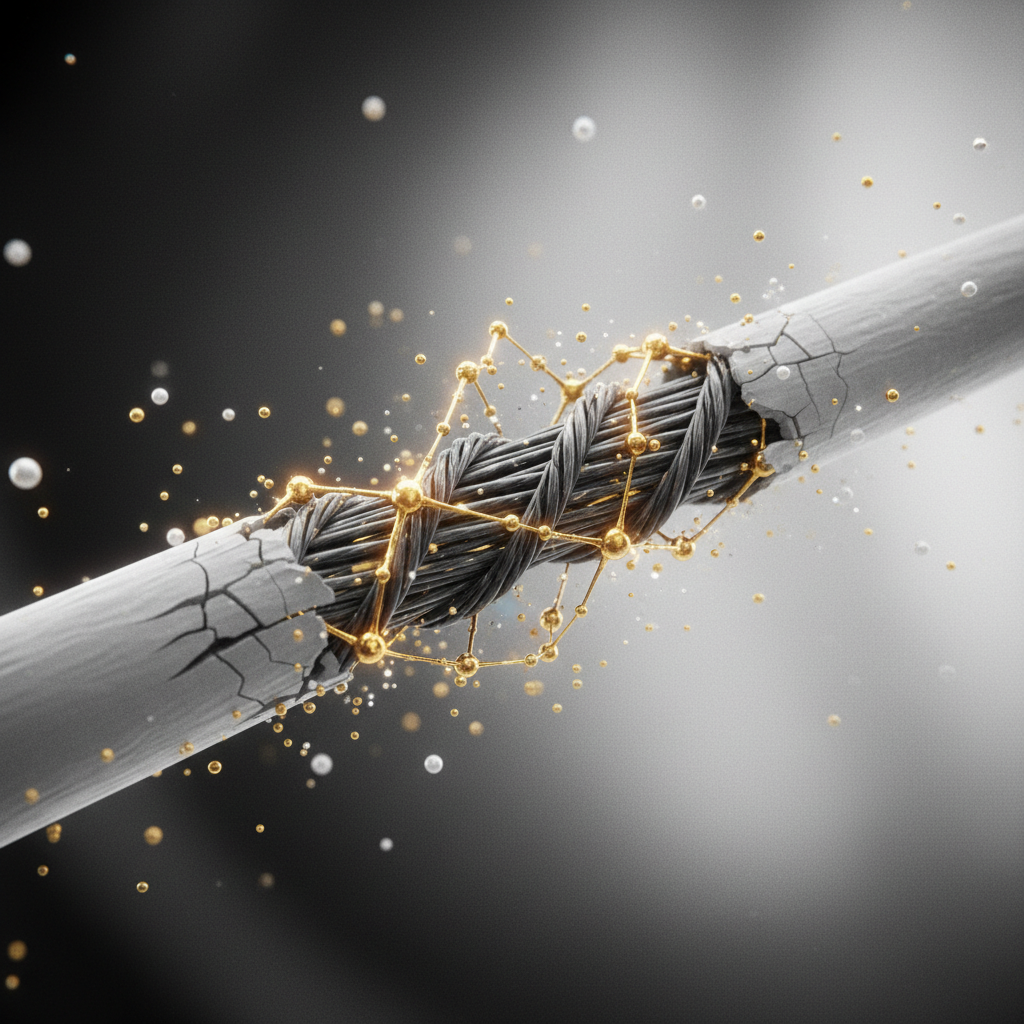
Virgin human hair has an acidic isoelectric point near pH 3.67 and a surface pH around 4.5 to 5.5. High-alkaline formulations like ammonium hydroxide force the cuticles open. When the cuticles lift, internal moisture evaporates rapidly, leaving the inner cortex exposed. Once the treatment is complete, damaged cuticles rarely lie flat again on their own, creating rough surface friction that encourages tangling and snapping.
Oxidation of the cortex
Permanent bleaching relies on hydrogen peroxide and persulphate salts to dissolve melanin granules. In doing so, these oxidising agents accidentally target cystine bonds. Cystine accounts for roughly 15 to 17 percent of the total amino acid content of healthy hair. Converting cystine to cystic acid strips the hair of its cross-linked structural scaffolding, leaving a sponge-like, porous fibre.
Alkaline relaxers and lanthionisation
Chemical relaxers formulated with sodium hydroxide or guanidine hydroxide operate at an extreme pH of 12.0 to 14.0. They dismantle disulphide bonds via lanthionisation, replacing strong cystine bonds with weaker lanthionine bonds. This process completely changes the natural curl pattern, but it permanently lowers the maximum mechanical load the fibre can tolerate before snapping.
Signs of chemically damaged hair
Identifying the specific markers of chemical trauma helps you differentiate between routine dry hair and structural failure:
- High porosity: The hair absorbs water instantly like a sponge, but takes hours to air dry due to compromised cuticle integrity.
- Gummy or stretchy wet texture: When wet, fibres stretch out without snapping back to their original length, eventually turning mushy and breaking.
- Split ends and trichorrhexis nodosa: Formation of tiny nodes along the shaft where the cortex has frayed completely, snapping under minimal tension.
- Excessive dullness and rough texture: The loss of the 18-MEA lipid layer scatters light rather than reflecting it, leading to a matte, lifeless appearance.
- Chronic tangles: Rough, raised cuticle scales lock against each other like velcro, creating severe matting during washing.
Actionable steps for restoring hair integrity
A structured regimen can restore mechanical strength, replenish lost surface slip, and stop progressive breakage.
1. Integrate low-molecular-weight proteins
High-molecular-weight proteins simply sit on the surface, which is helpful for conditioning, but lower-molecular-weight proteins (such as hydrolysed wheat, silk, or keratin peptides under 1,000 Daltons) can penetrate porous cuticle gaps. Apply a protein-rich treatment every two to three weeks to fill internal micro-voids. Avoid using protein without adequate conditioning afterwards, as over-proteinising fragile hair makes it stiff and brittle.
2. Acidify the cuticle layer
Counteract alkaline swelling by using post-wash rinses or leave-in sprays formulated at an acidic pH between 3.5 and 4.5. Acidic formulas help contract the swollen cortex and encourage the cuticle shingles to lie flat. This improves shine, lowers friction, and protects the internal cortex from environmental moisture shifts.
3. Replace lost surface lipids
Because 18-MEA cannot regrow, you must mimic its behaviour using conditioning agents that contain cationic surfactants (such as behentrimonium chloride or cetrimonium chloride) alongside light, penetrating fatty acids. These positively charged molecules adhere naturally to the negatively charged, highly damaged zones of the hair shaft, restoring hydrophobicity and reducing comb force.
4. Adjust washing and detangling habits
Fragile, chemically processed fibres are most vulnerable when saturated with water. Never detangle aggressively straight out of the shower. Apply a high-slip leave-in conditioner first, then gently work through lengths from ends to roots using a wide-tooth comb or flexible wet brush. Limit wash days to two or three times weekly using sulphate-free, low-foaming cleansers.
| Damage factor | Virgin hair state | Chemically damaged hair state | Targeted corrective action |
|---|---|---|---|
| Surface lipid layer | Intact 18-MEA coating; hydrophobic (repels water) | Oxidised and missing; hydrophilic (attracts water) | Use cationic conditioning agents and silicone or plant-based sealants |
| Cuticle orientation | Flat, overlapping, tightly sealed shingles | Raised, broken, or completely eroded edges | Acidic rinses (pH 3.5 to 4.5) to encourage cuticle closure |
| Cortex bonds | High cystine cross-linking; robust elasticity | Severed cystine bonds; high cysteic acid content | Hydrolysed protein treatments and bond-building additives |
| Tensile strength | Snaps only under strong tension; springs back | Snaps easily under light tension; stretches unnaturally | Minimise mechanical traction; reduce heat styling |
| Moisture balance | Natural balance retained within cortex | Rapid water absorption followed by extreme dryness | Film-forming humectants sealed with light emollient oils |
When chemical damage mimics follicular loss
Stylists and dermatologists often see clients who believe their hair is falling out from the root after a chemical treatment, when the real culprit is severe shaft breakage.
Examine the hair fibres that collect in your brush or drain. If the strand has a tiny white bulb on one end, it was shed naturally from the follicle, often triggered by stress, dietary deficiencies, or hormonal fluctuations (telogen effluvium). If the strand has no bulb, has jagged edges, or is shorter than your typical length, it is breakage caused by chemical degradation.
If you experienced intense burning, blistering, or oozing during your salon chemical service, visit a GP or dermatologist immediately. Chemical burns can damage underlying follicles, which does require medical attention to avoid scarring alopecia.
Supportive care with Watermans
When managing hair rendered fragile by chemical processes, scalp support and gentle daily maintenance are critical. Watermans Grow Me Shampoo offers a sulphate-free cleansing base that cleanses without roughly stripping the delicate hair shaft. Formulated with hydrolysed lupin protein, biotin, niacinamide, and rosemary, it supports a balanced, healthy scalp environment while providing gentle slip for brittle strands.
Pairing this with Watermans Condition Me Conditioner supplies hydrolysed vegetable protein and cholesterol to reinforce weakened cuticles, improve surface elasticity, and restore softness to stressed fibres.
Frequently asked questions about repairing chemically damaged hair
Can Olaplex or bond builders permanently fix chemical damage?
No cosmetic bond builder can permanently reverse chemical damage. While these treatments generate artificial cross-links that bridge broken internal bonds to improve tensile strength, the effect is temporary. As you wash and style your hair, those cosmetic links degrade. Continued maintenance and protective styling are necessary to keep the hair stable until healthy hair grows in.
How long does repairing chemically damaged hair usually take?
Repairing chemically damaged hair cosmetically takes four to eight weeks of consistent protein and lipid treatments to reduce breakage significantly. However, true complete renewal only happens as damaged lengths are trimmed away. Hair grows roughly 1 to 1.25 cm per month, meaning growing out a damaged section can take anywhere from six months to two years depending on length.
Can coconut oil reverse bleach damage?
Coconut oil cannot reverse or rebuild bleach damage, but it can limit future mechanical stress. Its high lauric acid content allows it to penetrate the hair shaft, reducing the swelling that happens when porous hair is exposed to water. Use it as a pre-shampoo treatment to soften the fibre, but always follow with balanced proteins and conditioners.
Should I cut off chemically damaged hair?
A full haircut is not always required, but regular micro-trims are vital. Once cuticles fray into split ends, that split continues to travel upwards along the hair shaft like a run in a pair of tights. Trimming half a centimetre to a centimetre every six to eight weeks stops the split from migrating, preserving the healthy length above it.
Can I colour or bleach my hair while repairing it?
Applying further oxidative colour or bleach to already compromised hair will lead to catastrophic breakage. Avoid all permanent colour, bleaching, and chemical straightening while repairing chemically damaged hair. If you want to refresh your colour, opt for non-oxidative direct dyes or semi-permanent glosses that do not require peroxide or ammonia.
Final thoughts on managing chemical damage
Successfully repairing chemically damaged hair comes down to realistic expectations and structural preservation. Hair fibres cannot heal like skin because they lack living cells, which means chemical changes cannot be completely reversed. However, by replenishing lost surface lipids, balancing hydrolysed proteins with rich conditioners, and trimming compromised ends, you can restore manageable movement and stop premature snapping while your new, healthy hair grows out.
Sources and references
- Robbins, C. R. (2012). Chemical and Physical Behavior of Human Hair. Springer Science & Business Media.
- International Journal of Cosmetic Science (2007). "The effect of chemical treatments on the hair cuticle and cortex."
- Cruz, C. F., et al. (2016). "Human hair: A review on its structure, properties, and the effects of cosmetic treatments." International Journal of Trichology.
- Swift, J. A. (1999). "Human hair cuticle: biologically conspired to the owner's advantage." International Journal of Cosmetic Science.
- Ruetsch, S. B., et al. (2001). "Investigation of the effects of cosmetic treatments on hair by atomic force microscopy." Journal of Cosmetic Science.
Find these ingredients in Watermans products
- Niacinamide: you will find this ingredient in our Hair Mask.