Repairing Chemical Hair Damage: Structural Biology and Evidence-Based Care
9 min read ·
Understand the science of repairing chemical hair damage, from rebuilding broken disulphide bonds to restoring lost lipids and preventing severe breakage.
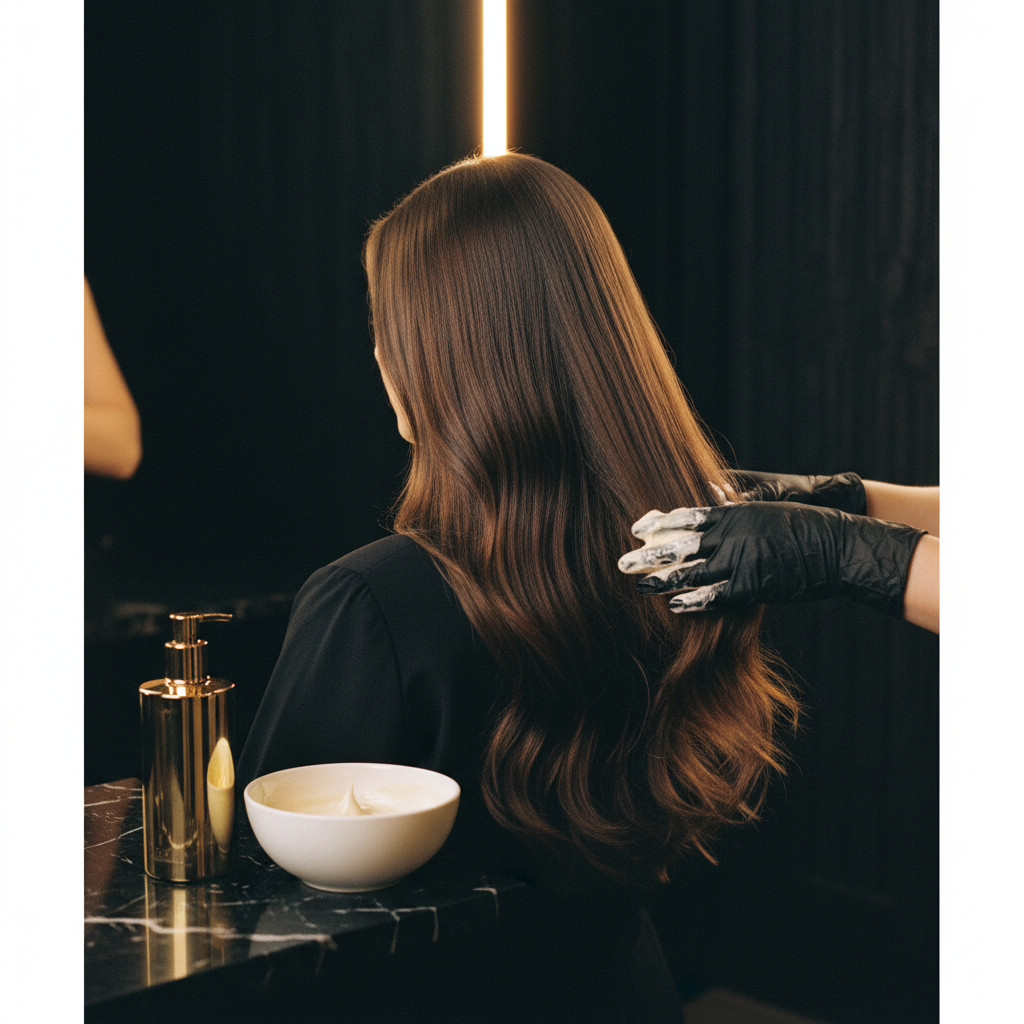
Quick answer: Repairing chemical hair damage requires addressing the structural disruption caused by alkaline processing, bleaching, and thermal re-bonding. Technically, hair fibre cannot biologically heal because it consists of non-living, keratinised tissue. However, cosmetic and structural intervention can dramatically improve fibre integrity, reduce snapping, and restore lipid barriers. Repairing chemical hair damage centres on rebuilding internal disulphide and hydrogen cross-links, replenishing the protective 18-methyl eicosanoic acid (18-MEA) surface layer, and smoothing raised cuticle scales with pH-balanced formulas.
Key takeaways
- Hair is non-living tissue; true biological cellular regeneration does not happen in the fibre shaft.
- Chemical processes like bleaching and permanent relaxing break covalent disulphide bonds and strip the protective lipid layer.
- Bleached and chemically straightened hair has increased porosity and a strong negative electrostatic charge, making it prone to mechanical breakage.
- Bond-building technologies, hydrolysed proteins, and low-pH conditioning agents can reinforce the cortex and seal cuticles temporarily.
- Trimming severely degraded ends is the only permanent solution for split ends and deep longitudinal fibre fractures.
Repairing Chemical Hair Damage: what the evidence shows
The science behind repairing chemical hair damage demonstrates that hair fibre undergoes profound chemical and structural changes during salon processing. Healthy virgin hair has an outer layer called the epicuticle, coated with a covalent monolayer of fatty acids known as 18-methyl eicosanoic acid (18-MEA). This lipid layer makes the fibre naturally hydrophobic, repelling water and protecting the inner cortex.
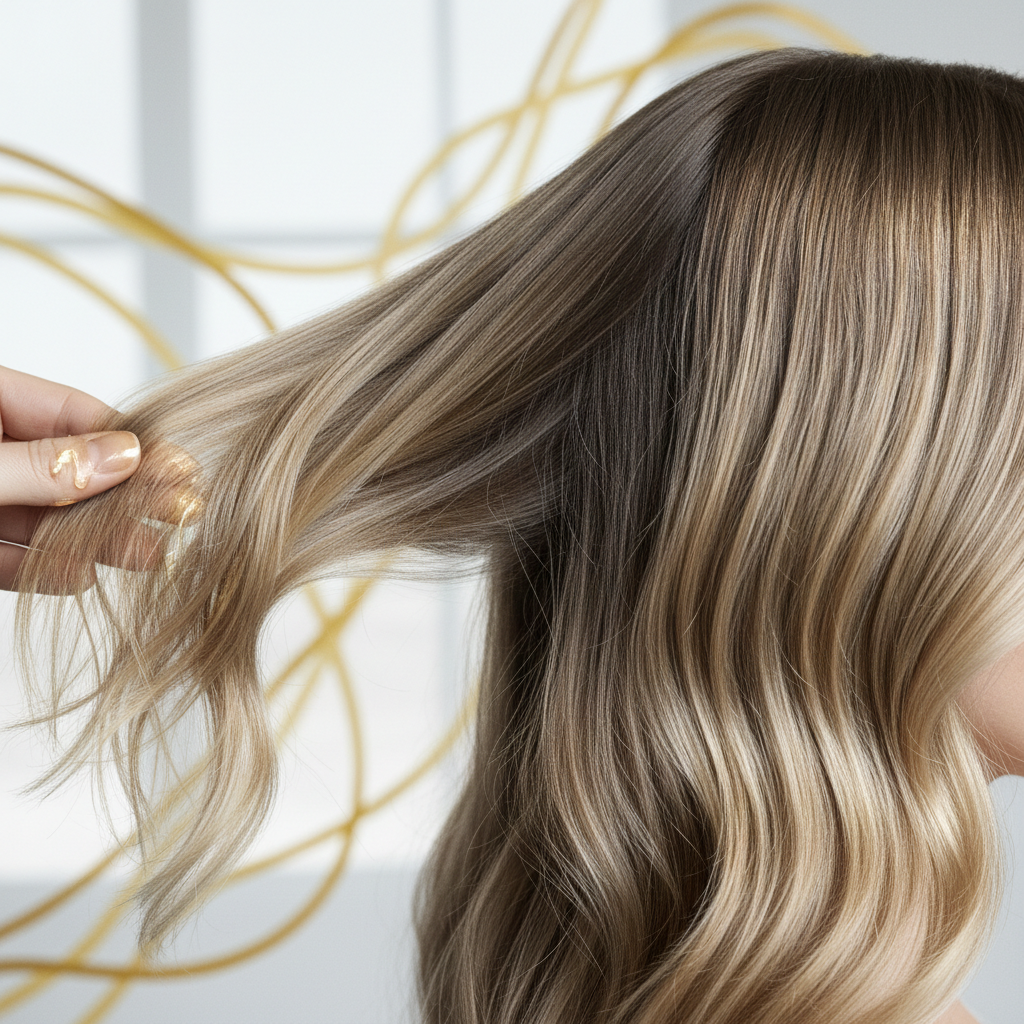
Chemical processing, including permanent colouring, bleaching with hydrogen peroxide, and chemical straightening, operates at a high pH (typically 9.0 to 11.0) to swell the shaft and force the overlapping cuticle scales open. This alkaline environment allows active agents to penetrate the cortex. In doing so, chemical treatments strip the hydrophobic 18-MEA layer completely.
Once the lipid shield is gone, the fibre becomes hydrophilic. It absorbs ambient moisture rapidly, swells unevenly, and loses tensile strength. High-lift bleaching oxidises the disulphide bonds that join keratin protein chains, turning them into weak cysteic acid residues. Research confirms that hair can lose up to 50 percent of its natural cystine content during aggressive bleaching. The hair snaps easily under normal combing tensions because its internal scaffolding has been destabilised.
Repairing chemical hair damage therefore relies on cosmetic restoration. Formulations deposit film-forming biopolymers, cross-linking active compounds, and positively charged (cationic) conditioning agents onto the degraded keratin structure. While these treatments cannot bring dead protein back to life, they physically bridge broken bonds and re-establish moisture resistance, preventing the fibre from snapping off.
| Damage Type | Primary Structural Impact | Reversibility Level | Most Effective Intervention |
|---|---|---|---|
| Bleaching / High Lift | Disulphide bond oxidation; cysteic acid formation | Structural reinforcement only | Dicarboxylic acid bond builders, hydrolysed keratin |
| Chemical Relaxing / Perming | Irreversible cleavage of disulphide linkages | Cortex reinforcement only | Cationic polymers, protein deep conditioners, neutral pH balancing |
| Ammonia / Alkaline Lift | Cuticle scale lifting; 18-MEA lipid depletion | Surface restoration | Low-pH acidic rinses (pH 3.5 to 4.5), synthetic lipid replenishing |
| Extreme Processing | Longitudinal splitting; cortical breakdown | Irreversible | Mechanical trimming of affected lengths |
What the evidence does not show
Controlled research has not found that any topical treatment can permanently weld severed hair fibres back together indefinitely. Marketing claims that promise to "permanently reverse" chemical trauma overstate what cosmetic chemistry can achieve.
Bond-building complexes form artificial cross-links between broken protein chains. These interventions substantially reduce breakage during tensile stress tests in laboratory settings. However, daily washing, UV exposure, and heat styling gradually strip away topical deposits and break down synthetic cross-links. Maintenance must be ongoing.
Evidence also shows that scalp treatments cannot repair the physical hair shaft that has already grown out. Nourishing the scalp follicle supports upcoming new growth, but existing chemical damage along the mid-lengths and ends requires direct fibre-level intervention.
The biological mechanism of chemical degradation
Understanding how chemicals alter hair architecture clarifies why specific repair methods work. Hair consists of three structural zones: the cuticle, the cortex, and the medulla.
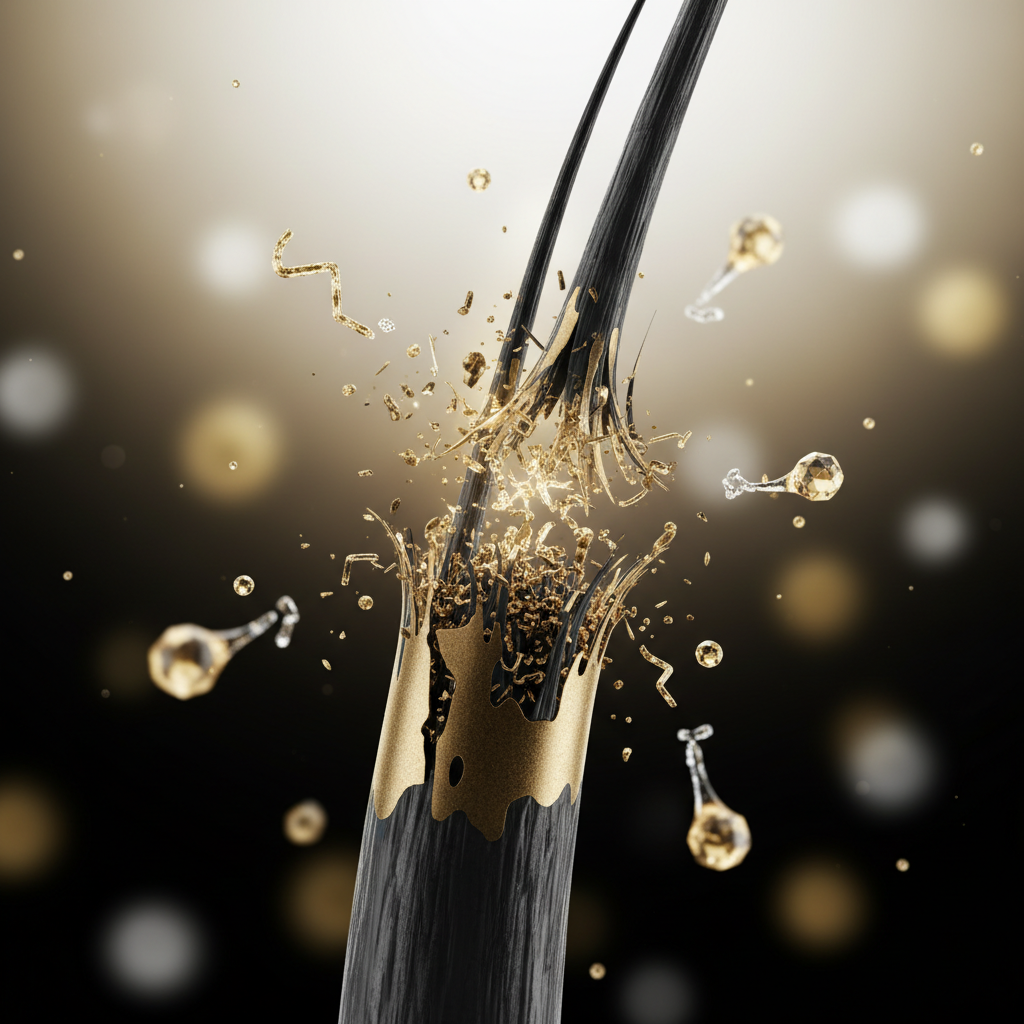
- The Cuticle: Between 6 and 10 layers of overlapping flat scales protect the cortex. Chemical alkalis cause these scales to lift and flare. If processing is prolonged, the scale margins fray, break off, and expose the softer interior.
- The Cortex: Making up roughly 80 to 85 percent of the total fibre mass, the cortex contains parallel keratin intermediate filaments bundled in a matrix rich in sulphur-containing amino acids (cysteine). Disulphide bonds act as rigid structural bridges. Bleach generates free radicals that break these bonds, turning cysteine into cysteic acid. As cysteic acid levels rise, the hair loses elasticity and fails to snap back when stretched.
- The Cell Membrane Complex (CMC): The intercellular cement holding the cuticles together is stripped away by alkaline swelling. This accelerates internal porosity, leading to "spongy" hair that feels mushy when wet and dry-brittle when desiccated.
Signs of chemically damaged hair
Hair that has suffered chemical trauma exhibits distinct clinical and tactile signs:
- High Wet Elasticity Without Recovery: Wet hair stretches abnormally long like chewing gum, then breaks without bouncing back.
- Loss of Hydrophobicity: When submerged or sprayed with water, the fibre absorbs liquid immediately and takes hours to dry naturally.
- Extreme Friction and Tangling: With cuticle scales permanently raised, adjacent strands catch against one another, forming persistent friction knots.
- Dullness and Colour Fading: Cuticles lie unevenly, preventing light from reflecting uniformly off the surface. Artificially introduced colour molecules leach out through porous gaps.
- Trichoptilosis (Split Ends): The protective cuticle is absent, causing the cortex to unravel into frayed filaments at the tips.
Step-by-step strategies to restore fibre integrity
A systematic, evidence-based approach can successfully manage and disguise the damage while preserving hair length.
Acidic pH rebalancing
Chemical processing leaves the hair in an alkaline, swollen state. Virgin hair thrives at an acidic isoelectric point of roughly pH 3.67, while typical scalp skin sits around pH 5.5. Applying acidic conditioners or leave-in rinses formulated between pH 3.5 and 4.5 contracts the keratin fibre, forcing raised cuticles to flatten back down against the cortex. This reduces friction, seals in remaining moisture, and restores shine.
Targeted bond-building therapies
Cosmetic formulations containing bis-aminopropyl diglycol dimaleate, maleic acid, or dicarboxylic acids work inside the cortex. These molecules feature reactive ends that interact with free amine and thiol groups, creating synthetic cross-links across disrupted keratin chains. Use these treatments consistently following any bleach or colour service to keep structural integrity high.
Protein-moisture equilibrium
Severely compromised hair needs both internal structural reinforcement and external softness:
- Hydrolysed Proteins: Low molecular weight proteins (such as hydrolysed wheat, silk, or keratin peptides) penetrate below the cuticle into the cortical matrix to plug micro-fractures.
- Emollients and Lipids: Because natural 18-MEA is absent, replacement conditioning agents like behentrimonium chloride, cetyl alcohol, and plant-derived triglycerides must coat the surface to lower combing friction.
Mechanical and thermal reduction
Minimise physical stress on vulnerable strands. Switch to wide-tooth detangling combs, comb only when hair is saturated with slip-enhancing conditioner, and sleep on low-friction fabrics like satin or silk. Keep hot styling tools under 150 degrees Celsius, and always use a film-forming heat protectant containing silicones or specialised co-polymers.
When breakage is mistaken for other conditions
It is essential to separate chemical hair breakage from systemic hair loss or shedding.
- Hair Breakage: Hair breaks along the shaft. The discarded strands do not have a white bulb on the end, and you will notice varying lengths of snapped pieces on your clothing or floor. This is a cosmetic, structural issue.
- Hair Shedding (Telogen Effluvium): Strands fall from the root with the white keratinised bulb intact, triggered by stress, hormonal fluctuations, nutritional deficiencies, or illness.
- Hair Loss (Alopecia): Follicular changes cause progressive miniaturisation or inflammatory patchiness across the scalp.
Chemicals can occasionally cause hair shedding if strong bleaches or relaxers cause a chemical burn on the scalp. This creates acute contact dermatitis and follicular shock. If you notice scalp burns, open sores, or loss of hair directly from the root, stop all chemical processing and consult a doctor or dermatologist.
Supporting stronger-looking hair with Watermans
When managing hair that has been exposed to intense bleaching, colouring, or chemical perms, taking care of both the scalp and the emerging hair shaft is critical. While damaged ends require structural bond-builders and trims, your scalp benefits from a balanced, nourishing environment to support the appearance of thick, vibrant hair as it grows.
Watermans GrowMe Shampoo and ConditionMe Conditioner offer a gentle, nutrient-rich regimen ideal for post-chemical maintenance. Formulated without harsh sulphates, GrowMe cleanses stressed hair without stripping natural sebum, delivering revitalising ingredients like biotin, rosemary, caffeine, and hydrolysed lupin protein straight to the scalp. Pair it with ConditionMe, which features cholesterol, niacinamide, and caffeine to replenish moisture, soften rough lengths, and reduce mechanical breakage during detangling.
Frequently asked questions about Repairing Chemical Hair Damage
Can split ends be healed without cutting them?
No. Split ends represent a complete fracture of both the cuticle and the cortical structure. While silicone serums, biopolymers, and conditioning agents can temporarily bind split ends together until the next wash, they do not permanently mend the split. Trimming the ends above the split point is the only way to stop the tear from travelling up the shaft.
How long does repairing chemical hair damage take?
The cosmetic appearance of chemically damaged hair can improve immediately after using bond-builders, deep conditioners, and acidic treatments. However, because hair cannot biologically repair itself, true recovery happens over months or years as healthy new hair grows from the roots and the compromised lengths are gradually trimmed away.
Will protein treatments make chemically damaged hair brittle?
Yes, if used incorrectly. Chemical damage creates voids that hydrolysed protein can fill, improving tensile strength. However, overloading porous hair with excessive, high-concentration protein treatments without sufficient moisturising emollients makes the fibre stiff, rigid, and prone to snap. Always balance protein treatments with hydrating, conditioning formulas.
Can olaplex or bond builders prevent all bleach damage?
Bond builders significantly mitigate breakage by linking disrupted protein structures during and after oxidation, but they do not make hair impervious to damage. High-lift bleach always degrades some disulphide bonds and strips the outer lipid layer. Even with premium bond builders, over-processing hair with excessive developer volumes will cause severe fibre degradation.
Should I wash chemically damaged hair every day?
Generally, no. Chemically processed hair lacks its natural water-repellent lipid shield, meaning it absorbs water rapidly and becomes fragile when wet. Frequent wetting and washing can cause repeated hygral fatigue (the swelling and shrinking of the inner cortex), leading to structural weakness. Washing two to three times a week with a gentle, sulphate-free shampoo is typically recommended.
Restoring strength to processed hair
Repairing chemical hair damage requires realistic expectations and consistent, science-backed maintenance. While modern cosmetic chemistry cannot bring non-living hair fibre back to life, it offers powerful tools to protect what remains. By counteracting high porosity with acidic formulas, rebuilding cortex integrity with cross-linking bond builders, and shielding fragile lengths from mechanical friction, you can dramatically reduce snapping and improve elasticity. Support your lengths with patient trims and provide your scalp with a clean, nutrient-dense environment so that your new growth emerges strong and resilient.
Sources and references
- Journal of Cosmetic Science, "Chemical and physical changes in hair caused by bleaching," 2008.
- International Journal of Trichology, "Hair Cosmetics: An Overview," 2015.
- Cosmetic Science and Technology: Theoretical Principles and Applications, "Hair Damage and Repair Mechanisms," Elsevier, 2017.
- British Association of Dermatologists, "Hair Breakage and Cosmetic Damage Guidelines," 2021.
- Journal of the Society of Cosmetic Chemists, "The effect of chemical treatments on the cell membrane complex of human hair," 1993.
Find these ingredients in Watermans products
- Niacinamide: you will find this ingredient in our Hair Mask.