Protein Overload Symptoms: How to Identify and Fix Brittle Hair
9 min read ·
Learn how to spot protein overload symptoms, understand the causes of brittle, straw-like hair, and discover proven steps to restore natural elasticity and shine.
Quick answer: Identifying protein overload symptoms requires looking at how your hair bends, feels, and stretches. Common protein overload symptoms include extreme stiffness, a dry, straw-like texture, dullness, loss of natural curl pattern, and brittle snapping when strands are gently pulled. This cosmetic condition happens when excess hydrolysed proteins coat and stiffen the hair shaft, blocking moisture absorption. It causes mechanical shaft breakage rather than biological follicle shedding, and it resolves once you clarify the hair and restore hydration.
Key takeaways
- Protein overload occurs when topical proteins accumulate on the hair cuticle, causing the fibre to become rigid, brittle, and prone to snapping.
- The telltale signs include a straw-like feel, loss of elasticity, tangled ends, and hair that snaps under light tension without stretching.
- Protein overload causes hair breakage along the shaft, not hair shedding from the follicle or medical hair loss.
- High-porosity and chemically treated hair need protein to patch structural gaps, but low-porosity hair is especially prone to rapid buildup.
- Resolving the issue involves pausing protein-heavy treatments, using a gentle clarifying wash, and focusing on deep conditioning with emollient-rich formulas.
Protein Overload Symptoms: what the evidence shows
Protein overload symptoms develop when the delicate balance between structural protein and internal moisture inside the hair shaft is disrupted. Hair is naturally made of roughly 85 to 90 percent keratin, a fibrous structural protein bonded by disulfide, hydrogen, and salt linkages. Cosmetic products use hydrolysed proteins (such as wheat, silk, keratin, collagen, or soy) to temporarily adhere to the cuticle and patch porous gaps along damaged shafts.
However, repeated use of leave-in treatments, deep conditioners, and styling products packed with hydrolysed proteins creates a rigid outer coating. Instead of reinforcing the hair, this coating hardens the cuticular layer. Cosmetic scientists refer to this as a loss of tensile compliance. The hair fibre loses its natural flexibility, leading to distinct symptoms:
- Straw-like, stiff texture: The hair feels rough, dry, and crunchy, even immediately after conditioning.
- Loss of elasticity: Healthy wet hair can stretch up to 30 percent of its resting length and return without breaking. Hair displaying protein overload barely stretches at all before snapping cleanly.
- Sudden brittleness and snapping: You notice short pieces of broken hair on your shoulders, clothes, or sink after gentle brushing.
- Dull, matte appearance: Excess protein deposits form an irregular surface film that scatters light rather than reflecting it, robbing the hair of natural shine.
- Tangled, velcro-like ends: Cuticle scales become propped open or unevenly coated, causing individual strands to snag against each other.
- Disrupted curl pattern: In wavy, curly, and coily hair textures, strands become stringy, limp, or puff out into frizzy clumps that refuse to hold definition.
What the evidence does not show
There is a common misconception that protein overload is a medical disorder or a scalp condition. It is not. Protein treatments applied to the hair fibre do not penetrate into the living follicle beneath the scalp, nor do they alter the hair growth cycle.
Protein overload does not cause alopecia, telogen effluvium, or hormonal thinning. If you notice hairs falling out with the small white bulb still attached at the root, that is biological shedding, not protein-induced breakage. Similarly, dietary protein intake from your meals does not cause hair fibre stiffness. Dietary amino acids are metabolised internally to build healthy keratin in newly emerging hair, whereas protein overload is strictly an external, cosmetic problem caused by topical hair products.
The mechanism: why hair becomes stiff and brittle
To understand why excess protein makes hair snap, you have to look at the mechanical structure of the hair shaft. Hair consists of three layers: the outer protective cuticle, the thick middle cortex containing keratin filaments, and the central medulla.
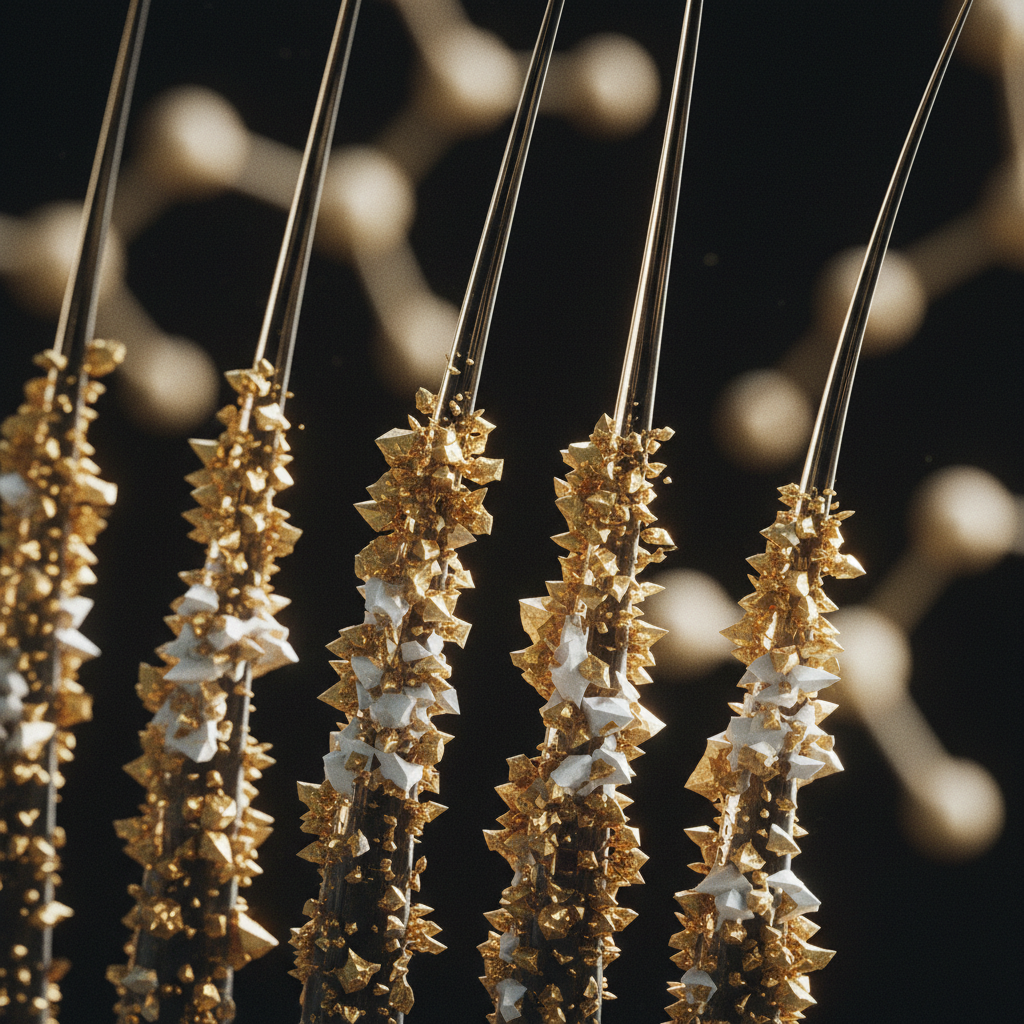
Hydrolysed proteins have low molecular weights, typically ranging between 500 and 10,000 Daltons. Smaller proteins penetrate the outer cortex slightly, while larger proteins deposit along the cuticle surface to form a film. Under normal conditions, these proteins act as temporary scaffolding, filling microscopic tears caused by heat styling, UV exposure, or chemical colouring.
Problems arise when these proteins accumulate without adequate plasticisers (water and conditioning lipids). Water molecules inside the cortex act as natural plasticisers, slipping between keratin chains to let them slide smoothly against one another when bent or stretched. When topical protein films build up excessively, they create an impermeable, rigid shield. This shell prevents ambient moisture and conditioning agents from entering the cortex. Without internal hydration to lubricate the keratin chains, the hair fibre behaves like dry pasta: perfectly straight and firm under static conditions, but instantly shattering when subjected to bending or tensile force.
Protein overload vs moisture overload
Telling protein overload apart from moisture overload (often called hygral fatigue) can be tricky because both conditions lead to dull, misbehaving hair. However, their physical responses to tension are polar opposites.
| Feature | Protein Overload | Moisture Overload (Hygral Fatigue) |
|---|---|---|
| Feel / Texture | Rough, stiff, straw-like, dry | Mushy, limp, excessively soft, gummy when wet |
| Wet Stretch Test | Snaps immediately with little to no stretch | Stretches far past normal length, does not bounce back |
| Breakage Pattern | Clean, brittle snap along mid-lengths and ends | Stretches until it shreds or tears apart |
| Curl Definition | Stringy, stiff, frizzy, fails to clump | Droopy, lifeless, elongated, cannot hold a curl |
| Primary Cause | Buildup of hydrolysed proteins or amino acids | Chronic over-conditioning and prolonged water exposure |
| Immediate Solution | Clarifying shampoo followed by emollient moisture | Gentle protein treatment or cut down conditioning time |
What you can do to fix it
Reversing protein overload is straightforward once you eliminate the source of excess protein and reintroduce moisture.
- Conduct a simple stretch test: Take a single wet strand of shed hair between your fingers and gently pull both ends apart. If it snaps immediately with zero give, protein buildup is the primary issue.
- Wash with a clarifying shampoo: Use a chelating or clarifying shampoo to strip away the stubborn film of hydrolysed protein, silicones, and polymers from the cuticle. Lather thoroughly and rinse with warm water to help lift the cuticle scales slightly.
- Audit your current product labels: Check your shampoos, conditioners, leave-ins, and styling creams. Look for ingredients such as hydrolysed keratin, hydrolysed wheat protein, hydrolysed silk, amino acids, hydrolysed soy protein, or collagen. Set protein-containing products aside for the next three to four weeks.
- Apply a protein-free [deep conditioner](https://watermanshair.com/products/masque-me-luxurious-hair-mask): Look for masks that prioritise humectants (glycerin, aloe vera, panthenol) and nourishing emollients (shea butter, argan oil, jojoba oil, cetearyl alcohol). Leave the mask on for 15 to 20 minutes under a shower cap, using gentle ambient heat to encourage absorption.
- Seal with lightweight oils: After rinsing, apply a light, protein-free leave-in conditioner followed by a few drops of pure oil to lock water into the cortex.
- Reintroduce protein slowly: Once your hair feels soft, pliable, and regains its bounce, you can reintroduce protein treatments on a balanced schedule (such as once every four to six weeks for colour-treated hair).
When the cause may be something else
If your hair remains fragile and snaps easily despite weeks of clarifying and deep conditioning, the culprit may not be protein overload:
- Severe chemical damage: Bleaching and perming break the internal disulfide bonds of the hair. Once these structural bonds are permanently destroyed, the hair snaps regardless of its protein-moisture balance.
- Heat degradation: Regular use of flat irons or curling wands at temperatures above 185 degrees Celsius melts the natural keratin inside the cortex and cracks the cuticle, causing mechanical brittleness that mimics protein buildup.
- Hard water mineral buildup: Calcium and magnesium ions from hard domestic water bind to hair fibres, creating a stiff, rough coating that prevents moisture absorption, mirroring protein stiffness almost identically.
- True follicular shedding: If hair is falling out in large quantities from the scalp rather than snapping along the shaft, check for biological triggers like iron deficiency, thyroid dysfunction, extreme stress, or hormonal changes.
Caring for your hair with Watermans
When managing hair prone to brittleness and breakage, choosing balanced haircare formulations is essential. Products that support scalp health and fibre integrity without bombarding the cuticle with heavy, continuous protein coatings help keep strands resilient. Watermans focuses on balanced scalp and fibre care designed to encourage optimal hair vitality, promoting thicker-looking, stronger-feeling hair while safeguarding delicate strands from unnecessary mechanical stress.
Frequently asked questions about Protein Overload Symptoms
How long does it take to reverse protein overload symptoms?
In most cases, protein overload symptoms improve within two to four weeks. Using a clarifying shampoo once or twice strips away the surface layer of hydrolysed proteins. Following this with weekly, protein-free deep moisturising treatments restores internal flexibility, eliminating the straw-like crunch relatively quickly.
Can low-porosity hair experience protein overload symptoms faster?
Yes. Low-porosity hair features tightly bound, overlapping cuticle scales that resist product penetration. When you apply hydrolysed proteins to low-porosity hair, the proteins cannot easily enter the cortex. Instead, they sit on the exterior surface, forming a stiff, brittle shell much faster than they would on porous hair.
Does protein overload cause hair loss at the root?
No. Protein overload symptoms are entirely cosmetic and mechanical, affecting only the exposed hair shaft. It leads to strand breakage along the mid-lengths and ends. It does not damage the hair follicle, affect follicular anchor points, or cause biological hair loss or shedding from the scalp.
How do I know if my hair product contains protein?
Read the ingredients list on the bottle. Common protein ingredients include hydrolysed keratin, hydrolysed collagen, hydrolysed wheat protein, hydrolysed silk, hydrolysed soy protein, oat protein, and isolated amino acids like arginine, glycine, or cysteine.
Balancing hair strength and elasticity
Recognising protein overload symptoms early is the best way to protect your hair from preventable mechanical breakage. Healthy hair demands a dynamic equilibrium: protein provides the structural tensile strength that stops the fibre from stretching out of shape, while water and fatty acids provide the flexibility needed to bend without snapping. If your strands feel crunchy, dull, and snap at the slightest pull, step back from protein-heavy formulas, clarify thoroughly, and bathe your hair in pure moisture until its natural elasticity returns.
Sources and references
- Robbins, C. R. (2012). Chemical and Physical Behavior of Human Hair (5th ed.). Springer-Verlag.
- Davis-Sivasothy, A. (2011). The Science of Black Hair: A Comprehensive Guide to Textured Hair Care. S逸 Press.
- Swift, J. A. (1999). Human hair cuticles: the mechanical property and shape changes induced by water. Journal of Cosmetic Science, 50(1), 23 to 34.
- Federal Institute for Risk Assessment (BfR). (2018). Safety evaluation of cosmetic ingredients: Hydrolysed proteins.
- International Journal of Cosmetic Science. (2007). Investigation of the penetration of peptides and hydrolysed proteins into human hair fibres.
Find these ingredients in Watermans products
- Argan Oil: you will find this ingredient in our Hair Growth Shampoo.
- Panthenol (Provitamin B5): you will find this ingredient in our Heat Protection Spray.
- Aloe Vera: you will find this ingredient in our Curly Hair Conditioner.