Protein Moisture Balance in Textured Hair: The Complete Evidence-Based Guide
10 min read ·
Master the protein moisture balance in textured hair. Understand the science of hair elasticity, identify protein or moisture overload, and prevent fibre breakage.
Quick answer: Protein moisture balance in textured hair is the functional equilibrium between internal structural proteins (keratin) and water content retained within the hair cortex. Textured hair (types 3 and 4) possesses natural elliptical cross-sections and curl patterns that create vulnerable bending points along the shaft, making it uniquely susceptible to mechanical snapping and dehydration. When these two elements fall out of alignment, the fibre either becomes rigid and brittle or weak and gummy, leading to breakage rather than true follicular hair loss.
Key takeaways
- Hair strength relies on polypeptide keratin chains, while elasticity and softness depend on water molecules plasticising those protein networks.
- Textured hair has naturally raised cuticle edges at every curve, leading to faster moisture loss and higher friction compared to straight hair.
- Protein overload causes stiff, brittle fibres that snap when stretched; moisture overload (hygral fatigue) leaves strands mushy, overly stretchy, and lacking curl definition.
- Water is the only true moisturiser; conditioning oils and butters act primarily as occlusives and emollients to seal that hydration inside.
- Resolving an imbalance requires diagnostic stretch tests, targeted clarifying washes, and matching topical treatments to hair porosity.
Protein moisture balance in textured hair: what the evidence shows
The mechanical behaviour of textured hair depends on two core components: cortical keratin proteins and absorbed water. Cortical cells make up roughly 85 to 90 percent of the hair shaft. They contain fibrous proteins held together by robust disulphide bonds, ionic salt bridges, and weak hydrogen bonds. While disulphide bonds provide tensile strength, hydrogen bonds interact constantly with water molecules.
Water acts as an internal plasticiser. In a healthy fibre, water molecules slip between the keratin chains, allowing the hydrogen bonds to break and reform as the hair bends, stretches, and springs back. Cosmetic science demonstrates that healthy human hair can absorb up to 30 percent of its dry weight in water under ambient conditions, and up to 35 to 40 percent in high relative humidity.
Textured hair displays an elliptical, asymmetric cross-section rather than a round one. Along the twists of curls, coils, and zig-zag bends, cuticle scales do not lie completely flat. This natural geometry leaves textured hair prone to rapid moisture evaporation and mechanical abrasion. Protein moisture balance in textured hair is therefore not a static ratio, but an active, ongoing cycle of maintaining structural integrity without sacrificing flexibility.
What the evidence does not show
The haircare community frequently misunderstands what protein and moisture treatments can realistically accomplish. Cosmetic science highlights clear boundaries:
- Topical proteins do not permanently "rebuild" broken disulphide bonds. Hydrolysed wheat, silk, keratin, or vegetable proteins deposit onto the hair shaft or temporarily penetrate into micro-gaps within the cuticle and outer cortex. They wash away over subsequent cleanses. They do not permanently reconstruct chemical damage caused by relaxers, bleaches, or extreme heat.
- Oils and butters do not hydrate the hair. Lipid-rich substances like shea butter, coconut oil, or castor oil contain no water. They lubricate the cuticle and slow water evaporation, but applying raw oils to dry, unwashed hair traps dryness rather than curing it.
- Imbalance does not cause follicular shedding. Protein overload or hygral fatigue weakens the hair shaft, resulting in breakage. This is structural fibre failure. It does not alter the biological hair growth cycle in the follicle (anagen, catagen, telogen) and will not induce telogen effluvium or pattern hair loss.
The biological and chemical mechanisms
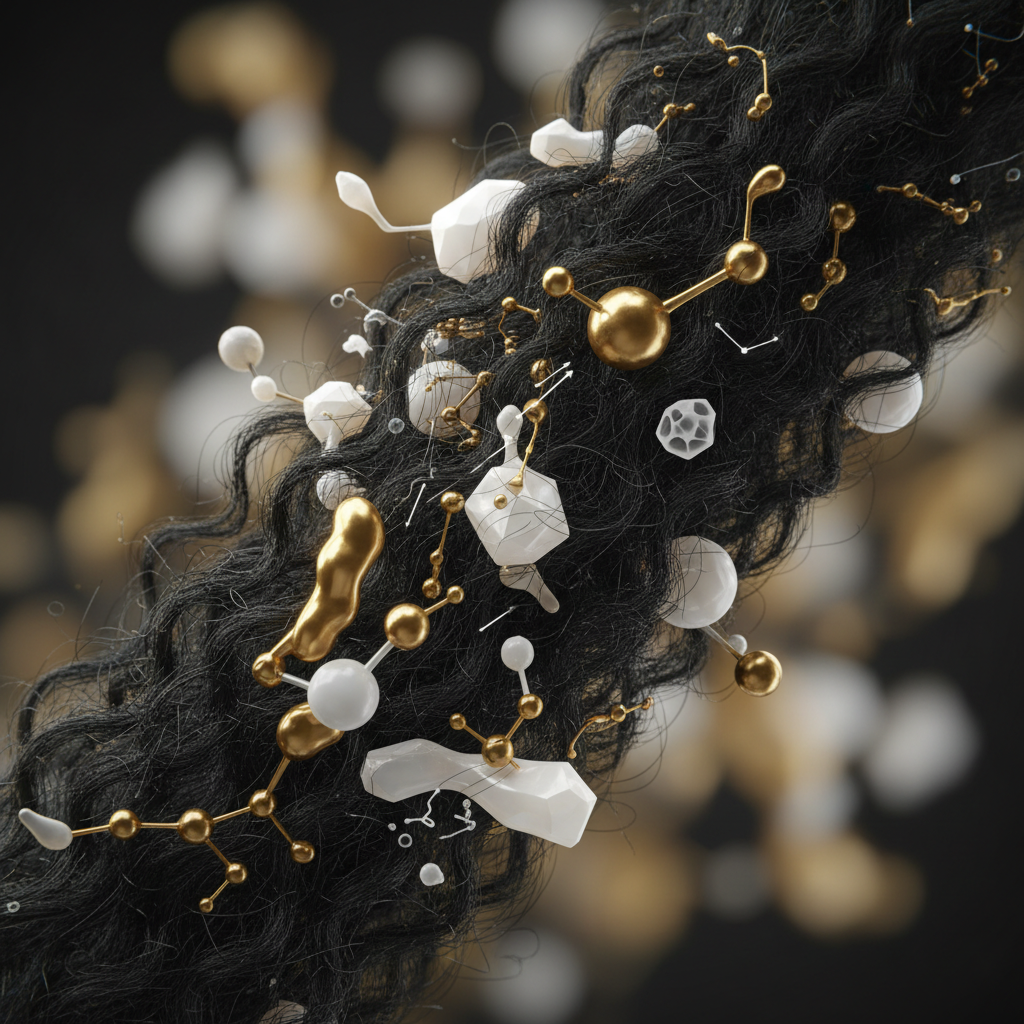
To maintain balance, one must understand how protein and water interact at the molecular level inside the hair fibre.
 [ Intact Cuticle Barrier ]
 ---------------------------------
 [ The Hair Cortex ]
 Keratin Chains + Disulphide Bonds
 (Tensile Strength)
 ↕
 Free Water Molecules
 (Flexibility & Plasticity)
 ---------------------------------
 [ Lipids / Cell Membrane Complex ]
When you wet the hair, water molecules enter the cortex and break temporary hydrogen bonds between keratin microfibrils. This allows the strand to stretch. As the hair dries, water leaves, and the hydrogen bonds reform into the hair's natural coil or curl pattern.
If textured hair lacks sufficient water, the keratin chains remain rigid and tightly bound. Any sudden mechanical tension (such as combing, brushing, or tight styling) snaps the strand at its thinnest elliptical curve. Conversely, if the hair takes on excessive water repeatedly without an adequate lipid barrier, or if the cuticle is damaged, the cortex swells and deswells excessively. This phenomenon, known as hygral fatigue, weakens the cell membrane complex, leading to mushy fibres that stretch excessively and fail to snap back into their curl pattern.
Topical hydrolysed proteins assist this dynamic by binding to negatively charged damaged sites along the keratin surface via electrostatic attraction. Their small molecular weights allow them to patch porosity gaps, increasing the fibre's tensile strength and reducing water uptake to manageable levels.
Protein overload versus moisture overload
Identifying which state your hair is experiencing is critical before reaching for treatments. The following table highlights the distinct differences between these two extremes.
| Feature | Protein Overload | Moisture Overload (Hygral Fatigue) | Balanced Textured Hair |
|---|---|---|---|
| Fibre texture | Straw-like, stiff, coarse, and rough to the touch | Limp, mushy, spongy, or gummy when wet | Smooth, soft, pliable, and well-lubricated |
| Elasticity | Low elasticity; snaps immediately with minimal stretch | Excessive elasticity; stretches far past its length without bouncing back | Stretches roughly 20 to 30 percent when wet and springs back to shape |
| Curl definition | Frizzy, uncooperative, dull, resists clumping | Drooping curls, loss of curl memory, flat roots | Springy, defined curls or coils with clear clump patterns |
| Primary cause | Excessive keratin or amino acid masks, leave-ins, and stylers | Prolonged wetness, lack of protein, over-conditioning overnight | Routine balancing of cleansers, light hydrolysed proteins, and humectants |
| Breakage pattern | Clean, brittle snaps with short broken pieces | Shredding, fraying, tearing under gentle tension | Minimal breakage during routine detangling |
Signs of an imbalance and the wet stretch test
The most reliable diagnostic tool for assessing protein moisture balance in textured hair at home or in the salon is the wet stretch test:
- Select a shed hair strand or gently isolate a single wet strand after cleansing.
- Hold the strand firmly between the thumb and forefinger of both hands, leaving roughly two inches of hair between them.
- Gently pull the hair apart to apply tension.
- Observe the reaction:
- If the strand snaps instantly with zero give, the hair is suffering from a lack of moisture or severe protein overload.
- If the strand stretches endlessly like a rubber band, feels mushy, and snaps without returning to its resting length, it lacks structural protein (moisture overload).
- If the strand stretches smoothly by roughly one-fifth to one-third of its length and returns to its curl pattern upon release, your balance is optimal.
Corrective actions: restoring balance
Correcting an imbalance requires deliberate adjustments to your washing and conditioning routine.
How to correct protein overload
- Clarify thoroughly: Use an anionic or chelating shampoo containing sodium laureth sulphate or olefin sulfonate to strip away residual protein deposits coating the cuticle.
- Halt protein ingredients: Inspect ingredient labels on shampoos, conditioners, and styling creams. Temporarily eliminate products containing hydrolysed wheat protein, hydrolysed keratin, amino acids, hydrolysed silk, or soy protein.
- Introduce deep conditioning with heat: Apply a protein-free [deep conditioner](https://watermanshair.com/products/masque-me-luxurious-hair-mask) containing water, fatty alcohols (such as cetyl alcohol or cetearyl alcohol), and humectants (glycerin, aloe vera, panthenol). Use a thermal heat cap or warm steamer for 15 to 20 minutes to open the cuticle and facilitate water uptake.
- Emollient sealing: Follow up with light oils or butters to seal in the newly introduced hydration without weighing down fine coils.
How to correct moisture overload
- Incorporate hydrolysed proteins: Apply a dedicated protein treatment. Look for formulations containing hydrolysed collagen, vegetable protein, or keratin within the first six ingredients.
- Reduce soaking time: Avoid deep conditioning overnight or leaving wet hair wrapped in damp towels. Aim to wash, condition, and dry your hair in a reasonable timeframe.
- Use indirect heat to set styles: Use a diffuser or hooded dryer to dry your hair to roughly 80 to 90 percent dry promptly, rather than allowing thick afro-textured hair to remain damp for 24 to 48 hours.
- Strengthen the cuticle: Use mild acidic rinses (pH 4.5 to 5.5) or protein-enriched leave-in conditioners to encourage the cuticle layer to lay flat, preventing uncontrolled water swelling.
When the cause is something else
Not all breakage or texture changes stem from a protein-moisture discrepancy. Other environmental, mechanical, and systemic factors can mimic these symptoms:
- Hard water mineral buildup: High levels of calcium and magnesium carbonate (over 180 mg/L) bind to hair proteins, leaving strands feeling stiff, rough, and unmanageable. This mimics protein overload even when no protein products are used. A chelating shampoo is required to remove these metallic ions.
- Heat damage: Temperatures exceeding 220°C break down the alpha-keratin structure within the cortex into amorphous beta-keratin, permanently destroying curl patterns. Protein treatments cannot reverse true thermal denaturation.
- Internal deficiencies and follicular shedding: If hair is falling out from the root (characterised by a small white bulb at the end of the strand) in quantities exceeding 100 hairs daily, this indicates shedding rather than breakage. Consult an NHS GP or a trichologist to investigate iron levels (ferritin), thyroid function, or vitamin D status.
When to seek professional advice
Stylists and trichologists offer diagnostic tools beyond home observations. Seek professional guidance if:
- Your hair exhibits sudden, intense breakage along the shaft despite eliminating heat and chemical treatments.
- You notice bald patches, scalp erythema (redness), scaling, or burning sensations.
- Stretch testing yields contradictory results, where hair feels both greasy and brittle simultaneously (frequently a sign of heavy silicone buildup combined with chemical damage).
- You are planning a chemical service (such as permanent colour or a relaxer); a professional must verify your hair's structural integrity before applying altering agents.
Frequently asked questions about Protein Moisture Balance in Textured Hair
What is the ideal protein moisture balance in textured hair?
The ideal balance occurs when textured hair maintains sufficient tensile strength from internal keratin to resist snapping, alongside adequate water content to remain elastic and soft. In this state, curls clump easily, bounce back when pulled, and show minimal breakage during gentle manipulation and detangling.
How often should textured hair receive a protein treatment?
Frequency depends on porosity and chemical history. High-porosity, colour-treated, or relaxed hair benefits from light hydrolysed protein treatments every 2 to 4 weeks. Undamaged, low-porosity textured hair rarely requires heavy protein treatments; a mild protein-containing conditioner every 6 to 8 weeks is usually sufficient to maintain tensile strength without causing stiffness.
Can coconut oil cause protein overload in textured hair?
Coconut oil does not contain protein, but its high concentration of lauric acid allows it to penetrate deeply into the cortex, binding to internal keratin structures and preventing water loss. In fine or low-porosity hair, this rapid reduction in water absorption can mimic the symptoms of protein overload, leaving strands feeling uncharacteristically hard, stiff, and dry.
Does hard water disrupt the protein moisture balance?
Yes. Hard water minerals, specifically calcium and magnesium, bind electrostatically to the hair surface and cuticle edges. This creates an impermeable, abrasive coating that prevents water and conditioning humectants from penetrating the cortex. The result is dry, brittle hair that mimics protein overload. A chelating wash with EDTA resolves this mineral buildup.
Why does my hair feel mushy when wet?
Hair feels mushy or gummy when wet because it has taken on excessive water and lacks sufficient protein structure to maintain its form. This state, often called hygral fatigue, occurs when the cortex swells uncontrollably, weakening internal hydrogen bonds. A topical treatment with hydrolysed proteins will rebuild tensile firmness and restore elastic bounce.
Maintaining lasting balance
Understanding the protein moisture balance in textured hair removes the guesswork from curl and coil maintenance. Hair is a complex, non-living biomaterial that responds directly to the laws of physical chemistry. By treating moisture as water retained within the cortex and protein as the reinforcing scaffolding that prevents physical collapse, you can easily diagnose problems before they lead to severe breakage. Pay close attention to how your hair behaves when wet, adjust your products according to current conditions, and maintain a thoughtful, consistent routine.
Sources and references
- Robbins, C. R. (2012). Chemical and Physical Behavior of Human Hair. 5th Edition. Springer-Verlag New York.
- Dawber, R. (1996). Hair: Its structure and response to cosmetic preparations. Clinics in Dermatology, 14(1), 105-112.
- Cruz, C. F., et al. (2016). Human hair characteristics and methods to investigate them: An overview. International Journal of Cosmetic Science, 38(5), 443-460.
- Velasco, M. V. R., et al. (2009). Hair fibre characteristics and methods to evaluate hair physical and mechanical properties. Brazilian Journal of Pharmaceutical Sciences, 45(1), 153-162.
- Evans, A. O., & Wickett, R. R. (2012). An examination of the effect of moisture on the mechanical properties of human hair. Journal of Cosmetic Science, 63(6), 387-396.
Find these ingredients in Watermans products
- Vitamin D: you will find this ingredient in our Hair Vitamins.
- Castor Oil: you will find this ingredient in our Camellia & Black Castor Hair & Body Oil.
- Panthenol (Provitamin B5): you will find this ingredient in our Heat Protection Spray.
- Aloe Vera: you will find this ingredient in our Curly Hair Conditioner.