Protective Hairstyles and Scalp Tension: Evidence, Risks, and Safe Styling
9 min read ·
Learn how Protective Hairstyles and Scalp Tension impact hair follicles, how to spot tension folliculitis early, and practical ways to prevent traction alopecia.

Quick answer: Understanding the relationship between Protective Hairstyles and Scalp Tension is vital for preventing long-term mechanical follicle damage. Protective styles tuck away fragile hair ends to minimise manipulation and weather exposure. However, when braiders install extensions too tightly or leave heavy styles in for months, excessive mechanical pull damages the root sheath. This leads to folliculitis and traction alopecia. A protective style should never cause pain, bumps, or persistent tenderness; persistent pulling completely counteracts the intended hair-saving benefits.
Key takeaways
- Protective styling shields fragile fibre ends from mechanical friction, but excessive tension turns a protective measure into a cause of hair damage.
- Scalp pain, stinging during installation, pimples, and redness are signs of acute traction, not normal parts of the styling process.
- Prolonged mechanical strain can cause traction alopecia, a form of hair loss that begins as reversible thinning around the margins but can become permanent scarring if ignored.
- Braids, twists, and locs should feel comfortable immediately; you should not need pain relief tablets or hot water dips to tolerate the tension.
- Limiting installation wear time to 6 to 8 weeks and allowing the scalp several weeks of rest between installs preserves follicular anchoring.
Protective Hairstyles and Scalp Tension: what the evidence shows
Clinical dermatology categorises traction alopecia as a preventable mechanical form of hair loss. Studies published in the British Journal of Dermatology and the Journal of the American Academy of Dermatology consistently identify tight braiding, heavy dreadlocks, weaves, and cornrows as major contributors to marginal and non-marginal traction alopecia.
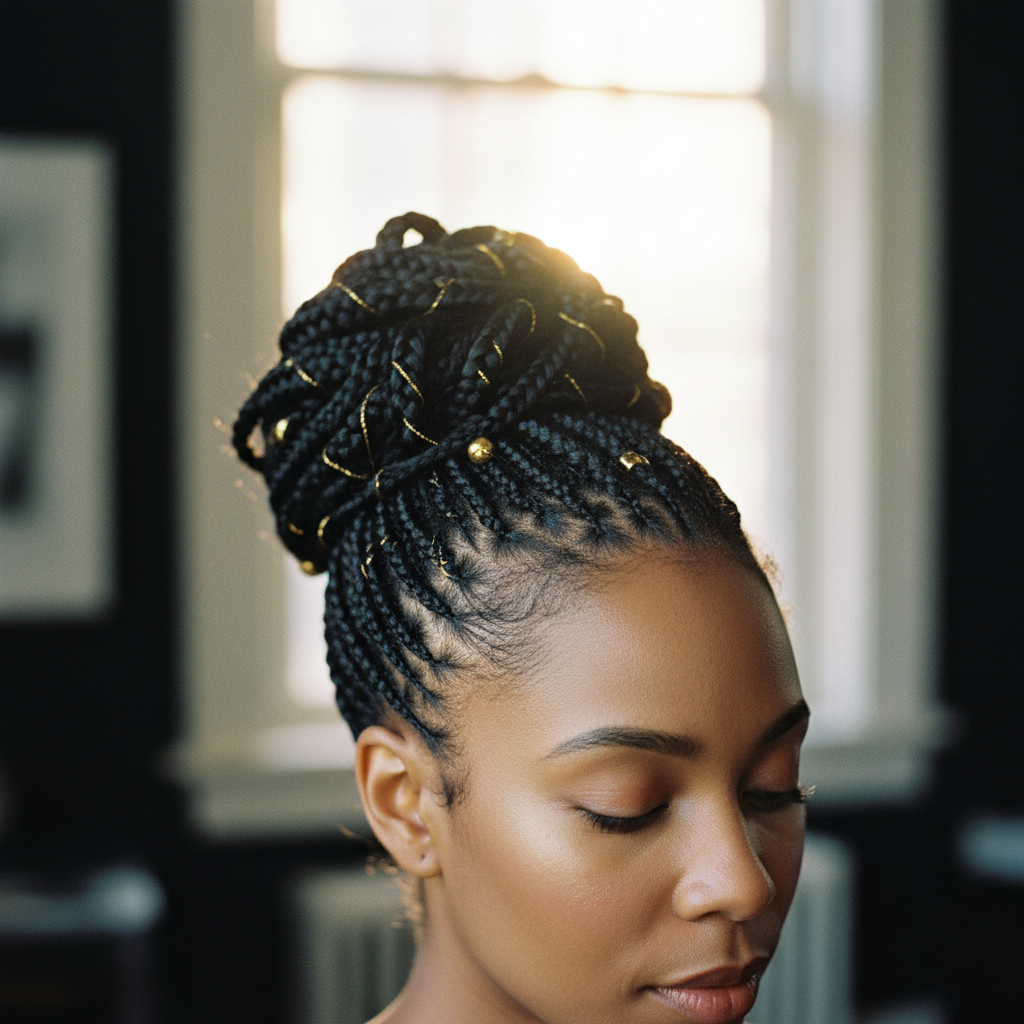
The root issue lies in the threshold of mechanical force that human hair follicles can endure. When styles exert continuous, low-grade pulling or sudden, acute tightness, the tension transmits straight to the dermal papilla and outer root sheath. Dermatologists observe that the risk multiplies when styles combine tight gripping at the root with heavy artificial extensions, or when applied to chemically relaxed hair, which already has reduced tensile strength.
Evidence confirms that tension damage develops in distinct stages. Early intervention reverses the process completely. If the pulling continues over years, the chronic perifollicular inflammation destroys the stem cell reservoir in the follicle bulge. This replaces functioning follicles with fibrous scar tissue, resulting in permanent, irreversible bald patches.
The mechanical biological process behind tension damage
The scalp is a vascular, highly innervated tissue supporting roughly 100,000 hair follicles. Hair fibre can withstand substantial axial strain, but the anchoring mechanism within the scalp tissue is far more delicate.
Excessive Braiding Tension
 │
 ▼
Mechanical Pull on Outer Root Sheath
 │
 ▼
Perifollicular Inflammation & Ischaemia (Pain / Bumps)
 │
 ▼
Early Stage: Premature Catagen Induction (Reversible Shedding)
 │
 ▼
Chronic Stage: Fibrotic Scarring of Follicular Bulge (Permanent Alopecia)
When an installation pulls the hair shaft taut:
- Mechanical Distension: The hair follicle gets pulled upward within its epidermal sleeve. This strains the attachment between the internal root sheath and the hair fibre.
- Localised Ischaemia and Nerve Compression: Tight tension pinches local microcapillaries, reducing blood flow to the dermal papilla. It also irritates sensory nerve endings, which generates the familiar throbbing sensation.
- Tension Folliculitis: Within 24 to 72 hours, small sterile pustules or erythema (redness) develop at the follicular opening. This inflammatory flare occurs because mechanical stress breaches the follicular seal, letting opportunistic skin microbes like Staphylococcus epidermidis provoke an inflammatory response.
- Premature Catagen Transition: To protect itself from physical avulsion (being pulled out entirely), the injured follicle aborts its active anagen (growth) phase and slips into catagen (regression), shedding the hair prematurely.
- Cicatricial Destruction: If the mechanical pulling never stops, persistent inflammation attracts lymphocytes and fibroblasts. Over months and years, fibrous scar tissue permanently takes over the follicle.
What the evidence does not show
Research does not show that protective styles are inherently damaging to afro-textured or curly hair. When installed with gentle, uniform tension, styles like two-strand twists, knotless braids, and halo crowns protect fragile ends from environmental weathering, reduce daily manipulation breakage, and support length retention.

The evidence also refutes the myth that "pain equals growth". A widespread misconception suggests that tight styles stimulate blood flow or secure the hair root for faster growth. Clinical evidence shows the exact opposite: tension restricts capillary microcirculation, induces ischaemic stress, and leads to hair loss rather than hair growth.
Finally, cosmetics and scalp oils cannot reverse or protect against physical tension. No botanical oil, butter, or scalp serum can neutralise continuous physical strain on a hair follicle. While topical soothers can relieve mild surface dryness, they do not stop the mechanical destruction caused by an overtight braid.
Comparing protective methods and tension risks
| Styling Method | Tension Level | Primary Risk Area | Safe Wear Duration | Recommended Adjustments |
|---|---|---|---|---|
| Traditional Box Braids | Moderate to High | Perimeter, nape, front hairline | 4 to 6 weeks | Use larger partings; avoid heavy, extra-long synthetic fibre. |
| Knotless Braids | Low to Moderate | Distributed evenly across scalp | 6 to 8 weeks | Feeds hair gradually, significantly reducing root strain. |
| Cornrows / Canerows | Moderate to Very High | Hairline and partings | 2 to 4 weeks | Ensure the base is not pulled taut; avoid braiding baby hairs. |
| Sew-in Weaves | High | Tracks anchored to braids | 4 to 6 weeks | Distribute track weight evenly; avoid overtight perimeter anchors. |
| Two-Strand Twists (Natural Hair) | Low | Minimal risk | 2 to 4 weeks | Keep sections loose at the base; ideal for low-tension protection. |
Signs of excessive scalp tension
You should inspect your scalp immediately during and after styling. Look out for these clinical signs of mechanical stress:
- Tension bumps: Small yellowish or red pustules along the hairline or partings 24 to 48 hours after installation.
- Persistent pain or headache: Throbbing or soreness that lingers more than two hours after leaving the chair.
- Skin tenting: Tiny cones of raised skin where the braid base pulls the scalp upward.
- The "fringe sign": A classic dermatological indicator of traction alopecia, where a fringe of shorter, broken hairs survives right at the margin while the hair directly behind it thins out.
- Absence of facial mobility: A feeling of tightness around your forehead or temples when you smile, chew, or blink.
Practical steps to prevent tension damage
Protecting your hairline requires clear communication with your stylist and proper home care:
- Speak up in the salon chair: Tell your braider immediately if an individual section stings or hurts. Do not wait for the style to be finished. A good stylist can easily loosen their grip on that section.
- Choose knotless installations: Knotless methods incorporate synthetic hair gradually down the shaft rather than anchoring a heavy knot directly against your scalp. This spreads mechanical weight far more evenly.
- Leave edges and fine baby hairs out: Fine hairs along the temporal peaks and nape have shallower roots and smaller diameters. They cannot support heavy synthetic hair. Ask your stylist to leave your delicate perimeter out of the braid pattern.
- Limit added fibre weight: Ultra-long, waist-length braids exert substantial gravitational pull on your follicles, especially when wet. Choose lighter lengths or human hair alternatives to reduce structural strain.
- Maintain dedicated rest windows: Keep styles in for no longer than 6 to 8 weeks. Once you take them down, give your hair at least 2 to 4 weeks in a loose, natural state before installing another set.
When the cause is something else
Not all thinning or scalp tenderness stems from tight styling. If your scalp sheds hair evenly across the entire head rather than just along the braided lines and margins, you may be dealing with telogen effluvium triggered by systemic illness, iron deficiency, or thyroid fluctuations.
Central thinning concentrated on the crown can indicate central centrifugal cicatricial alopecia (CCCA) or female pattern hair loss. Similarly, scaling, oily flakes, and intense itching point to seborrhoeic dermatitis rather than mechanical tension. A dermatologist can perform a pull test, trichoscopy, or scalp biopsy to tell these conditions apart.
Caring for your scalp during and after protective styles
While topical products cannot undo physical tension, maintaining a clean, balanced scalp environment supports tissue recovery once you release the strain. The Watermans collection offers targeted cosmetic support for stressed hair routines:
- Watermans GrowMe Shampoo: Formulated with biotin, rosemary extract, caffeine, niacinamide, and argan oil, this blend gently clears product build-up around the follicle collar without stripping the skin's lipid barrier. It creates an ideal environment for stronger-looking hair.
- Watermans ConditionMe Conditioner: Restores softness, moisture, and slip to dehydrated lengths once you take down your protective style, reducing mechanical breakage as you comb out shed strands.
- Watermans GrowMore Elixir: A lightweight, leave-in scalp serum designed for targeted application. It hydrates and refreshes stressed roots without leaving greasy residue on protective styles.
Frequently asked questions about Protective Hairstyles and Scalp Tension
How can I tell if my protective style is too tight?
If you feel throbbing pain, notice raised skin around your roots, or develop tiny white or red bumps along your hairline within days of installation, the tension is too high. A safe protective style should feel comfortable right away. You should be able to move your eyebrows, smile, and sleep without taking painkillers.
Can Protective Hairstyles and Scalp Tension cause permanent hair loss?
Yes. If you wear tight braids, weaves, or dreadlocks continuously for months or years, the persistent pulling triggers chronic folliculitis. This inflammation eventually destroys the stem cells inside the follicle bulge. Once fibrous scar tissue replaces the follicle, the resulting traction alopecia becomes permanent.
What should I do if my braids hurt after I leave the salon?
Do not try to endure the discomfort. Gently apply a warm, damp towel to the roots to help soften the synthetic fibre. If the pain, headache, or tension bumps persist past 24 hours, take down the tightest braids around your edges. Sacrificing a hairstyle is always better than losing your hair follicles.
Why do tiny white bumps appear along my hairline after braiding?
These bumps are a hallmark sign of tension folliculitis. They develop when strong mechanical pulling stretches the follicle opening, sparking local inflammation and letting surface skin bacteria irritate the hair pore. Treat them as an urgent warning that your hairstyle is pulling too hard.
How long should I rest my scalp between protective styles?
You should leave your scalp completely free of tension for at least 2 to 4 weeks between installations. This break gives your follicles time to recover from directional strain, normalises local blood flow, and lets you gently wash away natural shed hair without putting extra mechanical stress on your roots.
Finding the right balance with protective styling
Navigating the link between Protective Hairstyles and Scalp Tension comes down to balancing length retention with follicular health. Protective styles remain a fantastic, versatile option for shielding hair from daily wear and tear, but they only work when installed with gentle, sensible tension. Listen to what your scalp tells you, instruct your braider to protect your edges, and remove any installation that causes pain. Respecting your scalp's physical limits ensures your hair stays thick, comfortable, and resilient for years to come.
Sources and references
- British Association of Dermatologists. "Traction Alopecia Guidelines and Patient Information." (2020).
- Journal of the American Academy of Dermatology. "Traction alopecia: the root of the problem." (2017).
- American Academy of Dermatology Association. "Hairstyles that pull can lead to hair loss." (aad.org).
- National Health Service (NHS). "Hair loss: Traction alopecia causes and prevention." (nhs.uk).
- International Journal of Dermatology. "The role of mechanical tension in folliculitis and scarring alopecia." (2019).
Find these ingredients in Watermans products
- Niacinamide: you will find this ingredient in our Hair Mask.