Preventing Hygral Fatigue: How to Protect Hair from Water Damage
10 min read ·
Learn the science behind Preventing Hygral Fatigue. Understand how water-induced swelling causes hair breakage and discover evidence-based ways to protect your strands.
Quick answer: Preventing Hygral Fatigue requires minimising excessive swelling and deswelling of the hair fibre caused by repeated water absorption. Water penetrates the cortex, lifting cuticles and weakening internal keratin bonds. When hair undergoes constant wetting, soaking, or over-conditioning, these structural bonds degrade, leaving strands limp, gummy, and prone to snapping. Preventing this fibre stress involves pre-wash oil treatments, acidic pH balance, structural protein support, and avoiding prolonged water contact. However, these techniques address mechanical fibre breakage along the shaft rather than root-level follicular shedding.
Key takeaways
- Hygral fatigue is mechanical damage caused by the continuous swelling and contracting of the hair shaft when repeatedly soaked in water.
- Wet human hair can swell in diameter by roughly 15 to 20 percent, putting physical tension on the protective cuticle layer.
- Porous, bleached, or chemically treated hair absorbs moisture too rapidly, making it exceptionally vulnerable to water-induced weakness.
- True hygral fatigue presents as mushy, overly stretchy, limp hair that snaps under light tension, not as root hair loss.
- Strategies for preventing this damage include penetrating pre-shampoo oils, maintaining an acidic pH around 4.5 to 5.5, and shortening wash durations.
Preventing Hygral Fatigue: what the evidence shows
Preventing Hygral Fatigue depends on controlling how deeply and rapidly water penetrates the hair shaft. Cosmetic chemistry demonstrates that human hair is hygroscopic, meaning it readily attracts and holds moisture from its environment. When hair is submerged in water, the cortex swells. As hair dries, it shrinks back down. This cyclical expansion and contraction weakens the lipid membrane complex (the internal glue holding the cuticle cells down) and fractures the cortex.

Peer-reviewed studies in cosmetic science confirm that hair weakened by chemical processing (like bleaching or permanent waving) has an eroded 18-methyleicosanoic acid (18-MEA) lipid layer. Without this natural hydrophobic barrier, water enters the core unhindered. Controlled research shows that hydrophobic oils, especially coconut oil due to its low molecular weight and linear triglyceride structure, can penetrate the hair fibre to block excessive water uptake. Preventing Hygral Fatigue through pre-wash oiling reduces the volume of water the cortex can absorb, thereby dampening internal mechanical strain.
What the evidence does not show
Controlled research does not show that hygral fatigue causes hair loss from the root. Alopecia areata, androgenetic alopecia, and telogen effluvium originate inside the scalp follicle due to genetics, hormones, immune reactions, or physiological shock. Hygral fatigue is strictly a fibre shaft issue. It results in mechanical breakage, split ends, and fractured fibres, but it cannot shrink a follicle or arrest the cellular division responsible for new hair growth.
Furthermore, evidence does not show that hair requires "limitless hydration." A widespread myth suggests that dry-feeling hair simply needs more water, leading people to wet their hair daily or leave wet conditioners on for hours under plastic caps. Scientific testing reveals the opposite: water in excess temporarily weakens the hydrogen bonds that give hair its tensile strength. Dry-feeling hair often lacks surface lipids and structural integrity, not pure moisture.
The biological mechanism of water damage
To understand why preventing this stress matters, you must understand the architecture of the hair fibre. Hair consists of three primary regions:
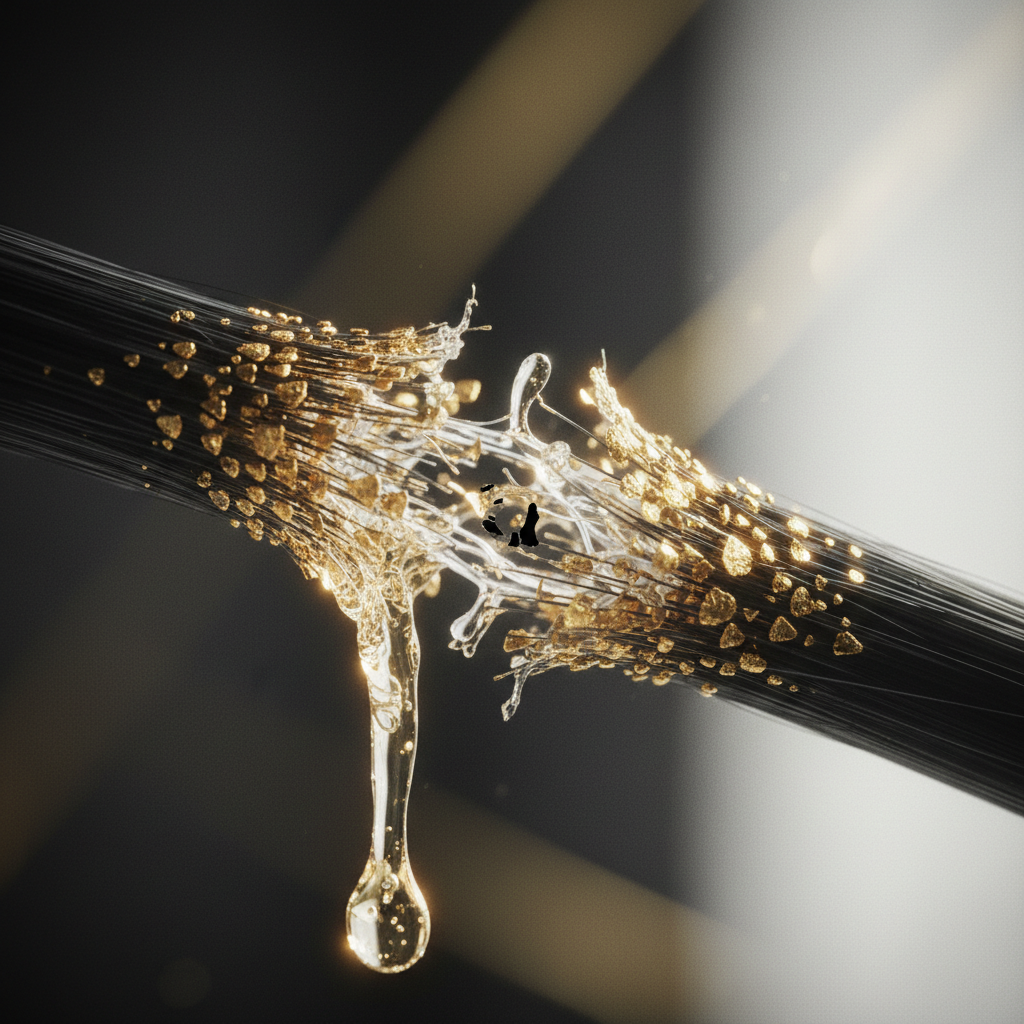
- The Cuticle: The outer protective layer made of overlapping, shingle-like keratin scales. A healthy cuticle is coated with an ultra-thin layer of fatty acids (18-MEA) that repels liquid water.
- The Cortex: The thick interior structural core made of keratin filament bundles bound together by disulphide, salt, and hydrogen bonds.
- The Cell Membrane Complex (CMC): The lipid-rich adhesive that cements cuticle scales and cortical cells together.
When healthy hair gets wet, water enters and temporarily breaks the weak hydrogen bonds within the cortex. This allows the fibre to stretch without snapping, up to about 30 percent beyond its resting length. However, when hair is wet repeatedly, or left saturated for hours, water leaches into the CMC. The cortex swells outward by up to 20 percent in diameter, forcing the rigid cuticle scales upward like open pine cones.
When the hair dries, the cortex contracts, but the lifted cuticles do not always return smoothly to their original position. Over repeated cycles, the edges of the cuticles chip away, the protective CMC dissolves, and internal keratin chains fracture. The strand loses its natural springiness, becoming permanently prone to breaking under everyday grooming.
Identifying the signs of hygral fatigue
Because hygral fatigue mimics other types of structural damage, identifying it accurately is essential. The most common indicators include:
- Excessive, gummy elasticity: When wet, the strand stretches far beyond its normal limit without snapping back into its original shape. It feels limp, spongy, or gummy between your fingers.
- Wet breakage: The strand breaks easily when wet with minimal tension, such as light combing or finger-detangling.
- Lack of curl definition: Naturally wavy, curly, or coily hair loses its spring and hangs in loose, shapeless, fluffy clumps even after moisturising products are applied.
- Dull, rough texture: Because the cuticle scales are permanently chipped or lifted from swelling, hair loses its light reflectivity and feels coarse when dry.
The table below contrasts hygral fatigue with common protein overload to help you choose the right corrective routine:
| Characteristic | Hygral Fatigue | Protein Overload |
|---|---|---|
| Wet Texture | Mushy, gummy, limp, overly soft | Rigid, rough, coarse, straw-like |
| Wet Elasticity | Stretches extensively without bouncing back | Barely stretches at all; snaps immediately |
| Primary Structural Issue | Swollen cortex, eroded CMC lipids | Excess protein film, rigid fibre stiffness |
| Root Cause | Excessive water soaking, lack of lipids | Overuse of hydrolysed protein products |
| Initial Fix | Protein reconstructor, pre-wash oils | Clarifying wash, lipid-rich emollients |
Practical steps for preventing hygral fatigue
Preventing Hygral Fatigue requires adopting routines that guard the fibre from unnecessary water saturation while reinforcing its lipid and protein architecture.
1. Apply penetrating oils before washing
Non-penetrating mineral oils sit on the surface, but certain plant-derived triglycerides can diffuse past the cuticle into the cortex. Applying coconut oil, babassu oil, or high-lauric oils 30 to 60 minutes before washing fills structural voids inside the cortex. Because oil and water repel each other, these lipids physically block water molecules from oversaturating the cortex, dramatically reducing radial swelling.
2. Formulate with an acidic pH
Hair has an isoelectric point around pH 3.67, while typical cosmetic products perform best for hair condition between pH 4.5 and 5.5. Alkaline water or high-pH cleansers force the cuticle wide open, accelerating water penetration. Using mildly acidic shampoos and conditioners keeps the cuticle tightly sealed, preventing rapid water absorption and preserving the delicate CMC.
3. Eliminate prolonged deep conditioning
Leaving wet masks, deep conditioners, or oil treatments under a plastic shower cap for several hours or overnight does not produce deeper nourishment. Hair reaches peak water absorption within 15 to 30 minutes. Keeping hair wet for hours keeps the cortex continuously swollen and the hydrogen bonds weakened, causing severe cuticle fatigue. Limit mask applications to the manufacturer's advised timeframe (typically 5 to 20 minutes).
4. Rebalance with hydrolysed proteins
If your hair already shows mild signs of water softening, balance your routine with hydrolysed wheat, silk, or keratin proteins. Small hydrolysed protein fragments penetrate the cortex to temporarily reinforce damaged internal matrices, while larger proteins deposit along the cuticle surface to patch micro-fractures, restoring snap and tensile resilience.
5. Shorten wash days and dry gently
Do not let wet hair air-dry slowly for eight hours if you have dense or porous hair. Use a smooth microfibre towel or cotton fabric to absorb excess water without friction. If needed, diffuse on a low, warm setting to move hair through its vulnerable wet state more quickly.
When the cause may be something else
If your hair is shedding excessively from the scalp (showing white bulbs at the end of the fallen strands) rather than snapping midway along the shaft, hygral fatigue is not the cause. Telogen effluvium is frequently triggered by acute physiological stress, high fevers, childbirth, nutritional deficiencies (such as iron or vitamin D), or rapid weight loss.
Similarly, if your hair feels rough and brittle but snaps with zero stretch, you are dealing with brittle hair, often caused by heat tools, ultraviolet radiation, or heavy protein accumulation rather than hygral fatigue.
When to seek professional advice
Consult a qualified trichologist or dermatologist if you experience sudden, widespread shedding, patchy bald spots, or persistent scalp pain, itching, or redness. A professional can use trichoscopy to examine your scalp follicles and determine whether your issues are follicular or cosmetic. For severe structural fibre damage, an experienced stylist can assess whether targeted salon bond-building treatments can salvage the integrity of your hair or if a corrective trim is necessary.
Supporting hair health with Watermans
Once you have protected your lengths from water fatigue, ensuring strong growth from the root is equally vital. Watermans focuses on scalp-first nutrition to encourage stronger-feeling hair right from the follicle.
The Watermans Grow Me Shampoo and Condition Me Conditioner work together to maintain a clean, balanced scalp environment while coating strands with moisturising nutrients, caffeine, and natural botanical extracts. Using an energising scalp formula alongside the structural protective measures detailed above gives you the ideal combination: a nourished scalp supporting resilient strands that resist mechanical snapping.
Frequently asked questions about Preventing Hygral Fatigue
What is the most effective method for Preventing Hygral Fatigue?
The most reliable method for Preventing Hygral Fatigue is applying a penetrating oil, like coconut oil, before shampooing. Penetrating oils absorb into the cortex, occupying internal space and repelling excess water. Pairing this with balanced wash times and acidic conditioners (pH 4.5 to 5.5) keeps cuticles flat and prevents water from continually over-swelling the hair fibre.
Can low porosity hair suffer from hygral fatigue?
Yes, but it takes longer to develop. Low porosity hair possesses tightly closed cuticles that naturally resist water entry. However, if low porosity hair is soaked in warm water for hours or left under deep conditioning caps overnight, water eventually penetrates the cortex. Once inside, water struggles to evaporate quickly, leaving the fibre in an extended swollen state that leads to hygral fatigue.
Does hygral fatigue cause permanent hair damage?
The cuticle chipping and structural CMC loss caused by hygral fatigue are permanent to that section of the hair shaft, as hair is non-living tissue and cannot biologically regenerate. However, you can manage the condition cosmetically using hydrolysed protein treatments, bond builders, and protective leave-in emollients until healthy new hair grows from the roots.
How long should I leave a deep conditioner on my hair?
You should leave deep conditioning treatments on for 5 to 20 minutes, or strictly according to the product directions. Leaving deep conditioners on for several hours or overnight does not boost efficacy. Instead, it saturates the hair fibre with water, breaking down hydrogen bonds and increasing your risk of developing hygral fatigue.
The roadmap to strong, resilient hair
Preventing Hygral Fatigue is fundamentally about honouring the physical boundaries of the hair shaft. Hair is strongest when dry, supported by intact internal bonds and an unbroken lipid barrier that shields against external moisture swings. By swapping out destructive overnight soaking routines for smart pre-wash lipid protection, pH-balanced formulas, and targeted protein support, you safeguard your cuticles against the wear and tear of daily cleansing. Treat your hair like the delicate fibre it is, minimise water-induced swelling, and you will maintain bouncy, resilient strands that stand up to everyday styling.
Sources and references
- Journal of Cosmetic Science: Keis, K., et al. "Investigation of penetration abilities of various oils into human hair fibres." (2005).
- Journal of Cosmetic Science: Rele, A. S., & Mohile, R. B. "Effect of mineral oil, sunflower oil, and coconut oil on prevention of hair damage." (2003).
- International Journal of Trichology: Gavazzoni Dias, M. F. "Hair Cosmetics: An Overview." (2015).
- Journal of the Society of Cosmetic Chemists: Robbins, C. R. "Chemical and Physical Behavior of Human Hair." (Springer, 5th Edition).
- British Association of Dermatologists: Patient Information Leaflets on Hair Breakage and Telogen Effluvium.
Find these ingredients in Watermans products
- Caffeine: you will find this ingredient in our Hair Growth Shampoo.
- Vitamin D: you will find this ingredient in our Hair Vitamins.
- Sunflower Seed Oil: you will find this ingredient in our Heat Protection Spray.