Hair Shaft Breakage vs Shedding: How to Tell the Difference
9 min read ·
Learn the real differences between Hair Shaft Breakage vs Shedding, how to spot the root bulb, and practical ways to restore hair fibre strength and scalp health.
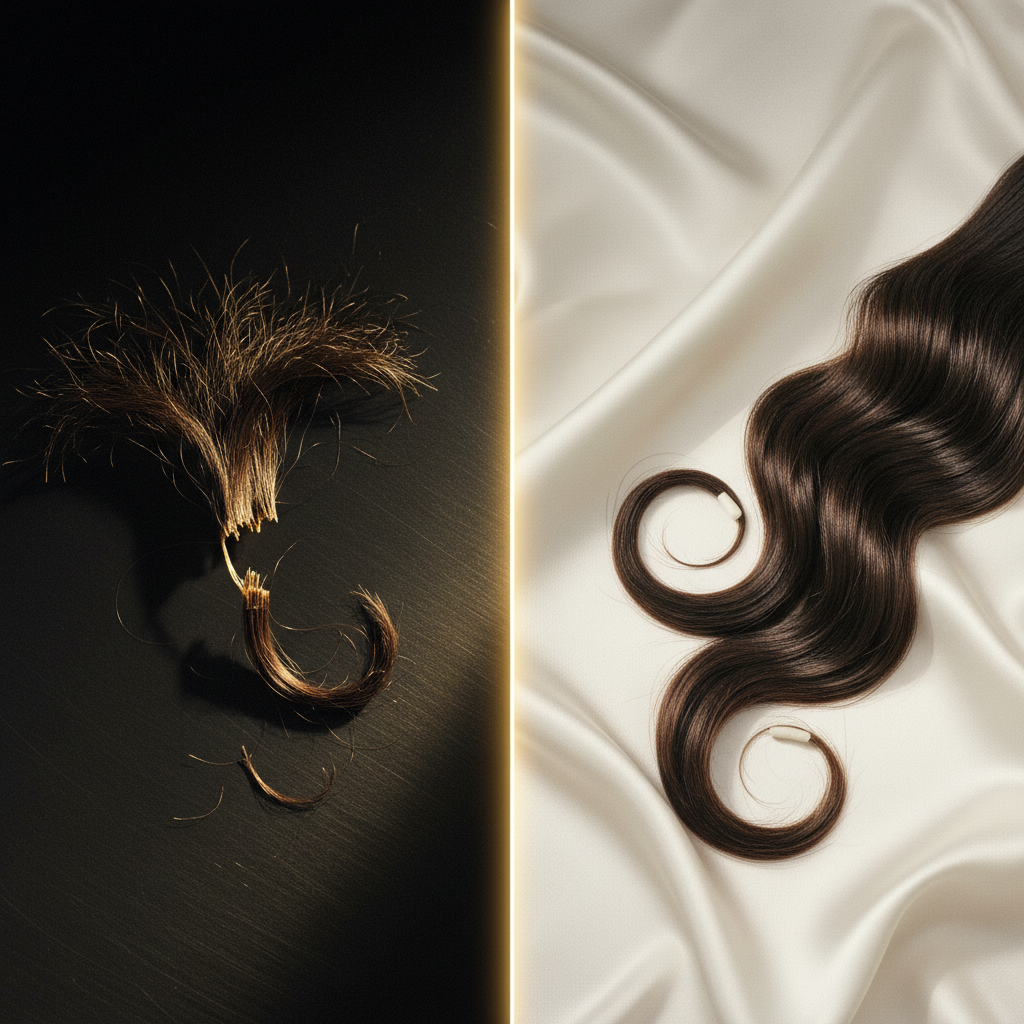
Quick answer: Understanding Hair Shaft Breakage vs Shedding comes down to where the hair separates. Shedding occurs at the follicle level, releasing a full-length strand complete with a tiny white bulb (the keratinised root sheath) as part of the natural hair cycle. Breakage is structural failure along the fibre itself, caused by mechanical, chemical, or thermal trauma, leaving shorter fragments without a bulb. While shedding reflects biological turnover, breakage reflects fibre degradation. Both require entirely different management strategies.
Key takeaways
- Shed strands are full length and display a small, firm white bulb at the root end.
- Broken fibres are shorter than your overall hair length and feature blunt, frayed, or split ends without a bulb.
- Daily shedding of 50 to 100 telogen hairs is biologically normal for human scalps.
- Hair shaft breakage stems from external damage to the protective cuticle, exposing the vulnerable cortex.
- Addressing shedding requires evaluating systemic health, scalp condition, or hormonal shifts, whereas preventing breakage requires adjusting styling, moisture balance, and chemical processing.
Hair Shaft Breakage vs Shedding: what the evidence shows
Dermatological research establishes a clear boundary between follicular shedding and structural breakage. The human scalp contains roughly 100,000 follicles, with 85 to 90 percent residing in the active growth phase (anagen) and roughly 10 to 15 percent resting in the telogen phase. At the conclusion of telogen (sometimes classified as exogen), the anchor at the base of the follicle dissolves, releasing the strand.
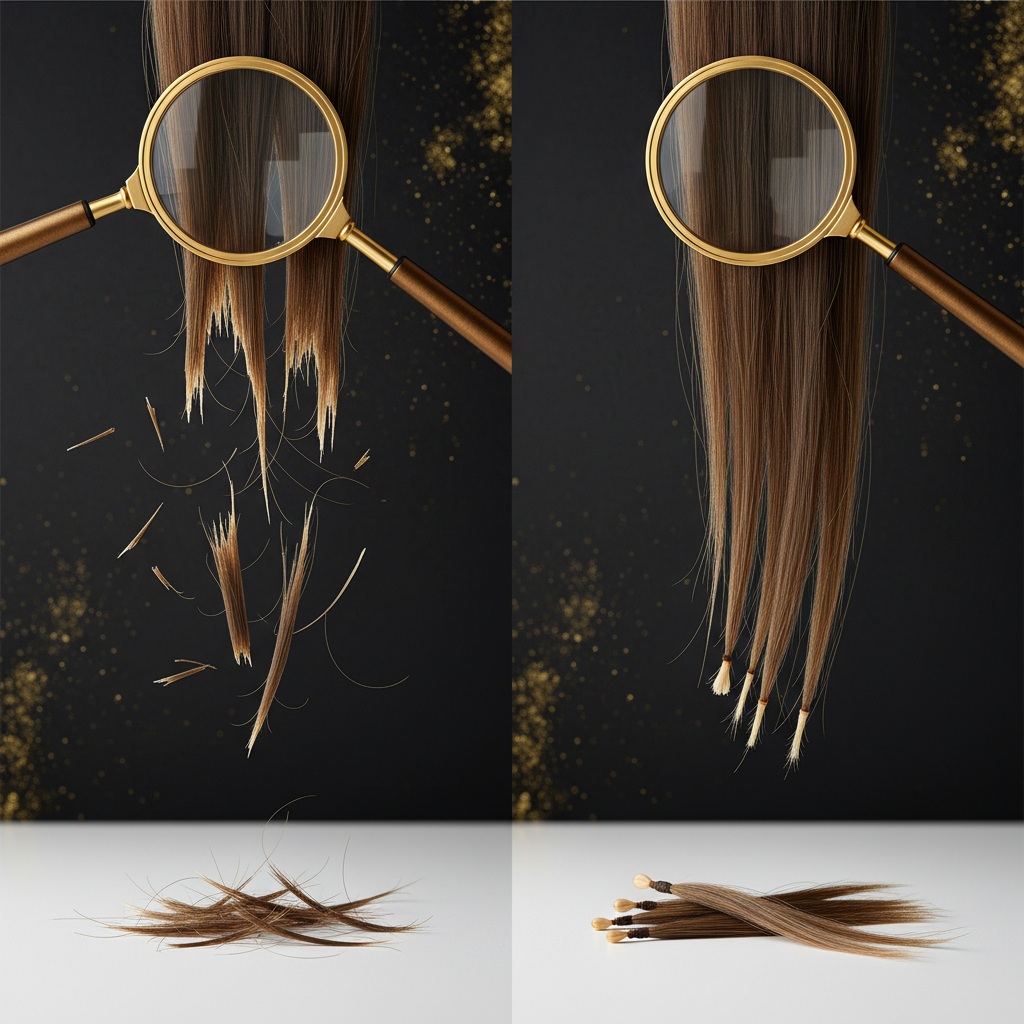
In contrast, hair shaft breakage involves structural fracture of the hair fibre without the involvement of the hair bulb. A healthy hair fibre consists of an outer protective cuticle composed of overlapping scales, surrounding an inner cortex of parallel keratin intermediate filaments. Scientific evaluations of hair weathering show that when the lipid-rich F-layer (18-methyleicosanoic acid) and the cuticle layers are stripped away, the cortex loses tensile strength. Under mechanical tension, such as vigorous brushing or tight traction, the weakened fibre snaps mid-shaft.
Confusing the two issues leads to ineffective interventions. Applying topical cosmetic conditioners will not stop telogen shedding driven by internal biological triggers. Conversely, taking systemic vitamins will not repair a physically compromised cuticle that is fracturing due to high-heat styling or chemical bleaching.
| Feature | Hair Shedding | Hair Shaft Breakage |
|---|---|---|
| Separation Point | The follicle opening at the scalp surface | Anywhere along the hair shaft |
| Presence of Bulb | Yes, a tiny white or translucent bulb at the end | No bulb; ends are blunt, frayed, or split |
| Length of Strand | Full length, matching your current hair growth | Uneven lengths, usually shorter fragments |
| Primary Mechanism | Telogen phase transition (exogen release) | Cuticle erosion and cortex tensile failure |
| Typical Daily Volume | 50 to 100 fibres per day | Highly variable; depends on physical handling |
| Root Cause | Hormones, illness, stress, genetics, cycles | Heat, bleach, UV, friction, tight hairstyles |
| Effective Solution | Scalp support, medical review, time, nutrition | Protein/moisture balance, lower heat, gentle care |
The biological mechanism of hair shedding
The life cycle of a hair strand operates in three main stages: anagen (growth lasting 2 to 7 years), catagen (regression lasting 2 to 3 weeks), and telogen (rest lasting roughly 3 months). During exogen, the old fibre is shed as a new anagen hair forms beneath it.
When systemic stressors disrupt this cycle, a condition known as telogen effluvium can occur. Physiological shocks such as high fevers, childbirth, severe nutritional deficits (such as iron or vitamin D deficiencies), or acute psychological stress prematurely push up to 30 to 50 percent of anagen hairs into telogen. Approximately two to four months after the triggering event, diffuse shedding increases dramatically, often exceeding 200 to 300 hairs per day. Because the follicle itself remains intact and healthy, the process is generally reversible once the internal trigger resolves.
The physical mechanism of hair shaft breakage
The hair shaft is an extraordinarily resilient biological composite, but it cannot regenerate living cells once formed. Its strength relies on disulfide bonds, hydrogen bonds, and salt bridges inside the cortex.
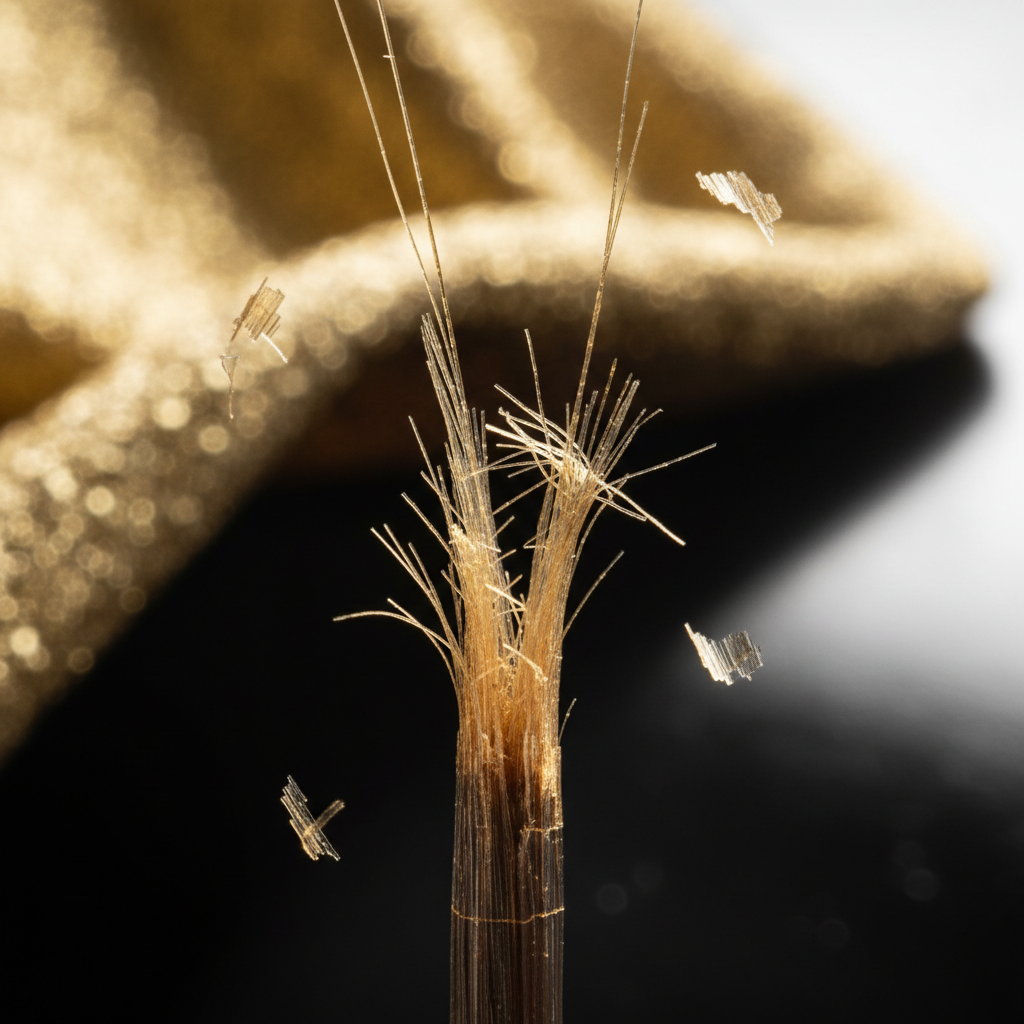
Breakage occurs when external stressors undermine this internal architecture:
- Chemical damage: Permanent hair dyes, relaxers, and bleaching agents penetrate the cuticle by raising the pH (often above pH 9.0 to 11.0). This process breaks disulfide bonds to alter pigment or curl patterns, reducing the fibre's tensile threshold.
- Thermal degradation: Flat irons and curling wands operating above 180 degrees Celsius degrade alpha-keratin into beta-keratin, stripping moisture and boiling trapped water within the cortex (creating microscopic "bubble hair").
- Mechanical stress: Brushing wet hair stretches the fibre beyond its elastic limit (roughly 30 percent elongation before permanent deformation), causing longitudinal splitting (trichoptilosis) or transverse snapping (trichorrhexis nodosa).
- Environmental wear: Ultraviolet radiation degrades amino acids (cystine, methionine, and tryptophan), leading to free-radical breakdown of the cuticle surface.
Signs to look for: how to tell them apart
Determining whether you are experiencing structural damage or follicular shedding requires a close look at your fallen strands.
The bulb test
Pick up fallen hairs from your pillowcase, brush, or shower drain. Examine both ends under bright light against a dark background, or run the strand between your fingertips. If you see or feel a small, hard, white or clear teardrop-shaped node at one end, the hair has shed from the follicle. If both ends are tapered, blunt, or frayed, the strand has broken mid-shaft.
The length assessment
Compare the length of fallen strands to the overall length of your hairstyle. Telogen shedding almost exclusively yields full-length hairs. If you notice small, confetti-like fragments of hair landing on your sink or shoulders during styling, you are dealing with fibre breakage.
Scalp density versus perimeter thinning
Follicular shedding tends to reduce overall hair volume across the entire scalp, often widening the central parting. Breakage, on the other hand, frequently concentrates in specific zones subjected to trauma: the crown (from rough sleeping or friction), the hairline (from tight ponytails or headbands), or the ends (where the hair fibre is oldest and most weathered).
Practical steps to reduce hair shaft breakage
Because hair breakage is a mechanical and cosmetic issue, targeted external interventions can dramatically improve fibre retention.
- Minimise thermal exposure: Limit direct heat tools to below 180 degrees Celsius and always apply a silicone- or polymer-based heat protectant to form a physical shield over the cuticle.
- Buffer wet styling: Wet hair has weakened hydrogen bonds, making it especially vulnerable to stretching and snapping. Detangle using a wide-tooth comb or flexible-bristle brush, starting at the tips and working upward toward the roots.
- Optimise hydration and conditioning: Use conditioners formulated with cationic surfactants (such as behentrimonium chloride) and hydrolysed proteins. These ingredients adhere electrostatically to damaged, negatively charged patches of the cuticle, temporarily smoothing the surface and reducing inter-fibre friction.
- Reduce nighttime friction: Cotton pillowcases create abrasive friction as you move during sleep. Switching to a smooth silk or satin pillowcase helps cuticles glide without snagging.
- Adjust mechanical tension: Avoid tight buns, braids, and rubber elastics that create localised stress points along the hair shaft.
Supporting the scalp environment: Watermans
While cosmetic care protects the hair fibre against physical breakage, follicular health requires a clean, nourished scalp environment.
Watermans Grow Me Shampoo and Condition Me Conditioner are formulated to support the appearance of hair density, strength, and vitality. Infused with natural ingredients such as biotin, rosemary extract, caffeine, niacinamide, argan oil, and lupin protein, these products help revitalise the scalp while coating fragile strands with protective moisture. By improving combability and smoothing the cuticle surface, this dual approach reduces friction-induced breakage while creating optimal conditions for healthy hair at the root.
When the cause may be something else
Not all shedding fits the standard mould of temporary telogen effluvium, and not all breakage is purely accidental.
Gradual thinning concentrated at the temples, crown, or vertex without obvious increased shedding may signal androgenetic alopecia (pattern hair loss), which miniaturises follicles over time. Patchy, smooth, coin-sized areas of hair loss suggest alopecia areata, an autoimmune response.
Persistent breakage occurring at specific intervals along the hair shaft can also indicate rare congenital structural defects, such as trichorrhexis invaginata ("bamboo hair") or monilethrix ("beaded hair"). If your hair snaps effortlessly despite minimal heat and chemical exposure, an underlying structural or genetic fragility may be present.
When to seek professional advice
Consult a qualified trichologist or dermatologist if you observe any of the following symptoms:
- Sudden, heavy shedding lasting longer than six months without improvement.
- Visible bald patches, redness, scaling, pustules, or burning on the scalp.
- Dramatic thinning accompanied by systemic symptoms such as sudden weight fluctuations, extreme fatigue, cold intolerance, or irregular menstrual cycles.
- Extensive, rapid hair snapping despite avoiding chemical treatments and thermal tools.
A clinical specialist can perform a trichoscopy, a gentle pull test, or blood tests (checking serum ferritin, thyroid-stimulating hormone, and vitamin levels) to pinpoint the exact cause.
Frequently asked questions about Hair Shaft Breakage vs Shedding
How can I quickly distinguish Hair Shaft Breakage vs Shedding at home?
Look at the end of the fallen strand under good light. If there is a small, firm, white bulb at the tip, it is a shed hair that left the follicle naturally. If there is no bulb and the hair is shorter than your typical length, it is breakage caused by physical or chemical damage.
Can a hair strand break and shed at the same time?
Yes. It is entirely possible to experience both telogen shedding and fibre breakage simultaneously. For example, a person undergoing postpartum hormonal changes may shed full-length hairs while also experiencing breakage along the hairline from tight styling or post-pregnancy fibre dryness.
Does brushing stimulate shedding or cause breakage?
Gentle brushing dislodges hairs that have already entered the exogen phase and detached from the follicle base, which is normal. However, aggressive brushing, especially on wet hair or through unconditioned tangles, exerts excessive mechanical tension that snaps healthy fibres mid-shaft.
How much shedding is considered normal per day?
Losing between 50 and 100 telogen hairs per day is considered typical for most people. If you wash your hair infrequently, you may notice an accumulation of several hundred hairs coming out at once on wash day, which represents normal shedding that was simply trapped in your hairstyle.
Will trimming my ends stop hair shedding?
No. Trimming hair removes split, weathered ends and halts breakage from travelling upward along the shaft, helping you retain length. However, trimming has no effect on the biological activity inside the scalp follicles and will not decrease shedding.
Final thoughts on Hair Shaft Breakage vs Shedding
Differentiating Hair Shaft Breakage vs Shedding is the single most important step in resolving thinning or loss of length. Shedding is a biological process originating beneath the scalp surface, driven by the hair cycle and systemic physiological factors. Breakage is an external mechanical failure of the cuticle and cortex, caused by daily styling, thermal tools, and chemical processing. By identifying the presence of a root bulb, evaluating strand length, and applying targeted care to both the scalp and hair fibre, you can effectively protect your hair from root to tip.
Sources and references
- British Association of Dermatologists. Telogen Effluvium: Patient Information Leaflet, 2021.
- National Institute for Health and Care Excellence (NICE). Alopecia: Clinical Knowledge Summary, 2022.
- Robbins, C. R. Chemical and Physical Behavior of Human Hair. 5th ed., Springer, 2012.
- Trüeb, R. M. "The Impact of Oxidative Stress on Hair." International Journal of Cosmetic Science, 2015.
- Sinclair, R. "Healthy Hair: What Is It?" Journal of Investigative Dermatology Symposium Proceedings, 2007.
Find these ingredients in Watermans products
- Vitamin D: you will find this ingredient in our Hair Vitamins.
- Niacinamide: you will find this ingredient in our Hair Mask.