Preventing Heat Damage in Styling: An Evidence-Based Guide
9 min read ·
Learn the science of preventing heat damage in styling. Discover keratin denaturation thresholds, safe tool temperatures, and evidence-based tips to protect your hair.
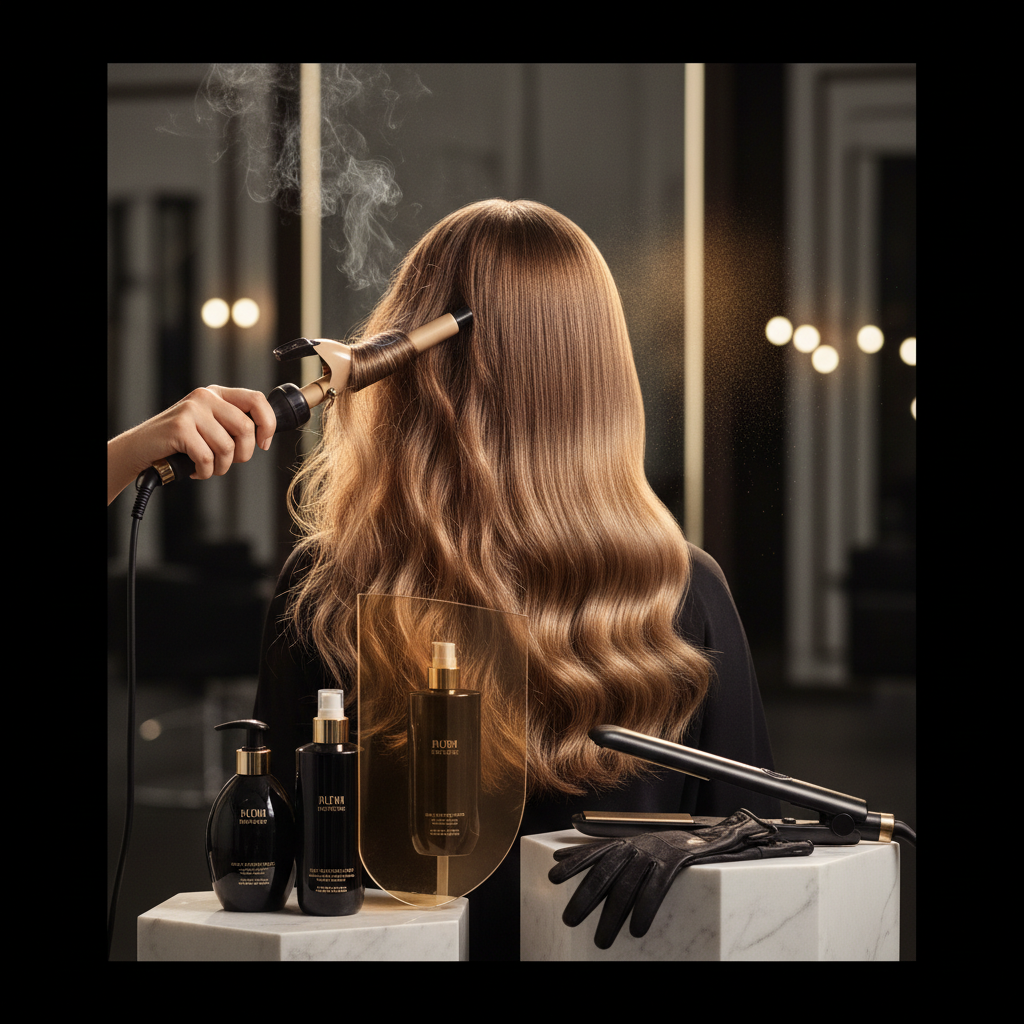
Quick answer: Successfully preventing heat damage in styling relies on keeping hot tool temperatures below 185°C, thoroughly drying hair before using direct contact irons, and applying a film-forming heat protectant evenly across every strand. Thermal tools alter keratin bonds and vaporise internal moisture, leading to irreversible fibre degradation. The main limitation is that heat protectants reduce thermal transfer by roughly 30 to 50 percent; they do not render hair fireproof, meaning cumulative exposure will eventually cause structural wear.
Key takeaways
- Thermal degradation begins around 140°C with moisture loss, while irreversible structural denaturation of hair keratin occurs between 180°C and 230°C.
- Applying flat irons or curling tongs to damp or wet hair causes "bubble hair", an irreversible physical deformity caused by boiling water inside the cortex.
- High-quality heat protectant sprays and serums function by slowing down heat conduction and reducing friction, but they cannot block 100 percent of thermal energy.
- Fine, bleached, or chemically processed hair has a lower thermal tolerance threshold than coarse, virgin hair and requires lower operating temperatures.
- Once thermal damage fractures the cuticle or melts cortex proteins, the fibre cannot regenerate; split ends and severe breakage require physical trimming.
Preventing Heat Damage in Styling: what the evidence shows
Preventing heat damage in styling requires a clear understanding of biophysics and cosmetic chemistry. Human hair consists predominantly of alpha-keratin, a fibrous structural protein arranged in organised crystalline coils within the hair cortex, wrapped in protective, overlapping cuticle scales. When you apply thermal styling tools, you deliberately disrupt temporary hydrogen bonds to reshape the hair. However, excessive or repeated heat permanently alters the hair's primary architecture.
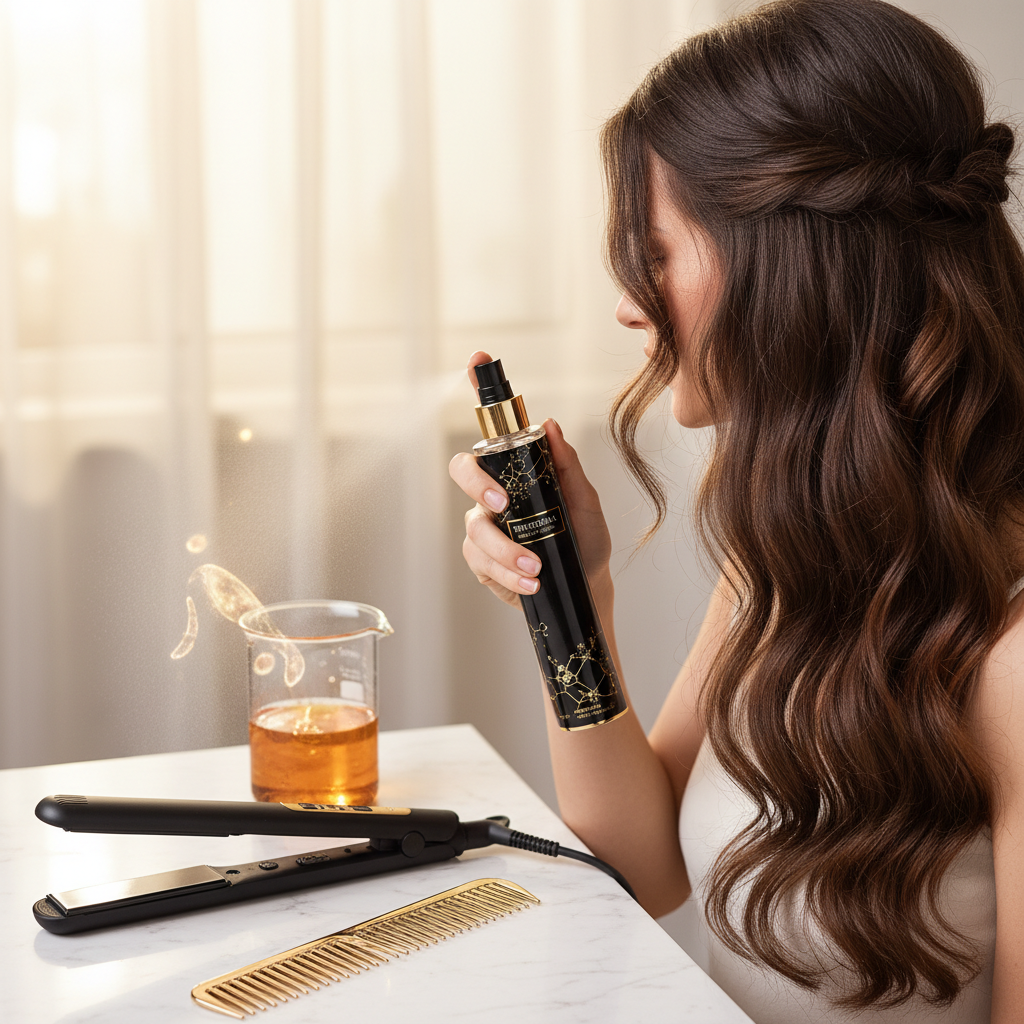
Controlled studies in cosmetic science demonstrate that dry thermal exposure up to 140°C predominantly affects surface moisture and superficial cuticle lipids, specifically 18-methyleicosanoic acid (18-MEA). When tool temperatures climb past 160°C to 185°C, structural changes accelerate. Above 185°C, keratin begins to lose its organised alpha-helix structure, partially denaturing into an amorphous state. At 215°C to 230°C, the protein physically decomposes, leading to severe tensile weakness, loss of elasticity, and hair fibre fracture.
Thermal tools also degrade natural hair melanin and artificial dye molecules. Repeated passes of high heat oxidise hair pigments, causing noticeable brassiness or colour fading, particularly on chemically lifted blonde hair.
The biophysical mechanism of thermal damage
To protect the hair fibre, you must understand how heat interacts with moisture, cuticles, and structural proteins. Thermal damage occurs along three distinct pathways:
- Bubble hair formation: When you clamp a flat iron onto wet or damp hair, the trapped water instantly converts into steam. Steam expands rapidly within the enclosed cortex, creating sub-microscopic and macroscopic gas pockets. These microscopic bubbles distort the hair shaft, leaving visible bulges, sudden bends, and extreme brittleness. Once bubble hair forms, the strand inevitably snaps at the site of the void.
- Lipid stripping and cuticle lifting: The outermost layer of the hair fibre is coated with a naturally occurring fatty acid layer known as the F-layer (18-MEA). Extreme heat melts and strips these essential surface lipids. Without them, cuticle cells lift, crack, and chip away, exposing the vulnerable cortex to friction, environmental degradation, and accelerated moisture loss.
- Keratin denaturation and cross-link degradation: Healthy hair retains its strength through disulphide bonds, salt linkages, and hydrogen bonds. Temperatures exceeding 180°C permanently disrupt the disulphide bridges and crystalline keratin structure. The hair loses its structural memory, rendering it limp, porous, and prone to snapping under regular brushing tension.
Signs of thermal damage vs other hair issues
Thermal damage presents differently depending on hair texture and previous chemical services. Look for these hallmark signs:
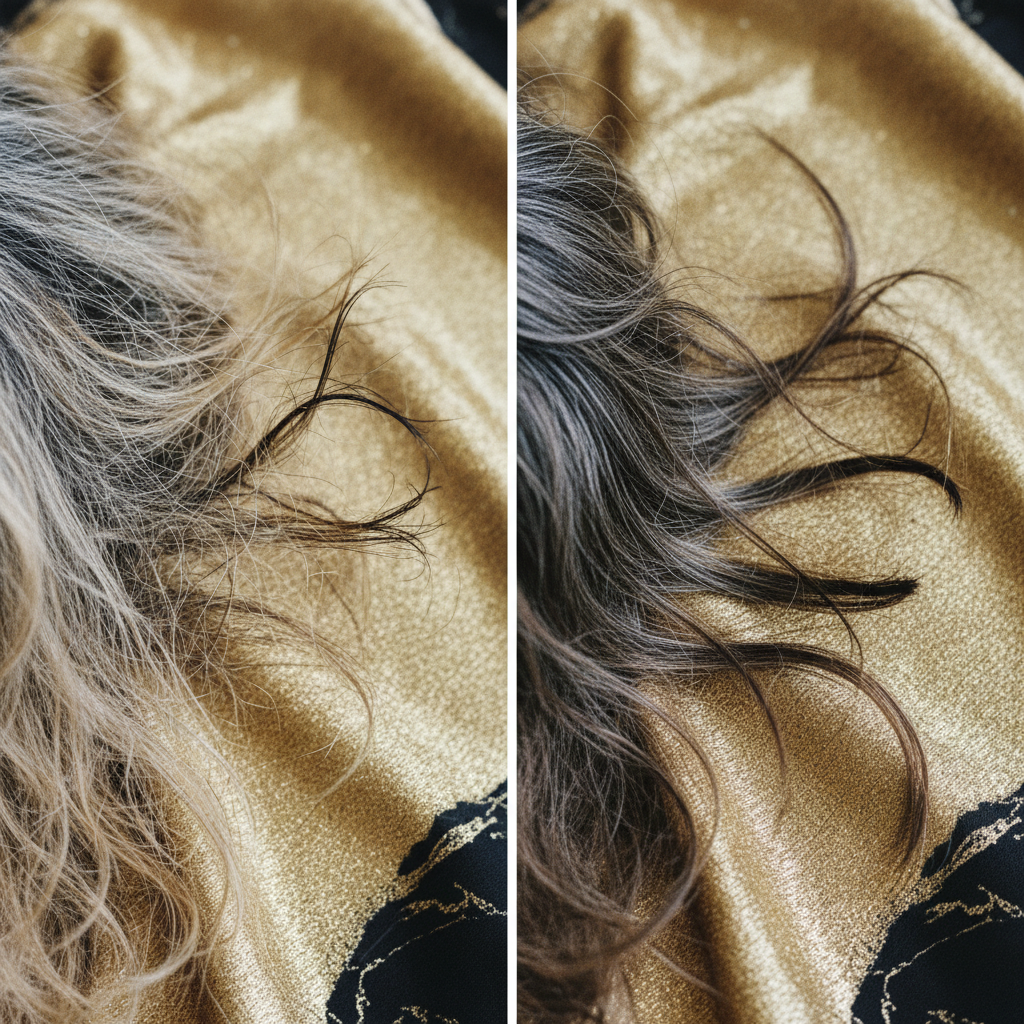
- White flecks along the mid-lengths: Often mistaken for lint or dandruff, these tiny white dots (trichorrhexis nodosa) indicate places where the cortex has collapsed and splintered outward under heat stress.
- Loss of natural curl pattern: In wavy, curly, and coily hair textures, thermal heat damage causes the natural coil pattern to fall slack, appearing straight or stringy in random patches even when wet.
- Extreme porosity and quick drying: Thermally degraded hair absorbs water instantly because of cracked cuticles, yet it dries unusually fast because it lacks the internal lipid structure to bind and retain moisture.
- Frizz that resists conditioning: When cuticles are permanently warped by high heat, conditioning agents struggle to form a uniform smoothing layer, leaving the surface rough and crinkled.
Crucially, thermal damage is distinct from telogen effluvium or follicular hair loss. Heat from styling tools snaps the hair shaft anywhere along its length (hair breakage). It does not cause hairs to shed from the root with their white bulb intact, provided the tool does not physically burn the scalp tissue.
Thermal thresholds by hair state
The following table provides evidence-based maximum operating temperatures and structural thresholds for different hair conditions.
| Hair Condition / Type | Baseline Moisture Status | Recommended Maximum Temperature | Primary Structural Risk |
|---|---|---|---|
| Fine or Bleached Hair | Depleted lipids, porous cortex | 150°C to 165°C | Rapid keratin denaturation, cuticle melting |
| Medium / Virgin Hair | Intact F-layer, normal hydration | 170°C to 180°C | Surface lipid depletion, dryness over time |
| Coarse / Resistant Hair | Dense cortex, multi-layered cuticle | 185°C to 195°C | Surface friction, gradual moisture loss |
| Damp or Wet Hair (Any type) | Liquid water present in cortex | Do not apply contact irons | Instant bubble hair deformity, fibre fracturing |
Practical strategies for protecting hair during styling
Minimising heat exposure involves mechanical, chemical, and behavioural adjustments. Incorporate these evidence-backed practices to safeguard your hair:
1. Ensure hair is completely dry before ironing
Never use flat irons, curling wands, or crimpers on damp hair. Use a blow-dryer on a medium temperature setting, keeping the nozzle at least 15 centimetres away from the hair surface, and keep it moving continuously. Only when the hair is 100 percent dry should direct-contact heated plates touch the fibre.
2. Apply a certified heat protectant correctly
Heat protectants rely on ingredients with low thermal conductivity, such as dimethicone, amodimethicone, polyquaternium polymers, and hydrolysed wheat proteins. These ingredients form a microscopic shield that slows the rate of heat transfer into the core of the hair fibre, lowering surface friction so styling tools glide without mechanical snagging. Distribute the product section by section using a wide-tooth comb rather than spraying a light mist over the top canopy alone.
3. Match tool temperature to hair diameter
More heat does not equal better styling; it simply equals faster damage. Most professional styling can be achieved between 160°C and 185°C. Invest in styling tools with clear digital temperature displays rather than uncalibrated dial controls.
4. Limit plate passes
Make a single, deliberate, steady pass down each hair section rather than running the iron rapidly over the same strand three or four times. Multiple passes accumulate heat exponentially in the hair shaft, overwhelming the cooling capacity of the surrounding air.
5. Give hair regular breaks
Mechanical heat styling should ideally be balanced with heat-free styling routines, such as overnight braids, foam rollers, or air-drying with nourishing leave-in products.
When the issue is not heat damage
Sometimes hair that appears dry, brittle, or broken is suffering from an entirely different underlying stressor:
- Chemical over-processing: Excessive bleaching, high-volume peroxide developers, relaxers, or perms can dissolve internal disulphide bonds chemically, mimicking thermal damage.
- Hard water mineral buildup: High concentrations of calcium and magnesium in municipal water supplies coat the hair shaft, making it feel stiff, brittle, and rough even if you rarely use a flat iron.
- Nutritional deficiencies or systemic stress: If your hair feels suddenly thin, or if you notice clumps shedding from the scalp with the root bulb attached, this is a follicular process such as telogen effluvium, not heat breakage along the hair shaft.
- Mechanical friction: Aggressive backcombing, rough towel-drying, or sleeping on abrasive fabrics can strip the cuticle mechanically without any thermal input.
Support your routine with Watermans
When managing hair that undergoes regular thermal styling, keeping the scalp environment healthy and maintaining fibre resilience is essential. While cosmetic products cannot fuse shattered hair fibres back together, using high-performance care can dramatically improve the hair's look, feel, and resistance to everyday breakage.
Watermans GrowMe Shampoo and ConditionMe Conditioner are expertly formulated to support strong-feeling, resilient hair. GrowMe cleanses the scalp gently, delivering biotin, rosemary extract, caffeine, and niacinamide to help maintain an optimal scalp environment for healthy-looking hair growth. Following with ConditionMe provides vital superficial slip, moisture, and surface protection with cholesterol, hydrolysed lupin protein, and natural oils. This helps smooth down lifted cuticles, reducing mechanical friction during blow-drying and leaving hair softer, shinier, and visibly fuller.
Frequently asked questions about Preventing Heat Damage in Styling
Can a heat protectant eliminate all styling damage?
No cosmetic formulation can eliminate heat damage completely. High-grade heat protectants typically reduce heat transfer by 30 to 50 percent and minimise cuticle friction. While they are indispensable for preventing heat damage in styling, high tool temperatures (above 190°C) or repeated passes will still degrade hair proteins over time.
At what temperature does hair suffer permanent thermal damage?
Irreversible structural changes to hair keratin begin between 180°C and 185°C, where the protein's alpha-helical structure begins to denature. Temperatures exceeding 200°C cause severe cuticle cracking, moisture flash-off, and protein decomposition. Keeping your tools below 185°C is the safest operational standard for most hair types.
Can thermally damaged hair be repaired with deep conditioning treatments?
No, thermally damaged hair cannot be permanently repaired. Hair is non-living tissue and lacks the biological capacity to regenerate once cuticles chip or internal keratin chains break down. Protein treatments, bond builders, and deep conditioners can temporarily patch cracks and improve cosmetic elasticity, but split ends and severe fibre breakage must ultimately be trimmed away.
Is blow-drying worse for your hair than using a flat iron?
Generally, flat irons cause more severe structural damage than blow-dryers because their metal or ceramic plates make direct, clamped contact with the hair at temperatures often exceeding 200°C. Blow-drying distributes moving air across a broader surface area at lower temperatures (roughly 60°C to 95°C). However, holding a dryer nozzle stationary against damp hair can still cause surface boiling.
Why does my natural curl pattern disappear after straightening?
When intense heat alters the disulphide bonds and denatures the crystalline keratin inside the hair shaft, the hair loses its structural memory. This permanent structural deformation prevents the protein chains from snapping back into their natural curl or coil configuration, leaving damaged strands looking flat, loose, or frizzy even after washing.
Best practices for long-term hair health
Mastering the balance between achieving your desired aesthetic and preventing heat damage in styling comes down to patience, temperature control, and physical awareness. Hair fibres cannot heal themselves biologically, so protecting the structural integrity of the cuticle and cortex from day one is the most effective way to preserve length, volume, and shine.
By restricting direct heat to completely dry hair, setting tools to calibrated temperatures below 185°C, and coating strands with quality heat protectants, you drastically reduce mechanical and thermal stress. Treat heat styling as an occasional transformation rather than an aggressive daily necessity, and trim damaged ends promptly to keep breakage from travelling upward.
Sources and references
- Journal of Cosmetic Science: "Thermal analysis of human hair: a study on the thermal stability of alpha-keratin", 2004.
- International Journal of Cosmetic Science: "Hair damage caused by hot styling tools: chemical and physical modifications", 2011.
- Journal of the American Academy of Dermatology: "Bubble hair: a physical abnormality of the hair shaft caused by thermal damage", 1992.
- Textile Research Journal: "Effects of heat on the physical and chemical properties of hair", 2008.
- Society of Cosmetic Scientists (UK): Principles and Practice of Cosmetic Science, Hair Care Chapter, 2018.
Find these ingredients in Watermans products
- Biotin: you will find this ingredient in our Hair Growth Shampoo.
- Niacinamide: you will find this ingredient in our Hair Mask.