The Science of the Porosity of Hair: Cuticle Structure and Moisture Balance
9 min read ·
Understand the Porosity of Hair: discover how cuticle structure affects moisture retention, what science says about testing it, and how to care for your hair type.
Quick answer: The Porosity of Hair refers to how easily the hair shaft absorbs and retains water, oils, and chemical treatments, determined primarily by the integrity of the outer cuticle layer. Hair porosity typically falls into three categories: low, medium, and high. While genetics establishes your baseline cuticle architecture, daily weathering, heat styling, and chemical processing dramatically alter it. Crucially, porosity governs surface moisture exchange, not biological hair growth or follicle activity inside the scalp.
Key takeaways
- Porosity describes the physical condition of the cuticle scales and their capacity to let moisture pass into the cortex.
- Low-porosity hair features tightly overlapping cuticles that resist water entry, while high-porosity hair has lifted or chipped cuticles that absorb water instantly but lose it just as fast.
- Elevated porosity is often acquired through mechanical friction, heat tools, bleaching, and UV radiation rather than genetics alone.
- Porosity directly influences how hair responds to cosmetic proteins, conditioning agents, and styling products.
- Product formulations cannot permanently rebuild missing cuticle tiles, but cosmetic film formers and hydrolysed proteins can temporarily patch structural gaps.
Porosity of Hair: what the evidence shows
Research into cosmetic trichology shows that the Porosity of Hair is an objective measurement of cuticle barrier function. The cuticle consists of roughly five to ten overlapping cellular layers that shield the inner cortex. In healthy, virgin fibres, these scales lie flat, cemented by an intercellular lipid membrane rich in 18-methyleicosanoic acid (18-MEA). This natural lipid layer confers hydrophobicity, meaning virgin hair naturally repels liquid water while regulating vapour absorption.
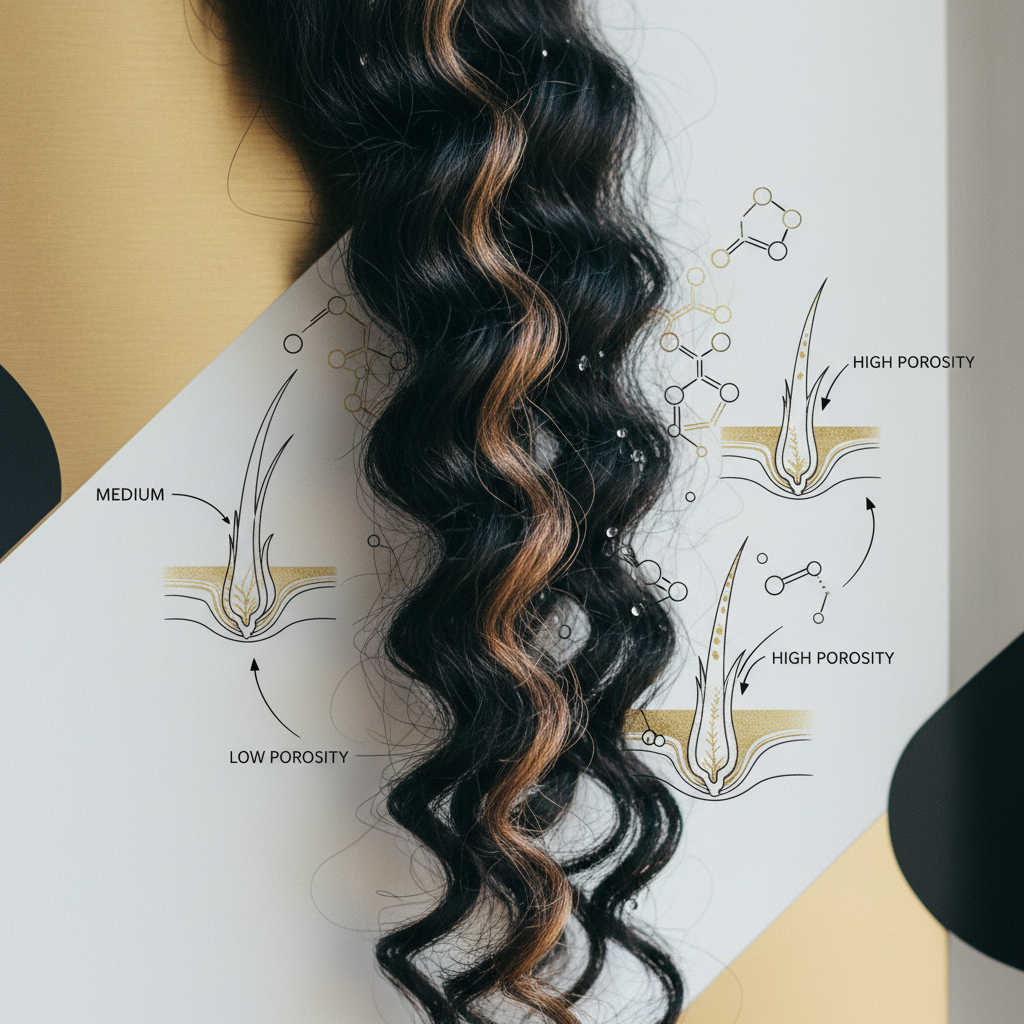
When the cuticle sustains chemical or physical trauma, these protective lipid layers degrade. Cosmetic science studies demonstrate that alkaline treatments like bleaching and permanent relaxers strip 18-MEA and lift the cuticle shingles. This shifts the fibre from hydrophobic (water-repelling) to hydrophilic (water-attracting). As a result, the fibre's porosity increases.
Laboratory assessments evaluate porosity using gas sorption, dye uptake tests, and liquid sorption balances. High-porosity fibres absorb significantly larger volumes of liquid water at a faster rate, yet they also display an accelerated desorption rate, drying out rapidly and leaving the cortex vulnerable to friction, tangling, and mechanical breakage.
What the evidence does not show
Popular hair forums often circulate misconceptions regarding hair porosity. The scientific literature clarifies several boundaries:
- Porosity does not dictate follicular hair growth. Porosity is a structural state of the non-living fibre that has emerged from the scalp. It has zero bearing on follicle cycling, anagen duration, or systemic hair shedding.
- Porosity cannot be reliably tested in a glass of water. The viral "float test", where a shed strand is placed in water to see if it sinks, is notoriously inaccurate. Surface tension, residual product films, sebum levels, and water temperature skew the results, rendering it scientifically invalid.
- Porosity is not permanent across the entire strand. A single hair fibre usually possesses low porosity near the root (newly formed, undamaged) and high porosity at the tip (weathered by months or years of washing and sun exposure).
The biological and physical mechanism
The outer layer of the hair shaft resembles tiles on a roof. In low-porosity hair, these tiles are bound closely together. Because the gaps between cells are microscopic (often under 5 nanometres), liquid water molecules struggle to slip past without heat or alkaline swelling. Products sitting on low-porosity hair often fail to penetrate, causing visible product build-up.
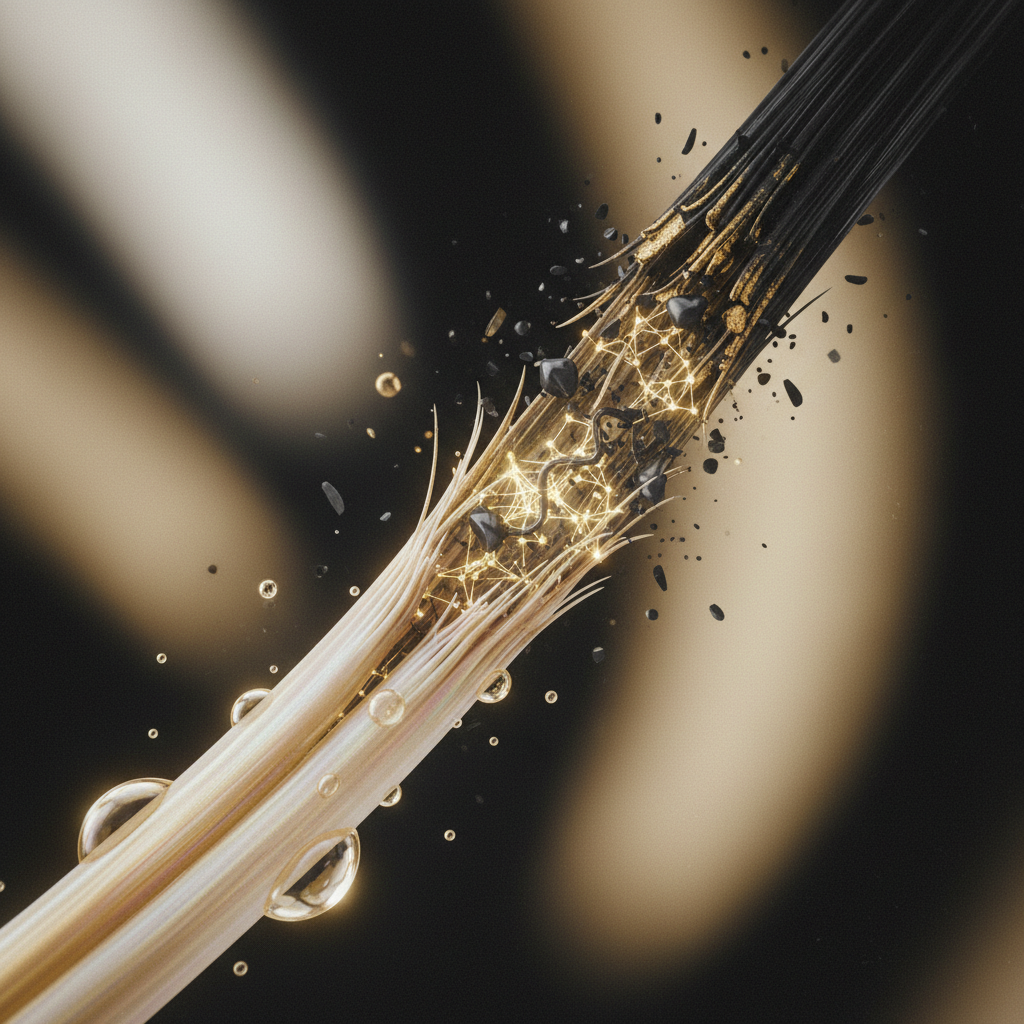
In medium-porosity hair, the cuticle layer allows a balanced exchange. Water penetrates with moderate ease, and the cortex retains that hydration without rapid evaporation.
In high-porosity hair, chemical insults (such as hydrogen peroxide or ammonium hydroxide) or extreme thermal heat break the covalent disulfide bonds and oxidise the protein matrix. Cuticle edges crack, chip, and lift outward. Water rushes directly into the cortex, causing the fibre to swell rapidly (hygral stress). Because the structural barrier is compromised, that moisture escapes just as quickly in dry ambient air, leaving the fibre stiff, prone to static, and fragile.
| Porosity Level | Cuticle State | Water Absorption Speed | Water Retention | Common Physical Traits |
|---|---|---|---|---|
| Low | Flat, tightly closed, intact lipid layer | Very slow; water beads on surface | High, once absorbed | Resists hair dye, prone to build-up, takes hours to dry |
| Medium (Normal) | Loosely aligned, minimal damage | Moderate and steady | Balanced | Holds styles well, accepts colour predictably |
| High | Lifted, chipped, or missing scales | Instantaneous | Poor; loses moisture rapidly | Absorbs product fast, tangles easily, feels rough, frizzy |
Signs of altered porosity
Observing how your hair behaves under water and during styling reveals far more than DIY float tests.
Low-porosity hair typically shows these traits:
- Water droplets bead on the surface of your hair when you step into the shower.
- It takes a remarkably long time for the hair to become thoroughly wet.
- Shampoos and leave-in conditioners tend to sit on the surface, creating a tacky or greasy coating.
- Drying times are lengthy, sometimes taking many hours to air-dry completely.
High-porosity hair displays the opposite characteristics:
- Strands saturate almost immediately under running water.
- Hair dries very quickly, yet feels parched, brittle, and rough to the touch once dry.
- Moisture from humectants leads to immediate swelling and frizz in humid weather.
- Chemical dyes absorb rapidly, often coming out darker than intended, but fade prematurely because the colour molecules wash out of the open cortex easily.
What you can do to manage hair porosity
Because the hair shaft consists of dead keratin, you cannot biologically "heal" a lifted cuticle. However, you can manage the physical properties of the fibre using targeted cosmetic strategies.
Managing low-porosity hair
Low-porosity fibres need techniques that encourage the cuticle to accept conditioning agents without creating surface build-up:
- Use mild heat (such as a warm towel or steamer cap) during conditioning treatments to gently swell the cuticle and allow ingredients to slip past.
- Choose lighter formulations featuring hydrolysed proteins, aloe, or lightweight humectants (glycerin, panthenol) over dense, heavy butters.
- Incorporate clarifying shampoos periodically to strip away product residues that block the cuticle margins.
Managing high-porosity hair
High-porosity hair requires reinforcement to seal gaps and limit hygral fatigue:
- Apply cosmetic formulations containing hydrolysed keratin, wheat protein, or silk amino acids. These small peptides temporarily lodge within cuticle fractures, improving tensile strength and elasticity.
- Use heavier emollient oils, fatty alcohols (cetyl and stearyl alcohol), and silicones (such as dimethicone or amodimethicone) to create an artificial barrier that slows moisture evaporation.
- Maintain an acidic rinse or conditioner pH (between 3.5 and 5.0) to encourage lifted cuticle edges to lie as flat as structurally possible.
When the cause may be something else
If your hair appears dull, unmanageable, or snaps easily, elevated porosity is not always the sole culprit.
Mineral build-up from hard water (calcium and magnesium carbonates) binds tenaciously to the hair shaft, mimicking high porosity by making hair feel rough, tangled, and straw-like. In this scenario, a chelating shampoo is required rather than heavy protein treatments.
Similarly, persistent brittleness and snapping along the shaft might stem from an over-saturation of protein treatments (protein overload), which leaves the fibre stiff and inflexible. If you notice unexpected shedding at the scalp level, this indicates a biological disruption in the follicular growth cycle, such as telogen effluvium, which is completely distinct from fibre porosity and breakage.
When to get professional advice
Consult a qualified trichologist or dermatologist if you experience sudden, widespread hair shedding, patchy thinning, or scalp inflammation. These conditions arise from biological processes within the skin and follicle, which surface conditioning cannot address.
For structural fibre concerns, a licensed hairstylist or colour specialist can perform a physical elasticity test and a wet-stretch analysis. They can tailor chemical formulas (such as adjusting developer volumes or applying acidic glosses) to protect highly porous zones during colouring or bleaching services.
Watermans cosmetic support
For individuals dealing with compromised, porous strands that break easily, gentle daily hair care is vital. The Watermans Grow Me range delivers a balanced, silicone-free cleansing experience that clears away residue without stripping the delicate lipid mantle of the hair. Paired with nutrient-dense botanical formulations and hydrolysed proteins, it supports a healthier-looking scalp environment while strengthening the feel of the hair fibre against everyday styling friction and breakage.
Frequently asked questions about Porosity of Hair
What is the most accurate way to test the Porosity of Hair?
The most reliable non-laboratory method is the strand slip test combined with drying observation. Gently slide your thumb and forefinger upward along a single dry hair strand from tip to root. If it feels smooth and glassy, porosity is low. If it feels rough, bumpy, or catches on your fingers, cuticle damage has raised your porosity.
Can you change your natural Porosity of Hair?
You cannot alter your genetic cuticle density, but environmental and chemical actions continuously change your acquired porosity. While you cannot permanently seal a damaged cuticle back to a virgin state, acidic treatments, protein conditioners, and protective styling can temporarily restore manageable surface properties until new hair grows out.
Why does high-porosity hair break so easily?
High-porosity hair has structural voids along its outer cuticle shield. Without this intact barrier, the inner keratin fibres in the cortex face direct exposure to heat, ultraviolet light, and friction. In addition, repeated swelling and contracting as water rushes in and out weakens the fibre bonds, leading to premature snapping.
Does low-porosity hair require protein treatments?
Low-porosity hair rarely requires intensive protein treatments because its cuticle layer is already intact and resilient. Applying high concentrations of large proteins to low-porosity hair often leads to severe surface build-up, leaving the hair feeling rigid, stiff, and prone to mechanical breakage. Stick to lightweight hydration instead.
Can hard water affect the Porosity of Hair?
Hard water does not directly create microscopic cuticle gaps the way bleach does, but it deposits mineral salts like calcium and magnesium onto the cuticle scales. These mineral deposits lift the cuticle edges and make the fibre feel artificially rough and porous, preventing moisture from entering the shaft properly.
Conclusion
Understanding the Porosity of Hair is essential for designing an effective haircare routine that protects against breakage and preserves hair health. By identifying whether your cuticles are tightly sealed, moderately balanced, or structurally compromised, you can select appropriate cleansers, adjust water temperatures, and apply the right balance of proteins and emollients. Respecting your hair fibre's porosity ensures your strands remain resilient, pliable, and well-shielded against the rigours of everyday styling.
Sources and references
- Robbins, C. R. (2012). Chemical and Physical Behavior of Human Hair. 5th ed. Springer-Verlag New York.
- Dawber, R. (1996). Hair: Its structure and response to cosmetic preparations. Clinics in Dermatology, 14(1), 105-112.
- Cruz, C. F., et al. (2016). Human hair characteristics and methods to evaluate hair physical and chemical properties. International Journal of Cosmetic Science, 38(5), 433-446.
- Syed, A. N., et al. (2002). The effect of ethnic differences and chemical treatments on the porosity of human hair. Journal of Cosmetic Science, 53(4), 239-250.
- Society of Cosmetic Chemists (SCC). Monograph on Hair Fibre Structure and Environmental Weathering.
Find these ingredients in Watermans products
- Panthenol (Provitamin B5): you will find this ingredient in our Heat Protection Spray.