Cuticle Damage: Causes, Science, and Evidence-Based Management
10 min read ·
Cuticle Damage exposes the hair cortex, causing tangling, dryness, and breakage. Learn the science of cuticle erosion, structural causes, and evidence-based care.
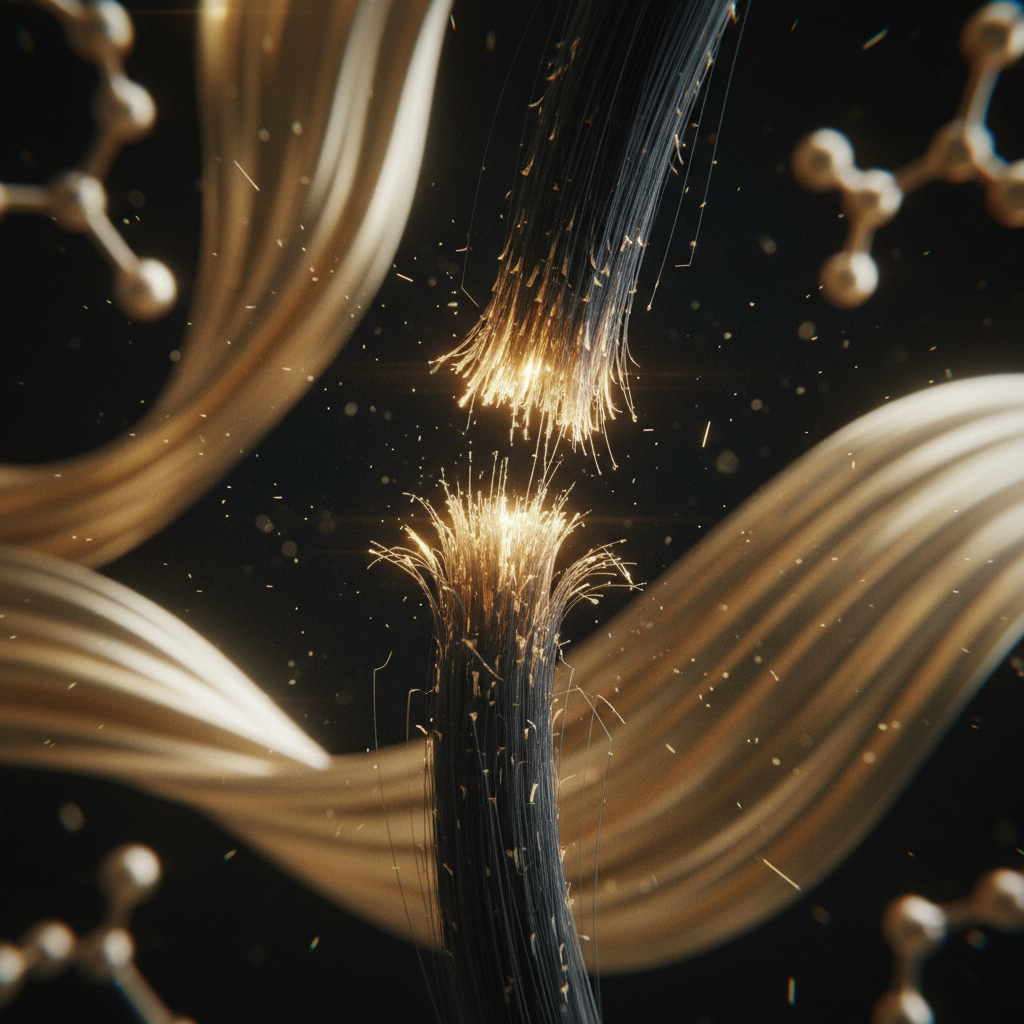
Quick answer: Cuticle Damage occurs when the protective, overlapping keratin scales covering the hair shaft are lifted, chipped, or stripped away by heat, chemical processing, UV radiation, or mechanical friction. Because hair fibres are biologically non-living tissue, Cuticle Damage cannot be naturally repaired or regenerated by cellular biological processes. Managing it relies entirely on preventative habits, targeted cosmetic conditioning to smooth raised edges, and trimming away fractured ends to prevent vertical splitting down the hair shaft.
Key takeaways
- The hair cuticle consists of 5 to 10 layers of flattened, overlapping scales that shield the inner cortex and regulate moisture flux.
- Cuticle Damage strips away the protective lipid layer (18-methyleicosanoic acid), making hair porous, dull, brittle, and prone to tangling.
- Hair is non-living keratinised tissue, meaning broken or eroded cuticles cannot biologically heal or regenerate once destroyed.
- Chemical bleaching, permanent waves, high heat above 180 degrees Celsius, and rough mechanical brushing are the leading drivers of scale erosion.
- Cosmetic interventions such as cationic polymers, silicones, and hydrolysed proteins temporarily patch defects and seal the fibre surface to reduce breakage.
Cuticle Damage: what the evidence shows
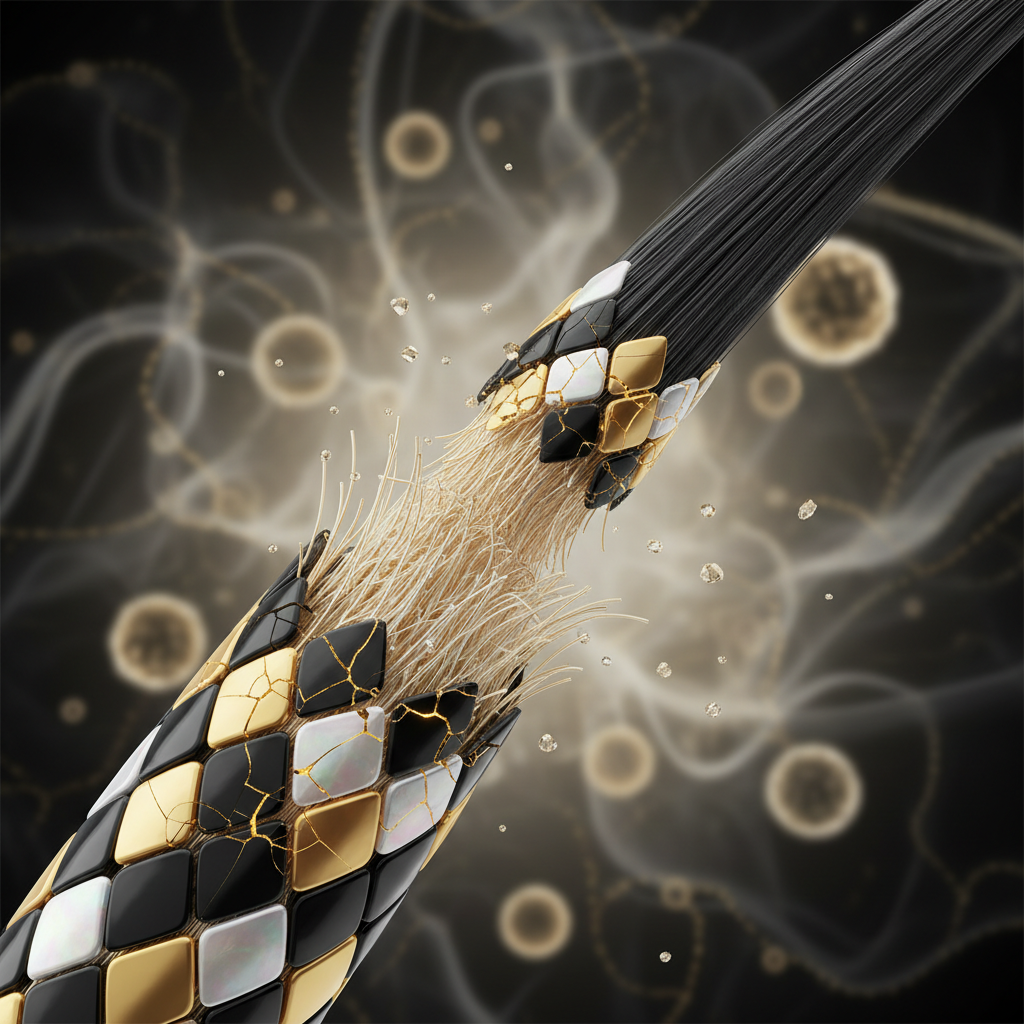
Scientific trichology views the cuticle as the hair fibre's primary physical armour. In healthy virgin hair, the cuticle comprises roughly 5 to 10 overlapping cellular layers aligned like tiles on a roof. These scales point downwards from root to tip. The outermost surface of each scale is coated with a specialised layer of lipids, primarily 18-methyleicosanoic acid (18-MEA), which gives hair its natural water-repellent (hydrophobic) quality and smooth slip.
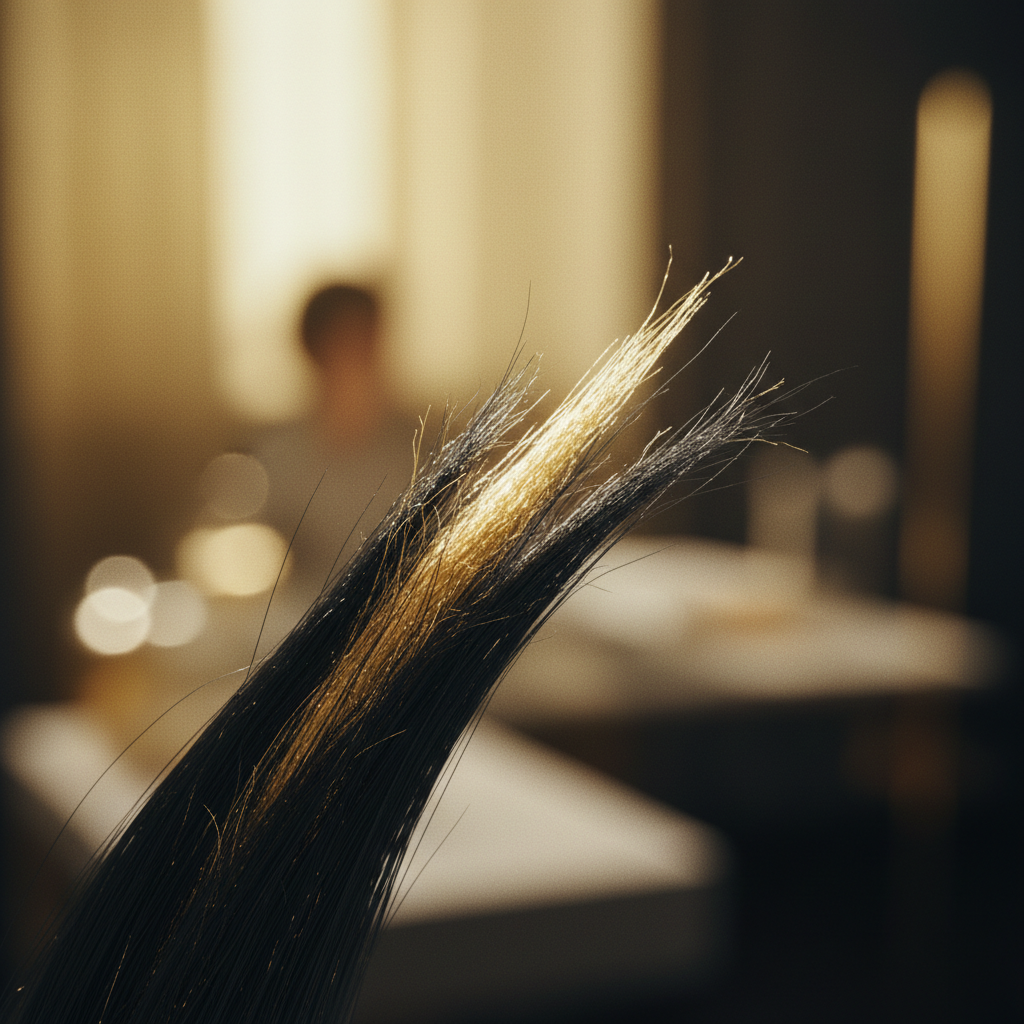
When Cuticle Damage sets in, this protective geometry fails. Electron microscopy shows that exposure to alkaline chemical treatments (such as ammonia in permanent dyes and bleaches, typically at pH 9.0 to 10.5) forces the cuticle scales to swell and lift aggressively. This process allows oxidising agents to enter the cortex, but it permanently breaks the covalent bonds anchoring the 18-MEA lipid layer.
Without this hydrophobic lipid envelope, hair transitions into a hydrophilic, highly porous sponge. Water rushes into the cortex, causing the inner fibre to swell, while ambient dry air pulls moisture straight back out. This rapid fluctuation, termed hygral fatigue, leads to structural stress, cracked scales, chipped edges, and eventual complete scale loss. Once the cuticle completely erodes in an area, the underlying cortex is exposed directly to environmental abrasion, causing premature fibre snapping.
| Cuticle Condition | Surface Charge & Chemistry | Microscopic Appearance | Physical Symptoms |
|---|---|---|---|
| Intact / Virgin | Hydrophobic, rich in 18-MEA lipids, negative surface charge (-10 to -15 mV) | Smooth, tightly overlapping scales lying flat toward the tip | High shine, easy wet and dry detangling, elastic bounce |
| Mildly Weathered | Partial lipid depletion, increased negative surface charge | Slight edge lifting, microscopic chipping at the scale margins | Mild dullness, occasional tangles at ends, slight frizz in humidity |
| Severe Cuticle Damage | Completely hydrophilic, high negative charge, lipid layer stripped | Missing scales, cracked cell boundaries, exposed cortex microfibrils | Chronic matting, rough sandpaper feel, unmanageable frizz, split ends, fibre snapping |
What the evidence does not show
There are several widespread misconceptions regarding damaged cuticles that cosmetic science directly refutes.
First, evidence does not show that any cosmetic product can permanently mend, cure, or regrow broken cuticles. Marketing phrases claiming to "repair hair cells" or "rebuild destroyed cuticles" are biologically misleading. Hair strands emerge from the scalp follicle as metabolically inactive, fully keratinised structures. They contain no live cells, vascular supply, or genetic machinery to synthesise new structural cuticle proteins. Treatments can glue broken scales down or temporarily fill hollow voids, but these cosmetic patches wash away over time.
Second, Cuticle Damage is not the same as hair shedding or biological hair loss. Hair loss (alopecia) originates beneath the scalp within the living dermal papilla and follicular stem cells. Cuticle erosion is purely a shaft integrity defect. While severe Cuticle Damage causes hair breakage along the mid-lengths and ends, making the hair appear thinner, the hair follicle itself continues its normal growth cycles unimpeded.
The mechanisms behind cuticle breakdown
Understanding how the cuticle degrades helps pinpoint where daily routines need adjusting. The degradation occurs across four distinct pathways:
Chemical degradation
Alkaline chemicals (pH 8.5 to 11.0) used in hair colourants, lighteners, and chemical relaxers break disulfide cross-links within the cuticle's sub-components (the epicuticle, exocuticle, and endocuticle). The exocuticle is rich in cystine (roughly 30% of its amino acid content), giving it rigidity. When chemical oxidisers cleave these cystine bonds into cysteic acid, the structural rigidity collapses, leaving scales soft, perforated, and unable to flatten back down against the shaft.
Thermal breakdown
Applying thermal styling tools (flat irons, curling wands) above 180 degrees Celsius physically softens keratin. If hair contains residual moisture when exposed to rapid heat exceeding 100 degrees Celsius, water trapped inside the cortex and beneath the cuticle scales vaporises instantly. This sudden expansion creates microscopic steam cavities and blister-like bubbles inside the cuticle cells (often classified as bubble hair), cracking the scales apart.
Mechanical friction
Vigorous towel-drying, backcombing, and brushing wet hair with fine-toothed brushes create intense shear stress. Wet hair swells by up to 15 to 20 percent in diameter and displays lower tensile resistance. Brushing against the grain (from tip to root) forcibly peels the delicate scale edges back, snapping the scales off at their base.
Environmental photo-oxidation
Ultraviolet radiation (UVA and UVB) degrades amino acids such as cystine, tryptophan, and tyrosine inside the cuticle. Sunlight oxidises the surface lipids and weakens the intercellular cement (the cell membrane complex) that glues adjacent cuticle layers together, causing them to delaminate and flake off over time.
Signs that your hair cuticles are compromised
You can identify Cuticle Damage through observable physical behaviours:
- Sandpaper or rough texture: Gliding your fingers from the ends up toward the roots meets significant resistance, friction, or a raspy texture.
- Persistent dullness: Light relies on flat, mirrored surfaces to reflect evenly. Raised, broken scales scatter light irregularly, eliminating natural shine regardless of cleanliness.
- Rapid water absorption and prolonged drying: Compromised hair becomes wet almost instantly when submerged because it lacks hydrophobic oils, yet it clings to excess internal water, taking hours to dry naturally.
- Frequent knotting and matting: Raised cuticle scales act like tiny barbs. When adjacent strands rub together, the raised edges lock into one another, creating dense, persistent tangles.
- Split ends (trichoptilosis): Once the outer cuticle protective sleeve wears through completely, the inner cortical fibres unravel into two or more distinct strands.
Restorative care and cosmetic management
Because biological healing is impossible, restoring condition focuses on cosmetic preservation and friction reduction.
Adjusting formulation pH
Healthy hair and scalp thrive at an acidic pH between 4.5 and 5.5. Cleansers and conditioners buffered to this acidic range help contract the hair fibre, encouraging lifted cuticle scales to sit as flat as possible against the shaft. Avoid high-pH soaps (pH 8.0 to 10.0), which swell and lift cuticles.
Leveraging cationic conditioners
Damaged cuticles carry an intense negative electrostatic charge due to the oxidation of cystine into cysteic acid. Cationic surfactants (such as behentrimonium chloride or cetrimonium chloride) and cationic polymers possess positive electrical charges. They are electrostatically drawn to the most damaged areas of the cuticle, laying down a thin, lubricating film that smooths down rough edges and neutralises static.
Protective sealants and hydrolysed proteins
Silicones (such as dimethicone and amodimethicone) deposit a microscopic, hydrophobic coating over bare spots where 18-MEA has been stripped. This temporary barrier keeps excess ambient moisture out, locks cortical hydration in, and slashes combing friction by up to 80 percent. Small-weight hydrolysed vegetable or keratin proteins (molecular weights under 1,500 Daltons) can penetrate microscopic cracks in the endocuticle to temporarily reinforce structural stability.
Friction control
Swap traditional terrycloth towels for smooth microfibre towels or cotton wraps, blotting rather than rubbing. Sleep on silk or satin pillowcases to prevent nightly shear friction, and detangle hair gently using wide-tooth combs or flexible-bristle detangling brushes, starting at the ends and working upward toward the scalp.
When the cause may be something else
Not all rough, unmanageable hair stems from environmental or cosmetic Cuticle Damage. If hair displays extreme fragility from the scalp or unusual structural twisting, consider alternative diagnoses:
- Monilethrix: A rare genetic condition where the hair shaft develops beaded, alternating thick and thin nodes that snap easily under minimal handling.
- Trichorrhexis nodosa: The formation of weak, swollen nodes resembling two paintbrushes thrust together. While often secondary to extreme physical trauma, it can occasionally be triggered by underlying metabolic, nutritional, or genetic abnormalities.
- Pili torti: A structural defect characterised by hair fibres that are twisted 180 degrees along their long axis, leading to fragile breakage and rough texture from early childhood.
- Extreme hard water mineral buildup: High concentrations of dissolved calcium and magnesium (above 180 mg/L) can precipitate onto the cuticle surface, creating a chalky, brittle feel that mimics structural damage without necessarily destroying the scales themselves.
Supporting hair health from the roots
While cuticle management addresses the outer defence of the existing shaft, maintaining strong fibre production begins at the follicle. Using targeted botanical routines alongside physical care supports optimal conditions for new hair growth. Watermans provides scalp-focused hair formulations, including products containing biotin, rosemary, caffeine, and hydrolysed lupin protein. While topical washes cannot reconstruct previously destroyed cuticle cells on older lengths, a clean, well-nourished scalp environment helps ensure new hair emerges with its natural lipid barrier and cuticle architecture fully intact.
When to seek professional advice
Consult a qualified trichologist or dermatologist if you observe:
- Hair breaking off rapidly in large clumps directly near the scalp level.
- Texture changes accompanied by burning, redness, flaking, or inflammation across the scalp skin.
- Distinct patches of baldness appearing alongside fibre breakage.
- Extreme shaft brittleness that does not soften or improve after eliminating all thermal styling and implementing deep-conditioning treatments over a period of 6 to 8 weeks.
Frequently asked questions about Cuticle Damage
Can Cuticle Damage be completely cured or reversed?
No. Because hair fibres are dead biological tissue without active cellular metabolism, Cuticle Damage cannot be naturally regenerated or biologically healed. Damaged or missing cuticle scales cannot regrow. High-performance conditioners, hydrolysed proteins, and cosmetic silicones can temporarily bridge fissures and smooth the fibre, but these treatments are temporary. Severely eroded ends must eventually be trimmed away.
Does Cuticle Damage cause hair loss from the scalp?
No, Cuticle Damage does not trigger biological hair loss or disrupt the follicular growth cycle. The cuticle is an external component of the hair shaft. Damage to the cuticle causes fibre weakness, splitting, and mid-shaft breakage. Although this breakage can make your hair look thinner and stop it from gaining length, the root of the hair remains anchored inside the follicle.
How does hair bleaching trigger severe Cuticle Damage?
Bleaching requires high-pH alkaline solutions (typically pH 9.0 to 10.5) to swell the shaft and force open the protective cuticle layers. The bleaching agent then oxidises natural melanin pigments inside the cortex. In doing so, it destroys the protective 18-MEA lipid layer and cleaves structural cystine bonds, leaving the cuticle scales permanently raised, chipped, porous, and prone to rapid moisture loss.
What is the most effective everyday habit to prevent Cuticle Damage?
The most effective habit is minimising wet friction and avoiding excessive direct heat. Never brush hair aggressively when wet, as water weakens internal bonds and softens cuticle margins. Use a wide-toothed comb on conditioned hair, always apply a heat protectant before styling, keep hot tools below 180 degrees Celsius, and blot hair dry gently with a microfibre towel instead of rubbing.
The bottom line on Cuticle Damage
Cuticle Damage compromises the outermost protective shield of your hair, altering its surface chemistry from a slick, water-repellent barrier into an exposed, porous strand vulnerable to snap breakage. Because hair cannot biologically repair its own structural scales, long-term hair health requires a defensive strategy. By lowering thermal heat, approaching chemical lightening with care, balancing formulation pH, and using smoothing conditioning polymers, you can preserve the integrity of your cuticle layer and keep your hair strong, resilient, and manageable.
Sources and references
- Journal of Cosmetic Dermatology: Structural and biochemical properties of the human hair cuticle and cortex.
- International Journal of Cosmetic Science: The role of 18-methyleicosanoic acid in hair surface hydrophobicity and combability.
- British Journal of Dermatology: Scanning electron microscopy studies of weathered and chemically treated human hair.
- American Academy of Dermatology: Evidence-based hair styling practices to reduce physical and thermal hair breakage.
Find these ingredients in Watermans products
- Biotin: you will find this ingredient in our Hair Growth Shampoo.