Porosity and Chemical Processing: Structural Impact and Management
9 min read ·
Understand how Porosity and Chemical Processing interact, how bleach and perms alter cuticle structure, and how to protect chemically treated hair from breakage.
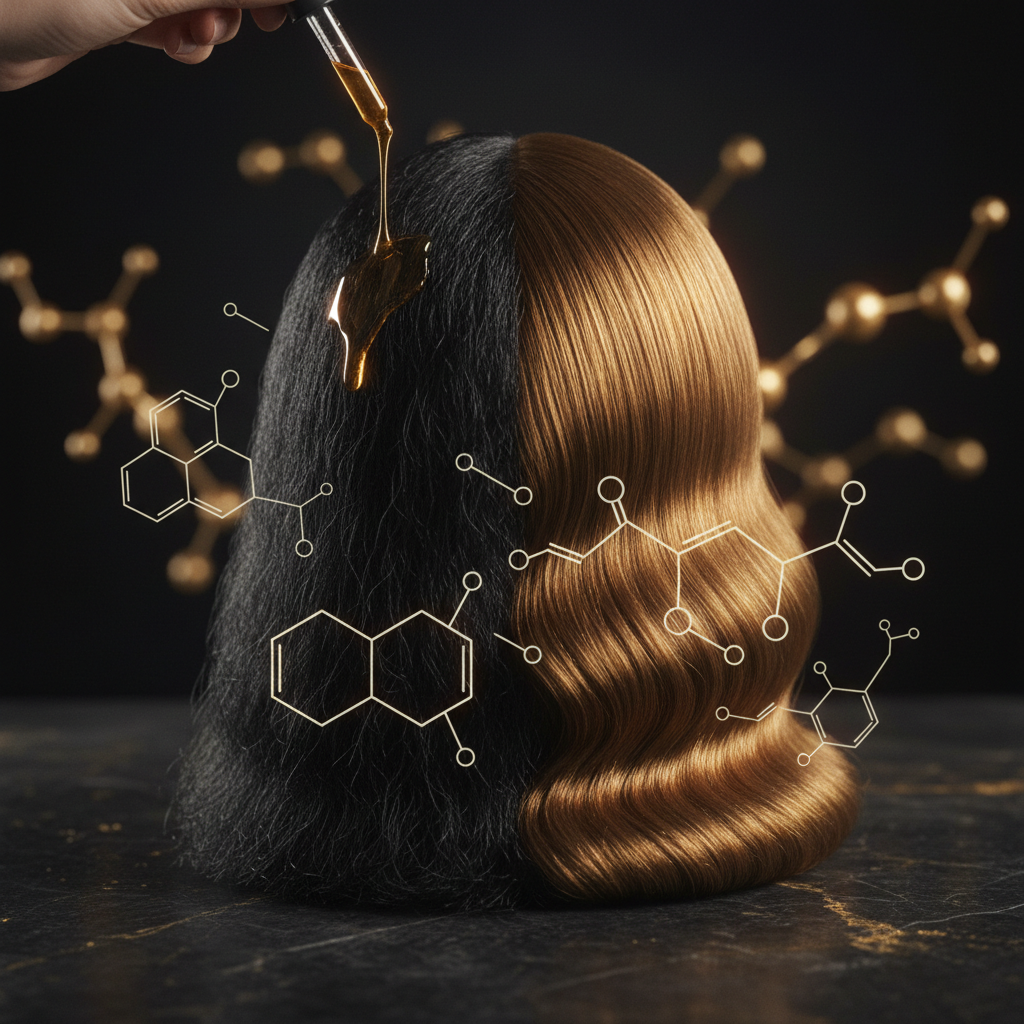
Quick answer: Hair porosity dictates how moisture, chemicals, and salon formulas enter and exit the hair shaft. The relationship between Porosity and Chemical Processing is reciprocal: your existing porosity determines how rapidly dyes, bleaches, and perm solutions penetrate, while the alkaline pH of those treatments permanently lifts or strips the protective cuticle layers, driving porosity higher. The main limitation is that cuticle loss from aggressive chemical services is irreversible, meaning damaged, high-porosity hair cannot be biologically repaired, only cosmetically managed with film-formers and proteins.
Key takeaways
- Natural hair has an intact, hydrophobic cuticle layer coated in 18-methyleicosanoic acid (18-MEA), which repels excess water and regulates moisture entry.
- Alkaline chemical treatments like bleach (pH 10 to 11), relaxers (pH 12 to 14), and permanent tints swell the fibre and strip 18-MEA, dramatically increasing porosity.
- High-porosity hair processes chemical services far more rapidly than low-porosity hair, raising the risk of severe fibre breakage and uneven, muddy pigment absorption.
- Chemical damage does not stop at the cuticle. It oxidises disulphide bonds within the internal cortex, reducing structural tensile strength.
- While hydrolysed proteins and acidic sealers can temporarily patch gaps and reduce porosity, severed keratin structures cannot regenerate naturally.
Porosity and Chemical Processing: what the evidence shows
Research into hair lipid chemistry and structural morphology demonstrates that chemical salon services alter the hair's surface energy and porosity more than any other factor. Virgin hair sits at an acidic isoelectric point near pH 3.67, with a tightly sealed cuticle and an intact lipid barrier.
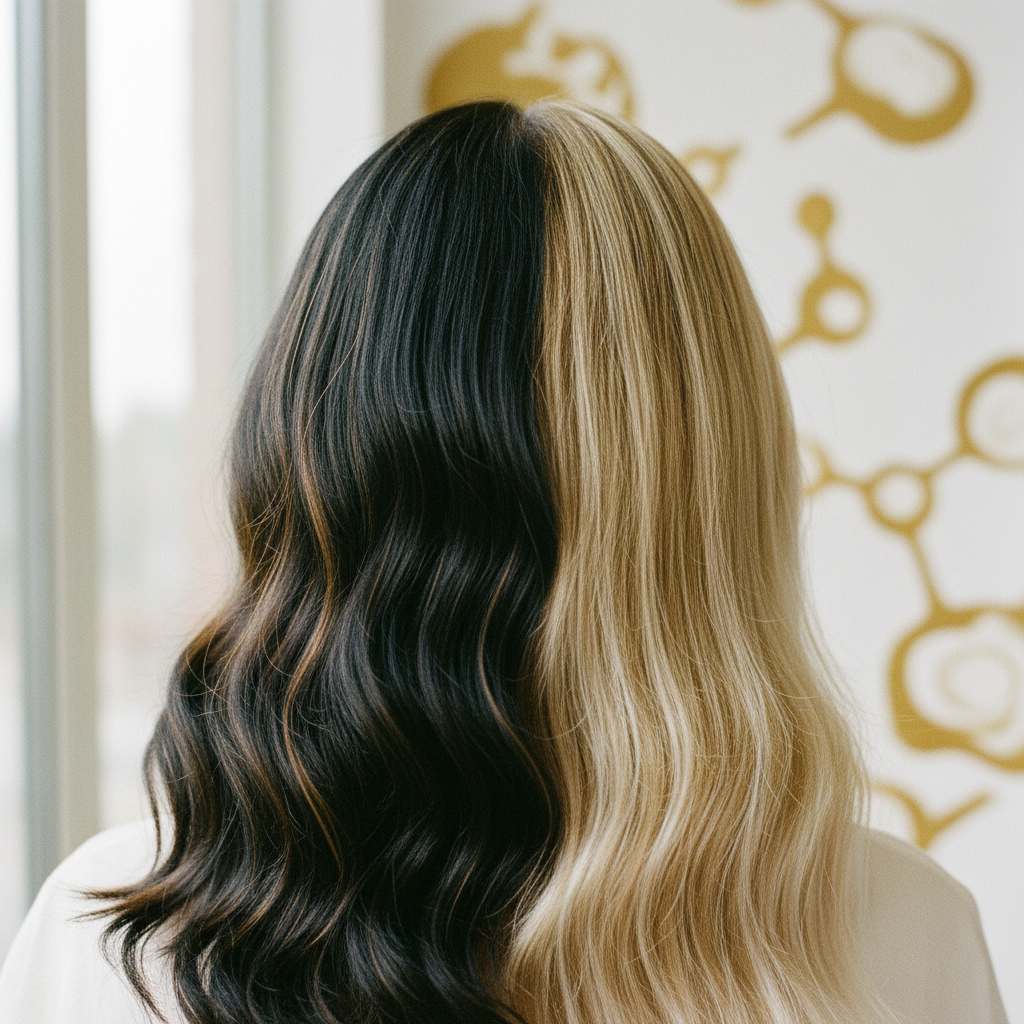
When hair undergoes bleaching, permanent colouring, perming, or relaxing, alkaline agents (most commonly ammonium hydroxide or sodium hydroxide) lift the imbricated cuticle scales. This allows hydrogen peroxide, reducing agents, or active lye to enter the cortex.
During this process, the essential surface lipid 18-methyleicosanoic acid (18-MEA) is stripped from the epicuticle through alkaline hydrolysis. Without 18-MEA, the hair switches from being naturally hydrophobic (water-repelling) to hydrophilic (water-loving). This radical transformation lies at the core of Porosity and Chemical Processing: the hair absorbs water rapidly, swells beyond its natural elastic limit, and loses moisture just as quickly, leaving the fibre dry, brittle, and structurally compromised.
The mechanism: how alkaline services change the cuticle and cortex
The hair shaft consists of three main zones: the outermost cuticle, the structural cortex, and the central medulla. The interaction between chemical services and hair porosity unfolds in distinct phases:
- Alkaline swelling and scale lifting: Permanent dyes (typically pH 9 to 10.5) and bleach mixtures (pH 10 to 11.5) force the 6 to 10 overlapping layers of cuticle cells to flare open. In healthy hair, these scales lie flat like shingles on a roof. Chemical swelling forces them apart, creating microscopic voids.
- Lipid extraction: Alkaline oxidation dissolves the covalent thioester bonds holding 18-MEA to the outer protein membrane. Once lost, the cuticle loses its natural slip and water resistance.
- Cortex oxidation and protein loss: As bleaching agents oxidise natural melanin, they simultaneously oxidise cystine, the primary amino acid responsible for cross-linking keratin chains via disulphide bonds. Cystine is converted into cysteic acid. The higher the level of cysteic acid, the weaker the inner fibre becomes and the more porous the hair behaves.
- Permanent porosity elevation: When the chemical is rinsed, the cuticle scales cannot fully return to their original, flat alignment. Gaps, chipped edges, and exposed cortical cells remain, permanently classifying the hair as high porosity.
| Porosity Level | Cuticle State | Chemical Processing Speed | Mechanical Strength | Primary Risk |
|---|---|---|---|---|
| Low Porosity | Tightly closed, intact 18-MEA lipid layer | Slow, highly resistant to penetration | High elasticity, resists breakage | Under-processing, uneven lift, chemical buildup |
| Medium (Normal) | Slightly raised edges, minimal lipid erosion | Predictable, standard manufacturer timing | Normal elasticity and tensile strength | Minimal when standard timings are followed |
| High Porosity | Chipped, missing, or permanently flared scales | Extremely rapid, aggressive absorption | Low elasticity, snaps easily when wet or dry | Severe breakage, uneven colour uptake, rapid fading |
What the evidence does not show
There is no scientific evidence that cosmetic treatments, leave-in masks, or bonding additives can biologically rebuild the cuticle or restore virgin porosity. While cosmetic chemistry has introduced effective film-forming polymers and bonding complexes that bridge broken disulphide pathways, they do not replace the missing biological cellular membrane complex (CMC) or reattach 18-MEA.
Furthermore, Porosity and Chemical Processing does not cause true hair loss (follicular shedding or miniaturisation such as androgenetic alopecia or telogen effluvium). When chemically treated, high-porosity hair snaps at the mid-shaft or near the root due to loss of tensile strength, this represents hair breakage, not hair shedding from the follicle. Chemical treatments can only induce true hair loss if caustic burns directly injure the scalp and follicular units.
Signs that chemical processing has altered your porosity
Recognising when chemical services have compromised your hair's porosity allows you to adjust both maintenance and future styling:
- Rapid wetting and drying: High-porosity hair saturates instantly under the shower spray but feels dry and rough within minutes of towel-drying.
- Tangles and friction: Damaged, raised cuticles snag against one another, creating chronic matting at the nape and ends.
- Flash-toning or uneven colour results: High-porosity zones, often the ends or previously lightened sections, pull toners and direct dyes too dark, too ashy, or distinctly muddy, while healthier roots resist uptake.
- Rubber-band elasticity when wet: When wet, strands stretch abnormally long without springing back, snapping under light tension.
- Dullness: Cuticles that no longer lie flat cannot reflect light smoothly, causing hair to look matte regardless of how clean it is.
Managing porosity during and after chemical services
When planning salon services on hair that already exhibits altered porosity, specific chemical adjustments are required to prevent structural failure:
- Perform a strand test: Never apply a uniform lifting or relaxing formula across the head. A strand test reveals how quickly the mid-lengths and ends process compared to the roots.
- Use porosity equalisers before colouring: Protein-rich sprays or conditioning sprays level out the surface charge of the hair, allowing dyes to deposit evenly across damaged and healthy zones.
- Lower developer volumes: For hair with elevated porosity, bleach does not require high peroxide concentrations. Dropping from 30 volume (9%) to 10 volume (3%) or 20 volume (6%) slows the oxidation rate and preserves cortex integrity.
- Incorporate acidic sealers: Following any chemical service, rinse thoroughly and apply an acidic treatment (pH 3.5 to 4.5). Acidic environments help contract the hair shaft, re-aligning the remaining cuticle scales as flatly as possible.
- Apply hydrolysed proteins and lipids regularly: Formulations containing hydrolysed wheat, soy, or keratin proteins deposit small peptide chains into micro-voids in the cuticle, while bio-identical lipids reduce moisture evaporation.
When the cause of high porosity may be something else
Chemical treatments are the fastest route to high porosity, but they are not the only cause. If your hair is porous, dry, and brittle despite never being bleached, relaxed, or tinted, consider other factors:
- UV radiation and sun exposure: Prolonged ultraviolet light breaks down cystine bonds and photo-oxidises surface lipids in virgin hair, lifting porosity over time.
- Thermal tool overuse: Blow-dryers held too close, flat irons, and curling tongs exceeding 180 degrees Celsius degrade the keratin matrix and crack the cuticle layer.
- Mechanical abrasion: Aggressive backcombing, vigorous rough-drying with coarse cotton towels, and hard-bristle brushes strip cuticle scales mechanically.
- Environmental water minerals: Hard water containing high levels of calcium, magnesium, and copper deposits minerals into the cuticle, making it rough, resistant, and mimics chemical damage.
When to seek professional stylist or trichological advice
If your hair stretches like chewing gum when wet, snaps continuously during routine combing, or displays patchy, discoloured bands from overlapping chemical services, pause all at-home chemical treatments. A qualified colourist or trichologist can perform a microscopic analysis or wet-stretch test to establish your fibre's breaking point.
Should you experience persistent scalp irritation, burning, redness, or patchy shedding following a chemical application, consult a trichologist or GP immediately. These symptoms indicate chemical burns or contact dermatitis rather than surface porosity issues.
Supporting chemically stressed hair
For chemically treated hair experiencing increased porosity, breakage, and surface roughness, an effective maintenance regimen focuses on supporting the scalp environment while reinforcing weakened hair fibres against mechanical snapping.
Watermans Grow Me Shampoo and Conditioner offer a gentle, nutrient-rich cleansing experience that cleanses without stripping delicate lipids. Formulated with hydrolysed lupin protein, biotin, rosemary, and niacinamide, the system helps smooth the cuticle surface and improve mechanical resilience. Using balanced, protein-supported products helps disguise porosity gaps, enhancing shine and manageability without weighing down chemically vulnerable lengths.
Frequently asked questions about Porosity and Chemical Processing
How does porosity affect colour processing time?
High-porosity hair processes chemical dyes and bleaches much faster than low-porosity hair because the open cuticle provides immediate access to the cortex. However, high-porosity strands also lose artificial colour molecules rapidly during washing, leading to premature fading. Low-porosity hair requires longer development times or subtle heat to allow pigments to penetrate the tightly sealed outer layer.
Can you fix high porosity caused by bleach permanently?
No, cuticle damage from chemical lifting cannot be permanently fixed. Cuticle cells do not have living biological mechanisms to regenerate. While bonding agents, conditioning masques, and protein treatments patch the hair shaft and temporarily lower effective porosity, these benefits wash out over time and must be continuously maintained until new virgin hair grows in.
What happens if you perm high-porosity hair?
Perming high-porosity hair carries a high risk of catastrophic breakage. Perm solutions break disulphide bonds using reducing agents; because porous hair absorbs the solution rapidly, the cortex can dissolve beyond its structural tolerance. This results in a weak, frizzy curl pattern or chemical melt, where strands snap under the slightest tension.
Why does chemical processing cause hair to feel mushy when wet?
Hair feels mushy, gummy, or excessively stretchy when alkaline chemicals degrade both the protective outer cuticle and the internal keratin cross-links. Without intact disulphide bonds to provide tensile recoil, water rushes into the cortex, breaking hydrogen bonds and leaving the internal protein matrix limp, fragile, and prone to breaking.
Conclusion
Understanding the dynamic balance between Porosity and Chemical Processing is vital for protecting hair against preventable breakage and chemical over-processing. Every alkaline service alters the physical architecture of the hair fibre, stripping essential surface lipids, lifting cuticles, and depleting cortical strength. By matching chemical strength to your existing porosity, using acidic equalisers, and maintaining hair with targeted proteins, you can enjoy colour and texture services while safeguarding the longevity of your hair.
Sources and references
- International Journal of Cosmetic Science, "The surface properties of human hair: lipid structure and chemical treatments," 2008.
- Journal of the Society of Cosmetic Chemists, "Chemical and physical changes in human hair induced by bleaching," 1993.
- Robbins, C. R., Chemical and Physical Behavior of Human Hair, 5th ed., Springer-Verlag, 2012.
- Cosmetic Science and Technology, "The effect of alkaline chemical treatments on the hair cuticle and cortex," 2015.
Find these ingredients in Watermans products
- Copper: you will find this ingredient in our Hair Vitamins.
- Niacinamide: you will find this ingredient in our Hair Mask.