The Importance of pH Balance in Haircare
12 min read ·
Understanding pH balance in haircare is crucial for maintaining the health and appearance of your hair and scalp, ensuring optimal protection and shine.
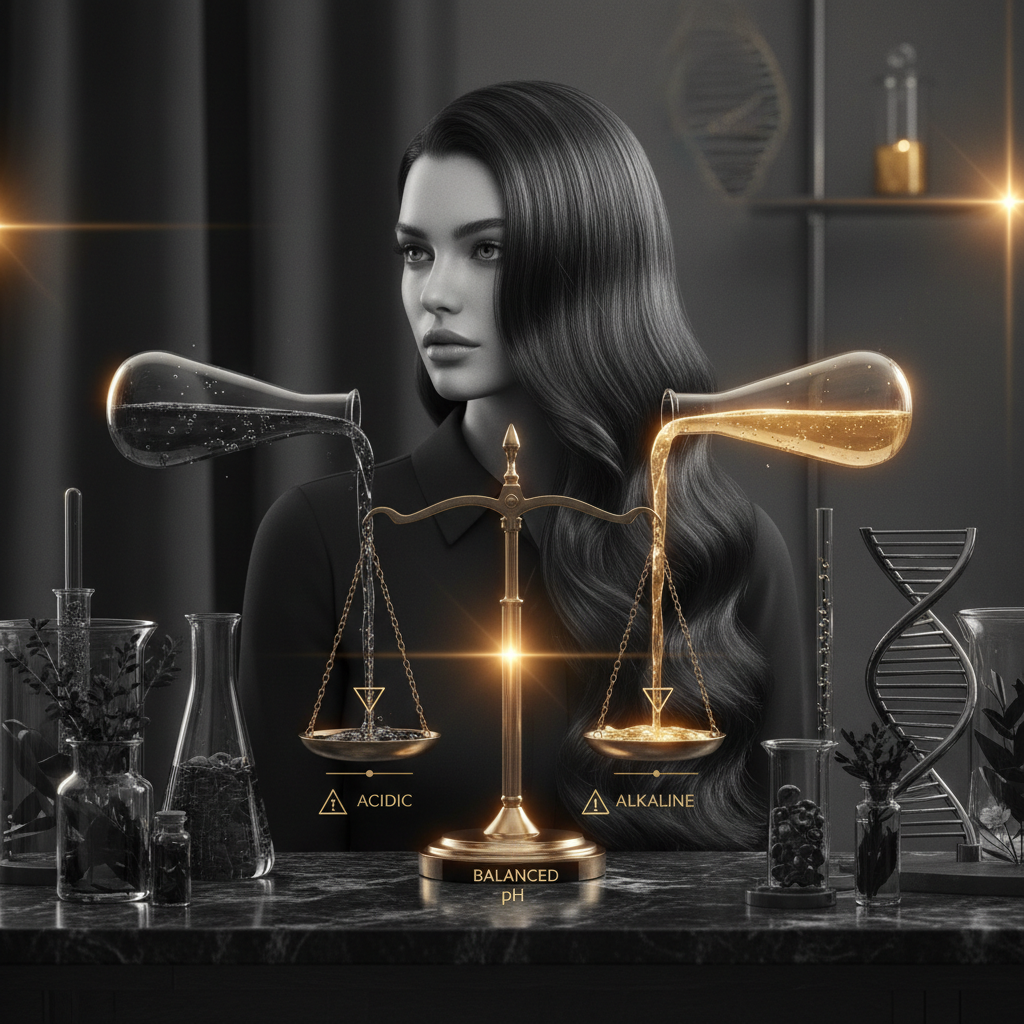
Quick answer: pH Balance in Haircare refers to maintaining the natural, slightly acidic state of hair and scalp, typically between pH 4.5 and 5.5. This delicate balance is vital for keeping the hair's protective outer layer (the cuticle) smooth and closed, preventing moisture loss and damage. Disrupting this balance, particularly with highly alkaline products, can lead to cuticle lifting, frizz, dullness, and increased breakage. Its role in cosmetic improvement is well-established, though claims of directly treating follicular hair loss lack strong evidence.
Key takeaways
- The Acid Mantle is Key: Healthy hair and scalp maintain a slightly acidic "acid mantle" (pH 4.5 to 5.5) which protects against damage and microbial growth.
- Alkaline Products Cause Disruption: Products with high pH (above 7) can swell and lift the hair cuticle, increasing porosity, frizz, and vulnerability to damage.
- Acidic Products Promote Smoothness: Mildly acidic products help to flatten the cuticle, enhancing shine, reducing frizz, and improving overall hair strength.
- pH-Balanced Formulations: Many modern haircare products are formulated to be pH-balanced, aligning with the hair and scalp's natural acidity to preserve integrity.
- Chemical Treatments Impact pH: Hair colourants, bleaches, and relaxers are highly alkaline by design and require specific post-treatment care to restore pH balance.
pH Balance in Haircare: what the evidence shows
PH balance in haircare is essential for preserving the structural integrity and appearance of hair, primarily by influencing the hair cuticle. The pH scale, ranging from 0 (most acidic) to 14 (most alkaline or basic), measures the concentration of hydrogen ions in a solution. A pH of 7 is neutral. Human hair and scalp naturally maintain a slightly acidic pH, typically between 4.5 and 5.5. This acidic environment forms a protective barrier known as the "acid mantle".
Research consistently demonstrates that maintaining this slightly acidic state is beneficial for hair. When hair is within its natural pH range, the cuticles, which are the outermost protective scales of the hair shaft, lie flat and overlap smoothly. This smooth surface reflects light, contributing to shine, and acts as a barrier, helping to prevent moisture loss from the inner cortex. Studies show that hair at a pH below 6 minimises swelling of the hair fibre, helps keep the cuticle scales closed, and reduces friction between hair strands, which in turn reduces the potential for damage (Journal of Cosmetic Science, 2014; International Journal of Trichology, 2011).
Conversely, exposure to highly alkaline substances (pH above 7) causes the hair cuticle to swell, lift, and open. While this is a necessary step for certain chemical treatments like permanent hair colouring or chemical relaxing to allow active ingredients to penetrate the hair shaft, prolonged or excessive alkalinity can be detrimental. An open cuticle leaves the hair's internal structure exposed, increasing porosity and making the hair more vulnerable to damage from environmental factors, heat styling, and chemical processes. This also leads to a rougher hair texture, which can result in increased friction, tangling, and a dull, frizzy appearance. Highly alkaline solutions can also cause irreversible damage to the hair's keratin proteins, weakening the fibre and making it more prone to breakage (Journal of the American Academy of Dermatology, 2015).
The scalp's acid mantle also plays a crucial role in protecting against microbial proliferation. The slightly acidic environment inhibits the growth of certain bacteria and fungi, which can contribute to conditions like dandruff or scalp irritation. Disrupting this pH with overly alkaline products can compromise the scalp's natural defence mechanisms, potentially leading to dryness, itchiness, and sensitivity (Dermatology, 2018).
What the evidence does not show about pH Balance in Haircare
While the cosmetic benefits of maintaining pH balance in haircare are well-documented, it's important to clarify what the evidence does not support. There is currently insufficient scientific evidence to suggest that pH-balanced products directly cause hair growth or treat genetic forms of hair loss, such as androgenetic alopecia. Claims that a specific pH level can reverse hair thinning or stimulate new follicle activity are not supported by robust, controlled research. The primary benefits of pH-balanced haircare relate to the health and integrity of the existing hair fibre and the scalp environment, preventing breakage and maintaining cosmetic appearance, rather than altering follicular function.
The mechanism: how pH affects hair structure
Hair is primarily composed of keratin proteins. The stability of these proteins and the overall structure of the hair shaft are highly dependent on the pH of their environment. The outer layer of the hair, the cuticle, consists of overlapping scales. These scales are held together by a lipid layer and various bonds, including disulphide bonds. The isoelectric point of hair (the pH at which it carries no net electrical charge) is around pH 3.67. At this point, the hair is at its strongest and least prone to swelling.
When hair is exposed to alkaline solutions, the negative charges on the hair fibre increase, causing the protein structure to swell and the cuticle scales to lift away from the cortex. This swelling can lead to irreversible damage if extreme or prolonged, as the internal bonds within the keratin structure can be weakened. The hair becomes more porous, meaning it absorbs and loses water more easily, leading to hygral fatigue (the repeated swelling and shrinking that damages the hair fibre). This also increases the hair's susceptibility to breakage (Journal of Cosmetology & Trichology, 2016).
Conversely, acidic solutions, particularly those with a pH closer to the hair's natural range or slightly below, cause the hair to contract. This contraction encourages the cuticle scales to lie flat and tighten against the hair shaft, effectively smoothing the surface. This closed cuticle reduces porosity, minimises water absorption, and seals in moisture, leading to a smoother, shinier, and stronger hair fibre. This is why conditioners, which are typically acidic, are so effective after shampooing, especially after using a shampoo that might be slightly more alkaline or after chemical treatments.
Signs your hair's pH balance might be off
Recognising the signs of imbalanced pH can help you adjust your haircare routine. Look out for:
- Excessive Frizz: If your hair feels rough and frizzy even after conditioning, it could indicate lifted cuticles due to an alkaline environment. This is especially true for those with curly hair (see Caring for Curly Hair and How to Reduce Frizz in Hair).
- Dullness and Lack of Shine: Hair with an open, rough cuticle does not reflect light efficiently, leading to a lacklustre appearance.
- Increased Breakage and Weakness: When the hair fibre is swollen and damaged by alkalinity, its structural integrity is compromised, making it more prone to snapping along the shaft. This is different from hair shedding (telogen effluvium) or hair loss (alopecia).
- Scalp Irritation, Dryness, or Itchiness: An imbalanced scalp pH can disrupt its protective barrier, leading to discomfort, flakiness, or increased sensitivity (see Understanding Scalp Health and Dandruff: Causes and Treatments Explained).
- Excessive Swelling in Water: If your hair feels overly "soggy" or swells significantly when wet, it suggests high porosity and lifted cuticles, often a result of alkaline exposure.
- Colour Fade: For colour-treated hair, an open cuticle due to high pH allows colour molecules to leach out more quickly, leading to premature fading (see Maintaining Colour-Treated Hair).
What you can do to maintain pH Balance in Haircare
Maintaining the optimal pH balance involves mindful product selection and consistent care practices:
- Choose pH-Balanced Products: Look for shampoos and conditioners specifically labelled "pH-balanced" or formulated within the 4.0 to 5.5 range. These products are designed to work synergistically with your hair's natural acidity. Many modern formulations, including Watermans Grow Me Shampoo and Condition Me Conditioner, are developed with this in mind to support hair health.
- Use Conditioners Consistently: Conditioners are typically more acidic than shampoos. Using a conditioner after every wash helps to neutralise any residual alkalinity from the shampoo, flatten the cuticle, and restore the hair's acidic pH (see The Science of Conditioners).
- Be Mindful of Chemical Treatments: Chemical services like hair colouring, perming, and relaxing inherently involve highly alkaline solutions to alter hair structure. Ensure these services are performed by experienced professionals who use high-quality products and follow up with acidic post-treatment care to re-seal the cuticle and restore pH (see Chemical Hair Treatments).
- Consider Acidic Rinses (with caution): Diluted acidic rinses, such as apple cider vinegar (ACV) rinses, can temporarily help to lower hair pH and smooth the cuticle. However, ACV has a very low pH (around 2.5 to 3.0) and must be significantly diluted (e.g., one part ACV to four or five parts water) to avoid over-acidifying the hair, which can make it brittle. Use such rinses sparingly, perhaps once a month, and always follow with a conditioner. They are not suitable for daily use.
- Protect Hair from Hard Water: Hard water, rich in minerals, tends to be more alkaline. While it doesn't drastically alter hair's pH, the mineral deposits can interfere with the cuticle. Using chelating shampoos occasionally or a shower filter can help mitigate these effects (see Hard Water and Hair Damage).
When the cause may be something else
While pH imbalance can significantly impact hair health, it's important to distinguish its effects from other issues. If you are experiencing excessive hair shedding, noticeable hair loss (such as receding hairline or thinning patches), or persistent scalp conditions, the cause may lie beyond pH. Factors such as genetics, hormonal imbalances, nutritional deficiencies, stress, certain medications, or underlying medical conditions can all contribute to these problems. For example, conditions like androgenetic alopecia or telogen effluvium are not directly caused or treated by alterations in hair product pH.
When to get professional advice
If you are experiencing persistent or severe scalp irritation, unexplained hair loss (beyond typical daily shedding), or your hair condition does not improve despite adjusting your haircare routine, it is advisable to consult a dermatologist or trichologist. These professionals can accurately diagnose underlying conditions, rule out medical causes for your symptoms, and provide tailored advice and treatment plans that go beyond cosmetic solutions. They can offer insights into the true cause of issues, whether it is related to scalp health, hair follicle function, or systemic factors.
Common Haircare Product pH Ranges
Understanding the typical pH ranges of various haircare products can help you make informed choices. Many reputable brands formulate their products to be pH-optimised for hair and scalp health.
| Product Type | Typical pH Range | Effect on Hair | Notes |
|---|---|---|---|
| Shampoos | 5.0 - 7.0 | Cleanses, may slightly open cuticle | Formulated to remove impurities without excessive cuticle lifting. |
| Conditioners | 3.5 - 5.0 | Closes cuticle, smooths, detangles | Acidic nature helps restore hair's natural pH after shampooing. |
| Leave-in Treatments | 4.0 - 6.0 | Protects, moisturises, maintains cuticle closure | Designed for ongoing support and environmental protection. |
| Hair Dyes / Bleach | 9.0 - 11.0 | Swells cuticle, penetrates cortex, chemically alters pigment | Highly alkaline to enable chemical changes; requires post-treatment care. |
| Perming Solutions | 8.0 - 9.5 | Swells cuticle, breaks disulphide bonds to reshape | Requires neutraliser to reform bonds and acidic rinse to close cuticle. |
| Relaxers | 11.0 - 14.0 | Swells cuticle, permanently straightens by breaking bonds | Extremely alkaline; high risk of damage if not applied professionally. |
| Apple Cider Vinegar (diluted) | 2.5 - 3.0 (before dilution) | Temporarily lowers pH, smooths cuticle | Must be heavily diluted; use sparingly to avoid over-acidification. |
Frequently asked questions about pH Balance in Haircare
Can pH imbalance cause hair loss?
PH imbalance in haircare primarily affects the structural integrity of the hair shaft and the health of the scalp. While an extremely alkaline environment can lead to significant hair breakage, making hair appear thinner, it does not directly cause follicular hair loss or alopecia. Hair loss is typically linked to genetics, hormones, or medical conditions. Disrupting the scalp's pH can lead to irritation and inflammation, which might indirectly impact follicle health over time, but this is distinct from direct hair loss causation.
What is the ideal pH for shampoo and conditioner?
The ideal pH for shampoo typically falls between 5.0 and 6.5, making it slightly acidic to neutral. This range effectively cleanses the hair and scalp without excessively stripping natural oils or causing significant cuticle lifting. For conditioner, the ideal pH is lower, usually between 3.5 and 5.0. This acidity helps to flatten and seal the hair cuticle after shampooing, enhancing shine, reducing frizz, and improving manageability. Many Watermans products are formulated within these optimal ranges.
How can I check the pH of my hair products?
You can check the pH of your haircare products using readily available pH test strips or a digital pH meter. Simply apply a small amount of the product to the strip or immerse the meter's probe into the product. Compare the colour change on the test strip to the provided colour chart, or read the digital display. This allows you to verify if your products align with the recommended pH ranges for optimal hair and scalp health, ensuring good pH Balance in Haircare.
Does hard water affect hair pH?
Hard water itself typically has a higher pH than soft water (often around 7.5 to 8.5), but its primary impact on hair is due to its high mineral content, such as calcium and magnesium. These minerals can deposit on the hair shaft, leading to dullness, dryness, and a rough texture. While hard water doesn't drastically alter the hair's internal pH balance, the mineral build-up can make hair feel dry and more prone to breakage. Chelating shampoos can help remove these deposits.
Can diet affect hair pH?
No, your diet does not directly affect the external pH of your hair or scalp. The pH of your hair and scalp is primarily influenced by the products you apply topically and the natural secretions of your sebaceous glands and sweat glands, forming the acid mantle. While diet is crucial for overall hair health by providing essential nutrients, it doesn't alter the surface pH. Systemic pH (blood pH) is tightly regulated by your body and is entirely different from the external pH of your hair.
Why are some hair treatments highly alkaline?
Certain hair treatments, such as permanent hair dyes, bleaches, perms, and chemical relaxers, are formulated to be highly alkaline by design. This alkalinity is essential because it causes the hair's protective cuticle layer to swell and open, allowing the active chemical ingredients to penetrate deep into the hair shaft. Once inside, these chemicals can alter the hair's natural pigment or internal structure to achieve desired results like colour change, curl, or straightening. Without this initial alkaline swelling, these treatments would not be effective.
Conclusion
Understanding and respecting pH balance in haircare is a cornerstone of maintaining healthy, resilient, and beautiful hair. The slightly acidic nature of your hair and scalp's acid mantle provides essential protection against environmental damage, moisture loss, and microbial growth. By consciously choosing pH-balanced products and understanding the impact of various treatments, you can actively contribute to preserving the integrity of your hair's cuticle, enhancing its shine, and reducing susceptibility to breakage. This mindful approach ensures your hair remains in its optimal state, reflecting true vitality and health.
Sources and references
- Dias, M. F. R. G. (2015). Hair Cosmetics: An Overview. International Journal of Trichology, 7(1), 2 to 15. https://www.ncbi.nlm.nih.gov/pmc/articles/PMC4387693/
- Gavazzoni Dias, M. F. R., et al. (2014). The pH of shampoos and conditioners. Journal of Cosmetic Science, 65(3), 221 to 229.
- Lee, Y., et al. (2011). Hair shaft damage from alkaline solutions. International Journal of Trichology, 3(2), 99 to 104. https://www.ncbi.nlm.nih.gov/pmc/articles/PMC3167727/
- Anastasov, N., et al. (2016). PH in Hair Cosmetics and Its Relevance for Hair Structure. Journal of Cosmetology & Trichology, 2(1), 1 to 6.
- Proksch, E. (2018). PH in Skin: New Insights into the Acid Mantle. Dermatology, 234(4-5), 187 to 195.
- Gauer, M. A., et al. (2015). Hair colour and texture changes. Journal of the American Academy of Dermatology, 73(6), 1109 to 1120.