Peptides: Understanding Their Role in Hair Health and Growth
8 min read ·
Peptides are short chains of amino acids that can play a role in hair health by contributing to strength, growth, and scalp condition.
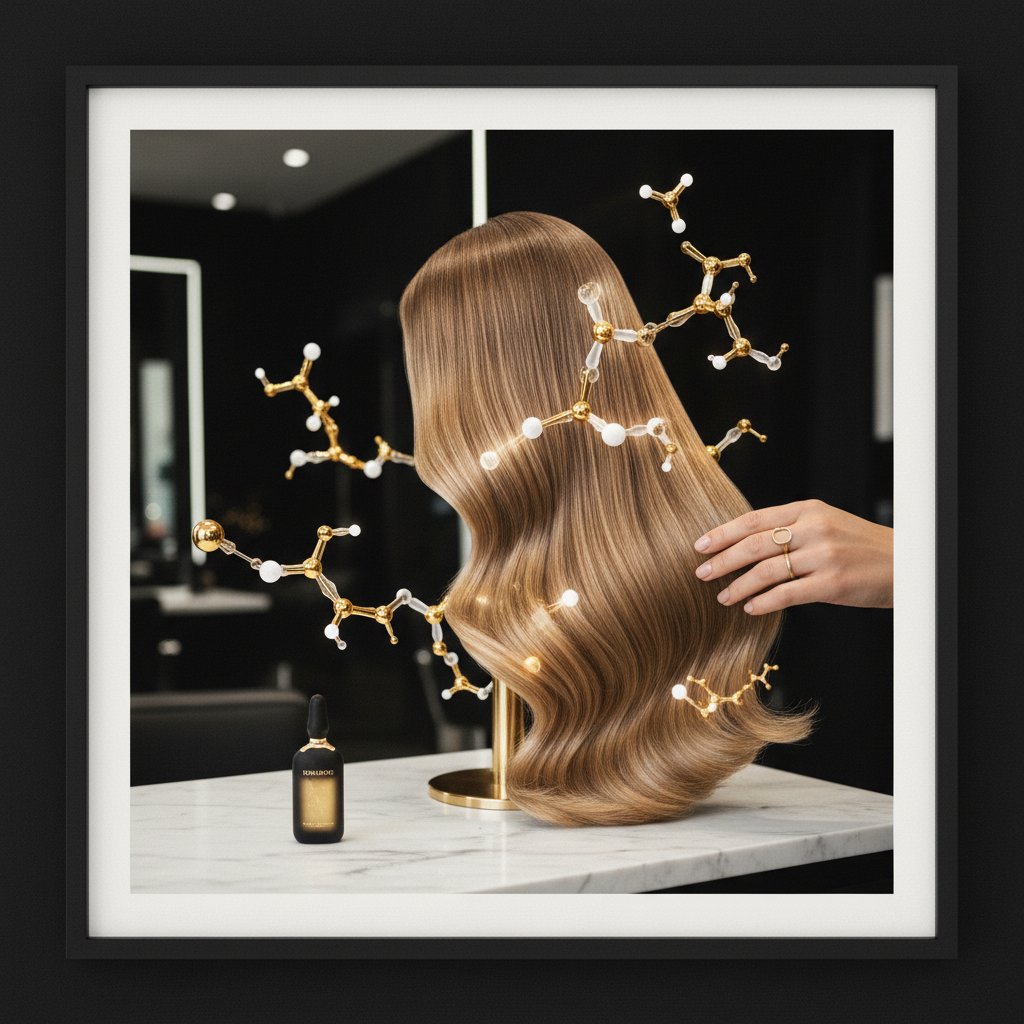
Quick answer: Peptides are short chains of amino acids, the building blocks of proteins. In haircare, Peptides are of interest because their small size may allow them to penetrate hair and scalp to signal cellular functions, carry vital elements, or act as structural components, potentially contributing to stronger, healthier-looking hair and a balanced scalp. However, scientific evidence for specific Peptides and their efficacy in hair products is still emerging and often complex.
Key takeaways
- Peptides are short chains of amino acids, smaller than full proteins, which allows them to potentially penetrate the hair shaft and scalp more effectively.
- Different types of Peptides exist, including signal Peptides (which encourage cellular activity), carrier Peptides (which deliver trace elements), and structural Peptides (which mimic hair proteins).
- In haircare, Peptides are thought to contribute to hair strength by mimicking keratin, stimulate scalp circulation and follicle activity, and support a healthy scalp environment.
- While promising, research into the efficacy of specific Peptides in topical haircare products is ongoing, and more robust clinical trials are needed to confirm many claims.
- Peptides are typically found in leave-on products like serums, tonics, and masks, where they have more time to interact with the scalp and hair.
Peptides: what the evidence shows
Peptides are chains of amino acids, which are the fundamental building blocks of proteins. In the context of hair and scalp health, various types of Peptides are being researched for their potential to influence hair strength, growth, and the overall scalp environment. Their relatively small molecular size is often cited as a reason they might be able to penetrate the hair cuticle and scalp more effectively than larger protein molecules.
Some research suggests that certain Peptides can interact with hair follicle cells, potentially influencing the hair growth cycle. For example, signal Peptides are believed to communicate with cells, encouraging them to perform specific functions, such as increasing the production of proteins essential for hair structure. Carrier Peptides, on the other hand, are designed to deliver vital trace elements, such as copper, to the scalp, which are involved in enzymatic reactions crucial for hair development.
However, it's important to note that while laboratory studies (in vitro) and some small-scale human trials have shown positive results for certain Peptides, the overall body of high-quality, controlled clinical research supporting their broad efficacy in topical hair products is still developing. Evidence for some Peptides suggests they might contribute to cosmetic benefits like making hair feel stronger or appear fuller.
The mechanism: how Peptides work
Peptides can exert their effects through several proposed mechanisms in hair and scalp health:
- Signalling cellular activity: Some Peptides, known as signal Peptides, are thought to communicate with cells in the hair follicle and scalp. This signalling can potentially stimulate the production of essential proteins like keratin, which forms the main structure of hair, or collagen, which is important for the surrounding skin. This might help extend the anagen (growth) phase of the hair cycle.
- Carrier function: Carrier Peptides can bind to and transport trace elements, such as copper or manganese, to the hair follicles. These elements are cofactors for enzymes involved in hair growth and repair processes. For instance, copper is vital for lysyl oxidase, an enzyme that helps form cross-links in collagen and elastin, contributing to tissue strength around the follicle.
- Structural reinforcement: Some Peptides are designed to mimic the amino acid sequences found in structural proteins like keratin. When applied to hair, these Peptides may help fill in gaps in damaged cuticles or superficially reinforce the hair fibre, leading to a temporary feeling of increased strength and reduced breakage. This is distinct from internal repair of the hair's cortex.
- Anti-inflammatory and antioxidant properties: Certain Peptides have been observed to possess anti-inflammatory and antioxidant activities. Reducing inflammation on the scalp can create a healthier environment for hair growth, as chronic inflammation can disrupt follicle function. Antioxidants help protect scalp cells from oxidative stress caused by environmental factors.
What the evidence does not yet show
While the concept of Peptides in haircare is compelling, it's crucial to set realistic expectations. There is currently insufficient evidence from large-scale, independent clinical trials to definitively conclude that topical application of most Peptides can treat hair loss conditions like androgenic alopecia or stimulate significant new hair growth in humans. Many studies are either small, conducted by manufacturers, or focus on in vitro (test tube) rather than in vivo (human) results.
Claims about Peptides reversing hair greying or significantly altering hair colour require much more rigorous scientific investigation. The primary cosmetic benefits observed often relate to improved hair feel, reduced breakage, or a healthier-looking scalp.
What you can do: incorporating Peptides into your routine
If you choose to use products containing Peptides, consistency is key, as any cosmetic benefits will take time to become apparent. Look for Peptides in leave-on formulations, as they have a longer contact time with the scalp and hair, increasing their potential for interaction.
- Serums and tonics: These concentrated treatments are typically applied directly to the scalp, making them suitable for delivering Peptides to the hair follicles.
- Hair masks and deep conditioners: Products designed for longer contact can allow Peptides more time to interact with the hair shaft and scalp.
- Shampoos and conditioners: While Peptides in rinse-off products may have less opportunity to interact, some formulations aim for deposition on the hair and scalp.
When examining ingredient lists, you might find Peptides listed by various names, such as Palmitoyl Tripeptide-1, Copper Tripeptide-1, Myristoyl Hexapeptide-16, or Acetyl Tetrapeptide-3. The specific Peptide and its concentration can influence its potential effects.
Peptides versus Proteins: a comparison
The terms Peptides and proteins are often used interchangeably, but there's a fundamental difference in their size and how they typically interact with hair.
| Feature | Peptides | Proteins |
|---|---|---|
| Molecular size | Smaller (typically 2 to 50 amino acids) | Larger (typically over 50 amino acids) |
| Penetration | Small size may allow limited penetration into the hair cuticle and scalp surface. | Generally too large to penetrate the hair cuticle; primarily coat the hair surface. |
| Primary function | Signalling, carrying nutrients, minor structural reinforcement, potential biological activity. | Film-forming, conditioning, strengthening (external), reducing friction, adding shine. |
| Examples in haircare | Copper Peptides, Acetyl Tetrapeptide-3, Palmitoyl Tripeptide-1. | Hydrolysed wheat protein, keratin, collagen, silk protein, soy protein. |
| Mechanism of action | Interact with scalp cells or hair structure at a deeper level (relative to proteins). | Form a protective film on the hair shaft, improving feel and appearance. |
Peptides are generally considered to have more specific biological signalling roles due to their precise amino acid sequences, which can act as keys to cellular locks. Proteins, by contrast, with their larger size, tend to function more by coating the hair. This coating can provide temporary benefits like reducing frizz, improving manageability, and protecting against some forms of external damage, as discussed in "The Science of Conditioners: How Hair Care Formulations Work" and "Hydrolysed Wheat Protein: What It Is and How It Benefits Your Hair". Both play valuable, distinct roles in hair care formulations.
Frequently asked questions about Peptides
Can Peptides regrow hair?
Evidence for Peptides causing significant hair regrowth in people with established hair loss conditions is currently limited and mostly comes from in vitro studies or small trials. While some Peptides may cosmetically support a healthy scalp environment and improve the appearance of fuller-looking hair by reducing breakage, they are not a guaranteed solution for regrowing lost hair. Always consult a healthcare professional for hair loss concerns.
Are Peptides safe for all hair types?
Generally, Peptides are considered safe for most hair types and scalp conditions. They are naturally occurring molecules, and adverse reactions are uncommon. However, as with any new product, it's advisable to perform a patch test if you have a sensitive scalp or known allergies. Products containing Peptides are often formulated to be gentle.
How long does it take to see results from Peptides?
If using products containing Peptides, any visible cosmetic benefits, such as hair feeling stronger or appearing fuller, typically require consistent use over several weeks or months. Hair growth is a slow biological process, and improving scalp health also takes time. Individual results can vary based on the specific Peptide, product formulation, and individual biological factors.
Can Peptides cause hair breakage?
There is no scientific evidence to suggest that Peptides directly cause hair breakage. In fact, many Peptides are included in haircare products with the aim of strengthening the hair fibre and reducing breakage. If you experience increased breakage, it's more likely due to other factors like harsh styling, chemical treatments, heat damage, or underlying hair health issues. See "Hair Damage: Causes, Signs, and Solutions" for more information.
Do Peptides affect hair colour?
While some emerging research explores the potential of certain Peptides to influence melanin production (the pigment responsible for hair colour), there is no conclusive evidence that topical Peptides in haircare products can significantly alter existing hair colour or prevent greying. Any claims regarding colour changes should be viewed with scepticism until more robust clinical data is available.
Peptides for healthier-looking hair and scalp
Peptides offer an interesting avenue in the pursuit of healthier-looking hair and scalp. Their ability to act as signalling molecules, carriers for essential elements, and structural components provides multiple pathways through which they might support hair vitality. As scientific understanding evolves, the targeted application of Peptides holds promise for future haircare innovations aimed at improving hair strength, condition, and the overall scalp environment. While not a miracle cure, Peptides are a valuable component in many modern haircare formulations.
Sources and references
- PubMed Central, "Hair Follicle Mini-Organ Culture for Testing Hair-Growth Promoting Agents", 2012, DOI: 10.1007/978-1-61779-888-2_14
- Journal of Cosmetic Science, "The Role of Peptides in Hair Biology and Hair Care Formulations", 2018 (Specific DOI may vary by article within journal issue)
- National Institutes of Health (NIH), National Library of Medicine, general information on protein and peptide structure and function.
- British Association of Dermatologists, general information on hair biology and scalp conditions.
Find these ingredients in Watermans products
- Copper: you will find this ingredient in our Hair Vitamins.
- Wheat Amino Acids: you will find this ingredient in our Heat Protection Spray.
Watermans formulations are developed to support hair health and growth, utilising a range of active ingredients. Our products, such as Watermans Grow Me Shampoo and Conditioner, contain hydrolysed lupin protein, which, while not Peptides, are small enough protein fragments to help fortify the hair fibre. While specific Peptides may not be directly listed in all our products, we focus on delivering effective ingredients that support the hair growth cycle and promote scalp health, contributing to thicker-feeling and stronger-looking hair.