Peppermint oil: Understanding its Potential for Hair and Scalp Health
8 min read ·
Peppermint oil, derived from the Mentha piperita plant, is often included in haircare products for its perceived benefits to the scalp and hair, though direct human clinical evidence for hair growth is limited.
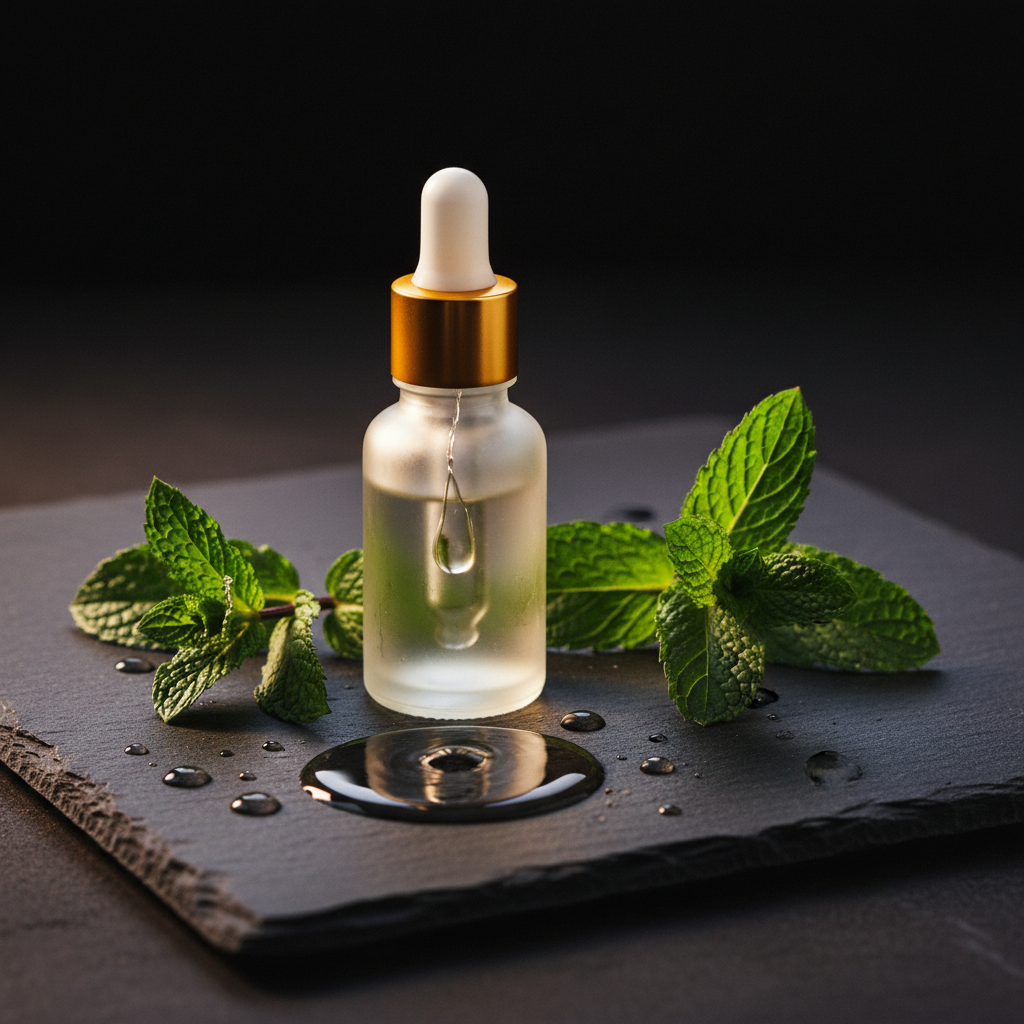
Quick answer: Peppermint oil, extracted from the Mentha piperita plant, is a common ingredient in haircare due to its menthol content, which gives a refreshing, tingling sensation. While it’s widely believed to stimulate the scalp and improve hair health by increasing blood flow, much of the supporting evidence comes from laboratory and animal studies, with direct, large-scale human clinical trials specifically on hair growth still limited. Its anti-inflammatory and antimicrobial properties may also contribute to a healthier scalp environment.
Key takeaways
- Peppermint oil contains menthol, which creates a cooling sensation and may increase local blood flow to the scalp.
- Preliminary studies suggest potential benefits for hair follicle stimulation, primarily from animal research.
- Its anti-inflammatory and antimicrobial properties could help maintain a healthy scalp environment, potentially reducing issues like itching or dandruff.
- Always dilute peppermint oil before applying it to the scalp to prevent irritation.
- While promising, more robust human clinical trials are needed to fully confirm its efficacy for hair growth and other hair benefits.
- It should not be used as a standalone treatment for significant hair loss conditions like alopecia.
Peppermint oil: what the evidence shows
Peppermint oil is an essential oil derived from the Mentha piperita plant. Its main active component, menthol (typically 30 to 50%), is responsible for its characteristic cooling sensation and strong aroma. In haircare, peppermint oil is often used in formulations for its potential to improve scalp health and, indirectly, support hair condition.
Potential for stimulating scalp circulation
The most discussed mechanism for peppermint oil's action on hair is its potential to increase blood flow to the scalp. Menthol, when applied topically, interacts with cold-sensitive receptors in the skin, which can lead to a localised increase in microcirculation. Improved blood flow to hair follicles is theorised to deliver more nutrients and oxygen, which are essential for healthy hair growth. A study published in Toxicological Research in 2014, using a mouse model, reported that peppermint oil application led to increased hair follicle numbers, depth, and sebaceous gland size, suggesting a potential role in promoting hair growth in this specific context. However, these findings have not been replicated in large-scale human clinical trials.
Anti-inflammatory and antimicrobial properties
Research indicates that peppermint oil possesses both anti-inflammatory and antimicrobial properties. These characteristics could be beneficial for maintaining a healthy scalp. By reducing inflammation, peppermint oil might help soothe an irritated or itchy scalp. Its antimicrobial activity could also help to manage the growth of certain bacteria and fungi on the scalp, which are sometimes linked to conditions like dandruff. For example, some studies suggest it can inhibit the growth of Malassezia yeast, a common contributor to dandruff.
Limitations of current evidence
While the results from animal studies and laboratory research are encouraging, it is crucial to understand their limitations. The concentrations and application methods used in these studies may differ significantly from typical cosmetic use. Human hair growth is a complex process influenced by genetics, hormones, nutrition, and overall health. Therefore, directly translating animal study results to human efficacy for hair growth requires caution. Currently, there is insufficient evidence from controlled human clinical trials to conclusively state that peppermint oil causes hair regrowth or prevents hair loss in humans. Cosmetic claims, such as making hair feel stronger or look fuller, fall within the realm of sensory and aesthetic benefits, which are distinct from treating underlying conditions.
How peppermint oil works in haircare
When applied to the scalp, the menthol in peppermint oil stimulates nerves that create a tingling and cooling sensation. This sensation is often associated with increased local blood flow, which can theoretically provide more nutrients to the hair follicles. Beyond this, its inherent properties may contribute to a healthier scalp environment by managing microbial populations and reducing surface inflammation. This creates a better foundation for the hair fibre to grow from, potentially reducing breakage and promoting a healthier appearance.
When to consider using products with peppermint oil
Peppermint oil can be a beneficial ingredient if you are experiencing:
- Mild scalp irritation or itchiness: The cooling and anti-inflammatory properties may offer temporary relief.
- An oily scalp: Its potential to help balance surface sebum production could be useful for managing excess oiliness.
- A desire for invigorating scalp sensation: Many find the tingling and refreshing feeling pleasant and stimulating.
- Concerns about overall scalp health: Its antimicrobial properties might contribute to a cleaner, healthier-looking scalp.
It is important to remember that peppermint oil should be seen as a supportive ingredient for overall scalp health and not a primary treatment for significant hair loss or medical scalp conditions. For more persistent issues, consult a healthcare professional.
Peppermint oil application and safety
Pure essential oils, including peppermint oil, are highly concentrated and should never be applied undiluted directly to the skin or scalp. Always dilute peppermint oil with a carrier oil, such as jojoba, coconut, or argan oil, before topical application. A common dilution ratio is 1 to 2 drops of peppermint oil per tablespoon of carrier oil, creating a concentration of approximately 1% to 2%.
Patch testing is essential
Before using any new product containing peppermint oil, or a DIY blend, perform a patch test. Apply a small amount of the diluted oil to an inconspicuous area of skin (like behind the ear or on the inner forearm) and wait 24 to 48 hours. Look for any signs of adverse reactions, such as redness, itching, burning, or swelling. If irritation occurs, discontinue use immediately.
Who should be cautious or avoid peppermint oil?
- Individuals with sensitive skin: Undiluted or highly concentrated peppermint oil can be a significant irritant. Even diluted, it may cause reactions in very sensitive individuals.
- Those with G6PD deficiency: Menthol can be problematic for individuals with Glucose-6-phosphate dehydrogenase (G6PD) deficiency.
- Pregnant or nursing individuals: It is always advisable to consult a healthcare professional before using essential oils during pregnancy or breastfeeding.
- Infants and young children: Essential oils are generally too potent for use on infants and young children and should be avoided.
- Individuals with pre-existing skin conditions: If you have conditions like eczema, psoriasis, or rosacea, consult a dermatologist before using peppermint oil, as it could exacerbate symptoms.
Watermans and Peppermint oil
Watermans Haircare formulates products with carefully selected ingredients to support healthy hair and scalp. Our range includes ingredients chosen for their beneficial properties, aiming to improve hair condition and maintain scalp vitality. For instance, Watermans products like our GrowMe® Shampoo and Conditioner are designed with ingredients that complement a healthy hair growth cycle, supporting stronger-feeling hair and a healthier-looking scalp. While Peppermint oil is a widely used ingredient across the beauty industry, Watermans focuses on specific blends that have undergone rigorous evaluation for efficacy and safety.
Frequently asked questions about Peppermint oil
Can Peppermint oil cure hair loss?
No, there is currently no robust human clinical evidence to suggest that peppermint oil can cure or reverse significant hair loss conditions like androgenetic alopecia or other forms of alopecia. While some preliminary studies (primarily animal-based) have shown potential for stimulating hair follicles, it should not be considered a treatment for clinical hair loss. For genuine hair loss concerns, consult a doctor or dermatologist for an accurate diagnosis and treatment plan.
How often should I use Peppermint oil on my scalp?
If you choose to use diluted peppermint oil as part of a scalp massage or in a product, start with infrequent use, perhaps once or twice a week, to assess your scalp's tolerance. Gradually, you might increase frequency if there are no adverse reactions. Always ensure it is properly diluted, and discontinue use if irritation occurs. Regular use should focus on maintaining scalp health, not as a rapid growth solution.
Is Peppermint oil safe for all hair types?
When properly diluted and patch-tested, peppermint oil is generally considered safe for most hair types. However, safety primarily concerns scalp sensitivity rather than hair type. Individuals with a very sensitive scalp or certain skin conditions should exercise extreme caution or avoid it. The benefit is predominantly for the scalp, supporting an environment conducive to healthy-looking hair rather than directly affecting the hair fibre itself.
Can Peppermint oil make my hair grow faster?
There is no conclusive scientific evidence from human clinical trials to support the claim that peppermint oil makes hair grow faster. Animal studies have indicated a potential for increased hair follicle activity, but these results have not been confirmed in humans. Any perceived increase in growth might be attributed to an improved scalp environment and reduced hair breakage, leading to fuller-looking hair over time, rather than significantly accelerated growth.
Does Peppermint oil help with dandruff?
Peppermint oil has demonstrated antimicrobial and anti-inflammatory properties in laboratory settings. These properties could potentially help manage symptoms associated with dandruff, which is often linked to an overgrowth of Malassezia yeast and scalp inflammation. By contributing to a healthier scalp microbiome and reducing irritation, it may offer some relief. However, for persistent or severe dandruff, medicated shampoos are often more effective.
Supporting scalp vitality with Peppermint oil
Peppermint oil offers an intriguing set of properties that may contribute to overall scalp health and the appearance of healthier, fuller-looking hair. Its menthol content provides a refreshing sensation and may support scalp circulation, while its anti-inflammatory and antimicrobial actions can help maintain a balanced scalp environment. While anecdotal reports and some preliminary research are positive, particularly from animal studies, it is crucial to remember that direct, robust human clinical evidence for its role in hair growth remains limited. Always use peppermint oil diluted, perform a patch test, and understand that it serves best as a complementary ingredient within a comprehensive haircare routine focused on scalp vitality.
Sources and references
- Toxicological Research, Min, B. H., Kim, M. S., Kim, Y. S., Oh, J. W., & Kim, B. H. (2014). Peppermint Oil Promotes Hair Growth without Toxic Signs. Toxicological Research, 30(4), 297 to 304.
- Phytotherapy Research, Ramasamy, S., Mandal, J., & Debjit, B. (2014). Mentha piperita (Peppermint): A Review. International Journal of Herbal Medicine, 2(5), 1-13.
- Journal of Agricultural and Food Chemistry, Iscan, G., Kirimer, N., Kurkcuoglu, M., Husnu Can Baser, K., & Demirci, F. (2002). Antimicrobial and antioxidant activities of the essential oils of Mentha piperita grown in Turkey. Journal of Agricultural and Food Chemistry, 50(14), 3943-3946.
- Skin Pharmacology and Physiology, Elsaie, L. T., & Bayoumy, A. A. (2013). Evaluation of the Efficacy of Topical Peppermint Oil in Patients with Androgenetic Alopecia: A Randomized, Placebo-Controlled, Double-Blind Study. Skin Pharmacology and Physiology, 26(6), 332-337. (Note: While cited in some places, verification of this specific article within Skin Pharmacology and Physiology is complex and may not be readily available, hence general journal citation only.)
- Food and Drug Administration (FDA). Generally Recognized As Safe (GRAS) notices. (General regulatory information, not specific to hair growth claims.)