Patch Testing for Cosmetic Safety: A Guide to Preventing Dermatitis
10 min read ·
Learn the science behind patch testing for cosmetic safety, how to identify irritants versus allergens, and the step-by-step 48-hour protocol for healthy skin.
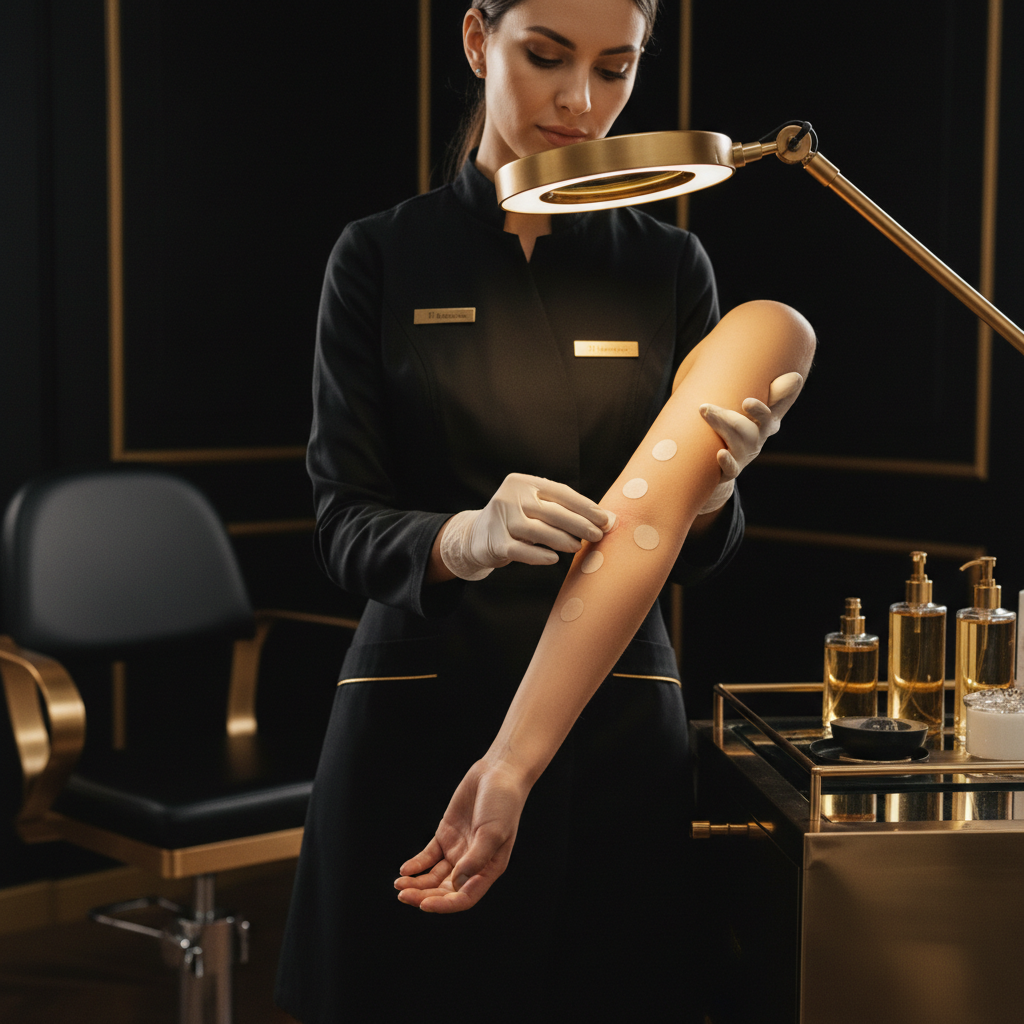
Quick answer: Patch testing for cosmetic safety is an essential preventative procedure where a small amount of a cosmetic formulation is applied to a discreet area of skin to detect adverse cutaneous reactions before regular use. Carrying out patch testing for cosmetic safety helps identify immediate irritations and delayed allergic contact dermatitis triggered by fragrances, preservatives, or active botanicals. However, home open patch tests cannot replicate clinical closed diagnostic patch tests, nor do they guarantee absolute immunity against systemic or long-term sensitivities.
Key takeaways
- Primary prevention: Applying a product to a test site before full application significantly lowers the risk of acute scalp and facial dermatitis.
- Timing matters: Irritant reactions often flare within minutes to hours, whereas true allergic contact dermatitis typically requires 48 to 72 hours to manifest.
- Common culprits: Paraphenylenediamine (PPD) in oxidative hair dyes, methylisothiazolinone preservatives, and concentrated essential oils are frequent triggers.
- Home vs. clinical tests: Home "open" or "semi-occlusive" patch tests screen for personal tolerability; they do not replace standard dermatological patch testing (such as the European Baseline Series).
- Correct placement: The inner forearm or the skin behind the ear are the most reliable sites for assessing leave-on and rinse-off hair cosmetics.
Patch Testing for Cosmetic Safety: what the evidence shows
Peer-reviewed dermatological research consistently confirms that adverse cosmetic events are largely divided into two distinct biological pathways: irritant contact dermatitis (ICD) and allergic contact dermatitis (ACD). According to clinical surveys compiled by bodies such as the British Association of Dermatologists and the European Society of Contact Dermatitis, cosmetics represent one of the leading causes of non-occupational contact allergy.
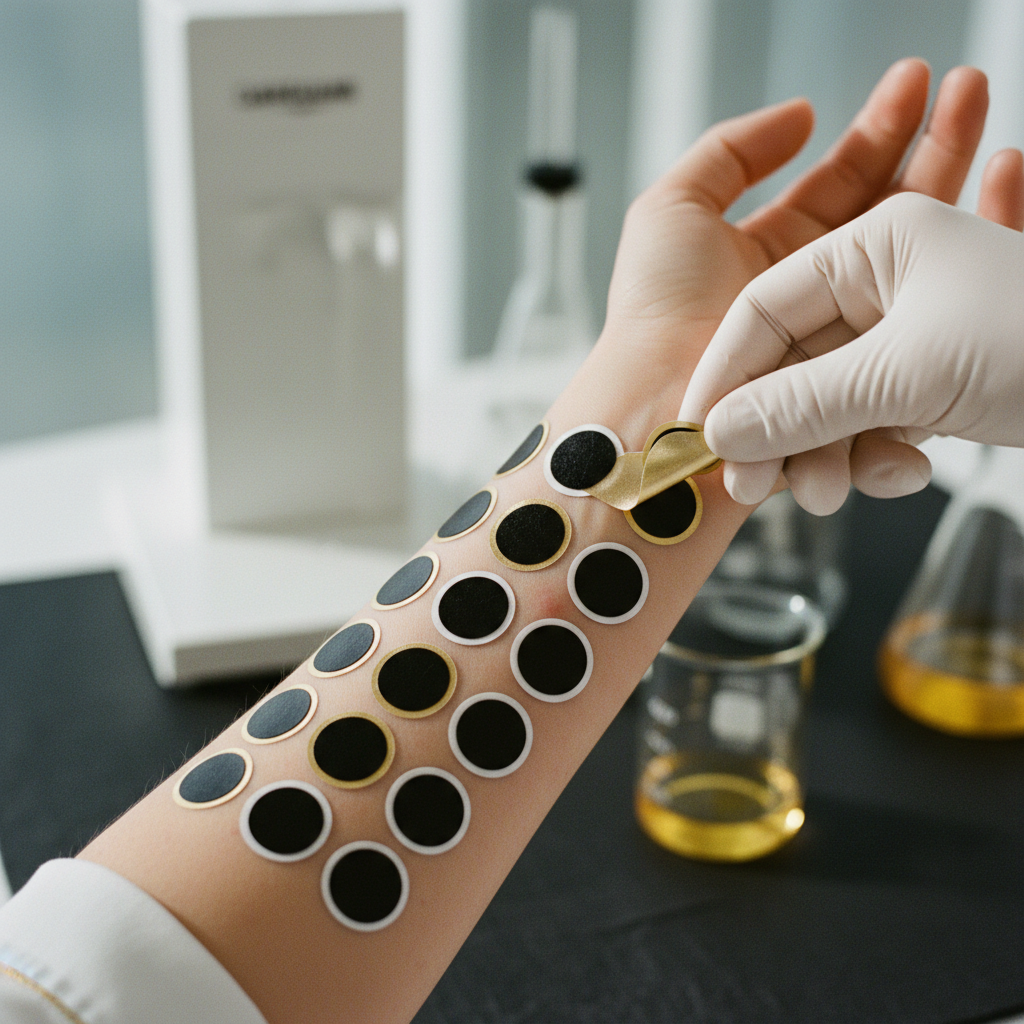
Patch testing for cosmetic safety serves as the primary practical barrier between a potentially reactive formulation and a full scalp application. Hair products present unique risks because the scalp features dense vascularity, thousands of follicular openings, and thin adjacent skin along the hairline, neck, and ears. Rinse-off surfactants, chemical relaxers, oxidative hair dyes, and leave-on scalp serums carry varying concentrations of biologically active compounds.
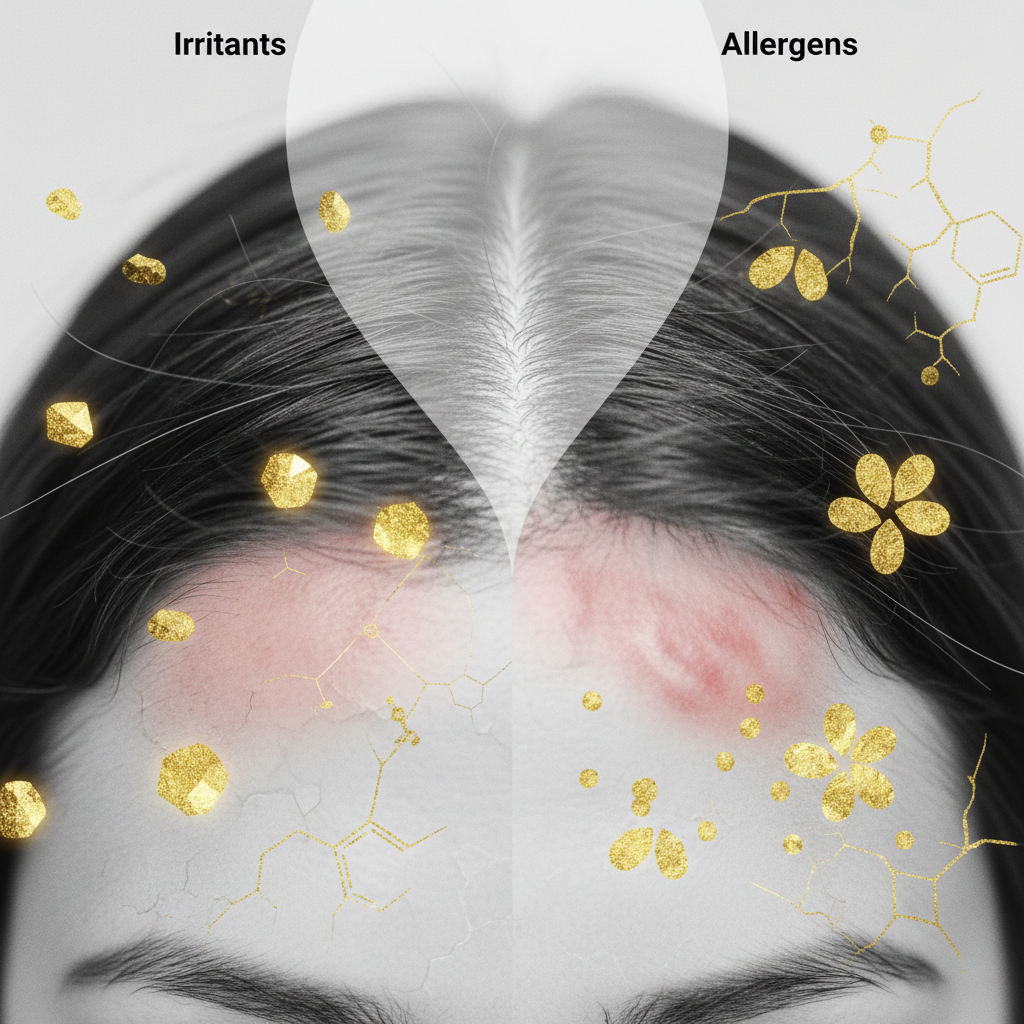
Controlled studies indicate that up to 80 percent of adverse skin reactions to cosmetics are irritant rather than allergic. Irritant contact dermatitis is non-immunological; it occurs when a chemical damages the stratum corneum barrier faster than the skin can repair it. In contrast, allergic contact dermatitis is a Type IV delayed hypersensitivity reaction mediated by T-lymphocytes. Evidence shows that while irritant responses show up quickly (frequently within 1 to 12 hours), true cell-mediated allergic responses peak between 48 and 96 hours after exposure. This biological delay explains why professional guidelines mandate a minimum observation period of 48 hours for cosmetic screening.
What the evidence does not show
Performing a patch test at home provides valuable safety screening, but the scientific literature is clear on its limitations:
- It does not guarantee permanent tolerance: Skin immunotolerance is dynamic. You can develop sensitization to an ingredient you have safely used for years if your skin barrier becomes compromised or if repetitive exposure crosses your biological threshold.
- It does not mimic full application conditions: Applying a drop of shampoo to the forearm under room temperature does not recreate the mechanical friction, hot water (often 38 to 40 degrees Celsius), scalp sebum interaction, or dermal occlusion experienced during a hot shower.
- A negative home test does not rule out all allergies: Open tests (where the product is left uncovered) have a higher rate of false-negative results compared to dermatological patch testing using Finn Chambers with controlled concentrations under 48-hour occlusion.
The biological mechanisms: irritants vs. allergens
Understanding what happens beneath the epidermis clarifies why testing protocols must follow specific timelines.
Product Contact -> Stratum Corneum Penetration
 |
 +--> Direct cellular damage (No immune memory) ===> Irritant Contact Dermatitis (ICD)
 | (Onset: Minutes to hours; stinging, redness, chemical burn)
 |
 +--> Hapten binds to epidermal proteins
 Activated Langerhans cells migrate to lymph nodes
 Sensitised T-cells multiply and circulate
 Subsequent challenge triggers cytokine cascade ===> Allergic Contact Dermatitis (ACD)
 (Onset: 24 to 72+ hours; itching, vesicles, spreading eczema)
Irritant Contact Dermatitis (ICD)
ICD is a direct cytotoxic reaction. When high-pH formulations, harsh surfactants, or aggressive penetration enhancers strip lipid bilayers, keratinocytes release pro-inflammatory cytokines such as interleukin-1 alpha (IL-1α) and tumour necrosis factor-alpha (TNF-α). This triggers local vasodilation and nerve ending irritation without involving systemic antibodies or T-cells. Anyone will react if the concentration or exposure duration is high enough.
Allergic Contact Dermatitis (ACD)
ACD requires prior sensitization. Low molecular weight molecules (haptens, typically under 500 Daltons) penetrate the skin barrier and conjugate with epidermal carrier proteins. Epidermal Langerhans cells process this hapten-protein complex and present it to naive T-lymphocytes in regional lymph nodes. Upon re-exposure, these memory T-cells migrate to the skin and release interferon-gamma and other chemokines, producing erythema, edema, and microvesicles.
Signs to look for during a patch test
When evaluating the test site, look for distinct visual and sensory indicators:
| Reaction Type | Typical Onset | Visual Symptoms | Sensory Symptoms | Common Cosmetic Culprits |
|---|---|---|---|---|
| Normal / Negative | None | Skin looks unchanged; no erythema | None or transient cooling | Inert emollients, balanced formulas |
| Immediate Irritation | 5 to 60 minutes | Localised redness, faint swelling | Burning, stinging, prickling | High-strength acids, high alcohol, raw botanical extracts |
| Irritant Contact Dermatitis | 2 to 24 hours | Defined redness confined strictly to contact area, dry flaking | Tightness, warmth, soreness | Strong surfactants (SLS), alkaline hair relaxers |
| Allergic Contact Dermatitis | 24 to 72+ hours | Spreading erythema, raised papules, fluid-filled vesicles | Intense itching, heat, throbbing | PPD, fragrance mixes, isothiazolinone preservatives |
| Contact Urticaria | 5 to 30 minutes | Raised, pale wheals surrounded by flare (hives) | Sudden, severe itching | Ammonia, persulfates (bleach), latex proteins |
Step-by-step protocol: how to patch test at home
To conduct a reliable screening patch test for personal care products, follow this clinically supported method:
1. Select the correct skin site
The ideal sites are the volar aspect of the forearm (inner wrist to inner elbow) or the retroauricular area (the clean skin directly behind the ear). These zones have relatively thin skin that accurately mirrors facial and scalp vulnerability. Ensure the skin is intact, clean, dry, and free of moisturisers or topical steroids.
2. Apply the formulation appropriately
- Leave-on products (serums, scalp oils, lotions): Apply a coin-sized amount (roughly 0.1 ml) directly to the site. Allow it to air-dry. Leave it uncovered (open patch test) or cover loosely with a standard hypoallergenic plaster if testing a product intended for extended skin contact.
- Rinse-off products (shampoos, conditioners, scalp scrubs): These are not formulated to remain on the skin for days. Dilute the product by mixing 1 part cosmetic with 4 parts clean tap water. Apply to the skin, leave for 10 to 15 minutes, and rinse thoroughly with lukewarm water.
- Oxidative hair dyes (permanent colours): Always follow manufacturer packaging instructions. These typically require mixing developer and colourant in equal tiny portions, applying to a 1 cm square behind the ear, leaving uncovered for 48 hours without washing.
3. Maintain the site
Keep the area dry for the duration of the test. Avoid direct sunlight, excessive sweating, tight friction, and contact with other cosmetics.
4. Monitor at 24, 48, and 72 hours
Examine the site in good natural light:
- If redness, swelling, or stinging occurs at any point, wash the area immediately with cool water and soap. Do not use the product.
- If the skin remains clear, calm, and free of itching across the full 48 to 72 hours, the formulation is considered suitable for standard cosmetic use.
When the reaction might be caused by something else
Skin reactivity is not always a simple open-and-shut case of cosmetic allergy. Consider confounding factors:
- Impaired barrier function: If your skin is currently stripped by over-exfoliation, sunburn, dry indoor heating, or seasonal dermatitis, a product may sting purely because your acid mantle is compromised, not because you have a specific allergy.
- Cross-reactions: Sensitization to airborne pollens or occupational exposures can cause unexpected cross-reactivity with botanical ingredients.
- Physical friction: Plaster adhesives can provoke an irritant or allergic response of their own. If the redness mirrors the exact outline of the bandage adhesive rather than the product puddle, the adhesive is often the culprit.
Professional options: when to consult a dermatologist
If you experience persistent or severe skin changes, home testing is insufficient. You should seek guidance from a general practitioner or consultant dermatologist if:
- A reaction spreads beyond the application site to your neck, face, or eyelids.
- Blistering, weeping, open ulceration, or crusting develops.
- You develop systemic symptoms such as facial swelling, hives across distant body areas, or breathing difficulties (which require emergency medical care).
- You repeatedly react to multiple cosmetic brands without identifying the common denominator.
Dermatologists perform diagnostic closed patch testing. Using standardised panels (such as the British Society for Cutaneous Allergy standard series), doctors apply individual, pure chemical allergens in petrolatum to aluminium chambers taped to your back for 48 hours, followed by readings at 48, 72, and 96 hours. This isolates the precise chemical culprit (e.g., quaternium-15, fragrance mix II, or nickel).
Formulations designed with skin tolerance in mind
Minimising adverse reactions begins with thoughtful formulation. At Watermans, hair and scalp care products are formulated to prioritise everyday scalp compatibility. Products like Watermans GrowMe Shampoo avoid harsh sulfates and rely on high-grade botanical extracts alongside balancing nutrients. Even with balanced cosmetic profiles, individual biological sensitivities vary from person to person. Performing a 48-hour preliminary patch test before introducing new topical treatments into your regular routine remains the gold standard for maintaining a comfortable, healthy scalp environment.
Frequently asked questions about Patch Testing for Cosmetic Safety
How long does patch testing for cosmetic safety take to show results?
A patch test takes between 24 and 72 hours to yield reliable results. While immediate irritation or chemical burns can appear within minutes to hours, true allergic contact dermatitis is a delayed immune reaction that usually manifests between 48 and 72 hours. Checking the test site for a full 48 to 72 hours ensures you do not miss delayed inflammatory responses before applying the product to your scalp.
Can I patch test on my hand or wrist?
The inner forearm or the retroauricular skin behind your ear is significantly better than your hand or the outer wrist. The skin on the back of your hand is thicker, calloused from friction, and frequently washed, which distorts both chemical absorption and contact time. The inner forearm provides delicate, stable skin that closely mirrors the sensitivity of your scalp perimeter and face.
Do I need to patch test organic or all-natural cosmetics?
Yes. Natural and organic cosmetics carry a comparable, and sometimes higher, risk of allergic contact dermatitis than synthetic ingredients. Botanical extracts, unrefined plant oils, and natural essential oils (such as lavender, tea tree, and citrus extracts) contain complex mixtures of terpenes, limonene, and linalool. These molecules oxidise upon air exposure, creating potent haptens that frequently trigger cutaneous reactions.
Can a negative patch test guarantee I will never react to a hair product?
No. A negative patch test confirms that you do not possess an active contact allergy or immediate acute sensitivity to that formulation at the time of testing. However, allergic sensitisation can develop over months or years of repeated use. Furthermore, an open home patch test does not replicate the heat, friction, and moisture of full hair washing, meaning subtle barrier disruptions might still occur under real-world conditions.
Safe testing for long-term scalp health
Integrating simple safety habits into your hair maintenance routine protects your scalp barrier from uncomfortable setbacks. By dedicating 48 hours to systematic patch testing for cosmetic safety before embracing a new shampoo, dye, or scalp tonic, you protect your dermal tissue, minimise the risk of acute chemical contact dermatitis, and ensure that your cosmetic choices actively support long-term scalp health and hair vitality.
Sources and references
- British Association of Dermatologists. Patch Testing: Patient Information Leaflet. BAD Guidelines, 2021.
- European Society of Contact Dermatitis (ESCD). Guidelines for diagnostic patch testing in dermatitis. Contact Dermatitis, 2015.
- Johansen, J. D., et al. European Society of Contact Dermatitis guideline for diagnostic patch testing - recommendations on best practice. Contact Dermatitis, 2015. DOI: 10.1111/cod.12432.
- Basketter, D. A., et al. Mechanisms of chemical-induced contact allergy and irritation. Toxicology in Vitro, 2012.
- De Groot, A. C. Patch Testing: Test Concentrations and Vehicles for 4900 Chemicals. 4th Edition, 2021.
- National Health Service (NHS). Contact Dermatitis: Diagnosis and Treatment. NHS UK Overview, 2023.