Minimising Hair Breakage: Principles, Mechanisms, and Protection
8 min read ·
Minimising hair breakage requires protecting the cuticle and cortex from mechanical and heat damage. Learn the proven science of preventing strand fracture.
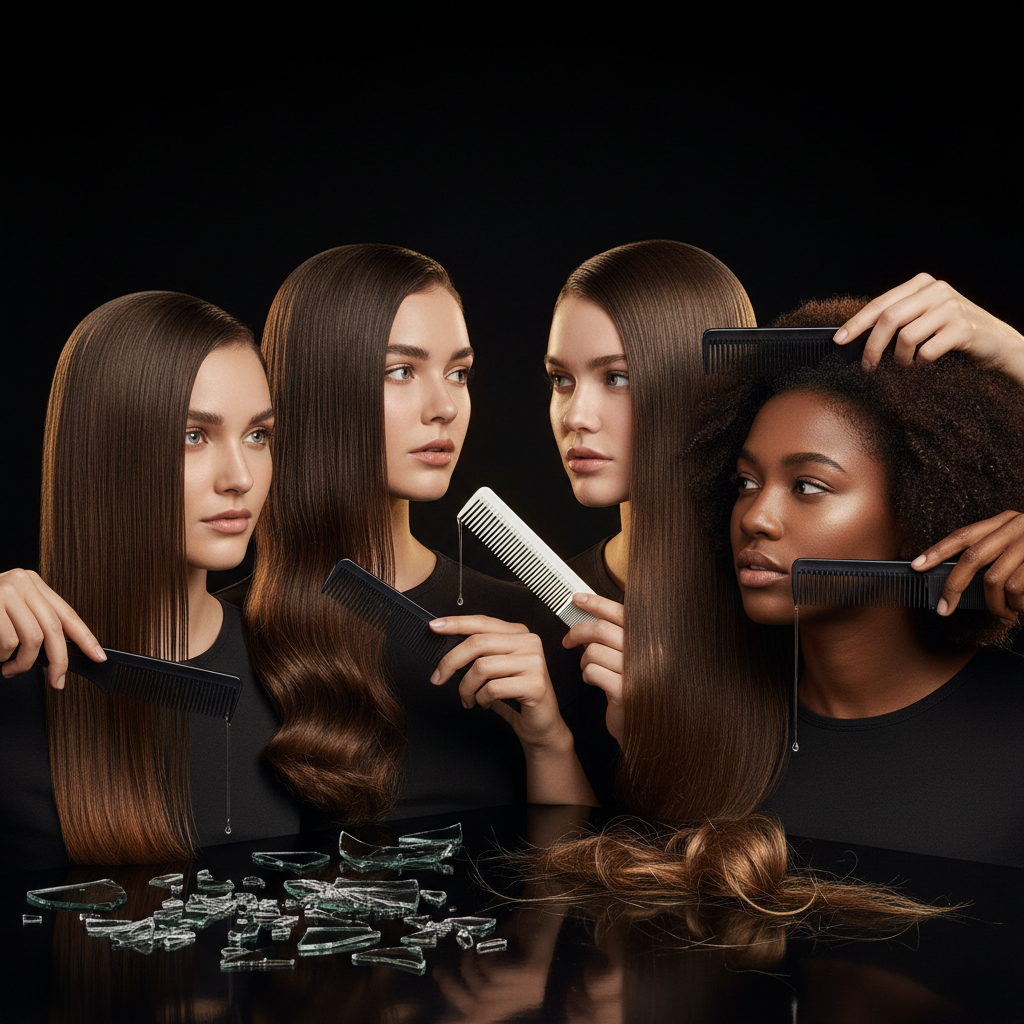
Quick answer: Minimising hair breakage requires protecting the structural integrity of the hair shaft, primarily by preserving the cuticle and cortex against mechanical, chemical, and thermal trauma. Because hair fibre is non-living keratinised tissue, snapped or split strands cannot biologically regenerate; success lies strictly in prevention, friction reduction, and moisture retention. True minimising hair breakage relies on gentle detangling, lower heat settings, sensible chemical processing intervals, and targeted conditioning rather than attempting to reverse structural fractures after they happen.
Key takeaways
- Hair breakage is structural fibre fracture along the shaft, completely separate from follicular hair shedding or alopecia.
- The hair cuticle shields the internal cortex; once chemical processing or mechanical friction strips this layer, tensile strength plummets.
- Wet hair swells and weakens, lowering the force threshold required to stretch and permanently snap the fibre.
- Heat tools above 180°C degrade alpha-keratin into disordered beta-keratin, making regular thermal styling a major culprit.
- Cosmetic interventions can temporarily coat, lubricate, and patch the cuticle, but they cannot fuse severed fibres back together permanently.
Minimising hair breakage: what the evidence shows
Minimising hair breakage centres on preserving the hair's tensile strength, which is governed by the structural arrangement of keratin intermediate filaments within the cortex. The cuticle acts as an overlapping, protective tile system held together by the cell membrane complex (CMC). When external stressors erode the cuticle, the cortex is exposed to ambient humidity, mechanical wear, and protein degradation.

Biophysical testing shows that healthy, virgin Caucasian and Asian hair fibres can stretch by roughly 30% of their original length before breaking when dry, and up to 50% when wet. However, afro-textured hair exhibits distinct elliptical cross-sections, tighter curl geometry, and intrinsic torsion points along the shaft. These natural twists create structural stress concentrations, reducing overall tensile resilience and making curly and coily hair types far more susceptible to mechanical fracture during routine grooming.
Chemical treatments such as permanent tinting, bleaching, and chemical relaxers aggressively strip the protective 18-methyleicosanoic acid (18-MEA) lipid layer from the cuticle surface. Research demonstrates that bleaching breaks critical disulphide bonds (cystine cross-links), oxidising them into cysteic acid residues. This irreversible loss of internal chemical bonds drastically decreases the force required to fracture the fibre under normal tension.
Thermal styling presents another verified threat. Heating dry hair beyond 180°C begins the thermal degradation of keratin proteins. If hair is wet or damp during heat application, moisture trapped within the cortex undergoes rapid vaporisation. This rapid expansion causes internal bubble formation (known clinically as "bubble hair"), structurally destroying the cortex and causing catastrophic breakage under minimal friction.
What the evidence does not show
Controlled cosmetic chemistry does not support claims that split ends can be permanently healed. Split-end menders and bonding treatments use polyelectrolyte complexes, silicones, or multi-valent ions to temporarily bridge fractured fibres. While these formulas reduce friction and visually smooth the shaft, the effect washes out. The only permanent resolution for a split or severely fractured shaft is physical trimming.
Furthermore, evidence does not show that hair breakage originates from the follicle. Breakage is an exclusively physical and chemical issue affecting the external fibre. Ingesting high-dose vitamins or biotin will not alter the structural strength of hair that has already emerged past the scalp surface.
Signs of hair breakage versus shedding
Distinguishing between hair breakage and follicular shedding is vital for selecting the correct management strategy.
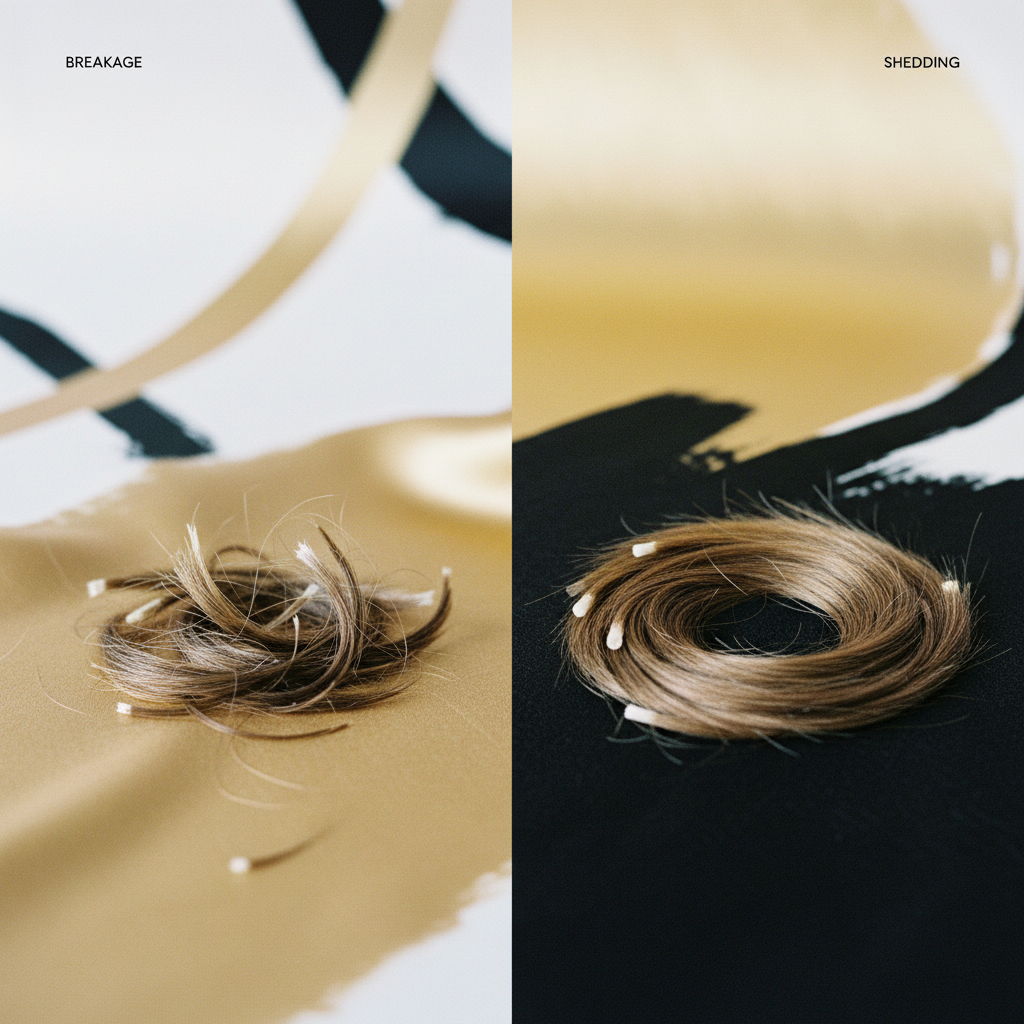
 Hair Strand Inspection
 │
 Does the fallen strand have a
 white bulb at one end?
 / \
 Yes No
 / \
 Follicular Shedding Hair Breakage
 (Telogen hair, natural loss) (Fibre fracture, mid-shaft snap)
Look for these distinct physical indicators:
- Absence of a bulb: Broken hairs lack the white, rounded keratin bulb characteristic of shed telogen hairs.
- Variable lengths: Breakage produces short, uneven fragments scattered on your clothing, sink, or brush, rather than full-length strands.
- Rough texture and fraying: Inspecting the ends reveals white dots (trichorrhexis nodosa) where the cortex has splayed, or visible splitting (trichoptilosis).
- Thinning mid-lengths and ends: While the density at the root remains robust, the perimeter or ends of your hair appear progressively sparser and wispy.
| Feature | Hair Breakage | Follicular Hair Shedding |
|---|---|---|
| Location of occurrence | Along the hair shaft (mid-lengths/ends) | At the scalp follicle level |
| Visible bulb | No bulb present | White, rounded telogen bulb attached |
| Length of fallen strands | Short, uneven fragments | Full length of the hair strand |
| Root cause | Mechanical, thermal, or chemical damage | Natural cycle, telogen effluvium, alopecia |
| Primary solution | Lubrication, gentler handling, trims | Medical review, scalp care, time |
Mechanical and thermal mechanisms that fracture hair
Hair fibres fracture when external pulling or bending forces exceed the yield point of the keratin matrix. Repeated cycles of wetting and drying cause the hair shaft to repeatedly swell and contract, a phenomenon known as hygral fatigue. Over time, this constant radial movement weakens the cell membrane complex between cuticle scales.
Grooming wet hair with a fine-toothed comb generates immense frictional tension. Because water breaks weak hydrogen bonds within the cortex, wet hair is significantly more elastic but has a lower plastic limit. Stretching wet hair past its safe deformation threshold results in irreversible deformation and snapped strands.
Friction from rough fabrics, such as cotton pillowcases or coarse bath towels, physically abrades lifted cuticle scales. Once the cuticle edges peel away, the exposed cortex frays like an unravelling rope, producing classic trichorrhexis nodosa fractures.
Practical steps for minimising hair breakage
Minimising hair breakage involves establishing daily habits that limit frictional stress and maintain cuticular cohesion.
- Alter wet-handling techniques: Never vigorously rub wet hair with a standard terrycloth towel. Instead, squeeze excess water out gently using a smooth microfibre towel or cotton wrap. Detangle solely when saturated with a high-slip conditioner, using a wide-tooth comb or flexible-bristle brush, beginning at the tips and working slowly upward.
- Cap thermal tools: If blow-drying or heat-styling, keep appliances below 180°C. Never apply flat irons or curling wands to damp or unconditioned hair. Always apply a film-forming heat protectant containing polymers like polyquaternium compounds to distribute thermal energy evenly.
- Optimise formulation pH: Use shampoos and treatments formulated within an acidic pH range of 4.5 to 5.5. Alkaline solutions (pH above 7.0) cause the cuticle scales to flare open and swell, dramatically increasing friction during washing. Acidic formulations maintain the isoelectric point of hair, keeping the cuticle flat and tight against the cortex.
- Reduce chemical processing overlap: When colouring or relaxing, ensure the chemical is applied strictly to new growth. Overlapping permanent colour or bleach onto previously processed hair strips remaining lipid layers and accelerates fibre collapse.
- Protect hair during sleep: Swap abrasive cotton pillowcases for silk or satin alternatives, which reduce nighttime mechanical drag. Loosely securing hair in a silk scrunchie prevents strands from tangling and snapping under body weight.
When breakage indicates an underlying issue
While mechanical manipulation causes most breakage, sudden or extreme hair fragility can sometimes point to internal medical or environmental issues. Severe protein-calorie malnutrition or trace mineral deficiencies (such as zinc or iron) can impair normal keratin synthesis in the matrix cells, producing structurally weak, fragile hair before it even leaves the scalp.
Rare genetic conditions, such as Netherton syndrome or Menkes disease, result in congenital hair shaft anomalies like trichorrhexis invaginata ("bamboo hair") or pili torti (twisted hair fibres), both of which cause extreme structural fragility. If your hair snaps effortlessly despite minimal manipulation and no chemical or heat exposure, consultation with a dermatologist or registered trichologist is warranted.
The role of targeted scalp and hair care
Maintaining a calm, nourished scalp environment supports the emerging hair fibre during its critical initial keratinisation phase. When the hair fibre forms within the follicle, adequate microcirculation and cell nutrition help ensure dense, resilient structural protein synthesis.
Watermans addresses this need through targeted formulations like the Grow Me Shampoo and Conditioner. Infused with biotin, rosemary extract, caffeine, and argan oil, the system cleanses the scalp gently without stripping critical lipids. By combining scalp-friendly botanicals with conditioning agents that coat and lubricate the outer cuticle, it smooths the hair surface, reduces combing friction, and supports routines dedicated to minimising hair breakage across all hair types.
Frequently asked questions about Minimising Hair Breakage
Can deep conditioning treatments reverse existing hair breakage?
No. Deep conditioning treatments cannot physically weld severed or fractured hair back together. However, they are invaluable for minimising hair breakage moving forward. Conditioners deposit fatty alcohols, quaternary ammonium compounds, and silicones onto the hair surface. This lubrication smooths the cuticle layer, lowers combing resistance, and prevents existing micro-cracks from tearing completely across the cortex.
Why does afro-textured hair break more easily than straight hair?
Afro-textured hair has an elliptical cross-section and frequent changes in fibre diameter along the shaft. The natural twists and bends create physical stress concentration points where force accumulates during combing. These anatomical characteristics mean afro-textured hair requires superior slip, moisture retention, and protective styling routines to effectively minimise hair breakage compared to straighter hair textures.
How often should split ends be trimmed to prevent breakage?
Trimming hair every 8 to 12 weeks is generally recommended to control breakage. When the cuticle wears away, the cortex splits into two or more strands. If left untrimmed, mechanical friction causes this split to travel upwards along the hair shaft like a run in a stocking. Snipping split ends early preserves the healthier lengths above the fracture point.
Does hard water directly snap hair fibres?
Hard water minerals, primarily calcium and magnesium, bind to the negatively charged surface of hair fibres. Over time, these mineral deposits leave hair feeling stiff, brittle, and coated. While the minerals do not directly dissolve or snap the hair, the resulting roughness increases inter-fibre friction during styling, leading indirectly to mechanical breakage if not cleared with a chelating shampoo.
Preserving fibre integrity
Minimising hair breakage is ultimately an ongoing exercise in risk mitigation. Because the hair shaft is an acellular, non-living structure, every mechanical brush stroke, high-heat pass, and chemical treatment permanently alters its internal architecture. By adopting low-friction detangling methods, keeping styling temperatures below critical degradation thresholds, choosing acidic formulations, and protecting delicate ends, you can preserve the native strength of your hair and stop preventable snapping before it starts.
Sources and references
- British Journal of Dermatology: "Hair shaft abnormalities and fragility in clinical trichology."
- International Journal of Cosmetic Science: "The physical and chemical effects of heat styling on keratin fibres."
- Journal of the Society of Cosmetic Chemists: "Tensile properties of human hair in relation to moisture and chemical processing."
- Robbins, C. R.: Chemical and Physical Behavior of Human Hair, 5th Edition, Springer.
- American Academy of Dermatology: "Grooming and hair breakage: practical dermatological guidance."
Find these ingredients in Watermans products
- Biotin: you will find this ingredient in our Hair Growth Shampoo.
- Zinc: you will find this ingredient in our Hair Vitamins.