Managing Single Strand Knots: Science and Prevention
10 min read ·
Learn the science of managing single strand knots (trichonodosis). Discover what causes tiny loops in curly hair and how to prevent and trim them effectively.
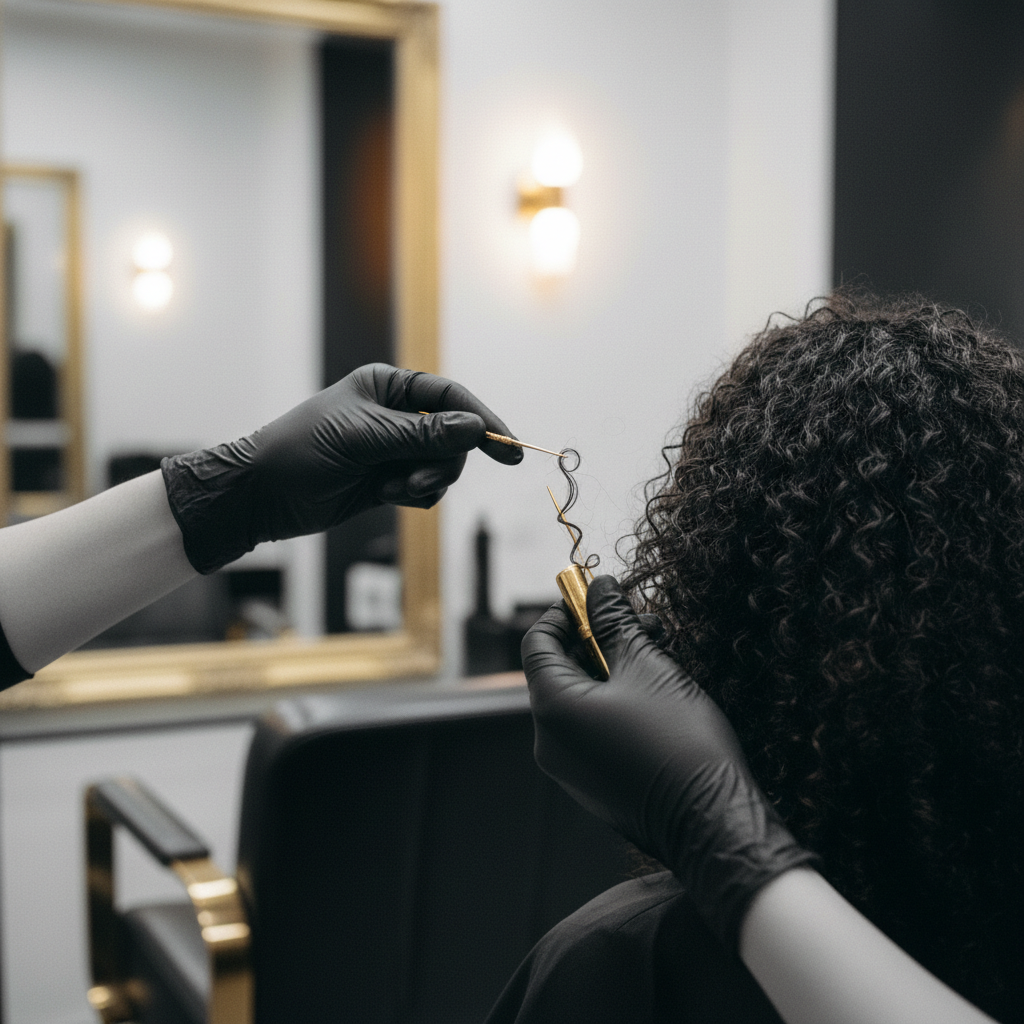
Quick answer: Successfully managing single strand knots involves reducing mechanical friction, keeping the hair shaft lubricated, and trimming damaged ends before they catch neighbouring strands. Also known scientifically as trichonodosis, these tiny knots form when an individual hair curls back and loops around itself. While you cannot unravel or repair an existing knot once it tightens, consistent preventive habits like protective styling, sleeping on silk, and applying film-forming conditioners dramatically lower how often they form.
Key takeaways
- Single strand knots, or trichonodosis, happen when an individual curly or coily hair fibre loops around itself and ties into a microscopic knot.
- Once a single strand knot forms, it cannot be safely untied; pulling it tightens the loop and causes mechanical fibre snapping.
- Managing single strand knots requires lowering the coefficient of friction on the cuticle surface through conditioners, leave-ins, and light sealing oils.
- Blunt shears are essential for trimming them out; using dull household scissors creates ragged cuticle edges that loop even faster.
- Protective styles, stretched drying techniques, and low-friction sleep surfaces (such as silk or satin) offer the strongest defence against recurring knots.
Managing Single Strand Knots: what the evidence shows
Managing single strand knots begins with understanding the physics of tightly coiled hair fibres. In dermatology and cosmetic chemistry, this condition is classified as trichonodosis. First documented in clinical literature in the late nineteenth century, trichonodosis is an acquired hair shaft condition characterised by the formation of true knots along the length of an individual hair shaft.
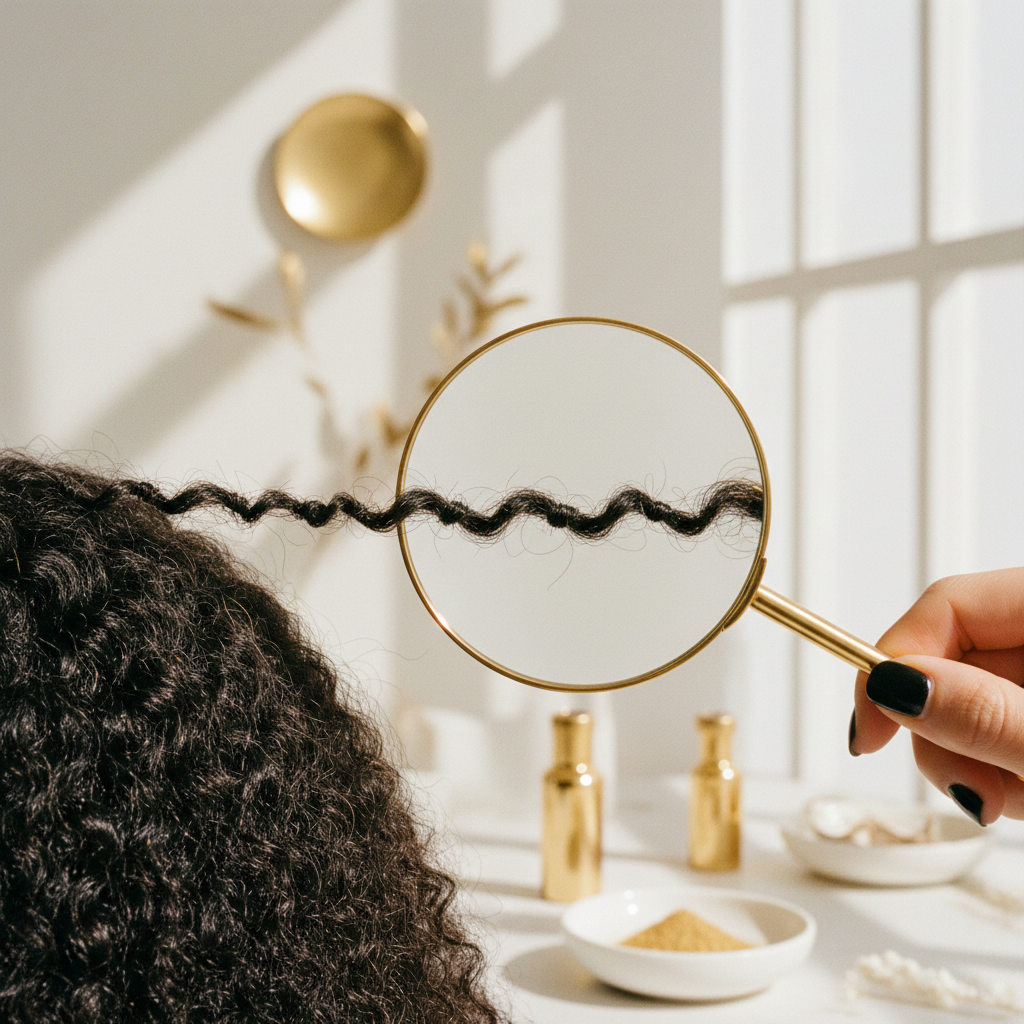
Research published in the International Journal of Dermatology and the Journal of the American Academy of Dermatology shows that curl geometry plays the primary role. Oval, asymmetrical hair follicles produce flattened hair fibres with variable cross-sectional diameters. These fibres do not grow in a straight path. Instead, they spiral tightly. When two parts of the same flexible fibre brush against each other, the raised edges of the outer cuticle layer catch, forming a loop. Everyday movement, wind, washing, and friction from clothing pull that loop taut, creating a permanent knot.
Clinical observations demonstrate that managing single strand knots is primarily a preventative discipline. Because the hair fibre is non-living keratinised tissue, there is no biological mechanism to self-repair a knot or smooth the raised cuticle scales caught within the loop. The focus of management is therefore twofold: surgically removing established knots to prevent them snagging surrounding hairs, and altering the mechanical environment so new loops cannot tighten.
What the evidence does not show
There is no evidence that single strand knots stem from internal health deficiencies, vitamin shortages, or systemic disease. They are strictly a mechanical and structural phenomenon driven by curl pattern and friction.
Furthermore, no cosmetic product can dissolve, untie, or fuse an existing single strand knot back into a smooth strand. Marketing claims promising that a serum or leave-in conditioner can "melt away" or "repair" trichonodosis are chemically false. While heavy emollients provide slip that prevents adjacent hairs from catching on the knot, the knot itself remains intact until trimmed away.
Finally, having these knots does not mean your hair is unhealthy or failing to grow. Trichonodosis is extremely common in type 3 (curly) and especially type 4 (coily) hair types due to the natural, beautiful curvature of the shaft. It indicates that the fibre is curly and experiencing surface friction, not that the follicle is impaired.
The mechanical process: how trichonodosis forms
Hair consists of three layers: the inner medulla, the structural cortex made of fibrous keratin, and the protective outer cuticle. The cuticle is composed of overlapping, shingle-like cells pointing downward toward the tip.
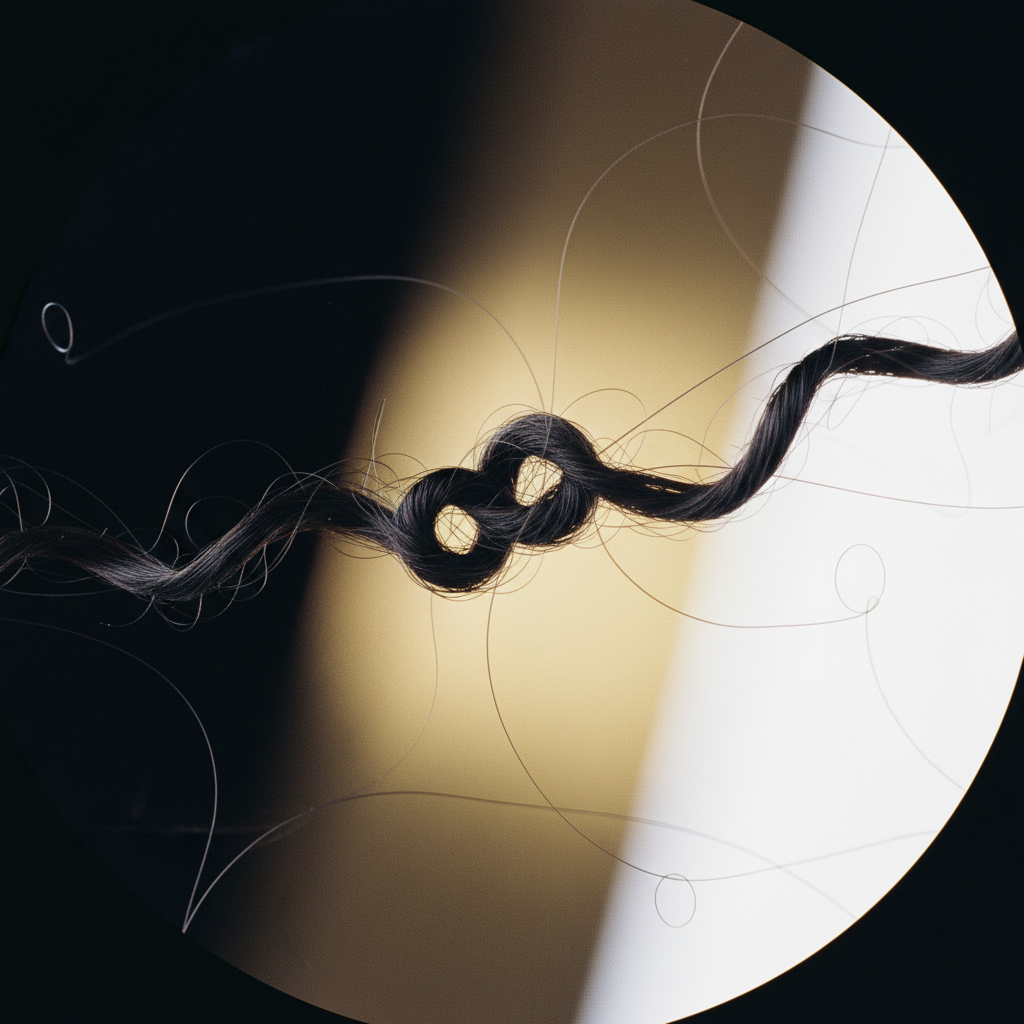
In straight hair, circular fibres glide past one another with minimal contact resistance. In coily hair, the elliptical cross-section causes the fibre to bend sharply. As the hair moves, an exposed tip or curved mid-shaft can loop back.
Normal Fibre: ============================>
Curled Loop: =========\ /==============>
 \ /
Trichonodosis: ==========(X)===============> (Knot tightens under tension)
Once this loop forms:
- Cuticle friction locks the loop: The raised scale edges of the cuticle interlock. The coefficient of friction increases dramatically.
- Tension tightens the knot: Simple acts like combing, washing, drying, or resting your head on a cotton pillowcase exert pulling forces. This turns a loose loop into a hard, compact knot.
- Cortex fracture occurs: The tight bend places extreme stress on the cortex proteins. Over time, the cuticle layers around the knot chip away, leaving the cortex bare.
- Mechanical breakage: When a comb or brush hits the microscopic knot, the tool catches. The strand inevitably snaps at the knot, resulting in a fractured, jagged tip that is prone to looping again.
Spotting the signs of single strand knots
Because single strand knots are microscopic, you rarely see them from a distance. However, they present clear tactile and functional signs during everyday styling:
- Rough, beaded texture: When sliding your thumb and index finger down an individual strand toward the tip, you feel tiny, hard beads or bumps along the shaft.
- Snapping sounds during detangling: Hearing small pops or clicks as a wide-tooth comb passes through conditioned hair often indicates the teeth are hitting and snapping knotted strands.
- Rapid retangling after washing: Hair that mats together quickly at the ends, even after thorough detangling and conditioning, often has knots acting as anchors that grab neighbouring strands.
- Uneven, frayed ends: Small white or light-coloured specks near the ends that do not wipe away (unlike lint or product residue) are often fractured knots where the cortex has split.
Structural comparison: single strand knots vs other shaft conditions
| Condition | Primary Cause | Visible Appearance | Can It Be Repaired? | Primary Solution |
|---|---|---|---|---|
| Single Strand Knots (Trichonodosis) | Curl geometry and friction causing self-looping | Tiny hard beads along a single hair shaft | No | Sharp trimming, lubrication, stretching |
| Split Ends (Trichoptilosis) | Cuticle wear exposing longitudinal cortex splits | Feathered, Y-shaped, or frayed hair tips | No | Trimming, bond-maintenance sealants |
| Trichorrhexis Nodosa | Severe chemical, heat, or mechanical trauma | Swollen, fragile white nodes (paint-brush break) | No | Cutting damaged length, reducing heat/bleach |
| Product Build-up | Insoluble silicones, polymers, or sebum residues | Dull, sticky coating along multiple fibres | Yes | Clarifying wash with chelating agents |
Practical strategies for managing single strand knots
Minimising trichonodosis requires intercepting the loop before it tightens. These practical techniques reduce the mechanical triggers that drive knot formation.
1. Detangle wet hair with high-slip formulas
Never detangle dry curly or coily hair. Water temporarily increases hair elasticity, while a conditioner with high slip creates a lubricating film over the cuticle scales. Look for products containing fatty alcohols (such as cetyl or stearyl alcohol), behentrimonium methosulfate, and plant oils. Use your fingers or a flexible-bristle detangling brush, working patiently from the tips upward toward the roots.
2. Keep the hair in stretched styles
Coily hair shrinks as it dries, which allows the ends to spring back, curl around themselves, and form knots. Wearing hair in stretched states significantly lowers knot incidence. Techniques like twist-outs, braid-outs, banding, African threading, or gentle roller sets keep the fibres aligned and elongated while drying.
3. Dust ends regularly with dedicated hair shears
Because an existing knot cannot be untied, gently snipping individual knots before they gather surrounding hairs is crucial. Use sharp, professional hairdressing scissors. Household scissors crush the hair shaft rather than slicing cleanly through it, leaving a rough end that immediately tangles again. Check your ends in bright lighting every four to six weeks and snip knots just above the bead.
4. Reduce sleep friction
Cotton pillowcases are absorbent and fibrous, creating friction that twists hair while you toss and turn. Wrap your hair in a satin or silk bonnet, or sleep on a 100% silk pillowcase. The smooth surface lets hair glide without snagging, preserving fibre alignment overnight.
5. Incorporate hydrolysed proteins and light sealants
Hydrated hair is pliable hair. Incorporating treatments with hydrolysed proteins (such as keratin, wheat, or silk proteins) helps temporarily patch missing cuticle gaps along the shaft. Following up with a light, film-forming oil or butter helps seal moisture in and lowers the surface friction between adjacent strands.
When the cause may be something else
If you notice widespread rough spots, weakness, and sudden snapping without clear looping, you may not be dealing solely with single strand knots.
Excessive thermal styling or frequent chemical treatments (such as bleaching or relaxers) can strip the cuticle entirely, resulting in trichorrhexis nodosa. This condition creates weak nodes that mimic the feel of knots but are actually points where the cortex has shattered internally.
Similarly, hard water build-up can make hair feel gritty, stiff, and prone to tangling. Minerals like calcium and magnesium bind to the negative charges on hair keratin, creating an abrasive surface that exacerbates friction. If hair feels chalky or rough across the entire head, a chelating wash may be required rather than an aggressive trimming schedule.
Supporting hair condition with Watermans
When managing single strand knots, maintaining resilient hair and a healthy scalp environment provides the best foundation for styling. Watermans focuses on premium, targeted formulations designed to keep hair looking and feeling its best.
Using Watermans Grow Me Shampoo alongside Condition Me Conditioner helps deliver nourishing ingredients, including biotin, rosemary extract, hydrolysed lupin protein, and caffeine, directly to your hair routine. The conditioner provides superior slip and detangling support, helping to smooth cuticle surfaces, reduce friction, and leave dry, fragile lengths feeling stronger and significantly more manageable.
Frequently asked questions about Managing Single Strand Knots
Can you untie a single strand knot with a needle?
No. Attempting to untie a knot with a needle or your fingernails scrapes away the delicate cuticle layer and stretches the hair shaft beyond its elastic limit. Even if the knot loosens slightly, the structural integrity of that section is permanently ruined, causing the hair to snap soon after. Trimming the knot cleanly with sharp shears is the safest method.
Why does coily hair get more single strand knots than straight hair?
Coily hair grows out of an asymmetrical, curved follicle, resulting in a flattened, ribbon-like shaft that naturally spirals. This spiral shape makes it easy for the tip or curved edge of a strand to loop back over itself. Straight hair has a circular cross-section and grows in a direct path, making self-looping physically rare.
Does protective styling stop single strand knots completely?
Protective styles such as twists, braids, and buns substantially reduce knots by keeping the ends tucked away and preventing strands from wrapping around each other. However, they do not stop them completely. Knots can still form during the installation, washing, or takedown process if the hair is handled roughly or allowed to dry in an unstretched state.
How often should I trim single strand knots?
Rather than doing large, frequent trims that sacrifice length, many people find success with "search and destroy" trimming every four to six weeks. In good lighting, examine small sections of hair, snipping individual knots roughly half a centimetre above the loop with sharp hairdressing scissors. A general trim every three to four months helps keep the perimeter even and healthy.
Effective approaches to trichonodosis
Successfully managing single strand knots comes down to patience, low-friction habits, and realistic maintenance. Because curly and coily fibres are naturally designed to curve, occasional knots are a normal part of your hair journey rather than a sign of poor health. By focusing on high-slip detangling, stretched styling techniques, low-friction sleep protection, and precise trimming, you can keep trichonodosis under control, protect your hair ends, and enjoy strong, thriving lengths.
Sources and references
- American Academy of Dermatology Association. "Caring for African American hair." aad.org.
- Dawber, R. "Knotted hair (trichonodosis)." British Journal of Dermatology, 1974.
- Khumalo, N. P., et al. "Hair care practices and hair shaft abnormalities in African women." Journal of the American Academy of Dermatology, 2008.
- Robbins, C. R. Chemical and Physical Behavior of Human Hair. 5th ed., Springer, 2012.
- Sinclair, R. D. "Healthy hair: what is it?" Journal of Investigative Dermatology Symposium Proceedings, 2007.
Find these ingredients in Watermans products
- Biotin: you will find this ingredient in our Hair Growth Shampoo.