Managing Mechanical Hair Breakage: The Complete Evidence-Based Guide
8 min read ·
Learn the causes of mechanical hair breakage and practical methods to protect vulnerable strands, reduce daily friction, and maintain healthy hair length.
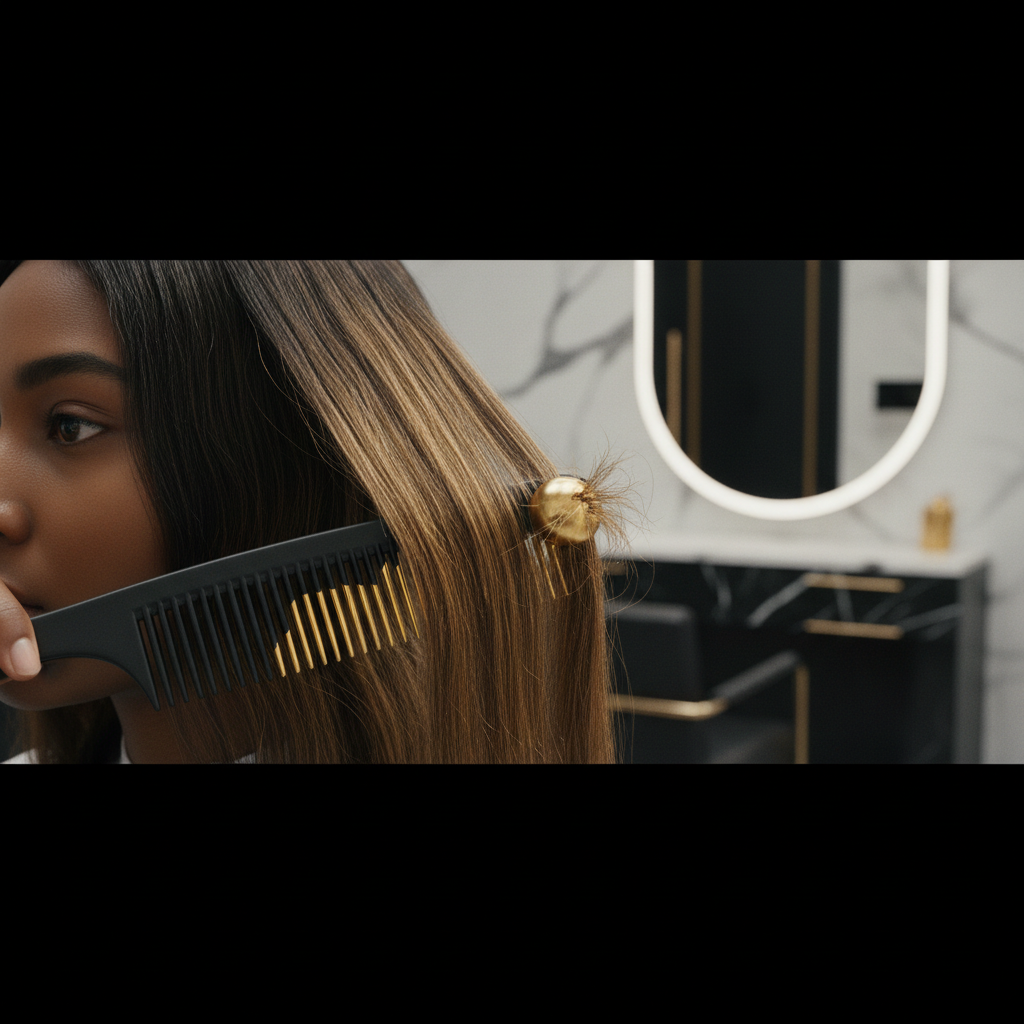
Quick answer: Managing mechanical hair breakage requires reducing physical friction, protecting the outer cuticle layer, and maintaining an optimal moisture balance to preserve tensile strength. Mechanical breakage happens when daily grooming forces, such as aggressive brushing, tight styling, or towel scrubbing, exceed the physical tolerance of the hair shaft. While managing mechanical hair breakage restores smoothness and prevents premature snapping along the strand, it cannot repair fibres that have already split completely or resolve internal shedding originating at the follicle level.
Key takeaways
- Mechanical breakage occurs along the hair shaft due to physical stress and friction, differing entirely from follicular shedding.
- Wet hair is significantly more vulnerable to mechanical failure because water weakens hydrogen bonds and lowers tensile strength.
- Protective handling techniques, including wide-tooth combs, slip-enhancing conditioning agents, and loose hairstyles, minimise daily cuticle wear.
- Heat, chemical processing, and environmental weathering multiply mechanical vulnerability by stripping the protective lipid layer.
- Fibre ends that have already fractured cannot be permanently re-fused and must be trimmed to halt further unravelling.
Managing Mechanical Hair Breakage: what the evidence shows
Managing mechanical hair breakage begins with understanding that hair fibres are non-living biological structures governed by physics. The external cuticle layer consists of overlapping scales coated in a thin fatty acid layer called 18-methyleicosanoic acid (18-MEA). When hair undergoes repeated physical friction, these scales lift, chip, and eventually peel away.

Clinical research into hair mechanics reveals that a healthy, dry hair fibre can stretch by roughly 20 to 30 percent of its original length before snapping. However, when you introduce repeated stress cycles, known as mechanical fatigue, the cuticle cracks under much smaller loads. Managing mechanical hair breakage therefore involves limiting cyclic tension. Studies in cosmetic science demonstrate that using lubricants, such as conditioning agents with high slip, significantly reduces the combing force needed to detangle strands, cutting mechanical strain by up to 50 percent during styling routines.
The biological and physical mechanisms of breakage
Hair breakage occurs through tensile fracture, shear stress, or buckling. Tensile fracture happens when you pull a strand along its axis until the internal keratin cortex tears apart. Shear stress occurs when an implement, such as a sharp plastic comb seam or a harsh metal hair tie, cuts crosswise across the cuticle.
Water alters these mechanics dramatically:
- Hydrogen bond disruption: Water molecules penetrate the cortex, breaking the temporary hydrogen bonds between keratin chains. This makes the fibre more elastic but lowers its overall breaking threshold.
- Cuticle swelling: When wet, the fibre swells by up to 15 percent in diameter. The lifted cuticle scales generate far greater friction against neighbouring strands, making wet detangling particularly hazardous without adequate slip.
- Loss of 18-MEA: Grooming wears away the natural hydrophobic lipid layer over time. Once lost, the cuticle becomes hydrophilic, absorbing excess water, tangling easily, and generating increased surface friction.
Signs that your hair is breaking mechanically
Distinguishing between hair shedding and hair breakage is vital for correct hair maintenance. You can readily identify mechanical failure through visual and tactile clues:
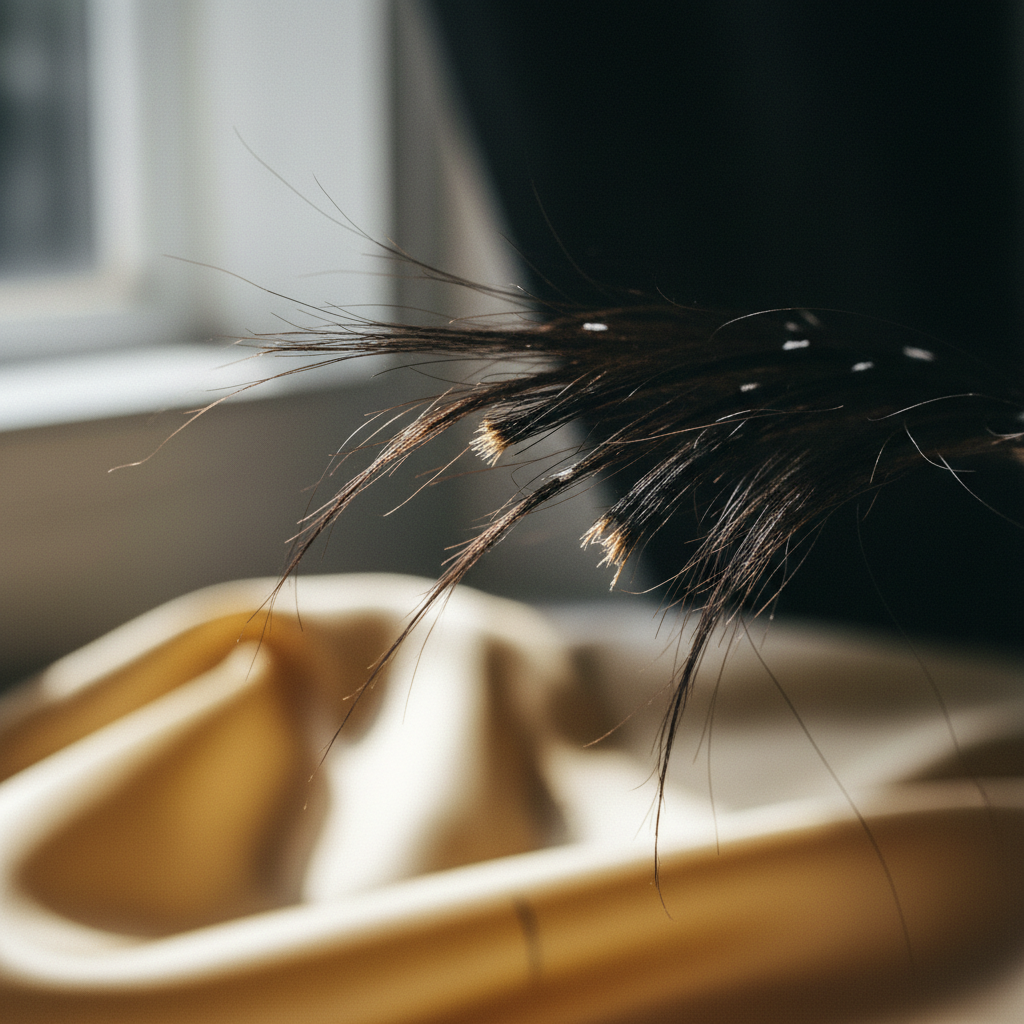
- Missing root bulbs: Shed hairs feature a small, white keratinised bulb at one end, indicating the follicle released the strand naturally. Broken hairs have blunt, fractured, or frayed ends with no bulb present.
- Short, uneven fragments: If you notice short, brittle pieces of hair on your shoulders, sink, or bathroom floor rather than full-length strands, you are observing mechanical breakage.
- Split ends (Trichoptilosis): The physical split of a strand into two or more arms marks progressive mechanical breakdown where the cortex is exposed to the elements.
- White dots (Trichorrhexis nodosa): Small white specks along the hair shaft represent sites where the cuticle has been stripped and cortical fibres have swollen outward like two brooms pushed together.
Mechanical breakage compared to follicular shedding
Understanding whether you are dealing with fibre trauma or scalp-level shedding determines the right management plan.
| Characteristic | Mechanical Hair Breakage | Follicular Hair Shedding |
|---|---|---|
| Site of origin | Along the hair shaft | At the scalp follicle |
| Fibre length | Short, uneven fragments | Full-length hair strands |
| Root bulb | Absent | Present (white, rounded bulb) |
| Primary cause | Brushing, friction, tight styles | Telogen cycle, stress, hormones |
| Impact on density | Frizzy ends, thinning mid-lengths | Diffuse thinning across scalp |
| Direct remedy | Friction reduction, conditioning | Medical or hormonal evaluation |
What the evidence does not show
There is no scientific evidence that topical products can permanently "glue" broken or split fibres back together. Once the cortical keratin chains snap, the structural integrity is permanently compromised. Products marketed as bond-builders or sealers can temporarily glue or cross-link cuticle edges together via polymer films, but these wash out over time.
Additionally, scientific literature does not support the idea that mechanical breakage leads directly to follicle death or permanent hair loss. Unless physical tension is so extreme and prolonged that it causes traction alopecia, surface-level mechanical damage remains confined to the hair shaft and does not hinder future follicular growth.
Practical steps for managing mechanical hair breakage
Addressing mechanical weakness involves adjusting daily habits to reduce surface friction and protect structural integrity.
1. Re-evaluate your detangling routine
Never rip through tangled lengths. Start detangling at the bottom three inches of the hair, working gradually upward toward the roots. Always use a wide-tooth comb or a flexible-bristle brush designed to bend before snapping the fibre. For textured and curly hair types, detangle exclusively while coated in conditioner to provide hydrodynamic slip.
2. Guard hair when wet
Because wet hair stretches and snaps under lower physical tension, avoid aggressive post-wash friction. Do not rub hair vigorously with a standard cotton loop towel. Instead, gently squeeze excess water away using a soft microfibre towel or smooth cotton t-shirt. Avoid brushing soaking wet hair without a leave-in detangler.
3. Reduce night-time friction
Tossing and turning against coarse cotton pillowcases generates significant friction against the cuticle. Switching to a silk or satin pillowcase allows fibres to glide smoothly. Alternatively, wrapping hair in a satin scarf or bonnet prevents friction knots from forming overnight.
4. Adjust styling tension
Tight ponytails, slicked buns, and rigid braids subject hair fibres to chronic tensile strain. Choose fabric-covered scrunchies or seamless spiral hair ties instead of rubber bands with exposed metal joins. Rotate the placement of your ponytails to prevent cumulative wear on a single zone of the hair shaft.
5. Schedule regular micro-trims
Because a split end travels upward along the shaft like a run in a pair of tights, trimming remains the only permanent fix for fractured ends. Removing a quarter of an inch every 8 to 12 weeks stops mechanical splits from undermining healthy lengths.
Scalp and follicle support: the role of Watermans
While managing mechanical hair breakage requires physical care of the hair shaft, healthy hair growth begins at the follicle. Strong hair fibres demand robust early development within the scalp.
Watermans focuses on the health of this foundation. Watermans GrowMe Shampoo delivers targeted ingredients like biotin, rosemary extract, caffeine, niacinamide, and argan oil to nourish the scalp environment. While topical cosmetics do not repair shattered hair shafts, creating a clean, nutrient-rich scalp supports the emergence of resilient new growth. Pairing scalp hygiene with friction-reducing styling routines ensures that newly formed strands can withstand daily mechanical stress as they grow.
When breakage indicates a deeper issue
Occasionally, mechanical breakage occurs because the hair fibre is inherently malformed or weakened from within. Nutritional deficiencies, especially insufficient dietary protein, iron, or zinc, can undermine the structural matrix of developing keratin. Thyroid irregularities also alter cuticle structure and make fibres abnormally brittle.
If your hair snaps under the slightest touch despite gentle handling and no chemical exposure, consult a dermatologist or trichologist. They can examine the strands under a polarised light microscope to rule out genetic shaft disorders, such as monilethrix or trichothiodystrophy, which demand specialised clinical care.
Frequently asked questions about Managing Mechanical Hair Breakage
Can managing mechanical hair breakage make hair grow faster?
Managing mechanical hair breakage does not change how fast hair grows from your scalp, which averages roughly 1 to 1.25 centimetres per month. However, by stopping the ends from snapping off at the same rate hair emerges from the follicle, you effectively retain your length. This retention often creates the visible appearance of faster, fuller hair growth.
Is brushing hair 100 strokes a day good for mechanical health?
No, the old advice to brush hair 100 strokes a day accelerates mechanical breakage. Every brush stroke introduces friction against the cuticle, scraping off protective lipids and chipping scale edges. Brush your hair only as much as necessary to detangle it and style it into place, using smooth, wide-spaced tools.
What is the biggest styling mistake leading to mechanical breakage?
The most common mistake is roughly detangling wet hair from the roots downward. When you comb from root to tip, small tangles accumulate into one large, tight knot near the ends. Trying to force a comb through that compressed knot creates extreme tensile stress, shearing the cuticle and snapping the hair fibre instantly.
Can deep conditioning reverse mechanical breakage?
Deep conditioning treatments cannot reverse existing physical fractures or repair split ends permanently. However, they are vital for managing mechanical hair breakage going forward. Rich conditioners deposit conditioning polymers, fatty alcohols, and lipids that smooth lifted cuticles, reducing combing friction and protecting against future mechanical stress.
Conclusion
Managing mechanical hair breakage requires a proactive approach centered on reducing physical stress, lowering friction, and respecting the structural limits of the hair shaft. By switching to gentle detangling techniques, guarding vulnerable wet strands, and steering clear of high-tension styles, you can shield the delicate cuticle from premature breakdown. Treat every strand like a fine biological textile: handle it with care, moisturise it regularly, and trim away splits before they spread, ensuring your hair retains its natural strength from root to tip.
Sources and references
- Robbins, C. R. (2012). Chemical and Physical Behavior of Human Hair. 5th ed. Springer-Verlag.
- Swift, J. A. (1999). "The mechanics of fracture of human hair." International Journal of Cosmetic Science, 21(4), 227-239.
- Dawber, R. (1996). "Hair: Its structure and response to cosmetic preparations." Clinics in Dermatology, 14(1), 105-112.
- Evans, T. A. (2017). "Fatigue failure of human hair." Journal of Cosmetic Science, 68(4), 253-267.
- British Association of Dermatologists. (2020). "Hair Breakage and Shaft Anomalies." BAD Clinical Guidelines.
Find these ingredients in Watermans products
- Zinc: you will find this ingredient in our Hair Vitamins.
- Niacinamide: you will find this ingredient in our Hair Mask.