Managing Hard Water Hair Damage: Science, Symptoms, and Solutions
9 min read ·
Learn the science of managing hard water hair damage. Discover how calcium and magnesium affect the hair shaft, and how to restore softness, shine, and elasticity.
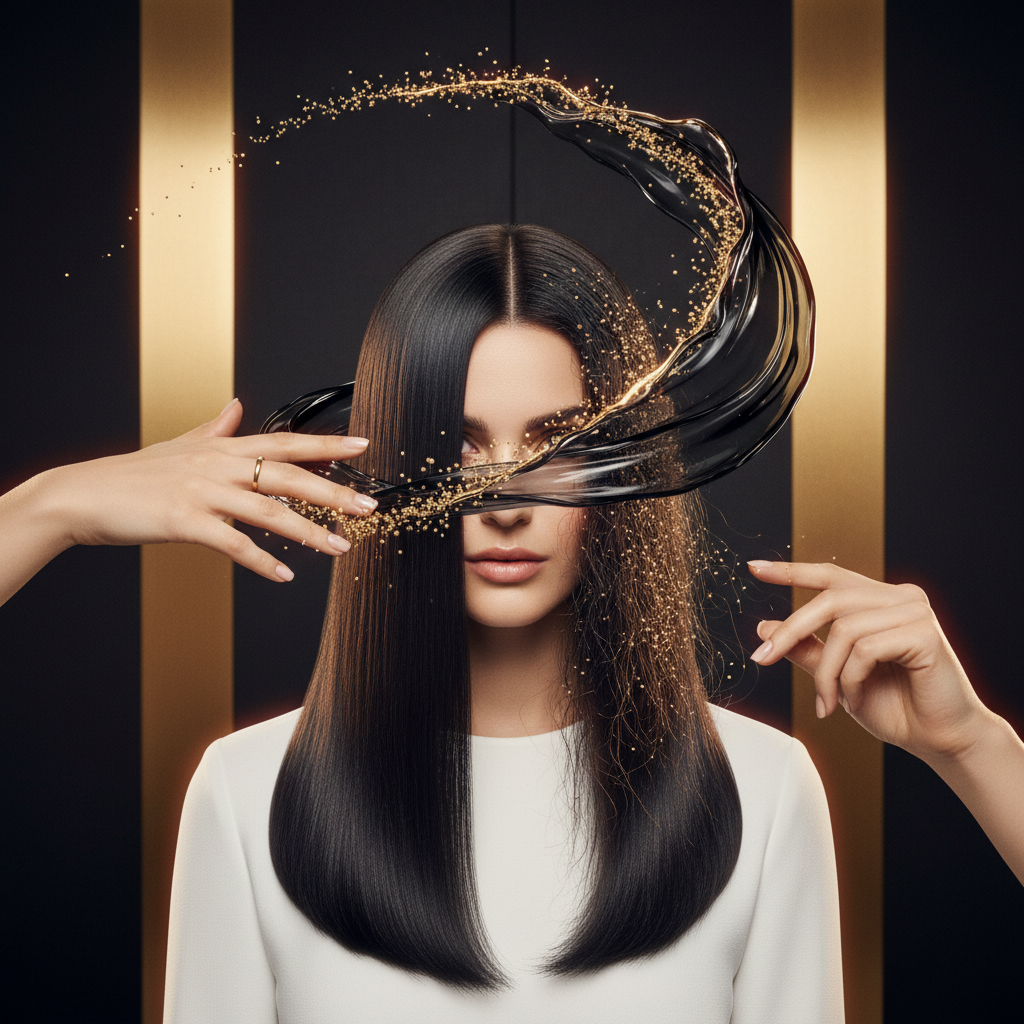
Quick answer: Managing Hard Water Hair Damage requires counteracting mineral buildup from dissolved calcium and magnesium ions that cling to the hair shaft. These minerals crystallise along the cuticle, leaving strands feeling rough, brittle, and coated while reducing elasticity. The most effective approach involves using chelating agents to dissolve mineral complexes, followed by deep conditioning to restore lipid balance. The main limitation is that chelating treatments remove surface mineral deposits and prevent further mechanical breakage, but cannot biologically mend split ends or reverse chemical damage already present in the hair cortex.
Key takeaways
- Hard water contains high concentrations of multivalent mineral ions, primarily calcium (Ca2+) and magnesium (Mg2+), defined by the World Health Organization as exceeding 120 mg/L of calcium carbonate equivalent.
- Mineral ions bond to negatively charged sites on damaged keratin, forming an insoluble film that blocks moisture absorption and stiffens the hair fibre.
- Managing hard water hair damage centres on chelation, a chemical process using binding agents like disodium EDTA or citric acid to lift mineral deposits safely.
- Hard water causes hair breakage due to friction and brittleness, not follicular hair loss or alopecia.
- Clarifying shampoos remove oils and product residues, but true chelating formulas are required to pull bound mineral salts from the hair shaft.
Managing Hard Water Hair Damage: what the evidence shows
Managing Hard Water Hair Damage begins with understanding how domestic water supplies interact with keratin fibres. When you wash your hair in hard water, dissolved minerals do not simply rinse away. Instead, positively charged calcium and magnesium ions bind electrostatically to the anionic (negatively charged) sites exposed on the hair surface, particularly where the cuticle has experienced previous weathering or chemical lifting.
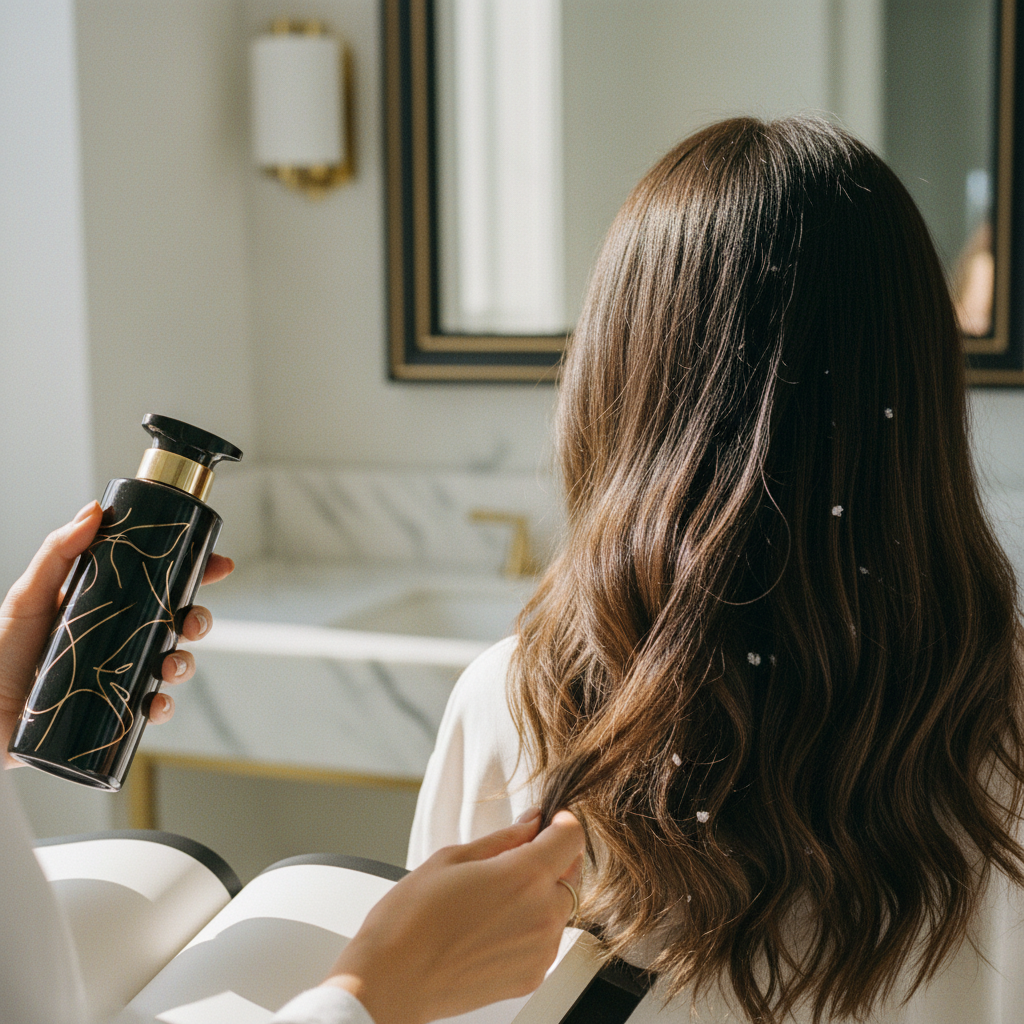
Research published in the International Journal of Dermatology demonstrated that hair washed in hard water exhibits significant mineral deposition on the cuticle surface compared to hair washed in distilled water. This mineral layer disrupts the flat alignment of cuticle scales. As the scales remain propped open by microscopic salt crystals, friction between individual strands increases substantially. The clinical consequence is not true hair loss at the follicle level, but increased tangling, dullness, and mechanical hair breakage during combing and styling.
Furthermore, these mineral deposits react chemically with standard fatty acid surfactants found in basic soaps and non-chelating shampoos. This reaction creates an insoluble curd, often recognised as soap scum, which coats the hair shaft. This hydrophobic, rigid layer repels conditioning agents and prevents topical moisturising ingredients from penetrating the hair fibre.
How hard water alters the hair fibre: the mechanism
The mechanism of mineral deposition on human hair involves both physical precipitation and ionic bonding. Natural hair has an isoelectric point around pH 3.67. At normal tap water pH levels, which typically sit between pH 6.5 and 8.5, the hair shaft carries a net negative electrical charge.
- Ionic attraction: Positively charged calcium (Ca2+) and magnesium (Mg2+) cations are strongly attracted to the negatively charged carboxylate groups on the hair keratin.
- Crystal formation: As the hair dries, water evaporates, leaving behind solid calcium carbonate (CaCO3) and magnesium salts. These minerals crystallise directly on the exterior cuticle and within the porous spaces of the outer cortex.
- Cuticle stiffness: The crystalline structure stiffens the outer sheath of the hair strand. Instead of flexing smoothly during movement or brushing, the hair encounters high friction and snaps under lower tensile loads.
- Oxidative catalytic reactions: Trace metals often present alongside hard water minerals, such as copper (Cu2+) and iron (Fe3+), catalyse free radical reactions via Fenton chemistry. When exposed to ultraviolet light or hydrogen peroxide during colouring, these deposited metals accelerate protein degradation and colour fading.
Signs your hair is suffering from mineral buildup
Identifying mineral deposits early helps you adapt your wash routine before severe fibre snapping occurs. The most frequent signs include:
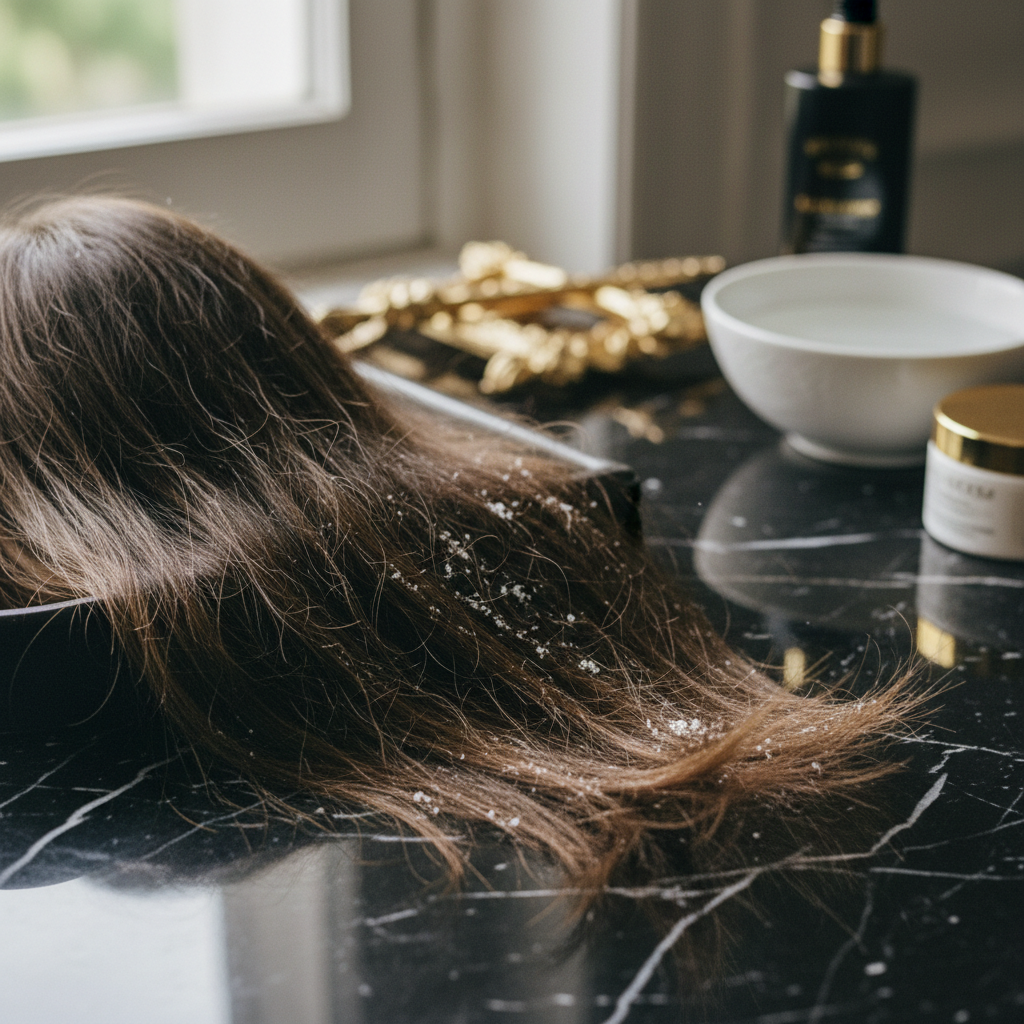
- A persistent waxy or chalky coating: Hair feels unclean, coated, or heavy immediately after washing and drying.
- Extreme tangling and roughness: The hair snags easily during wet and dry detangling because elevated cuticle scales catch on neighbouring strands.
- Loss of natural curl definition: Wavy and curly hair patterns become limp, frizzy, or stringy due to the added weight and rigidity of mineral crusts.
- Colour shifts and dullness: Lightened or blonde hair takes on a brassy or greenish cast due to copper oxidation, while dark hair looks matte and ash-toned.
- Sudden resistance to conditioning: Rich hair masks and leave-in conditioners seem to sit on the surface without softening the strands.
Hard water effects versus other hair challenges
It is vital to distinguish between mineral buildup, structural chemical damage, and true follicular shedding.
| Characteristic | Hard Water Buildup | Chemical Damage (Bleach/Perm) | Scalp Shedding (Telogen Effluvium) |
|---|---|---|---|
| Primary Location | Cuticle surface and outer cortex | Internal cortex and lipid layer | Hair follicle / dermal papilla |
| Root Cause | Calcium and magnesium precipitation | Disulphide bond cleavage and protein loss | Premature shift from anagen to telogen phase |
| Physical Texture | Coated, chalky, stiff, straw-like | Gummy when wet, porous, snapping easily | Normal fibre texture; root bulb visible |
| Visible Breakage | Mid-shaft snaps from combing friction | Severe snapping, split ends, shredding | Little to no shaft breakage |
| Resolution Method | Chelating agents and acidic rinses | Bond repair and protein conditioning | Addressing systemic or physiological triggers |
What you can do: steps for managing mineral buildup
A structured regimen removes accumulated minerals and shields the hair fibre from future deposits.
1. Introduce targeted chelating treatments
Standard clarifying shampoos rely on strong anionic surfactants (such as sodium laureth sulfate) to strip sebum and silicones. However, they lack the specific molecular structure needed to pull mineral ions off keratin. To break the bonds between calcium and your hair, look for formulations containing chelating agents:
- Disodium EDTA or Tetrasodium EDTA: Synthetic compounds with high binding affinities for multivalent metal ions.
- Sodium phytate or Phytic acid: Plant-derived chelators that effectively bind divalent minerals.
- Citric acid: An alpha-hydroxy acid that complexes with calcium ions while lowering formulation pH.
Use a dedicated chelating shampoo once every one to two weeks, depending on water hardness in your area. Leave the lather on the hair for two to three minutes to allow the chelating ligands to bind the mineral ions before rinsing thoroughly.
2. Acidify the final rinse
Hard water minerals leave the hair cuticle raised and slightly alkaline. Applying an acidic rinse with a pH between 4.0 and 5.0 helps neutralise residual alkalinity, smooth down the imbricated cuticle layers, and dissolve surface calcium salts. A diluted apple cider vinegar rinse (one part vinegar to eight parts water) or an acidic post-wash treatment restores the natural acidic mantle of the hair.
3. Replenish lost lipids and moisture
Because mineral deposits strip natural protective lipids and chelating cleansers can leave the hair temporarily bare, follow every chelating session with an intensive, emollient-rich deep treatment. Formulations containing fatty alcohols (cetyl and stearyl alcohol), ceramides, and light natural oils replenish the intercellular cement between cuticle cells.
4. Install point-of-use filtration or softeners
While showerhead filters containing KDF (Kinetic Degradation Fluxion) media effectively reduce free chlorine and some dissolved heavy metals, they do not soften water by removing calcium and magnesium. True water softening requires an ion-exchange system that replaces calcium and magnesium with sodium ions. If installing a whole-house ion-exchange softener is not feasible, an alternative is using distilled or reverse-osmosis water for your final rinse.
When the cause may be something else
Before attributing all your hair concerns to your water supply, assess whether other factors are involved. Chronic dryness and breakage often stem from:
- Heat styling damage: Frequent use of straighteners or curling wands above 185°C degrades the alpha-keratin matrix, causing moisture loss and fractures that feel identical to hard water stiffness.
- Excessive chemical processing: High-lift bleaching and repeated permanent waving degrade the cuticle entirely, leaving hair porous and brittle regardless of water quality.
- Scalp disorders: If you experience itching, flaking, or inflammation, do not assume it is simply "hard water scalp." Conditions such as seborrhoeic dermatitis, scalp psoriasis, and contact allergies require clinical dermatological treatment rather than chelating shampoos.
Supporting hair vitality with Watermans
When managing hard water hair damage, maintaining strong hair fibres and a balanced scalp environment is essential. While chelating washes address the external mineral residue on the hair shaft, supporting the structural integrity of new growth provides resilience against ongoing environmental stress.
Watermans Grow Me Shampoo is formulated with dynamic natural ingredients including biotin, rosemary extract, caffeine, niacinamide, and argan oil. Designed to be sulphate-free, it cleanses gently without harshly stripping the scalp's moisture barrier. Pairing it with Watermans Condition Me Conditioner supplies hydrolysed lupin protein, cholesterol, and essential fatty acids that smooth the cuticle, restore slip, and dramatically reduce the mechanical breakage that hard water deposits encourage.
Frequently asked questions about Managing Hard Water Hair Damage
Can hard water cause permanent follicular hair loss?
No. There is no clinical evidence showing that hard water damages the hair follicle or causes conditions like androgenetic alopecia or alopecia areata. Hard water causes hair breakage along the shaft because crystallised mineral deposits increase friction, weaken elasticity, and lead to mechanical snapping during brushing. The root of the hair remains unaffected.
How often should I use a chelating wash for Managing Hard Water Hair Damage?
For most people living in hard water areas (water hardness exceeding 180 mg/L), using a chelating treatment once every 7 to 14 days is ideal. If you wash your hair daily or swim in chlorinated pools, you may need a weekly wash. If your hair is dry or chemically processed, limit chelation to every two weeks followed by an intensive deep conditioning mask.
Will a showerhead filter completely fix hard water hair damage?
Standard shower filters remove chlorine, sediment, and volatile organic compounds, which helps prevent dry skin and oxidation. However, standard filters cannot physically soften water because they do not contain ion-exchange resins. To eliminate calcium and magnesium entirely, you need a salt-based water softening unit. Shower filters reduce oxidising irritants, but regular chelating steps remain necessary.
What is the difference between clarifying and chelating shampoos?
Clarifying shampoos are formulated with potent surfactants designed to strip surface sebum, styling waxes, and silicones. Chelating shampoos contain specific chemical sequestering agents (such as EDTA, citric acid, or phytic acid) designed to bond with dissolved mineral ions and metal deposits. To reverse mineral stiffness, a chelating shampoo is required.
Protecting your hair against hard water
Managing Hard Water Hair Damage comes down to understanding water chemistry and adjusting your routine to counter mineral adhesion. By combining routine chelation, pH-balancing acidic rinses, and rich lipid conditioning, you prevent calcium and magnesium ions from compromising the structural strength of your hair. Taking these proactive steps ensures your strands stay smooth, pliable, and resilient against everyday mechanical stress, no matter how hard your tap water is.
Sources and references
- World Health Organization. Hardness in Drinking-water: Background document for development of WHO Guidelines for Drinking-water Quality. WHO/HSE/WSH/10.01/10/Rev/1, 2011.
- Srinivasan, G., et al. "Effects of hard water on hair." International Journal of Dermatology, vol. 52, no. 7, 2013, pp. 884-885.
- Evans, T., & Wickett, R. R. Practical Modern Hair Science. Allured Business Media, 2012.
- Robbins, C. R. Chemical and Physical Behavior of Human Hair. 5th ed., Springer-Verlag, 2012.
- Marsh, J. M., et al. "Role of copper in hair damage during coloration." Journal of Cosmetic Science, vol. 65, no. 5, 2014, pp. 317-326.
Find these ingredients in Watermans products
- Copper: you will find this ingredient in our Hair Vitamins.