Managing Hard Water Damage on Hair: Science, Symptoms, and Solutions
8 min read ·
Discover proven methods for Managing Hard Water Damage on Hair. Learn how minerals affect the hair cuticle and how to restore moisture, shine, and elasticity.
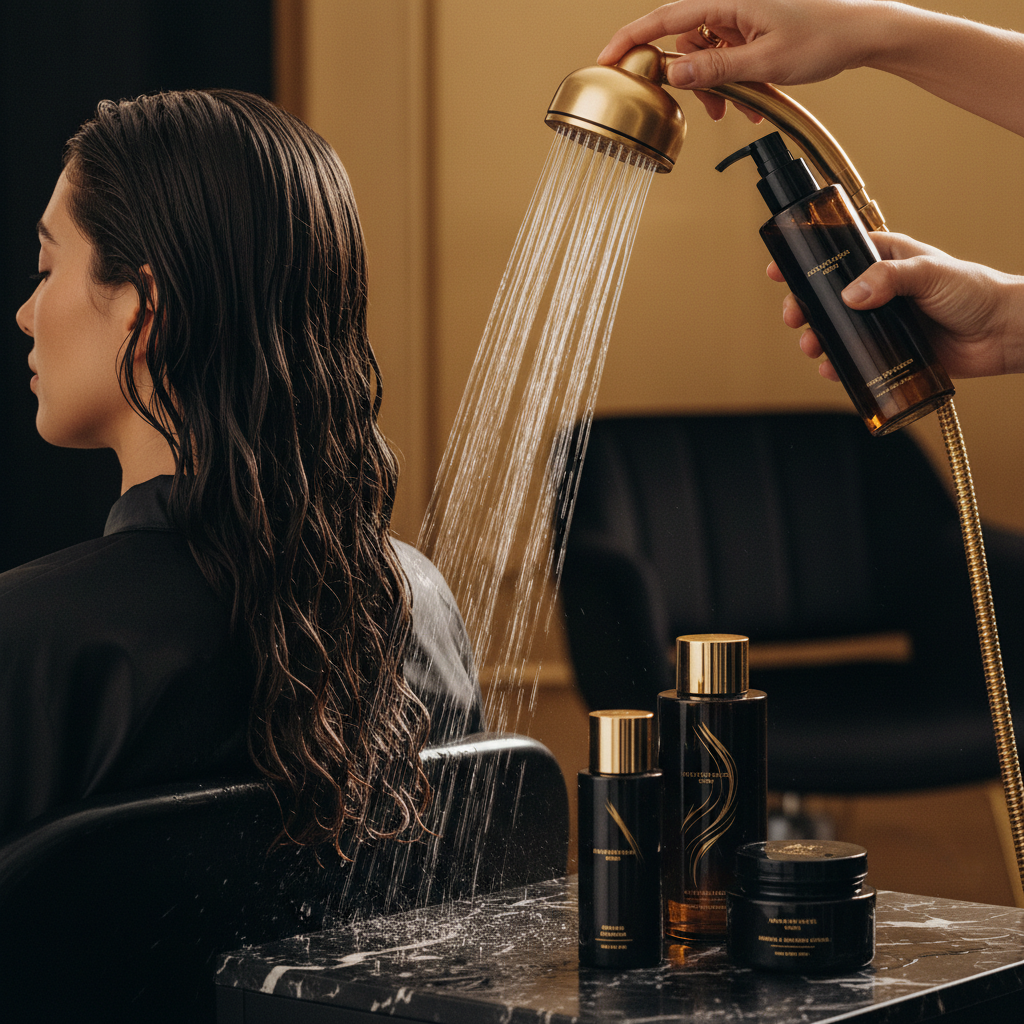
Quick answer: Managing Hard Water Damage on Hair requires removing mineral build-up and restoring moisture to the cuticles. Hard water contains high concentrations of dissolved calcium and magnesium. These minerals bind to hair fibre, creating an insoluble coating that blocks hydration, reduces elasticity, and leads to mechanical breakage. However, while managing hard water damage on hair restores softness, prevents breakage, and improves scalp comfort, it does not treat follicular hair loss or genetic thinning, which require medical assessment rather than cosmetic descaling.
Key takeaways
- Hard water contains dissolved calcium and magnesium ions (typically exceeding 180 mg/L in very hard areas) that form an insoluble residue on the hair shaft.
- Mineral build-up disrupts the cuticle layer, leaving hair rough, dull, and prone to friction-induced snapping.
- Hard water does not cause hair loss at the follicle level, but it significantly accelerates hair breakage along the mid-lengths and ends.
- Weekly use of chelating agents (such as disodium EDTA or citric acid) neutralises mineral deposits without stripping natural sebum.
- Acidic rinses with a pH of 4.5 to 5.5 help smooth raised cuticles and reduce mineral adhesion.
- Water softeners and filtered shower attachments offer the most effective long-term preventative measure.
Managing Hard Water Damage on Hair: what the evidence shows
Managing Hard Water Damage on Hair starts with understanding how dissolved minerals interact with the biological structure of keratin. When water evaporates from your hair after washing, dissolved calcium carbonate and magnesium sulphate crystalise. They adhere directly to the hair shaft.
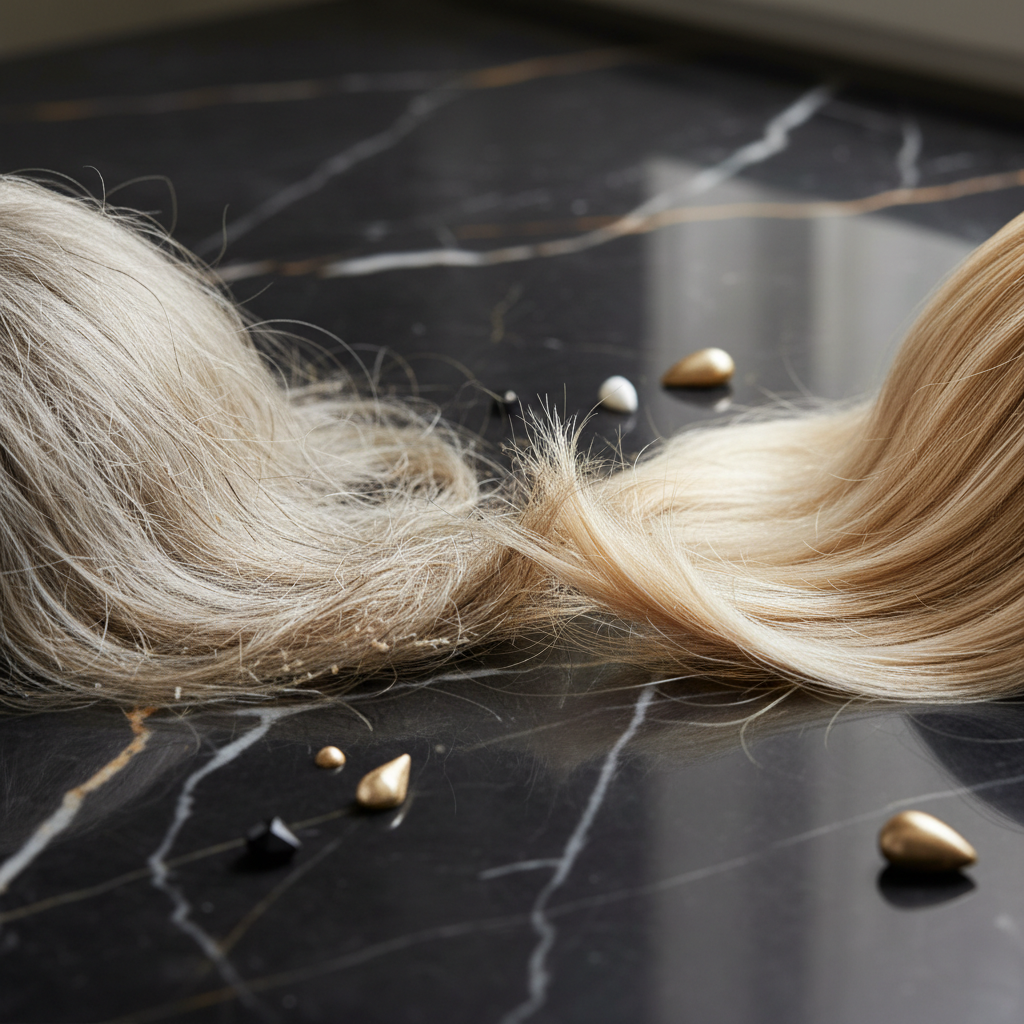
Cosmetic chemistry studies demonstrate that these minerals interact negatively with common cleansing agents. Hard water neutralises traditional anionic surfactants, turning soap and shampoo into an insoluble curd (calcium stearate). This residue settles onto the hair fibre and scalp.
Research published in the International Journal of Trichology examined hair washed in hard water versus distilled water over 30 days. The findings revealed that while hard water did not alter the internal tensile strength of healthy virgin hair directly, it significantly increased surface roughness and surface charge. This structural roughness leads to higher inter-fibre friction, tangling, and extensive mechanical breakage during brushing and styling.
| Water type | Mineral concentration (CaCO3) | Impact on hair fibre | Common visible symptoms |
|---|---|---|---|
| Soft water | 0 to 60 mg/L | Minimal residue, cuticles lie flat, high lather | Clean feel, manageable, light |
| Moderate water | 61 to 120 mg/L | Slight mineral accumulation over weeks | Mild dryness, requires frequent conditioning |
| Hard water | 121 to 180 mg/L | Regular mineral crusting, reduced shampoo lather | Tangling, dullness, faded hair colour |
| Very hard water | Over 180 mg/L | Dense mineral salt deposit, stiff cuticle scale | Chronic breakage, straw-like texture, dry scalp |
What the evidence does not show
There is no credible scientific evidence demonstrating that hard water causes pattern baldness (androgenetic alopecia) or triggers autoimmune hair loss (alopecia areata). Dermatology clinics frequently treat individuals convinced that relocating to a hard water area has caused their hair to fall out.
It is vital to distinguish between hair shedding and hair breakage. Hair shedding occurs when the follicle transitions into the telogen phase and releases the hair bulb from the scalp. Hard water does not alter follicular growth cycles. What people perceive as "hair loss" from hard water is almost always distal breakage: brittle strands snapping off mid-shaft due to friction, stiffness, and cuticle erosion.
The mechanism: how minerals damage the hair fibre
The outer protective layer of hair consists of overlapping cuticle scales held together by cell membrane complex lipids. Healthy hair maintains an isoelectric point (the electrical neutral state) around pH 3.7, while the natural surface pH of hair sits between 4.5 and 5.5.
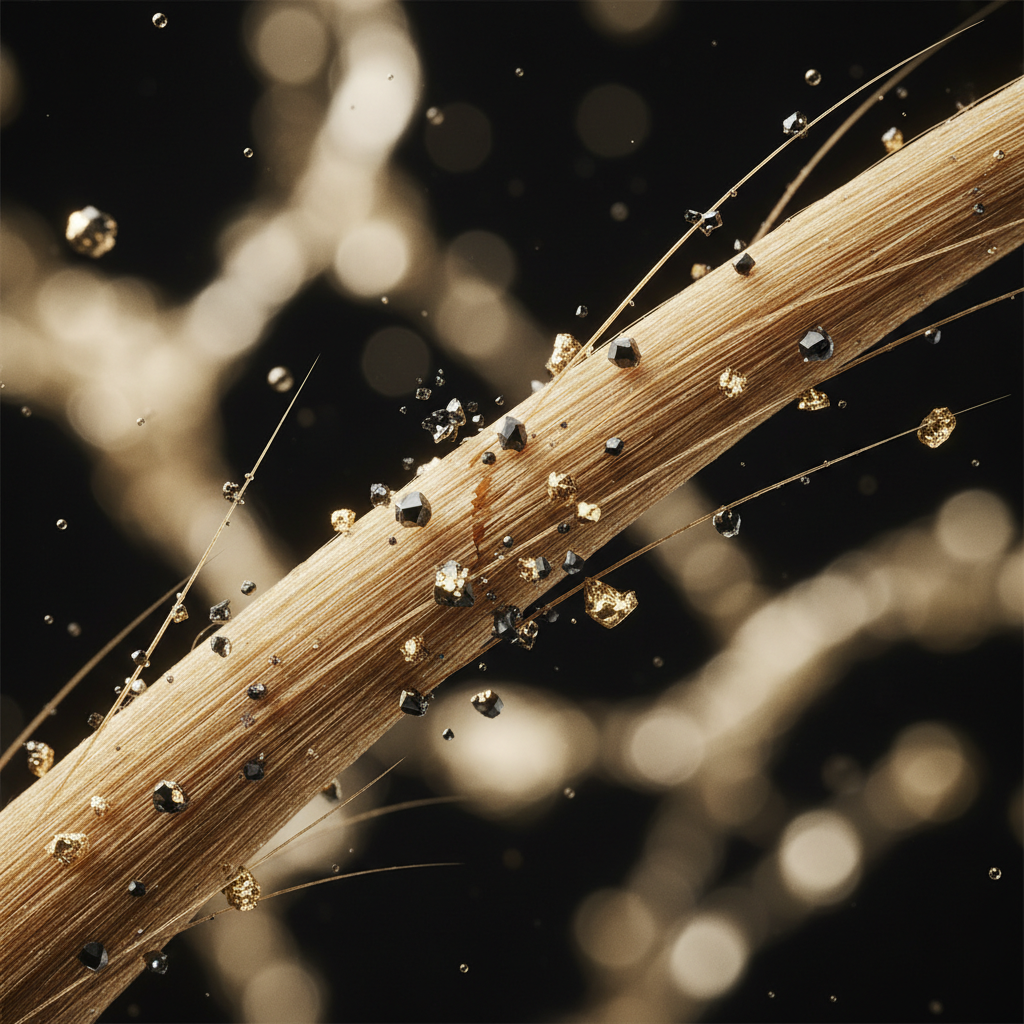
Hard water disrupts this delicate balance in three distinct ways:
- Alkaline shifting: Hard tap water typically carries an alkaline pH between 7.5 and 8.5. This alkalinity lifts the hair cuticles, exposing the vulnerable cortex beneath.
- Mineral trapping: Positively charged calcium (Ca2+) and magnesium (Mg2+) ions are electrostatically drawn to the negatively charged, damaged sites on the keratin protein. Once attached, they form a calcified film that prevents moisture, conditioners, and oils from penetrating the fibre.
- Oxidative catalytic reactions: Trace metals often present alongside hard water (such as copper and iron) act as catalysts for free-radical damage. When exposed to ultraviolet light or chemical bleaches, these trapped metals accelerate lipid oxidation and split disulfide bonds inside the cortex.
Signs your hair is suffering from mineral build-up
You can generally diagnose mineral accumulation through physical characteristics and styling behaviour:
- Persistent dryness: Your hair feels parched and stiff even immediately after deep conditioning treatments.
- Lack of lather: Your regular shampoo refuses to lather cleanly, requiring double or triple the usual amount to feel clean.
- Loss of shine and movement: Hair appears matte, limp, and lacks natural bounce because the mineral coating scatters light unevenly.
- Brassiness or discoloration: Blonde, silver, or lightened hair shifts toward an undesirable yellow, green, or brassy orange tone due to mineral oxidisation.
- Increased knotting: Strands catch on each other easily, leading to severe matting, split ends, and high breakage when combing wet hair.
- Dry, flaky scalp: Mineral salts dry out the epidermal barrier of the scalp, mimicking dandruff and triggering irritation.
Practical steps for managing mineral build-up
Effectively managing hard water damage on hair requires a consistent routine focused on chelation, pH balancing, and lipid replenishment.
1. Integrate chelating washes
Standard clarifying shampoos remove surface sebum and styling product resins, but they lack the specific chemistry needed to dissolve mineral salts. You need a dedicated chelating treatment containing ingredients like tetrasodium EDTA, disodium EDTA, or sodium phytate. These ingredients bond with mineral ions, pulling them away from the keratin structure so they rinse down the drain. Use a chelating wash once every 7 to 14 days, depending on the hardness of your local supply.
2. Restore the acidic mantle
Because hard water raises the cuticle, you must re-acidify the hair after every wash. Rinsing with a mild, diluted acidic formula (such as an apple cider vinegar rinse diluted to 1 part vinegar to 8 parts water, or a balanced pH 4.5 leave-in spray) contracts the cuticle scales. This locks in moisture, smooths the exterior surface, and prevents subsequent mineral penetration.
3. Use deep conditioning lipid masks
Once minerals are stripped, the underlying hair fibre is often severely dehydrated. Apply reconstructive deep conditioners rich in fatty alcohols (cetyl and stearyl alcohol), ceramides, and hydrolysed proteins to patch cuticle gaps and restore elasticity.
4. Install physical water filtration
Shower head filters containing KDF-55 media can reduce chlorine, iron, and heavy metals, although only an ion-exchange water softener can completely eliminate calcium and magnesium ions. If a whole-house softener is not feasible, a multi-stage shower filter remains a beneficial initial defence.
When hair issues are caused by something else
If your hair continues to thin, fall out by the root, or break despite corrective washing routines, hard water is unlikely to be the primary culprit. Consider these common alternatives:
- Telogen effluvium: Sudden, excessive daily shedding across the entire scalp, often triggered by severe physical stress, nutritional deficits (low ferritin, zinc, or vitamin D), hormonal shifts, or acute illness two to four months prior.
- Chemical over-processing: High-lift bleaches, permanent perms, and relaxers destroy internal disulfide bonds. This damage causes severe breakage that looks similar to hard water distress but stems from chemical dissolution.
- Scalp disorders: Conditions such as seborrhoeic dermatitis, psoriasis, and folliculitis cause scalp flaking and inflammation independent of water hardness.
Consult your GP, an NHS dermatologist, or an accredited member of the Institute of Trichologists if you observe distinct bald patches, scalp pain, or hair falling out directly from the bulb in large clumps.
Supporting hair health with Watermans
When addressing external stressors like hard water, supporting your scalp and fortifying fragile lengths makes an enormous difference. Watermans products are formulated to revitalise compromised hair without relying on harsh, drying sulphates.
Incorporating Watermans Grow Me Shampoo alongside Watermans Condition Me Conditioner provides an ideal, nourishing foundation. Formulated with hydrolysed lupin protein, biotin, caffeine, and argan oil, this system delivers essential hydration and cuticle-smoothing lipids that counteract the brittle, abrasive effects of mineral residue. Used consistently, it helps keep your hair feeling resilient, flexible, and full of body.
Frequently asked questions about Managing Hard Water Damage on Hair
Can hard water cause permanent follicular hair loss?
No. Hard water does not cause permanent or follicular hair loss. The minerals remain on the outer shaft and scalp surface; they do not penetrate deep into the dermis to alter follicle health. Any shedding linked to hard water is usually fibre breakage caused by surface roughness, friction, and lack of flexibility.
How often should I use a chelating wash for Managing Hard Water Damage on Hair?
In moderately hard to hard water areas, use a chelating wash once every two weeks. If your water exceeds 180 mg/L or you swim regularly, increase this to once a week. Avoid daily chelation, as excessive stripping can leave the hair cuticle dehydrated and sensitive.
Will a shower filter completely remove hard water minerals?
Most standard shower head filters do not soften water. They use carbon or KDF media to filter chlorine, heavy metals, and sediment, but they cannot remove dissolved calcium and magnesium. Only an ion-exchange system (which swaps calcium ions for sodium ions) softens water completely. However, shower filters still help reduce oxidising contaminants.
Does hard water ruin dyed or bleached hair?
Yes. Hard water accelerates colour fading and tone alteration. Calcium deposits make bleached hair feel brittle, while trace copper and iron oxidise within porous, lightened strands, turning blonde hair brassy or dull green. Chelating washes and acidic rinses prevent this mineral-induced colour shift.
Strategic hair care for hard water regions
Managing Hard Water Damage on Hair requires a deliberate approach focused on mineral removal, cuticle restoration, and moisture balance. While living in a hard water region presents genuine challenges for hair manageability, understanding the physical interaction between calcium ions and keratin allows you to safeguard your strands effectively. Regular chelating maintenance, balanced acidic conditioning, and targeted scalp care will preserve the softness, strength, and vibrant shine of your hair over the long term.
Sources and references
- International Journal of Trichology, "Evaluation of the Effect of Hard Water on Hair Tensile Strength", 2013, DOI: 10.4103/0974-7753.114706
- Journal of Cosmetic Dermatology, "The effect of water hardness on the cleansing ability of shampoos", 2016
- Drinking Water Inspectorate (DWI), "Water Hardness in England and Wales", Technical Guidance Document, 2021
- British Association of Dermatologists, "Telogen Effluvium Patient Information Leaflet", 2022
- Institute of Trichologists, "Understanding Hair Breakage versus Hair Loss", Educational Series, 2020
Find these ingredients in Watermans products
- Zinc: you will find this ingredient in our Hair Vitamins.