Leave-in Conditioners and Slip: The Science of Smooth Detangling
8 min read ·
Explore the science behind leave-in conditioners and slip, including how surface friction, cationic polymers, and cuticle mechanics protect against hair breakage.
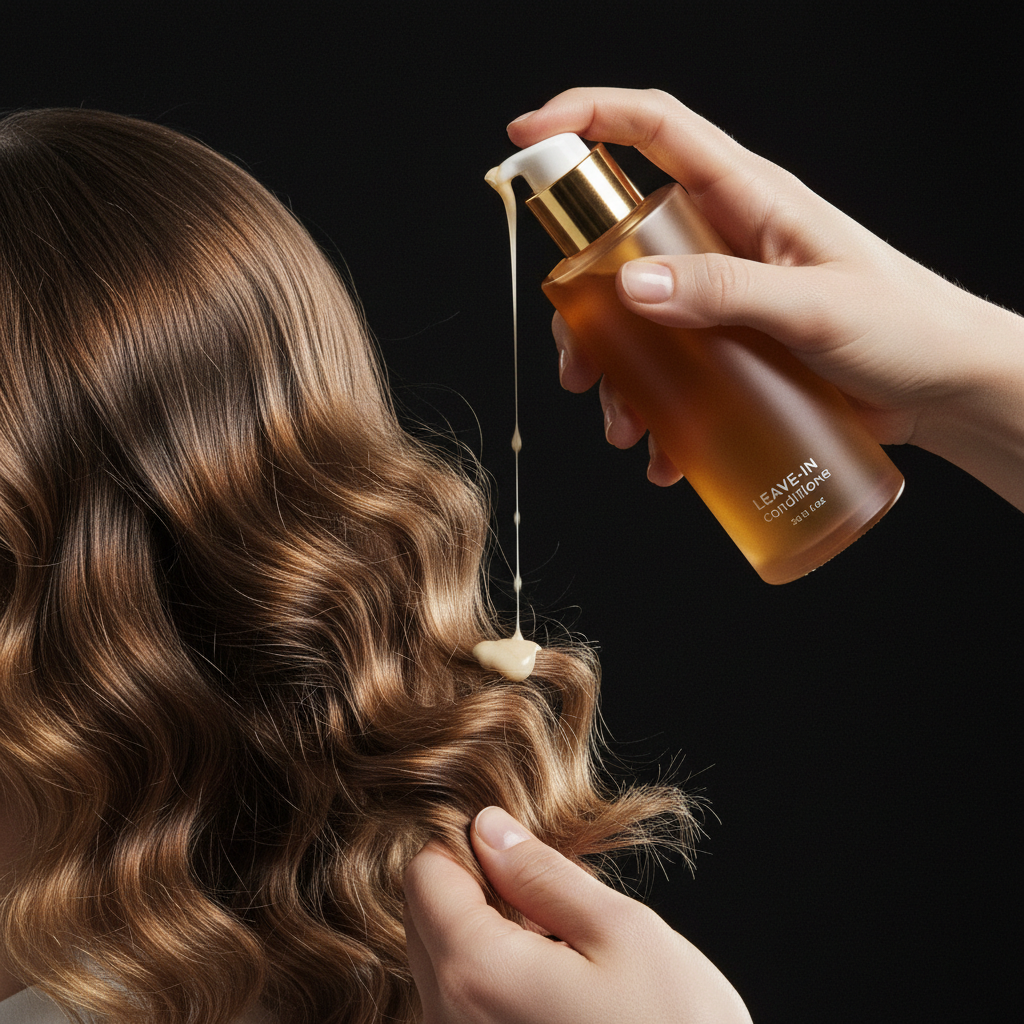
Quick answer: Understanding Leave-in Conditioners and Slip comes down to surface friction and cuticle mechanics. In cosmetic science, slip describes how easily fingers, combs, or adjacent hair fibres glide past one another without snagging. Leave-in conditioners provide long-lasting slip by depositing cationic polymers, silicones, and fatty alcohols that lower the hair's friction coefficient. However, their primary limitation is cosmetic: while slip dramatically reduces mechanical breakage during detangling, leave-ins do not physically rebuild broken internal keratin bonds or resolve genetic hair loss.
Key takeaways
- Slip measures the lubricity and reduction of surface friction between adjacent hair fibres or between hair and styling tools.
- Cationic surfactants, silicones, and natural plant mucilages provide slip by binding electrostatically to negatively charged, damaged cuticle sites.
- Effective leave-in formulas protect hair against mechanical breakage, which occurs when wet or dry detangling forces exceed the fibre's tensile strength.
- Leave-in conditioners differ from rinse-out products because they contain lighter film-formers and fewer heavy emulsifiers designed to remain on the shaft without causing limp buildup.
- Slip prevents breakage, but it cannot cure biological shedding, genetic hair loss, or internally repair fractured disulphide bonds.
Leave-in Conditioners and Slip: what the evidence shows
Textile and cosmetic researchers measure hair friction using force sensors that track how much resistance a comb encounters as it moves down a tress. Scientific literature, such as studies published in the Journal of Cosmetic Science, demonstrates that damp, chemically processed hair has a significantly higher friction coefficient than virgin hair. When hair is wet, water swells the shaft and lifts the cuticle scales, increasing inter-fibre drag. If you try to drag a comb through unslipped hair, the force spikes, leading to cuticle chipping and mid-shaft snapping.
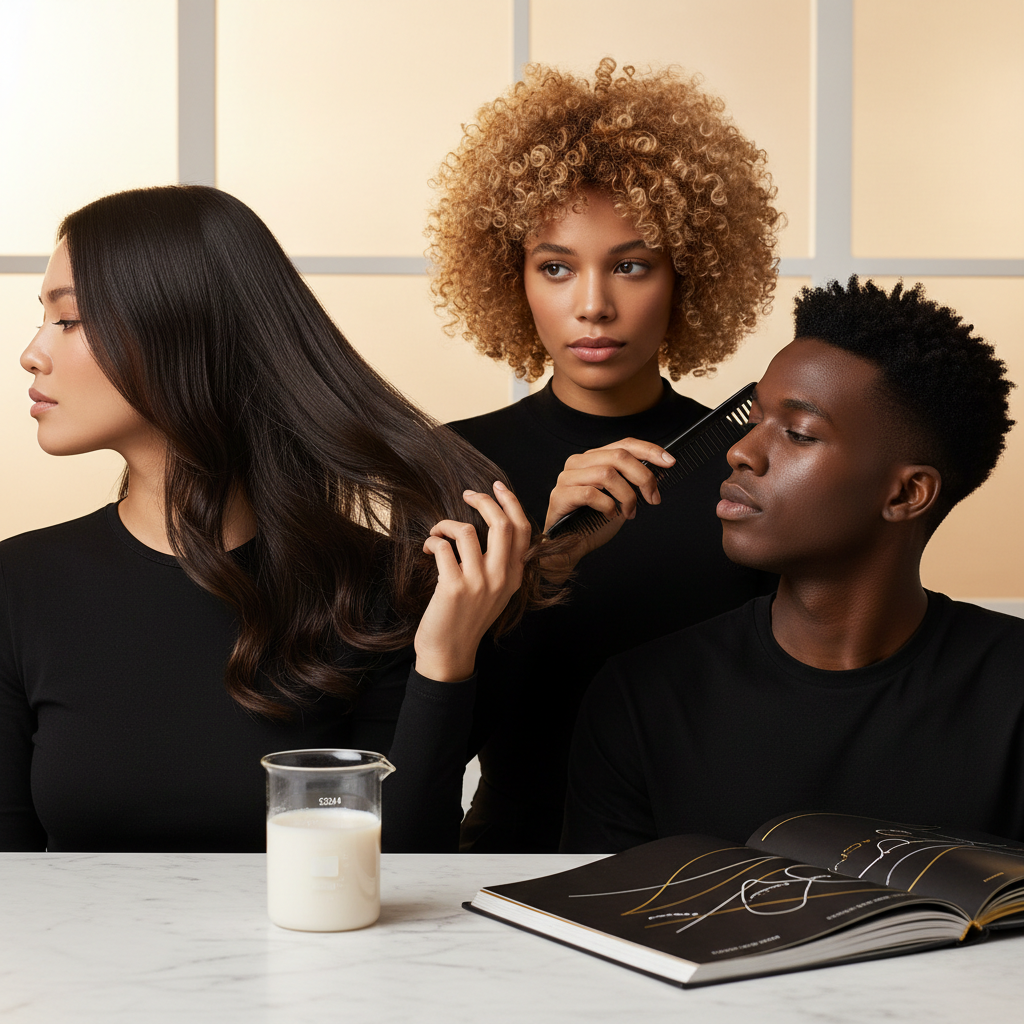
This is where the relationship between Leave-in Conditioners and Slip proves vital. Rinse-out conditioners deposit emollients and cationic agents that provide immediate slip under running water. Yet, rinsing washes away a significant portion of the free lubricating layer. A leave-in conditioner acts as an unwashed protective barrier. It coats raised cuticle edges with a micro-thin lubricating film, ensuring that low-friction detangling continues long after you leave the shower. Tribological testing shows that treating hair with leave-in emulsions can reduce wet combing work by up to 50 to 80 percent depending on the base formulation.
The mechanical mechanism behind slip
To understand slip, you have to look at the electrical charge and topography of the hair fibre.
- Electrostatic attraction: Human hair carries a natural negative electrical charge (an isoelectric point around pH 3.67). Chemical treatments, heat, and weathering strip away the hair's protective outermost lipid layer (18-methyleicosanoic acid, or 18-MEA), exposing damaged keratin and multiplying these negative sites.
- Cationic adsorption: Leave-in conditioners rely on positively charged molecules, such as behentrimonium methosulfate, cetrimonium chloride, and polyquaternium compounds. Opposites attract. These positive charges lock onto the negative sites, neutralising static flyaways and smoothing the jagged edges of lifted cuticles.
- Film formation and lubrication: Ingredients such as dimethicone, amodimethicone, fatty alcohols (cetyl and stearyl alcohol), and plant-derived mucilages (like slippery elm or marshmallow root) form a hydrophobic, silky barrier.
When your comb meets the hair fibre, it glides across this smooth molecular film instead of catching on the microscopic shingles of the cuticle. Lower friction directly translates into lower mechanical tension on the follicle and the fibre shaft.
What the evidence does not show
It is essential to separate cosmetic protection from biological hair growth.
- Slip does not cure or treat alopecia: When you detangle without slip, you snap hair along the shaft, causing mechanical breakage. Reducing this breakage keeps your ends full and thick, but it does not alter follicular hair shedding (telogen effluvium) or patterned hair loss (androgenetic alopecia).
- Leave-ins do not permanently repair split ends: While good slip prevents splits from travelling further up the shaft by stopping comb friction, the film is temporary. Once you wash the hair with a clarifying surfactant, the polymer film washes away, exposing the underlying cuticle structure until reapplied.
- More slip does not mean better penetration: Highly slippery ingredients (such as high-viscosity silicones and heavy cationic guar gums) sit largely on the exterior of the hair fibre. Their job is surface modification, not deep cortex reconstruction.
Comparing ingredients responsible for slip
Formulators select slip agents based on hair diameter, porosity, and whether the hair needs water-soluble lightness or heavy-duty lubrication.
| Ingredient category | Common examples | Primary mechanism | Best hair profile |
|---|---|---|---|
| Cationic surfactants | Behentrimonium methosulfate, cetrimonium chloride | Adsorbs electrostatically to negative damage spots; flattens cuticles | Fine to medium, chemically treated, or high-porosity hair |
| Silicones | Amodimethicone, dimethicone | Forms a hydrophobic, high-slip barrier; resists wash-off without buildup | Coarse, highly porous, or heat-styled hair |
| Fatty alcohols | Cetyl alcohol, stearyl alcohol, cetearyl alcohol | Provides creamy viscosity and lipid lubrication | Dry, coarse, or naturally curly textures |
| Cationic polymers | Polyquaternium-10, Polyquaternium-37 | Creates lightweight, flexible film; controls static | Fine hair prone to tangles that weighs down easily |
| Plant mucilages | Marshmallow root, slippery elm, flaxseed extract | Gel-based polysaccharide lubrication; water-soluble | Fine, wavy, and easily weighed-down curls |
Signs your hair lacks adequate slip
If your post-wash styling routine lacks proper surface lubrication, your hair will show clear signs of mechanical distress:
- White bulbs vs. clean breaks: If you examine the hair collected in your brush and see short pieces without a white bulb at the root, you are experiencing mechanical breakage from high friction, not biological shedding.
- Audible snapping during styling: Hearing a faint popping sound when running a comb or brush through wet hair indicates tension peaks exceeding the fibre's elastic limit.
- "Fairy knots" (single-strand knots): Common in curly, coily, and afro-textured hair, these occur when adjacent, high-friction hair fibres twist around themselves and knot instead of sliding past each other.
- Rapid mid-day tangling: Hair that feels soft when freshly dried but mats into a bird's nest within a few hours usually lacks a persistent leave-in conditioning film.
How to use leave-in conditioners to maximise slip
Getting the most out of your product requires strategic application and the right mechanical tools:
- Apply to soaking wet or damp hair: Water acts as a natural carrier, helping distribute viscous leave-in conditioners evenly across millions of individual strands without over-concentrating product in one spot.
- Work from ends to roots: The oldest part of your hair (the ends) has lost the most natural 18-MEA lipid coating and holds the highest negative charge. Start your application there, smoothing upward toward the mid-lengths.
- Use wide-tooth tools or flexible-bristle brushes: Apply your leave-in first, gently distribute it with your fingers to establish initial slip, and then proceed with detangling tools. Never force a comb through an unlubricated knot.
- Pair with a targeted growth and density routine: While cosmetic slip protects your lengths, scalp health dictates future growth. Watermans Grow Me Shampoo and Condition Me Conditioner provide a balanced, revitalising wash routine formulated with biotin, caffeine, and argan oil to nourish the scalp and strengthen the feel of hair before you apply your post-wash styling products.
When tangling is caused by something else
If applying high-slip products fails to solve chronic tangles, the root cause may be structural rather than cosmetic:
- Severe chemical degradation: Hair that has been repeatedly bleached or relaxed can suffer from cuticle loss where the cortex is directly exposed. In this state, the fibre becomes gummy when wet and brittle when dry; no amount of leave-in slip can fully compensate for missing cuticle layers.
- Hard water mineral scale: Hard water deposits calcium and magnesium carbonate onto the hair shaft (often exceeding 200 mg/L in hard water zones). This mineral crust creates a rough, sandpapery texture that overwhelms standard conditioning polymers.
- Weathering and extreme split ends: Once a hair shaft has split into multiple prongs, those frayed ends physically latch onto neighbouring hairs like Velcro. The only solution for split ends is a professional trim.
Frequently asked questions about Leave-in Conditioners and Slip
What is the cosmetic definition of slip in haircare?
Slip refers to the slipperiness and lubricity imparted to hair fibres by conditioning agents. High slip reduces the friction coefficient between adjacent hair shafts, combs, and fingers. This allows styling tools to pass through tangled strands smoothly, minimising tension and preventing mechanical fibre breakage.
Can fine hair benefit from Leave-in Conditioners and Slip without looking greasy?
Yes, fine hair benefits greatly from slip because fine strands have a smaller cross-sectional area and snap easily under detangling tension. The key is choosing lightweight formulations powered by water-soluble plant mucilages, cetrimonium chloride, or polyquaternium polymers rather than heavy plant butters or non-volatile silicones.
Does good slip stop hair from falling out from the root?
No. Slip only protects the hair fibre against shaft breakage caused by friction and physical tension. It has no biological influence on the hair follicle, the follicular growth cycle, or hair shedding conditions such as telogen effluvium and androgenetic alopecia.
Can I leave my regular rinse-out conditioner in my hair for extra slip?
You should avoid using rinse-out conditioners as leave-ins. Rinse-out formulas contain higher concentrations of heavy emulsifiers and conditioning quats meant to be flushed away with water. Leaving them on the scalp and hair can lead to irritation, dull film buildup, and limp, greasy strands.
A balanced approach to hair protection
A well-formulated leave-in conditioner is one of the most effective tools for defending your hair against the everyday wear and tear of styling. By mastering the dynamics of Leave-in Conditioners and Slip, you reduce the physical friction that chips cuticles and causes snapping, helping you retain length and preserve smooth hair texture. Pair high-slip detangling practices with a nutrient-rich wash routine that prioritises scalp vitality, and you will give your hair the best chance to stay resilient from root to tip.
Sources and references
- Journal of Cosmetic Science, "Measurement of Combing Forces on Wet and Dry Hair", 2012.
- International Journal of Trichology, "Hair Cosmetics: An Overview", 2015.
- Society of Cosmetic Chemists, "Conditioning Agents for Hair and Skin", Marcel Dekker, 1999.
- Clinical, Cosmetic and Investigational Dermatology, "Hair breakage: Mechanisms and prevention", 2017.
Find these ingredients in Watermans products
- Biotin: you will find this ingredient in our Hair Growth Shampoo.