Keratin Treatments and Fibre Elasticity: Science and Hair Health
8 min read ·
Explore how keratin treatments impact fibre elasticity, why chemical smoothing can cause brittle hair breakage, and how to maintain tensile strength.
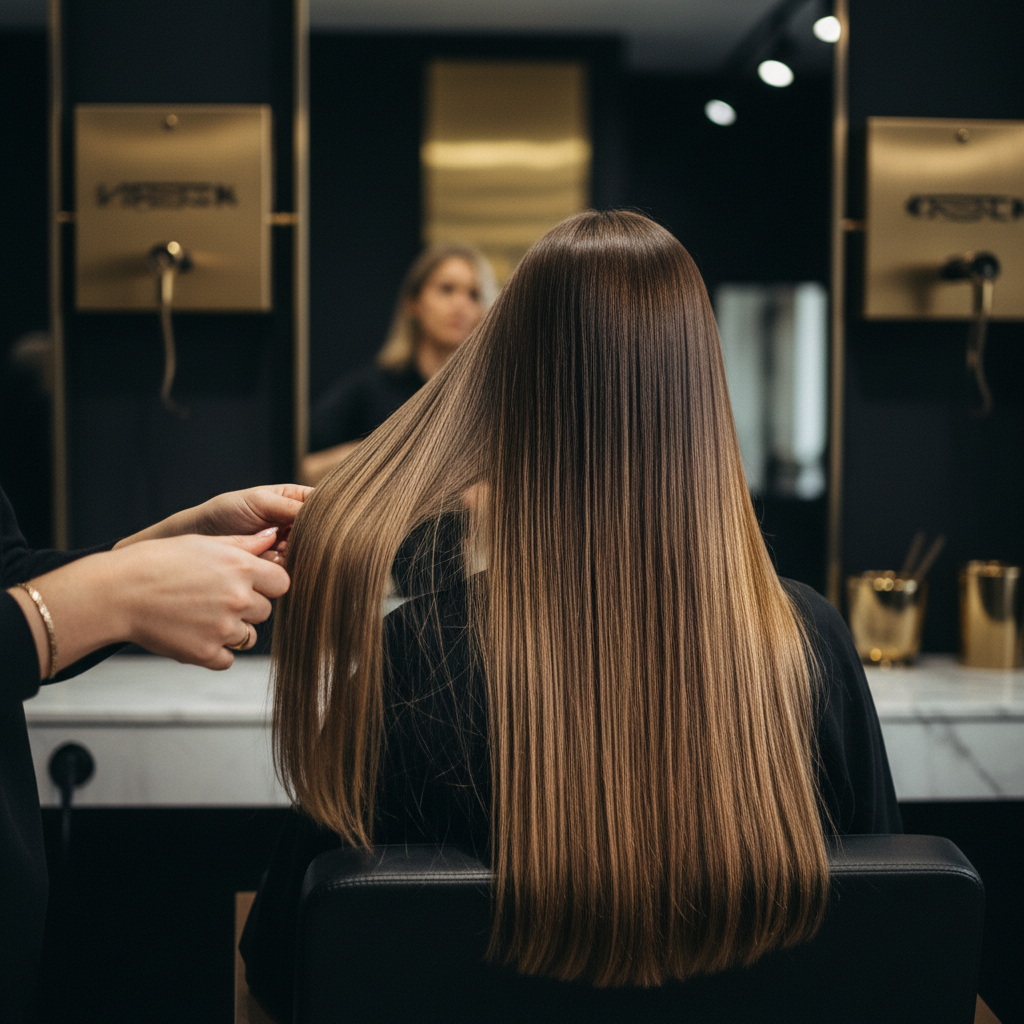
Quick answer: The relationship between Keratin Treatments and Fibre Elasticity is a delicate trade-off between cosmetic smoothing and mechanical resilience. In the short term, these salon processes cross-link proteins to coat and seal the cuticle, temporarily reducing porosity and frizz. However, the high heat (often 200°C to 230°C) and chemical cross-linking agents alter the internal alpha-helical structure of the hair cortex. This rigidifies the fibre, which often reduces natural tensile elasticity and leaves hair prone to snapping under mechanical stress.
Key takeaways
- Keratin treatments do not permanently rebuild natural hair bonds; they create an external and inter-filament synthetic scaffold.
- Fibre elasticity depends on the natural alpha-helical protein coils of the hair cortex stretching and recovering without breaking.
- High-temperature flat irons used during chemical processing can denature cortex proteins, leading to brittle, stiffened strands.
- Loss of elasticity manifests as hair snapping when gently stretched wet, rather than stretching and returning to its resting length.
- Professional aftercare must balance surface lubrication and internal moisture to prevent sudden shaft breakage.
Keratin Treatments and Fibre Elasticity: what the evidence shows
When evaluating Keratin Treatments and Fibre Elasticity, cosmetic science differentiates between surface shine and structural integrity. Intact, healthy virgin hair can stretch roughly 30% of its original length when wet and return to its starting state without damage. This bounce comes directly from the cortex, which makes up about 85% of the fibre and contains polypeptide chains wound into resilient alpha-helices.
During semi-permanent smoothing processes, chemical solutions containing hydrolysed keratin and cross-linking aldehydes or glyoxylic acid derivatives are saturated into the hair. The treatment is then sealed using flat irons operating between 200°C and 230°C.
Studies into hair biomechanics indicate that this process creates artificial methylene or hemiformal bridges between and within keratin filaments. While these cross-links lock the fibre into an aligned, flat geometry, they also restrict the natural mobility of the protein chains. The hair feels remarkably soft and silky because the cuticle scales are cemented down, but the actual tensile elasticity of the underlying fibre is often diminished. The strand becomes rigid rather than supple.
The mechanical difference: elasticity versus tensile stiffness
Tensile strength measures the ultimate force required to snap a hair shaft, while elasticity measures how far that shaft can deform under tension and bounce back.
Healthy hair behaves like an elastic spring up to a distinct yield point (roughly 2% to 3% extension dry, and up to 30% wet). When you stretch a wet strand, hydrogen bonds release and reform while disulfide bonds sustain the overall architecture.
When chemical cross-linking solutions are ironed into the hair, the internal matrix becomes artificially stiffened. The yield region of the stress-strain curve changes. Because the cross-linked matrix cannot easily accommodate structural shifting, excessive tension causes the fibre to reach its fracture point much sooner. Consequently, clients frequently notice that their hair looks glossy and straight, but snaps easily under the tension of a brush, hairband, or towel.
| Characteristic | Healthy Virgin Fibre | Immediately Post-Keratin Treatment | Heat-Compromised Post-Keratin Fibre |
|---|---|---|---|
| Wet Stretch Capacity | 25% to 30% before yield | 10% to 15% (stiffened matrix) | Under 5% (snaps almost instantly) |
| Recovery to Length | Returns to original length | Returns, but with high resistance | Does not return; permanent plastic deformation or snaps |
| Cuticle Condition | Scaled, flexible, intact | Sealed, smooth, low friction | Fused, brittle, prone to chipping |
| Primary Risk | Friction and weathering | Tensile brittleness under stress | Severe breakage along the mid-lengths |
| Flexibility | High lateral bending recovery | Moderate to low (stiff drape) | Very low (rigid, fragile strands) |
Mechanisms of fibre damage during processing
The primary threat to hair elasticity during these treatments is thermal degradation combined with chemical denaturation.
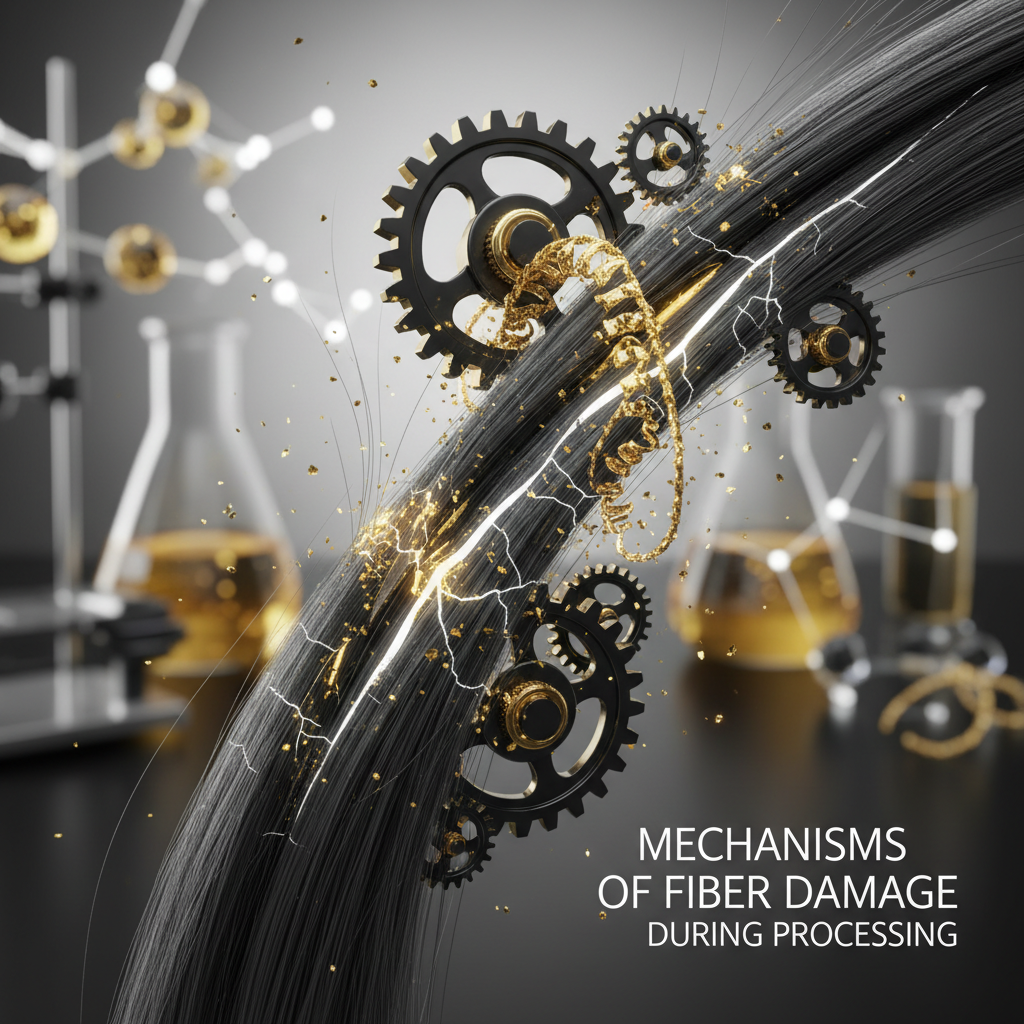
- Thermal denaturation of keratin: Keratin intermediate filaments begin undergoing irreversible thermal transitions around 155°C, with severe structural melting occurring above 220°C. Applying a flat iron repeatedly at 230°C to wet or damp chemically treated hair causes rapid moisture vaporisation, leading to bubble hair deformity and internal cortex micro-cavities.
- Cystine destruction: High thermal exposure oxidises cystine into cysteic acid. Because cystine disulfide cross-links provide the mechanical backbone of hair, losing them directly undermines the elasticity of the fibre.
- Over-cross-linking: Aldehydes and glyoxyloyl carbocysteine create synthetic intra-filament bonds. If over-processed, the hair matrix becomes hyper-rigid. Without adequate pliable hydration, the internal proteins cannot slide past each other during bending or stretching.
Identifying compromised fibre elasticity
Assessing elasticity does not require complex lab equipment. You can identify altered tensile behaviour through simple visual and tactile tests.
- The wet stretch test: Take a single shed wet strand between your thumb and forefinger. Gently pull. Healthy hair stretches noticeably before returning to its resting length. Stiffened, heat-damaged hair has zero give and snaps immediately under slight pressure.
- Mid-shaft snapping: Rather than finding hairs with root bulbs attached (which indicates natural follicular shedding), you notice short, blunt-ended fragments on your shoulders, pillowcase, or bathroom floor.
- Loss of natural curl rebound: When wet, hair that has undergone repeated smoothing displays inconsistent drop patterns, remaining limp and board-like without any spring.
- Dry, papery ends: As the synthetic cross-links wash out over 8 to 12 weeks, the underlying thermal damage is exposed, leaving the ends dry, straw-like, and split.
Supporting elasticity and preventing breakage
Once hair fibre protein has denatured, it cannot be biologically healed, as hair is dead tissue. However, you can protect the existing matrix and mitigate mechanical breakage through targeted handling:
- Lower mechanical stress: Avoid tight elastic bands, harsh brushing, and heavy tension styling. Use wide-tooth combs on conditioned wet hair.
- Incorporate emollient lipids: While keratin treatments provide proteinaceous coating, the hair shaft requires fatty acids and emollients to retain moisture and flexibility. Lightweight plant oils and ceramide analogues lubricate the cuticle, reducing friction during styling.
- Regulate heat exposure moving forward: Do not use high-heat curling irons or flat irons on hair that has already undergone chemical smoothing. Keep styling tools below 150°C and always apply a thermal protectant.
- Pore-filling conditioning: Use leave-in conditioners formulated with humectants (such as glycerin and panthenol) to attract ambient moisture into the fibre, preventing the keratin matrix from drying into a brittle state.
When breakage is not caused by the treatment
If you notice excessive hair on your brush after a salon appointment, ensure you are identifying the problem correctly.
Breakage happens along the fibre shaft, leaving short, broken pieces without a white bulb. Hair shedding, on the other hand, involves the entire hair strand falling out from the follicle, complete with a tiny white bulb at the end. Follicular shedding is typically linked to systemic triggers like telogen effluvium, hormonal fluctuations, nutritional deficiencies, or high stress levels.
A keratin treatment acts purely on the external hair fibre and does not directly induce hair shedding from the follicle unless severe chemical contact dermatitis occurs at the scalp line. If you are losing long hairs with bulbs, the cause is biological, not chemical smoothing.
Watermans approaches to fibre care
For hair showing mechanical fatigue or breakage following salon procedures, maintaining scalp health while safeguarding hair lengths is crucial. Watermans GrowMe Shampoo delivers a sulphate-free cleanse that avoids stripping the cosmetic seal of smoothed hair, while nourishing the scalp environment with biotin, rosemary, and niacinamide. Complementing this, Watermans ConditionMe Conditioner works as a cuticle-smoothing agent enriched with cholesterol and hydrolysed lupine protein, providing the surface lubrication and moisture balance necessary to prevent brittle snapping.
Frequently asked questions about Keratin Treatments and Fibre Elasticity
Can a keratin treatment permanently destroy my natural curl pattern?
Yes, high heat can permanently alter your curl pattern. While the smoothing formula is designed to wash out gradually over 2 to 4 months, heat in excess of 200°C can melt the protein structure of the cortex. This thermal damage permanently relaxes the curl, meaning that section of hair will not regain its natural spring until new growth emerges.
Why does my hair feel brittle after having a smoothing treatment?
The combination of chemical cross-linking agents and high-temperature flat-ironing can strip the fibre of internal moisture and natural elasticity. Without adequate flexibility, the hair shaft becomes stiff and rigid. This rigidity means the fibre cannot bend or stretch naturally during styling, which leads to snap breakage.
What is the primary connection between Keratin Treatments and Fibre Elasticity?
The connection between Keratin Treatments and Fibre Elasticity centres on the structural shift in the cortex. Treatments introduce synthetic cross-links that stiffen the fibre to achieve straightness and frizz reduction. However, this stiffness restricts the alpha-helical proteins from stretching, markedly lowering the natural elasticity of the hair shaft.
How soon after a keratin treatment can I use protein masks?
Avoid heavy structural protein treatments for at least 4 to 6 weeks following your appointment. Because the hair fibre is already heavily cross-linked and rigid from the chemical service, adding concentrated proteins can lead to protein overload, making the hair even more brittle. Focus instead on emollient-rich moisturising treatments.
Will post-treatment breakage eventually stop on its own?
Breakage will continue unless you change how you handle the compromised fibre. Because the damaged sections lack natural elasticity, you must reduce friction, cease high-heat styling, and use lubricating conditioners. The snapped, brittle ends must eventually be trimmed away as healthier hair grows from the roots.
Fibre preservation and structural balance
Navigating the balance of Keratin Treatments and Fibre Elasticity requires understanding that superficial smoothness does not equal internal tensile strength. While these procedures create manageable, glossy hair by sealing the outer cuticle, the mechanical resilience of the cortex is inevitably tested by the chemical cross-linking and intense heat involved. To keep your hair intact, avoid treating cosmetic shine as a sign of structural health. Focus on minimal tension, lipid-rich conditioning, and gentle styling to protect the remaining elasticity of the fibre.
Sources and references
- Robbins, C. R. (2012). Chemical and Physical Behavior of Human Hair. 5th ed. Springer Science & Business Media.
- Cruz, C. F., et al. (2016). "Human Hair Keratin and Mechanical Properties: The Influence of Cosmetic Treatments." Journal of Cosmetic Science, 67(4), 215-225.
- American Academy of Dermatology (AAD). "Hair styling without damage: Keratin treatments and thermal tools."
- Dawber, R. (1996). "Hair: Its structure and response to cosmetic preparations." Clinics in Dermatology, 14(1), 105-112.
- Bolduc, C., & Shapiro, J. (2001). "Hair cosmetics: an overview." Journal of the American Academy of Dermatology, 44(5), 712-723.
Find these ingredients in Watermans products
- Niacinamide: you will find this ingredient in our Hair Mask.