Keratin Treatment Care: An Evidence-Based Guide to Long-Lasting Results
9 min read ·
Master Keratin Treatment Care with scientific advice on washing, sulphate-free routines, and heat styling to maintain smooth hair and prevent fibre breakage.
Quick answer: Effective Keratin Treatment Care relies on preserving the cross-linked protective seal formed around the hair shaft during salon processing. For the first 72 hours, keep hair dry and straight. Thereafter, use sulphate-free, sodium chloride-free cleansers with a skin-friendly pH (4.5 to 5.5) and wash no more than two or three times weekly. The main limitation is that aftercare cannot indefinitely prevent natural erosion; cosmetic benefits diminish over 8 to 16 weeks as wash cycles gradually strip the outer coating.
Key takeaways
- Preserve the initial set: Avoid moisture, sweat, clips, bands, and tucking hair behind ears for the first 72 hours to prevent permanent indentations while the polymer network stabilises.
- Ditch harsh salts and surfactants: Sodium chloride and anionic sulphates (like sodium lauryl sulphate) degrade the cross-linked protein coating, rapidly reversing treatment smoothing benefits.
- Control washing frequency: Water absorption causes the hair cortex to swell, lifting the cuticle scales and physically abrading the outer protective sheath.
- Maintain optimal pH: Products formulated at pH 4.5 to 5.5 keep the hair cuticle compact, extending the life of the surface seal.
- Differentiate breakage from shedding: If you observe short, snapped fibres, thermal damage during the salon sealing process is the likely culprit, rather than follicular hair loss.
Keratin Treatment Care: what the evidence shows
Professional keratin treatments do not simply infuse native protein into the hair cortex to heal it. Instead, they deposit hydrolysed keratin fragments alongside conditioning agents and aldehyde-based or glyoxylic acid-based cross-linking agents onto and inside the hair cuticle. When the stylist applies high heat (typically 200°C to 230°C) using a flat iron, these chemicals cross-link with the hair's natural amino acids, creating an insoluble, hydrophobic coating that temporarily flattens cuticles and seals the fibre against environmental humidity.
Scientific literature on cosmetic hair chemistry demonstrates that this artificial matrix remains susceptible to chemical and mechanical stripping. Sodium chloride (common salt) acts as an abrasive solute and promotes the dissolution of surface-bound conditioning films. Strong surfactants, particularly sulphates, aggressively dissolve the outer lipid layer and the surrounding synthetic polymer sheath.
Proper Keratin Treatment Care aims to minimise the two primary drivers of cuticle erosion: mechanical friction and repetitive water swelling (hygral fatigue). When keratin-treated hair is exposed to frequent water ingress, the hair shaft swells radially by roughly 15% and contracts as it dries. This repeated expansion cracks the brittle, heat-cured polymer surface, allowing moisture to reach the inner cortex and re-engaging natural frizz and curl patterns prematurely.
What the evidence does not show
Controlled research does not show that post-treatment keratin care can repair fundamentally fractured disulphide bonds deep within the hair cortex. While marketing often claims that at-home keratin products "rebuild the hair from the inside out", topical shampoos and conditioners lack the chemical reducing agents and intense thermal energy necessary to cross-link amino acids into the cortex matrix.
Furthermore, evidence does not show that keratin aftercare products cause or prevent follicular hair loss. The living hair follicle sits roughly 4 millimetres beneath the scalp surface. Topical aftercare formulas applied to the hair shaft do not influence the hair growth cycle (anagen, catagen, telogen phases). Any thinning observed following a smoothing service is almost invariably mechanical fibre breakage at weak points created by excessive flat iron heat during the initial salon procedure.
The biological and chemical mechanism
To maintain treated hair effectively, you need to understand how the fibre behaves before and after salon processing:
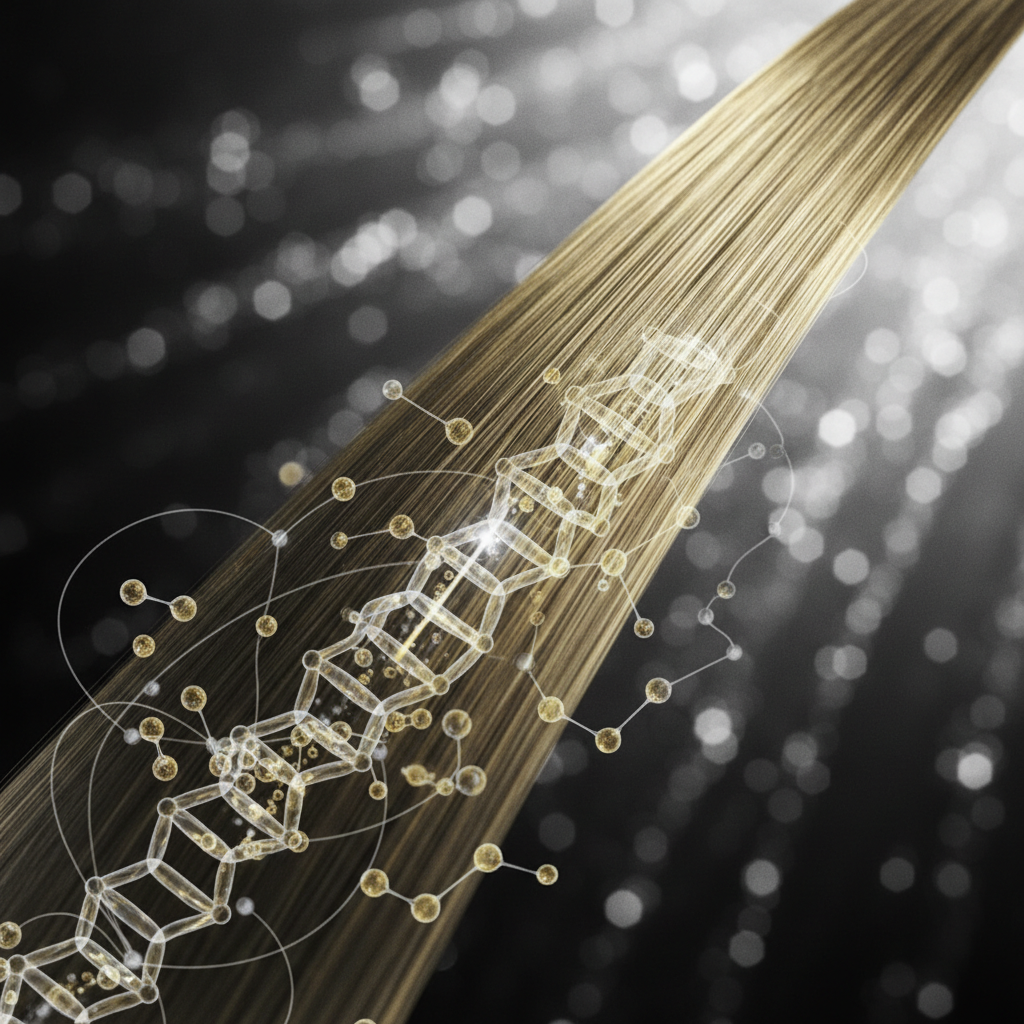
- The Cuticle and Cortex Dynamics: Healthy human hair has an outer layer of overlapping cuticle scales held together by the cell membrane complex (CMC), rich in 18-methyleicosanoic acid (18-MEA). Chemical straightening or smoothing strips this hydrophobic lipid layer.
- Polymer Deposition: The treatment floods the open scales with hydrolysed keratin (derived from wool or plant protein), silicones, and cross-linking aldehydes or organic acids.
- Thermal Polymerisation: High heat dehydrates the system, forming methylene bridges or imine bonds that weld the cuticles down into a uniform, light-reflective surface.
- The Vulnerability to Swelling: Water has a high dielectric constant and weakens hydrogen bonds. When you wash your hair, water penetrates any micro-cracks in the cured coating.
- The Role of Acidic pH: Maintaining an acidic environment (pH 4.5 to 5.5) keeps the cuticle scales tightly contracted, mechanically shielding the polymer coating from washing out.
What you can do: a practical maintenance routine
A structured routine prolongs the lifespan of a salon treatment from 6 weeks up to 16 weeks:
- The Critical 72-Hour Window: Keep the hair completely dry. If water or perspiration hits the hair, blow-dry it immediately on a cool-to-warm setting and pass a flat iron over the section on low heat (160°C to 180°C). Sleep on a silk or satin pillowcase to reduce friction.
- Select the Right Cleanser: Use shampoos explicitly labelled sulphate-free and sodium chloride-free. Look for mild amphoteric or non-ionic surfactants such as cocamidopropyl betaine, sodium cocoyl isethionate, or decyl glucoside.
- Reduce Wash Frequency: Limit cleansing to two or three times per week. On intervening days, use a lightweight, residue-free dry shampoo if oil builds up at the scalp.
- Blow-Dry After Washing: Keratin-treated hair is heat-activated. Allowing hair to air-dry often results in subtle waves or frizz, as ambient moisture disrupts surface alignment. Use a directional nozzle pointing down the shaft with medium heat to reseal the cuticle.
- Protect Against Environmental Exposure: Chlorine in swimming pools and dissolved minerals in hard tap water strip the coating rapidly. Apply a silicone-based protective leave-in barrier before swimming, or wear a silicone cap.
| Care Practice | Recommended Approach | Unfavourable Approach | Mechanism / Reason |
|---|---|---|---|
| Cleansing Surfactants | Cocamidopropyl betaine, sodium cocoyl isethionate | Sodium lauryl sulphate (SLS), sodium laureth sulphate (SLES) | Harsh surfactants solubilise and strip the surface polymer film |
| Ingredient Exclusions | Sodium chloride-free formulations | Products containing sea salt or sodium chloride thickeners | Salt crystallises and mechanically erodes the protective coating |
| Washing Cadence | 1 to 3 times per week | Daily washing | Minimises water swelling (hygral fatigue) and cuticle lifting |
| Post-Wash Drying | Blow-drying downward with medium heat | Leaving hair to air-dry in humid air | Heat re-aligns temporary hydrogen bonds along the smoothed shaft |
| Night Care | Silk or satin pillowcase | Rough cotton pillowcase | Reduces shear friction that abrades flattened cuticle edges |
When the issue is something else: damage vs. shedding
If you notice changes in your hair after a keratin treatment, it is vital to distinguish between cosmetic issues, mechanical fibre breakage, and true biological shedding.
Mechanical Breakage
If hair seems suddenly thinner, snaps easily during brushing, or you notice short, jagged strands without white bulbs on your clothes, you are experiencing fibre breakage. This happens when the stylist applies excessive heat during the salon sealing process, denaturing the cortex proteins and causing thermal fatigue. Proper aftercare can coat and soften the remaining fibre to prevent further snaps, but it cannot reattach broken shafts.
Biological Hair Shedding
If you notice long hairs falling out from the root, featuring a tiny white keratinised bulb at the tip, this is follicular shedding (often telogen effluvium). Topical aftercare does not cause this. Telogen effluvium is typically triggered by systemic stressors such as severe illness, hormonal shifts, nutritional deficiencies, or high psychological stress that occurred two to four months prior. Rarely, a severe scalp burn or contact dermatitis from improper chemical application can cause temporary reactive shedding.
Professional options and when to consult a specialist
Consult a professional trichologist or dermatologist if you experience:
- Persistent scalp redness, flaking, burning, or itching after treatment, which points to contact dermatitis caused by chemical exposure.
- Diffuse shedding exceeding 100 to 150 hairs daily that persists for more than four weeks.
- Significant hair breakage concentrated close to the scalp surface.
For routine cosmetic maintenance, speak with your stylist about in-salon glosses or acidic bonding treatments between major appointments. These services help reinforce the hair fibre without the intense thermal exposure required by full keratin smoothing procedures.
Supporting the scalp environment
While the lengths of your hair need protective, conditioning polymers, your scalp remains living skin that requires regular, hygienic cleansing to maintain a balanced microbiome. Build-up of heavy silicones, conditioning agents, and dry shampoos can cause scalp irritation if left unchecked.
Watermans approaches this balance by focusing on revitalising the scalp environment while keeping formulations mindful of hair integrity. Using gentle, targeted formulas around the roots ensures that hair follicles remain unburdened by heavy cosmetic residues, supporting healthy-looking, fuller hair growth while you care for your smoothed lengths.
Frequently asked questions about Keratin Treatment Care
How soon after my treatment can I wash my hair?
You should wait at least 72 hours before washing your hair. This window allows the cross-linked conditioning polymer to fully cure and anchor along the cuticle scales. Washing too early introduces water into the cortex, disrupting the chemical bond formation and significantly diminishing the smoothing effect.
Does Keratin Treatment Care require completely changing my styling products?
Yes, you should review your products carefully. Avoid hairsprays, mousses, or serums containing drying alcohols (alcohol denat, isopropyl alcohol) and heavy salts. These ingredients strip the synthetic seal. Instead, choose lightweight, water-soluble styling creams and heat protectants designed for chemically smoothed hair.
Can I colour my hair after having a keratin treatment?
You should wait at least two weeks after a keratin treatment before applying hair colour. Applying dye too soon disrupts the freshly sealed cuticle layer, leading to patchy colour uptake and premature breakdown of your smoothing treatment. Many colourists recommend completing permanent tinting or lightening services two weeks before the keratin appointment instead.
Why is my hair feeling dry a few weeks after the treatment?
Keratin treatments make the hair shaft hydrophobic, meaning it repels environmental water. While this stops frizz, it can also prevent external moisture from penetrating if you do not use adequate leave-in conditioning agents. Incorporate a sulphate-free deep conditioning mask containing fatty alcohols (cetyl, stearyl) once weekly to restore suppleness.
Summary of Keratin Treatment Care
Mastering Keratin Treatment Care comes down to protecting the delicate, heat-cured polymer seal on your hair cuticle. By avoiding water in the initial 72 hours, steering clear of sodium chloride and harsh sulphate detergents, and blow-drying gently with low-to-medium heat, you can keep your hair smooth, lustrous, and manageable for months. Always monitor the health of your scalp alongside the lengths of your hair to ensure your routine supports both cosmetic radiance and long-term hair resilience.
Sources and references
- American Academy of Dermatology (AAD). "Hair styling without damage." aad.org.
- Robbins, C. R. Chemical and Physical Behavior of Human Hair. 5th edition, Springer, 2012.
- Gavazzoni Dias, M. F. "Hair Cosmetics: An Overview." International Journal of Trichology, 2015.
- International Journal of Cosmetic Science. "Effects of chemical treatments on the physical and mechanical properties of hair." 2018.
- Cosmetic Ingredient Review (CIR). "Safety Assessment of Hydrolysed Keratin and Related Ingredients in Cosmetics." 2016.