Keratin Structure and Disulfide Bonds: The Science of Hair Strength
9 min read ·
Explore the science of keratin structure and disulfide bonds. Learn how covalent cross-links give hair its strength, and how to prevent fibre breakage.
Quick answer: Hair strength relies fundamentally on keratin structure and disulfide bonds, which together create the durable biological composite of the hair cortex. Keratin is a fibrous protein packed with the sulphur-rich amino acid cysteine, while disulfide bonds act as permanent covalent cross-links that give the hair fibre its tensile strength, elasticity, and shape. The main limitation is that broken disulfide bonds cannot spontaneously re-form once severed by chemical processing or extreme heat, requiring deliberate cosmetic care to reduce mechanical breakage.
Key takeaways
- Hair is composed of roughly 85 to 90 percent keratin, an insoluble structural protein arranged in organised helical intermediate filaments.
- Disulfide bonds are covalent chemical linkages between two cysteine residues, providing the majority of the fibre's mechanical resilience and wet strength.
- Chemical processes like bleaching, perming, and relaxing deliberately alter or permanently break disulfide bonds, which can lead to fibre snapping if unmanaged.
- Temporary bonds (hydrogen and salt linkages) dictate styling changes with water and heat, but disulfide bonds determine the hair's permanent architecture.
- Topical bond-building cosmetic technologies help reinforce weakened hair, but they cannot fully restore the native protein network back to its virgin state.
Keratin structure and disulfide bonds: what the evidence shows
Understanding keratin structure and disulfide bonds requires looking inside the hair cortex, which makes up roughly 80 percent of the hair's total mass. Human hair is predominantly built from hard alpha-keratins, which are fibrous proteins rich in cysteine residues. Within each cortical cell, keratin polypeptides twist together into alpha-helical dimers. These dimers pair up to form tetramers, which then assemble into protofilaments and intermediate filaments measuring roughly 7 to 8 nanometres across.
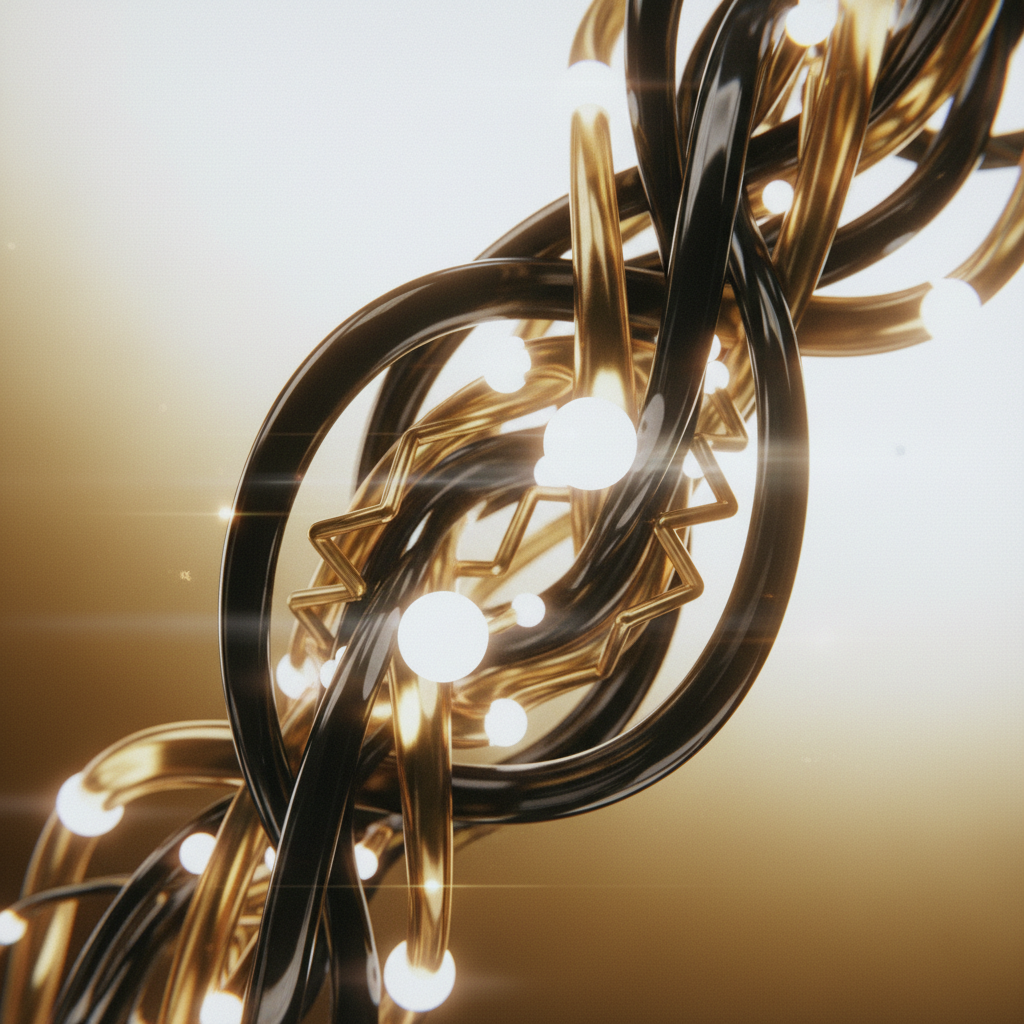
These organised filaments sit embedded in an amorphous, non-filamentous protein matrix. This matrix has an exceptionally high concentration of sulphur-rich proteins. The connection between the filaments and the matrix is forged primarily through disulfide bonds.
Disulfide bonds (covalent S-S bridges) form when the thiol groups (-SH) of two neighbouring cysteine amino acids oxidise. Because covalent bonds involve shared electron pairs, they require substantial energy to break. They resist water, shampooing, and routine mechanical stress. While weaker bonds like hydrogen bonds break every time you wet your hair, disulfide bonds remain intact, ensuring your hair retains its natural baseline curl pattern and tensile strength when dry.
The hierarchy of chemical bonds in hair
The hair fibre relies on three distinct types of chemical bonds to maintain its shape, flexibility, and physical integrity.
| Bond Type | Bond Mechanism | Relative Strength | How It Breaks | How It Re-forms |
|---|---|---|---|---|
| Disulfide Bonds | Covalent cross-links between cysteine residues (-S-S-) | Strongest (approx. 250 kJ/mol) | Chemical reduction, bleaching (alkaline oxidation), heat over 220°C | Chemical neutralisation (partial) or remains permanently cleaved |
| Salt (Ionic) Bonds | Electrostatic attraction between positive and negative amino acid side chains | Intermediate strength | Extreme pH shifts (strong acids or alkalis below 4.0 or above 7.0) | Returning the hair shaft to its isoelectric point (pH 4.5 to 5.5) |
| Hydrogen Bonds | Weak electrostatic attraction between polar hydrogen and oxygen/nitrogen atoms | Weakest individually, but highly numerous | Water, humidity, and heat | Removal of water (drying) and cooling in a new shape |
What the evidence does not show
There are several persistent misconceptions surrounding keratin structure and disulfide bonds in commercial salon care:
- Bond multiplication does not mean full biological restoration. While modern cosmetic plexes and cross-linking formulations can create new synthetic bridges between cleaved protein fragments, peer-reviewed cosmetic chemistry shows they do not rebuild the exact native intermediate filament matrix. They strengthen the fibre enough to reduce breakage, but they do not return chemically processed hair to virgin condition.
- Breakage is not hair shedding. Severing disulfide bonds causes brittle fibre fractures along the hair shaft. It does not act at the dermal papilla or induce follicular shedding (telogen effluvium) or patterned alopecia. A hair breaking midway along the shaft is a fibre integrity issue, not a follicle root issue.
- Keratin treatments do not always strengthen bonds. Many commercial salon smoothing services marketed as keratin treatments do not add structural stability to internal bonds. Instead, they deposit hydrolysed protein films on the exterior cuticle and use high heat to cross-link aldehydes or organic acids, occasionally causing significant internal disulfide damage due to excessive flat-iron temperatures.
Mechanisms of disulfide bond cleavage
Disulfide bonds can be degraded through chemical, thermal, and environmental routes.
Chemical bleaching and oxidative colour
Alkaline persulphate bleaching agents are designed to oxidise melanin granules inside the cortex. However, they indiscriminately oxidise cystine (the bonded dimer of two cysteine molecules) into cysteic acid residues. Cysteic acid cannot re-form a disulfide cross-link. This results in permanent loss of tensile strength, increased fibre porosity, and higher water absorption, leaving the cortex structurally compromised.
Chemical straightening and perming
Alkaline perms and curl relaxers use chemical reducing agents (such as ammonium thioglycolate or sodium hydroxide) to purposefully cleave disulfide bonds into free thiol groups. The hair is reshaped mechanically on rods or smoothed flat. While an oxidising neutraliser (usually dilute hydrogen peroxide) is applied to rebuild the S-S bonds in their new alignment, studies show that roughly 10 to 15 percent of native disulfide bonds fail to re-form, remaining as free thiols or converting to permanent cysteic acid.
Thermal denaturation
Exposing the hair fibre to styling tools heated beyond 190 to 220 degrees Celsius denatures the alpha-helical keratin structure. At these temperatures, the helical spirals unfold into disordered beta-sheet configurations. Above 230 degrees Celsius, thermal degradation directly cleaves the covalent sulfur bonds, leading to irreversible blistering, bubble hair deformity, and immediate mechanical failure.
Signs of depleted disulfide integrity
When the internal keratin scaffolding loses its covalent support, the hair displays clear physical symptoms:
- Loss of wet elasticity: Healthy hair can stretch up to 30 percent of its dry length in water and spring back. When disulfide bonds are extensively cleaved, the wet fibre stretches excessively like rubber and fails to bounce back, snapping under minor tension.
- Mushy or spongy wet texture: A significant loss of internal protein cross-linking allows the cortex to take on excessive water weight without structural resistance.
- Pattern distortion: Naturally wavy or curly hair that undergoes severe chemical processing loses its defined spring, resulting in limp, uneven wave patterns.
- Trichorrhexis nodosa: Under micro-examination, the cortex fractures into small brush-like nodes where cuticle and cortical filaments have shredded sideways.
Protecting and supporting fibre structure
You can preserve the biological integrity of your hair's protein structure through consistent protective habits:
- Respect the isoelectric point: Human hair is chemically most stable at an acidic pH between 4.5 and 5.5. At this pH, salt bonds remain closed and swelling is minimised, protecting the internal cortex from mechanical friction.
- Limit heat exposure: Never exceed 185 degrees Celsius on thermal styling tools. Use formulated heat protectants containing silicones or heat-stable polymers that slow the rate of thermal transfer to the keratin core.
- Incorporate hydrolysed proteins: Small-chain peptides (molecular weight under 1,000 Daltons) from plant or wheat sources can temporarily penetrate micro-voids in damaged cuticles, providing surface reinforcement and reducing daily friction.
- Handle wet hair with care: Because hydrogen and salt bonds are temporarily dissociated when hair is saturated with water, the hair fibre relies entirely on its disulfide bonds for support. Never brush wet, chemically processed hair with rigid bristles; use a wide-tooth comb or flexible detangler.
When the issue is follicular, not structural
It is vital to distinguish between fibre snapping caused by broken chemical bonds and genuine hair loss occurring at the scalp. If you notice hairs accumulating on your brush with small white bulbs attached at the base, these are telogen hairs shed naturally from the follicle.
If hairs are shedding in diffuse, high volumes without bulbs, or if you notice widening partings, patchy thinning, or scalp inflammation, the cause is not disulfide breakdown. Nutritional deficiencies (such as ferritin or zinc shortages), hormonal imbalances, thyroid disorders, and genetic alopecia require evaluation by a qualified trichologist, dermatologist, or GP. Cosmetic bond treatments cannot stimulate follicle growth or arrest hair shedding.
Supporting hair health from the outside
While internal cortical architecture dictates fibre strength, scalp vitality dictates the quality of newly emerging hair fibres. Maintaining a clean, residue-free follicular environment helps newly emerging keratin filaments grow under optimal conditions. For daily care, formulations such as Watermans Grow Me Shampoo and Condition Me Conditioner offer gentle cleansing alongside botanical extracts, niacinamide, and rosemary, supporting cosmetic fullness, detangling fragile ends, and softening the hair fibre without stripping essential surface lipids.
Frequently asked questions about Keratin Structure and Disulfide Bonds
What is the primary role of keratin structure and disulfide bonds?
The primary role of keratin structure and disulfide bonds is to provide the hair shaft with shape, strength, and resilience. Keratin filaments provide the basic structural protein mass, while disulfide bonds link adjacent protein chains covalently. This internal architecture allows hair to withstand daily brushing, movement, and washing without instantly snapping or deforming.
Can broken disulfide bonds heal on their own?
No, broken disulfide bonds cannot heal on their own. Hair fibres are non-living biological structures that contain no living cells, blood supply, or metabolic processes. Once a covalent disulfide bond is broken and oxidised into cysteic acid, the hair fibre cannot self-repair. Bond-repairing cosmetic products can temporarily cross-link damaged sites, but they do not reverse the underlying biological damage.
How do hydrogen bonds differ from disulfide bonds in hair?
Hydrogen bonds are weak, temporary bonds formed by attractions between polar molecules, easily broken by water, humidity, or moderate warmth and rebuilt as hair dries. In contrast, disulfide bonds are strong, permanent covalent bonds formed between sulphur atoms in cysteine. They resist water entirely and require chemical agents or extreme heat to break.
Does high heat damage keratin proteins permanently?
Yes, high heat permanently damages keratin proteins. When styling tools exceed 200 degrees Celsius, the helical alpha-keratin chains unfold into flat beta-sheets, a process called thermal denaturation. Extended exposure melts the internal cortex matrix, cleaves disulfide bonds, and forms micro-cavities within the fibre that permanently weaken hair elasticity.
How does hair bleach affect disulfide bonds?
Hair bleach oxidises the melanin pigments inside the cortex, but it also aggressively oxidises the sulphur atoms in cysteine. Instead of simply separating the disulfide bonds so they can reconnect later, bleaching agents permanently convert cystine into cysteic acid. This removes the structural cross-links entirely, leaving bleached hair highly porous and prone to snapping.
Structural integrity and long-term hair care
Understanding keratin structure and disulfide bonds reveals that hair is a remarkably resilient, yet ultimately finite, biological composite. The combination of alpha-helical protein filaments and strong covalent cross-links allows human hair to handle regular washing, styling, and environmental exposure. However, chemical services and extreme heat place severe demands on this architecture. By treating the hair fibre gently, using sensible thermal boundaries, balancing pH levels, and seeking clinical trichological guidance when follicle shedding arises, you can keep your hair's structural foundation intact.
Sources and references
- Chemical and Physical Behavior of Human Hair (5th Edition), Clarence R. Robbins, Springer, 2012.
- Journal of Cosmetic Dermatology, "Hair shaft damage from heat and chemical treatments", 2011.
- International Journal of Trichology, "Hair cosmetics: An overview", 2015.
- Royal Society of Chemistry, "The structural properties and chemical reactivity of human hair keratin", 2018.
- British Journal of Dermatology, "Mechanisms of hair fibre fracture and tensile failure", 2016.
Find these ingredients in Watermans products
- Rosemary Extract: you will find this ingredient in our Hair Growth Shampoo.
- Zinc: you will find this ingredient in our Hair Vitamins.
- Niacinamide: you will find this ingredient in our Hair Mask.