Keratin Smoothing Treatment Afro Hair: Science, Safety, and Results
10 min read ·
Discover how a keratin smoothing treatment afro hair service works, its benefits, safety considerations, and how it differs from traditional chemical relaxers.
Quick answer: A keratin smoothing treatment afro hair procedure uses hydrolysed protein and heat to seal the hair cuticle, temporarily loosening tight coil patterns, repelling humidity, and cutting blow-dry time. Unlike permanent chemical relaxers that break internal disulfide bonds, modern keratin formulas cross-link temporary bonds along the fibre. The treatment typically lasts 8 to 12 weeks. Its main limitation is that heat activation carries a risk of thermal damage or irreversible curl loss if performed at excessive temperatures on fragile, low-tensile afro-textured strands.
Key takeaways
- Keratin treatments do not permanently alter the internal disulfide bonds of the hair shaft, making them chemically distinct from sodium hydroxide or guanidine hydroxide relaxers.
- For type 4 afro hair, keratin smoothing delivers reduced frizz, enhanced resistance to atmospheric humidity, and increased ease of thermal styling.
- Excessive flat-iron temperatures during the sealing phase (above 200°C to 215°C) pose the biggest risk of thermal denaturation, potentially causing heat damage and uneven curl reversion.
- High-quality salon formulations rely on glyoxylic acid or carbocisteine technologies rather than harmful formaldehyde releasers to modify outer protein cross-links.
- Post-treatment maintenance demands sulfate-free cleansing and consistent moisture replenishment to protect the fragile lipid layer of coily hair.
Keratin smoothing treatment afro hair: what the evidence shows
A keratin smoothing treatment afro hair application acts primarily on the cuticle and outer cortex rather than breaking down the hair's fundamental architecture. Afro-textured hair (types 4A, 4B, and 4C) possesses an elliptical cross-section, asymmetrical bulb geometry, and unevenly distributed cortical cells. These structural characteristics create natural torsion points along the hair fibre where the strand is particularly vulnerable to mechanical snapping and dehydration.
Scientific investigations into cosmetic keratin treatments show that the formulations deposit low-molecular-weight hydrolysed keratins and conditioning agents into fissures along the cuticle. When ironed at specific temperatures, active cross-linking agents (such as glyoxylic acid derivatives) create temporary hemiacetal or amide bridges. This process temporarily flattens raised cuticle scales and aligns the strands, reducing the swelling typically caused by ambient water vapour.
Controlled laboratory studies published in cosmetic science literature confirm that while these treatments significantly reduce moisture-induced fibre diameter expansion, they do not produce complete permanent straightening on high-density coily hair. Instead, users experience elongation of the natural coil pattern, softening of the hair texture, and a substantial drop in combing friction.
What the evidence does not show
The cosmetic evidence does not show that keratin treatments repair broken internal bonds permanently. Despite marketing language suggesting the hair is restored to a virgin state, keratin treatments provide an external coating and superficial cross-linking mechanism. They do not reconstruct missing cortical mass or undo prior chemical injury.
Furthermore, research does not show that a keratin smoothing treatment afro hair service is completely risk-free for natural curl patterns. Many clients expect their original coil pattern to return with full elasticity once the treatment washes out over 8 to 12 weeks. However, dermatological literature documents cases of acquired trichorrhexis nodosa and heat-induced curl elongation when stylists use excessive heat to seal the product. If the flat iron exceeds the thermal threshold of afro hair, the protein matrix denatures, resulting in permanent curl pattern disruption.
Finally, keratin smoothing does not halt hair shedding or treat hair loss. The treatment operates strictly on the dead keratinised fibre outside the scalp. It has zero biological impact on follicular cycling, telogen phase shedding, or scalp conditions.
The biological and chemical mechanism
To understand how smoothing treatments perform on afro hair, one must compare them directly to traditional thermal and chemical altering methods.
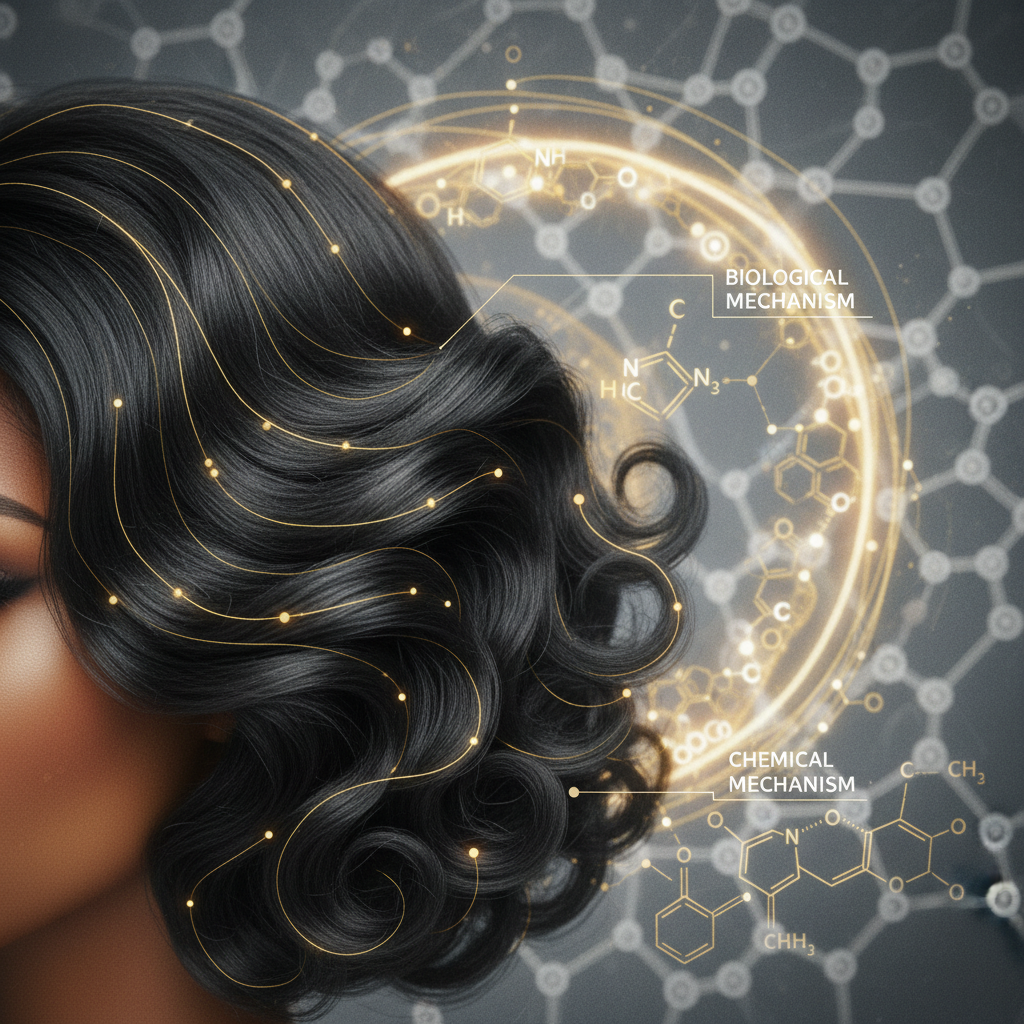
The hair shaft is composed of roughly 65% to 95% keratin proteins, held together by three types of chemical bonds:
- Hydrogen bonds: Weak physical bonds broken easily by water and reset by heat.
- Salt linkages: Ionic bonds altered by shifts in pH.
- Disulfide bonds: Strong covalent bonds formed between sulfur-containing cysteine amino acids, responsible for the hair's permanent shape.
Chemical relaxers use high-alkaline compounds (pH 11.5 to 14) to permanently cleave disulfide bonds, converting them into lanthionine bonds through a process called lanthionisation. This permanently removes the curl but severely reduces the mechanical tensile strength of the fibre.
Modern keratin systems, particularly those using glyoxylic acid or carbocisteine, operate at an acidic pH (between 1.5 and 2.5). The acidic solution diffuses into the outer cortex, temporarily disrupting salt linkages and weak hydrogen bonds. When the hair is dried and passed through a flat iron at 180°C to 205°C, thermal energy induces a temporary cross-linking between the treatment's protein chains and the hair's natural amino acids. The cuticle is laminated shut, locking the hair into an elongated, smooth alignment without dissolving the primary disulfide framework.
| Feature | Keratin Smoothing Treatment | Alkaline Chemical Relaxer | Traditional Press and Curl |
|---|---|---|---|
| Primary Mechanism | Acidic cross-linking & cuticle seal | Lanthionisation (disulfide bond breakage) | Temporary hydrogen bond disruption |
| pH Range | 1.5 to 2.5 | 11.5 to 14.0 | Neutral (no chemicals used) |
| Effect on Afro Coil Pattern | Loosens and elongates (reversible) | Completely straightens (permanent) | Temporarily straightens (reverts with water) |
| Tensile Strength Impact | Preserves internal core; risk lies in heat | Reduces mechanical strength by 30% to 50% | Preserves bonds; risk lies in direct heat |
| Average Duration | 8 to 12 weeks | Permanent until new growth occurs | Until next wash or exposure to humidity |
| Resistance to Humidity | High | High | Low |
Signs to look for: is afro hair suitable for keratin smoothing?
Before booking or applying a keratin treatment, assessing the baseline condition of the hair fibre is critical. Afro hair has fewer cuticle layers at its curvature turns, making diagnostic assessment vital.
Good candidates for the procedure generally display:
- Resilient tensile elasticity: The wet fibre stretches gently and returns to shape without immediate snapping.
- Manageable porosity: Cuticles absorb water steadily rather than acting like a sponge or completely repelling hydration.
- Desire for styling versatility: Clients who want to switch between blow-outs and natural coily styles without resorting to permanent chemical straighteners.
Signs that indicate hair is unsuitable:
- Severe thermal fatigue: Hair that has already lost its curl elasticity due to daily hot-comb or flat-iron usage.
- Bleach or severe colour damage: Hair oxidised with high-volume peroxides often lacks the protein integrity needed to withstand the 180°C+ heat required to seal keratin formulas.
- Active scalp inflammation: Any condition involving erythema, peeling, or scalp irritation can be aggravated by acidic treatments contacting the skin.
Caring for afro hair after keratin smoothing
Maintaining smoothed afro hair requires a routine that balances moisture retention with cuticle protection. The treatment laminates the surface, which can initially make water penetration feel different.
- Avoid immediate moisture (if prescribed): Some traditional formulas require 48 to 72 hours of keeping hair completely dry to allow the cross-links to cure. Many modern glyoxylic treatments can be rinsed immediately, so follow the manufacturer directions precisely.
- Switch to sulfate-free cleansers: Harsh anionic surfactants like sodium lauryl sulfate strip the keratin coating off the hair shaft prematurely. Cleanse with gentle, amphoteric or non-ionic surfactant formulas.
- Incorporate humectant deep conditioning: Afro hair requires consistent internal hydration. Use weekly conditioning masks containing glycerin, panthenol, and light botanical oils to maintain fibre flexibility.
- Calibrate heat tools carefully: If styling with heat at home, keep tool temperatures below 180°C. Never apply maximum heat to already-treated hair, as you will cook the outer polymer layer and blister the cuticle.
- Protect strands at night: Sleep on a mulberry silk or satin pillowcase, or wear a satin-lined bonnet. Reducing nighttime friction prevents mechanical wear along the fragile bends of type 4 strands.
When curl loss or breakage is caused by something else
When people report excessive shedding or patchy loss after a keratin treatment, the smoothing formula is rarely the root cause. Distinguishing cosmetic breakage from medical hair conditions is essential for proper management.
If hair breaks off in short, uneven fragments along the shaft, the culprit is mechanical or thermal breakage, typically caused by an over-heated flat iron during the salon service.
If complete strands shed with a small white bulb visible at the tip, this is follicular hair shedding. A keratin treatment applied to the hair shaft cannot trigger anagen-to-telogen shedding inside the skin. Sudden telogen effluvium is frequently driven by systemic stressors that occurred two to four months earlier, such as severe illness, dietary deficiencies, acute emotional stress, thyroid dysfunction, or hormonal fluctuations.
Patchy, circular bald spots indicate alopecia areata (an autoimmune condition), while gradual thinning at the crown or temples points toward androgenetic alopecia or traction alopecia from tight protective styles. A smoothing treatment does not cause or cure these conditions.
When to seek professional advice
Stylists and clients should seek medical guidance from a registered trichologist or dermatologist if the scalp develops burning, severe scaling, weeping, or persistent itching following any chemical or thermal application. These symptoms may suggest contact dermatitis or chemical burn.
Consult a specialist if shedding exceeds 100 to 150 hairs daily for more than six weeks, or if you notice distinct changes in the density of your hairline or crown. For the treatment itself, visit a professional salon stylist with dedicated expertise in textured and afro hair. An experienced professional understands how to adjust heat passes and tool temperatures to avoid irreversible damage to the curl pattern.
Frequently asked questions about keratin smoothing treatment afro hair
Will a keratin smoothing treatment afro hair application damage my natural curls permanently?
When performed correctly by a trained professional using low-to-moderate flat-iron temperatures (around 180°C to 200°C), the treatment washes out over 8 to 12 weeks, allowing your natural curl pattern to return. However, if the iron is applied at excessive heat or with too many passes, thermal denaturation can occur, causing permanent loss of curl elasticity.
How does this treatment differ from an afro hair texturiser or relaxer?
A relaxer or texturiser uses high-alkaline chemicals (pH 11 to 14) to permanently break the hair's internal disulfide bonds, making the structural change permanent until new hair grows. A keratin treatment operates at an acidic pH, temporarily smoothing and coating the cuticle layer without breaking the core disulfide bonds.
Can I still wear my afro hair curly after having a keratin treatment?
Yes. A keratin treatment does not make afro hair bone-straight on its own; it elongates and loosens the coil pattern while eliminating frizz. When you wash and air-dry your hair, your curls will typically appear softer, more elongated, and more defined, with enhanced resistance to shrinkage from humidity.
How long does the service last on type 4 afro hair?
On type 4 hair, the results typically last between 8 and 12 weeks. Longevity depends on how frequently you wash your hair, whether you use sulfate-free cleansers, and your hair's baseline porosity. Deep-cleansing clarifiers and chlorinated swimming pools will shorten the lifespan of the treatment.
Is formaldehyde still a concern in modern keratin treatments?
Historical keratin formulas relied on methylene glycol or formalin, which released toxic formaldehyde gas when heated. Today, reputable salons use formaldehyde-free technologies built on glyoxylic acid, carbocisteine, or oxoacetamide amino acids. Always ask your stylist to verify that the formula is certified formaldehyde-free.
Choosing the right path for your hair
Deciding on a keratin smoothing treatment afro hair service comes down to your personal styling goals and how you like to wear your hair. If you love the look of silk presses, manage high humidity on a daily basis, or struggle with excessive detangling friction, this service provides an effective, temporary bridge that avoids the permanent bond destruction of alkaline relaxers.
The essential factor is thermal control. Afro-textured strands demand respect for their delicate, elliptical structure. By working with a professional stylist who tailors iron temperatures to your hair's unique density and porosity, you can enjoy weeks of manageable, weather-resistant styling while safeguarding the natural bounce of your curls.
Sources and references
- American Academy of Dermatology (AAD): Hair styling without damage: relaxers and smoothing treatments.
- Godefroy, I., et al. (2014). Effects of cosmetic treatments on the physical and mechanical properties of curly and afro-textured hair fibres. International Journal of Cosmetic Science.
- Robbins, C. R. (2012). Chemical and Physical Behavior of Human Hair. Springer Science & Business Media.
- Cruz, C. F., et al. (2016). Keratin-based peptide systems for hair protection and restoration. International Journal of Molecular Sciences.
- US Food and Drug Administration (FDA): Hair Smoothing Products That Release Formaldehyde When Heated. (Updated consumer guidance).
Find these ingredients in Watermans products
- Panthenol (Provitamin B5): you will find this ingredient in our Heat Protection Spray.