Silk Press vs Keratin Treatment: The Complete Haircare Guide
9 min read ·
Understand the real differences between a Silk Press vs Keratin Treatment, covering chemical mechanisms, heat damage, longevity, and curl preservation.
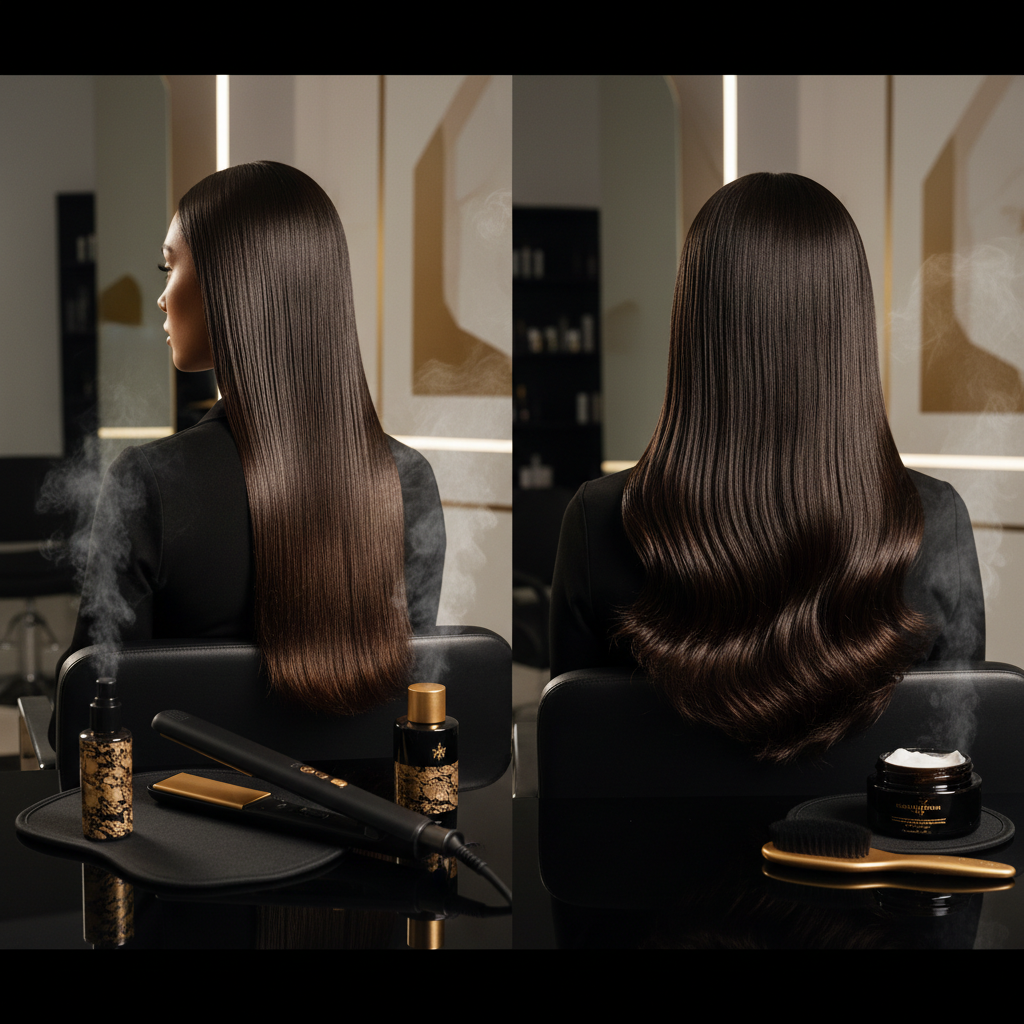
Quick answer: When comparing a Silk Press vs Keratin Treatment, the primary distinction lies in chemical alteration versus mechanical heat styling. A silk press is a temporary, non-chemical thermal straightening technique using a blow-dryer and flat iron that reverts completely upon contact with water. In contrast, a keratin treatment is a semi-permanent chemical service that infuses hydrolysed protein and cross-linking aldehydes into the cuticle, lasting 8 to 12 weeks. The main limitation of both methods is the risk of heat damage and structural fibre fatigue if performed incorrectly.
Key takeaways
- Longevity: A silk press lasts until your next wash (usually 1 to 3 weeks), whereas a keratin treatment alters the hair fibre for 2 to 4 months.
- Internal chemistry: Silk presses rely solely on temporary hydrogen bond disruption through heat. Keratin treatments use chemical cross-linking agents and high heat to reform cuticle alignment and tame frizz.
- Curl preservation: A properly executed silk press preserves your natural curl pattern fully after washing. Keratin treatments loosen the natural curl pattern semi-permanently.
- Humidity resistance: Keratin treatments offer continuous, wash-resistant humidity defence. Silk presses are highly vulnerable to reversion when exposed to moisture or sweat.
- Damage profiles: Overuse of thermal styling in silk presses causes cuticular blistering, while improperly formulated keratin treatments risk chemical over-processing and exposure to volatile compounds.
Silk Press vs Keratin Treatment: what the evidence shows
Understanding the debate of Silk Press vs Keratin Treatment requires looking at how each service alters the hair shaft. Hair consists primarily of keratinised protein filaments held together by three types of chemical bonds: disulphide bonds, salt bonds, and hydrogen bonds.
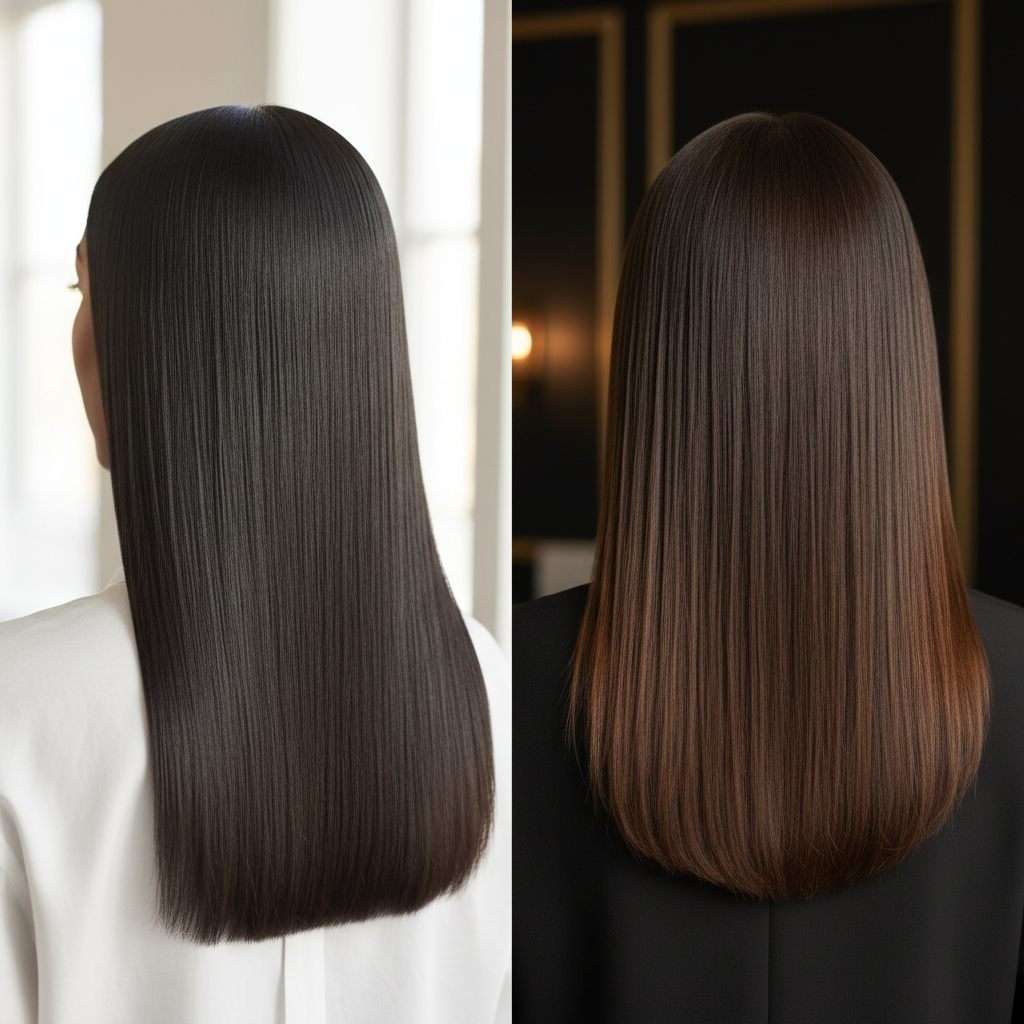
A silk press works exclusively on weak hydrogen bonds. Hydrogen bonds account for roughly one-third of the hair's mechanical strength and are easily broken by water and heat. During a silk press, the stylist washes, clarifies, deep-conditions, blow-dries, and flat-irons the hair at temperatures typically between 180°C and 215°C. The mechanical heat dehydrates the fibre temporarily, re-aligning hydrogen bonds in an elongated, straight formation. Because no covalent or chemical cross-linking takes place, the hair returns to its natural structural morphology the moment ambient moisture or water penetrates the cortex.
A keratin treatment (often referred to as a Brazilian smoothing treatment) relies on a semi-permanent chemical process. The hair is treated with a solution containing hydrolysed keratin, amino acids, and a functional aldehyde or acid derivative (such as glyoxylic acid, methylene glycol, or formaldehydes in older formulations). When sealed with a flat iron at roughly 230°C, the chemical solution forms cross-linked networks around and within the hair cuticle. This polymer film hydrophobically seals the shaft, preventing ambient water vapour from entering and preventing natural swelling. As a result, the hair remains smoother, less frizzy, and significantly less textured through multiple wash cycles.
| Attribute | Silk Press | Keratin Treatment |
|---|---|---|
| Primary Mechanism | Thermal restructuring of hydrogen bonds | Chemical cross-linking and cuticle coating |
| Chemical Alteration | None (purely physical) | Semi-permanent cross-linking |
| Duration | 1 to 3 weeks (until wet) | 8 to 12 weeks (gradual wash-out) |
| Effect on Curl Pattern | Temporary straightening; full reversion | Loosens curl; texture softening |
| Humidity Resistance | Low; prone to immediate reversion | High; actively repels water vapour |
| Reversion Trigger | Water, steam, perspiration | Time, surfactant washing, salt water |
| Typical Heat Level | 180°C to 215°C | 200°C to 230°C |
| Safety Concerns | High heat blistering, mechanical friction | Vapour emissions, chemical cross-linking |
The molecular mechanisms of thermal and chemical smoothing
The keratin matrix inside the hair cortex provides natural elasticity and shape. When you choose a silk press, heat softens the amorphous protein regions around keratin microfibrils. By using a specialised silicone or silk-infused heat protectant, surface friction decreases, allowing the ceramic or titanium plates of a flat iron to compress the cuticle scales flat. This process maximises specular light reflection, creating high shine. However, if the flat iron exceeds 220°C, the hair's structural moisture evaporates too rapidly, converting trapped water into high-pressure steam that forms micro-voids inside the cortex (bubble hair).
Keratin treatments alter structural porosity. Natural afro, curly, and wavy hair displays uneven cuticle thickness and asymmetric cortical cell arrangements. Keratin smoothing solutions fill these irregular fissures with low molecular weight proteins. When heat-cured, the cross-linking agents polymerise, physically locking the cuticle flat against the cortex. This barrier significantly increases the fibre's hydrophobicity. Because the cortex cannot absorb ambient humidity, the hair cannot revert to its original twisted configuration. However, repeated keratin treatments can create a brittle build-up of cross-linked proteins, reducing hair elasticity over time.
Signs of heat and chemical damage to look for
Neither procedure is completely without risk. Because both methods rely on high temperatures, structural breakdown can occur:
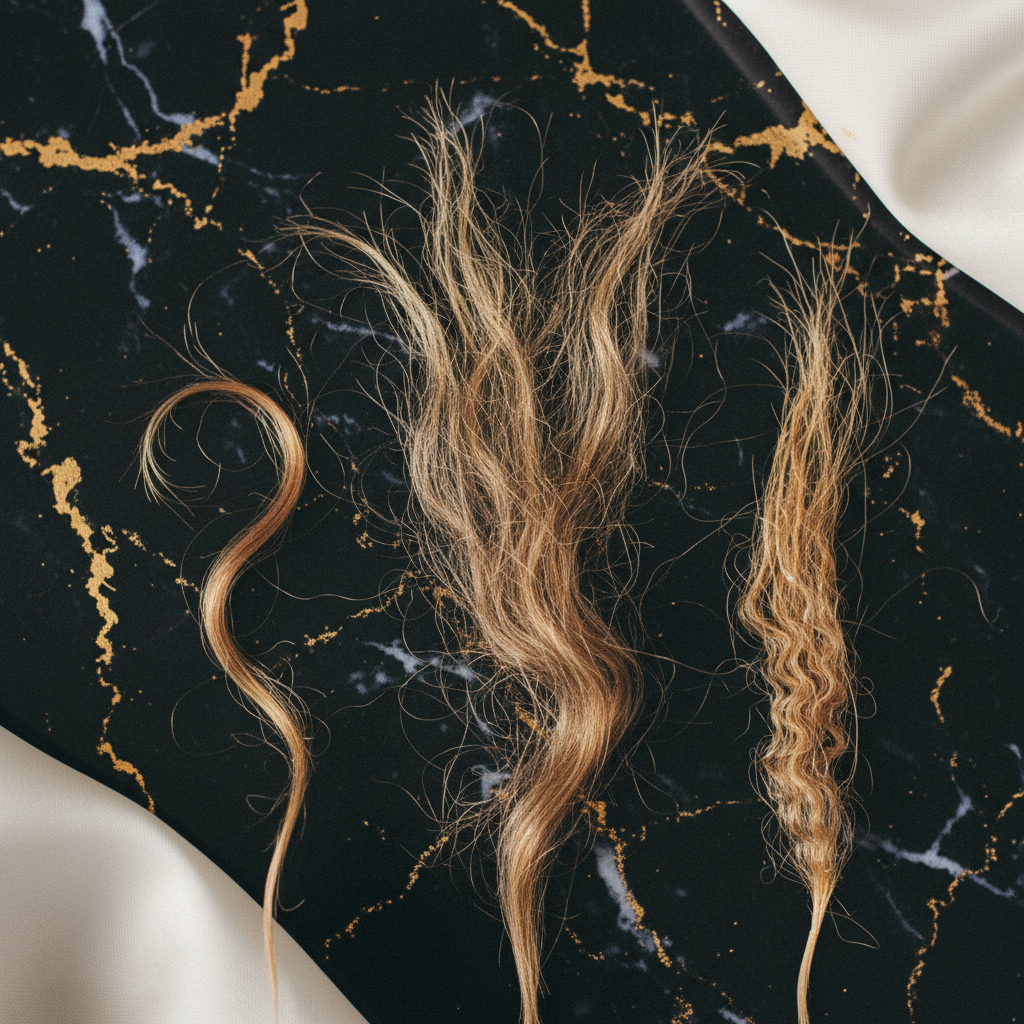
- Thermal heat damage (Silk Press): Look for limp, lifeless strands that refuse to revert to their original curl pattern after being drenched in water. Other signs include dry, straw-like ends, white split ends (trichoptilosis), and mid-shaft snapping.
- Cuticle melting (Keratin Treatment): Look for a gummy, mushy texture when the hair is wet, extreme rigidity when dry, or increased shedding caused by breakage at the demarcation line where treated and new growth meet.
- Scalp irritation: Chemical fumes from smoothing solutions can cause contact dermatitis, scalp burning, or flaking if applied too close to the epidermal barrier.
Practical steps: maintaining your hair health
If you choose a silk press:
- Always apply a silicone-based heat protectant (such as dimethicone or cyclopentasiloxane), which acts as a thermal buffer, slowing the rate of heat transfer into the cortex.
- Limit flat ironing passes to a maximum of one to two passes per section.
- Wrap your hair in silk or satin nightly to reduce mechanical friction and preserve moisture balance.
- Cleanse your hair with a mild, sulphate-free shampoo when reverting to avoid snapping brittle strands.
If you choose a keratin treatment:
- Ensure the salon is well-ventilated to prevent inhalation of volatile organic compounds.
- Avoid sodium chloride (salt) and harsh sulphate cleansers post-treatment, as they degrade the cross-linked protein coating prematurely.
- Space treatments out by at least 12 to 16 weeks to prevent progressive protein embrittlement.
- Alternate with deep-hydrating, moisture-rich conditioning masks to balance tensile protein strength with flexibility.
When hair issues stem from something else
It is common to confuse styling-related breakage with medical hair loss. If you notice an increased number of strands in your brush after a silk press or keratin treatment, determine whether the hair has an intact root bulb.
Hair breaking off without a white bulb at the end is fibre breakage caused by mechanical or thermal stress along the hair shaft. Hair falling out with the white bulb intact represents genuine follicular shedding (such as telogen effluvium, triggered by hormonal shifts, nutritional deficiencies, or high stress). Chemical smoothing agents and hot irons cannot cause true follicular hair loss unless they cause direct chemical burns to the scalp that damage the underlying hair follicles.
Supporting your hair journey with Watermans
When switching between styling techniques or letting your natural hair rest, maintaining the scalp environment and the condition of the hair fibre is essential. Watermans focuses on supporting a clean, nourished scalp and strengthening the feel of vulnerable hair.
Using a system like Watermans GrowMe Shampoo and ConditionMe Conditioner provides the hair with targeted cosmetic ingredients including biotin, rosemary extract, niacinamide, and hydrolysed lupin protein. While these products do not alter chemical bonds or reverse severe thermal damage, they cleanse the scalp of styling residues and condition the hair fibre, leaving strands feeling stronger, fuller, and softer. For leave-in support between salon appointments, Watermans Grow More Scalp Elixir delivers a concentrated blend of nutrients directly to the scalp without heavy oils that could weigh down a fresh silk press.
Frequently asked questions about Silk Press vs Keratin Treatment
Can a silk press cause permanent curl loss?
Yes, a silk press can cause permanent loss of your curl pattern if excessive heat is used. When hot tools exceed 215°C to 230°C, the alpha-keratin helices within the cortex denature into non-reversible beta-keratin configurations. This structural change prevents the hair from snapping back into its natural curl, leaving permanent heat-damaged straight sections that must be cut off.
Which lasts longer between a Silk Press vs Keratin Treatment?
In the debate of Silk Press vs Keratin Treatment, the keratin treatment lasts significantly longer. A silk press lasts only until the hair encounters moisture, perspiration, or washing (typically 7 to 21 days). A keratin treatment chemically changes the hair surface and lasts 8 to 12 weeks, gradually washing out over dozens of shampoos.
Can I get a silk press if I already have a keratin treatment?
Yes, you can silk press hair that has received a keratin treatment. In fact, flat ironing keratin-treated hair is faster and requires less heat because the keratin treatment has already smoothed the cuticle and loosened the natural texture. However, stylists should exercise caution and keep iron temperatures below 190°C to prevent compounding heat stress.
Will a keratin treatment stop my hair from reverting in rain?
A keratin treatment will not make your hair completely waterproof, but it dramatically improves humidity resistance. By coating and cross-linking the cuticle, it slows the penetration of atmospheric moisture into the cortex. Hair may pick up slight surface wave or volume in heavy downpours, but it will not experience the rapid, complete reversion typical of a silk press.
Which option is safer for fine, fragile hair?
A silk press performed at moderate temperatures (under 190°C) with high-grade thermal protectants is generally safer for fine hair than a chemical treatment. Fine hair has fewer cortical layers and a narrower diameter, making it uniquely vulnerable to chemical over-processing and protein brittleness from the cross-linking agents used in keratin treatments.
Deciding between styling and semi-permanent smoothing
Choosing between a Silk Press vs Keratin Treatment depends entirely on your lifestyle, styling goals, and how frequently you wish to wear your natural curls. If you value flexibility, zero chemical alteration, and the ability to return to your natural curl pattern on wash day, the silk press remains the superior choice. If your priority is long-term frizz reduction, faster daily styling routines, and dependable humidity resistance across multiple months, a professional keratin treatment offers distinct functional advantages. Whatever your choice, prioritise low-tension handling, responsible heat management, and a nourished scalp.
Sources and references
- Robbins, C. R. (2012). Chemical and Physical Behavior of Human Hair. Springer Science & Business Media.
- Cruz, C. F., et al. (2016). Keratin-based peptide systems for hair protection and restoration. International Journal of Cosmetic Science, 38(4), 384-393.
- US Food and Drug Administration (FDA). (2021). Hair Smoothing Products That Release Formaldehyde When Heated.
- British Association of Dermatologists. (2020). Hair breakage and thermal styling guidelines.
- Gavazzoni Dias, M. F. (2015). Hair cosmetics: an overview. International Journal of Trichology, 7(1), 2-15.
Find these ingredients in Watermans products
- Biotin: you will find this ingredient in our Hair Growth Shampoo.
- Niacinamide: you will find this ingredient in our Hair Mask.