Ingredients for Hair Thinning: Evidence, Mechanisms, and Scalp Health
9 min read ·
Discover the evidence-based ingredients for hair thinning, from caffeine to rosemary extract, and learn what works to support scalp health and density.
Quick answer: The most effective ingredients for hair thinning work by targeting follicular micro-inflammation, extending the anagen (growth) phase, improving scalp microcirculation, or reducing tensile hair breakage. Clinically studied cosmetic and topical agents include caffeine, rosemary extract, niacinamide, biotin, and specialised peptides. However, their primary limitation is that topical cosmetic ingredients cannot cure underlying genetic miniaturisation (androgenetic alopecia) or systemic deficiencies on their own, making correct diagnosis essential before expecting significant changes in hair density.
Key takeaways
- Distinguish between hair thinning caused by follicular miniaturisation, temporary diffuse shedding (telogen effluvium), and mechanical fibre breakage.
- Caffeine, rosemary oil, and peptides show measurable benefits in laboratory and controlled cosmetic trials by supporting microcirculation and cellular vitality.
- Essential micronutrients like biotin, zinc, and iron only resolve thinning if an underlying clinical deficiency actually exists.
- Cosmetic formulations improve fibre diameter, scalp health, and hair resilience, which creates a fuller appearance while protecting existing strands.
- Sudden or patchy hair shedding requires a clinical consultation with a doctor or trichologist rather than cosmetic intervention alone.
Ingredients for hair thinning: what the evidence shows
Selecting evidence-backed ingredients for hair thinning requires understanding how active compounds interact with the scalp biology and the hair follicle matrix. When formulated correctly, specific topical compounds help optimise the scalp environment, preserve existing strands, and maintain active growth phases.
Caffeine
Topical caffeine acts as a cellular stimulant. In peer-reviewed laboratory investigations, such as studies published in the International Journal of Dermatology, caffeine was shown to counteract the growth-inhibiting effects of dihydrotestosterone (DHT) in human hair follicles. It penetrates the skin barrier rapidly through the hair follicles, reaching peak concentrations within 20 to 30 minutes of application. Caffeine works primarily by inhibiting phosphodiesterase, which raises intracellular levels of cyclic adenosine monophosphate (cAMP). This biochemical shift stimulates cellular metabolism in follicular keratinocytes and can help extend the anagen growth cycle.
Rosemary extract (Rosmarinus officinalis)
Rosemary leaf extract contains carnosic acid and rosmarinic acid, two polyphenols with documented anti-inflammatory and vascular benefits. A widely cited 2015 comparative trial demonstrated that topical rosemary oil delivered comparable improvements in hair count to a standard 2 percent minoxidil solution after six months of continuous use, with significantly less scalp itching reported. Its primary biological mechanism is the enhancement of microcapillary perfusion around the dermal papilla, ensuring that vital oxygen and nutrients reach the hair bulb.
Niacinamide (Vitamin B3)
Niacinamide is a potent vasodilator and barrier-repair agent. Formulated typically at concentrations between 1 and 5 percent, niacinamide boosts follicular energy metabolism by serving as a precursor to the coenzymes NAD and NADP. In scalp applications, it enhances epidermal barrier integrity by stimulating ceramide synthesis, reduces oxidative stress caused by sebum oxidation, and calms peri-follicular micro-inflammation. A healthy, uninflamed scalp barrier prevents premature follicle regression.
Biotin and B-complex vitamins
Biotin (vitamin B7) acts as a coenzyme for carboxylase enzymes involved in fatty acid synthesis and amino acid metabolism, both critical to keratin production. Topically, biotin conditions the cuticular layers of the shaft to prevent breakage. Orally, however, biotin supplements only improve hair density if you have an objective, diagnosed deficiency. For individuals with normal blood serum levels, taking excessive supplemental biotin produces no proven follicular benefit and can interfere with diagnostic laboratory tests.
Peptides (Copper peptides and signal peptides)
Copper tripeptide-1 (GHK-Cu) and synthetic signal peptides represent a major advancement in non-prescription trichology. GHK-Cu has been shown to stimulate extracellular matrix synthesis, promote angiogenesis (new blood vessel formation), and reduce local inflammatory cytokines. By reinforcing the collagen envelope around the dermal papilla, peptides help anchor the follicle firmly within the dermis, protecting it from premature catagen transition.
| Active Ingredient | Primary Target | Main Mechanism | Evidence Rating |
|---|---|---|---|
| Caffeine | Follicle bulb / keratinocytes | Inhibits phosphodiesterase, counters DHT-induced stress | Strong topical cosmetic evidence |
| Rosemary Extract | Dermal papilla microvasculature | Enhances microcirculation, provides antioxidant support | Moderate to strong comparative evidence |
| Niacinamide | Scalp barrier and lipid metabolism | Precursor to NAD/NADP, lowers micro-inflammation | Strong dermal and scalp evidence |
| Biotin | Keratin infrastructure | Coenzyme in protein synthesis, cuticular smoothing | Strong for deficiency; cosmetic for fibre strength |
| Copper Peptides | Extracellular matrix & dermis | Stimulates angiogenesis, boosts collagen around the bulb | Emerging to moderate clinical evidence |
What the evidence does not show
It is critical to set realistic boundaries for cosmetic interventions. Ingredients found in daily shampoos, serums, and conditioners cannot reverse advanced follicular senescence, where the hair follicle has fully atrophied and scarring has replaced the ostium.
Cosmetic ingredients also cannot alter genetic expression. In androgenetic alopecia, 5-alpha reductase converts testosterone to DHT, which causes progressive miniaturisation of genetically susceptible hair bulbs. While some botanicals and caffeine demonstrate mild 5-alpha reductase inhibition in vitro, topical cosmetic shampoos cannot be claimed to halt or treat clinical alopecia in the manner of medical pharmaceuticals. Expecting a cosmetic wash to permanently cure patterned hair loss leads to disappointment.
Furthermore, high-dose oral vitamins will not accelerate growth or reverse thinning unless blood work verifies a specific nutritional deficit. Indiscriminate supplementation often produces expensive urine rather than thicker hair.
Mechanisms: loss, shedding, and breakage
Understanding thinning requires distinguishing between three distinct biological events:
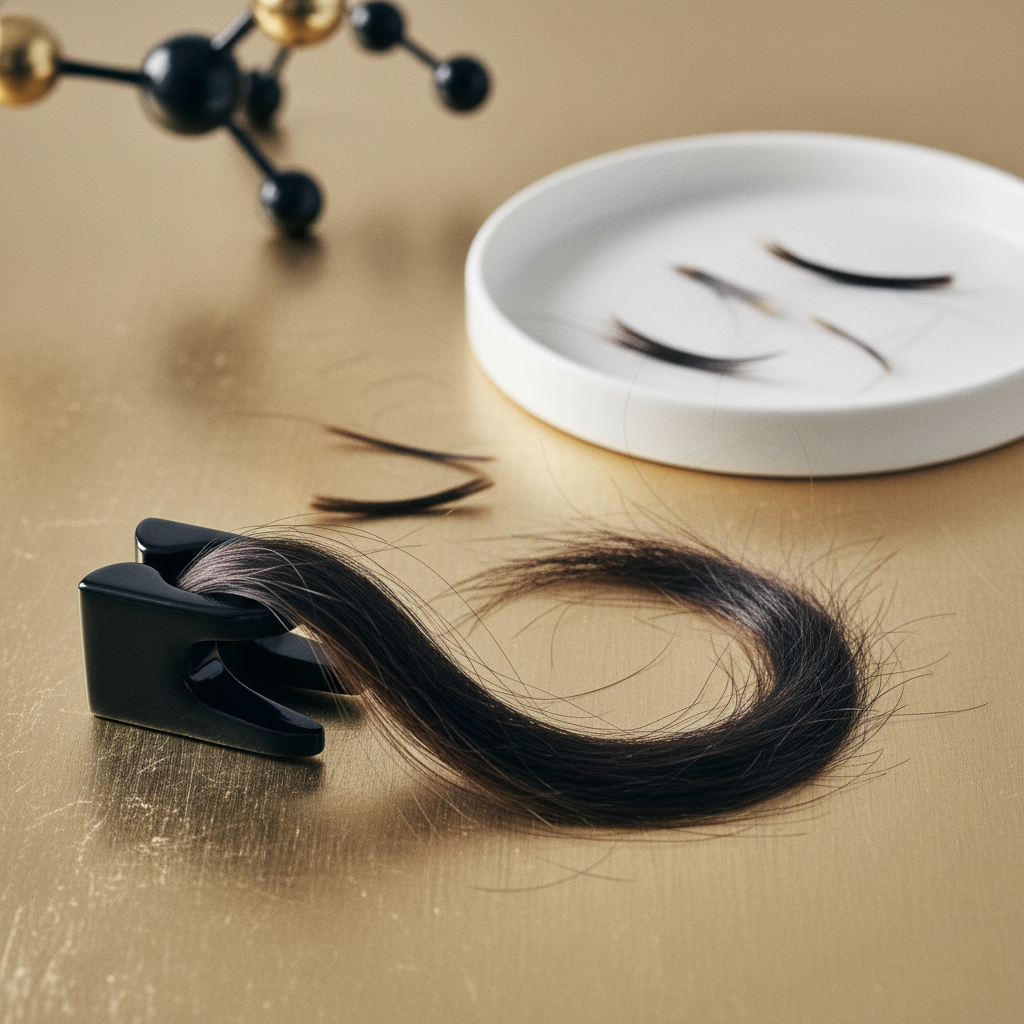
- Follicular miniaturisation (hair loss): The follicle shrinks with each successive growth cycle, producing a progressively finer, shorter vellus-like hair until the follicle ceases production entirely.
- Telogen effluvium (hair shedding): A systemic physiological shock (such as illness, childbirth, severe psychological stress, or crash dieting) pushes a large percentage of growing anagen hairs prematurely into the telogen resting phase. Roughly two to three months later, these hairs shed diffusely across the scalp.
- Shaft fracture (breakage): The hair follicle produces a healthy strand, but chemical processing, heat styling, or mechanical friction strips the cuticle, exposing the cortex and causing the fibre to snap. This reduces overall volume and density, creating the illusion of scalp thinning.
Targeting the correct mechanism dictates whether you need anti-inflammatory scalp actives, nutritional rehabilitation, or protein-rich conditioning agents to reinforce tensile strength.
What you can do to support thinning hair
Adopting an evidence-based daily routine helps preserve density and improve the visual diameter of fine strands:
- Cleanse consistently: Keep the scalp microbiome balanced by washing frequently enough to clear sebum and dead squames. Built-up sebum oxidises into squalene hydroperoxide, which triggers micro-inflammation around the follicle collar.
- Incorporate targeted topical washes: Use shampoos and treatments formulated with caffeine, rosemary, and niacinamide. Leave the lather on the scalp for 2 to 3 minutes to allow optimal dermal absorption of water-soluble actives.
- Minimise mechanical damage: Use wide-tooth combs, avoid aggressive towel drying, and keep hot tools below 180 degrees Celsius to avoid protein denaturing within the hair cortex.
- Support from within through balanced nutrition: Ensure adequate dietary protein (the building block of keratin) alongside iron, zinc, and essential fatty acids.
The Watermans approach to hair density
For those seeking a multi-ingredient approach to daily scalp care, Watermans incorporates an evidence-focused blend of these active botanicals and vitamins. Watermans GrowMe Shampoo brings together caffeine, rosemary extract, niacinamide, biotin, and hydrolysed lupin protein within a single, revitalising formula. Designed to support optimal scalp vitality while cleansing away sebum build-up, this combination reinforces hair fibres against breakage and leaves the hair looking visibly thicker, fuller, and conditioned. Used consistently alongside a healthy hair care routine, it supplies the scalp environment with the micro-nutrients needed to thrive.
When the cause may be something else
Thinning is not always a topical issue. The root cause may be systemic, including:
- Thyroid dysfunction: Both hypothyroidism and hyperthyroidism disrupt the metabolic rate of the hair matrix, causing dry, brittle, diffusely thinning hair.
- Ferritin and iron deficiency: Low serum ferritin stores impair cellular division in the hair bulb, as ferritin is required by rapidly dividing matrix cells.
- Hormonal transitions: Polycystic ovary syndrome (PCOS), perimenopause, menopause, or discontinuing oral contraceptives shift androgen-to-oestrogen ratios, which can trigger androgenetic thinning.
- Autoimmune conditions: Conditions like alopecia areata involve the immune system attacking hair follicles, creating distinct circular bald patches rather than diffuse thinning.
When to seek professional advice
Consult a medical doctor, dermatologist, or registered trichologist if you notice:
- Sudden, rapid shedding resulting in handfuls of hair coming out during washing or brushing.
- Patchy, well-defined circular areas of bare scalp.
- Scalp symptoms including persistent redness, burning, tenderness, scaling, or pustules.
- Thinning accompanied by unexplained fatigue, significant weight fluctuations, or irregular menstrual cycles.
Frequently asked questions about ingredients for hair thinning
Which ingredients for hair thinning are proven to stimulate the scalp?
Caffeine, rosemary extract, and niacinamide possess the strongest evidence for stimulating the scalp environment. In published laboratory and clinical trials, caffeine enhances cellular energy metabolism, rosemary extract supports microcapillary circulation around the dermal papilla, and niacinamide calms surface inflammation while reinforcing the epidermal barrier.
Can topical vitamins cure hair thinning?
No, topical vitamins cannot cure hair thinning caused by genetic patterns or systemic conditions. While vitamins such as biotin, panthenol, and niacinamide help condition the hair fibre, seal moisture, and support cellular health at the surface, they do not alter the underlying genetics of androgenetic alopecia.
How long does it take for ingredients for hair thinning to show visible results?
Because the human hair cycle operates slowly, noticeable cosmetic improvements generally take between 3 and 6 months of daily or regular use. Hair grows approximately 1 centimetre per month, meaning new, resilient growth requires several months to achieve noticeable coverage and density.
Is rosemary extract really as effective as pharmaceutical treatments?
Evidence from a 2015 study indicated that rosemary oil produced comparable results to a low-strength 2 percent minoxidil solution after six months for certain types of thinning. However, it requires rigorous consistency, and high-strength medical formulations still offer more predictable outcomes for moderate to advanced androgenetic alopecia.
Does biotin help thinning hair if you take it as an oral supplement?
Biotin supplements will only resolve hair thinning if you have an underlying, clinically confirmed biotin deficiency. True biotin deficiencies are rare in people consuming balanced diets. If your levels are normal, extra biotin will not produce additional hair growth and may distort thyroid laboratory tests.
Maintaining scalp health for long-term density
Navigating the vast selection of ingredients for hair thinning comes down to understanding the biological realities of your scalp. By focusing on verified compounds like caffeine, rosemary extract, peptides, and niacinamide, you can significantly enhance scalp microcirculation, tame micro-inflammation, and strengthen delicate fibres against daily breakage. While cosmetic formulations cannot rewrite genetics or replace medical interventions for severe conditions, a deliberate, evidence-based regimen provides the strongest foundation for preserving hair density and cultivating healthy-looking, fuller hair.
Sources and references
- Panahi, Y. Et al. (2015) 'Rosemary oil vs minoxidil 2% for the treatment of androgenetic alopecia: a randomized comparative trial', Skinmed, 13(1), pp. 15-21.
- Fischer, T.W. Et al. (2014) 'Differential effects of caffeine on hair follicle elongation in male and female human hair follicles in vitro', British Journal of Dermatology, 171(5), pp. 1031-1043.
- Patel, D.P., Swink, S.M. And Castelo-Soccio, L. (2017) 'A Review of the Use of Biotin for Hair Loss', Skin Appendage Disorders, 3(3), pp. 166-169.
- Tosti, A. And Schwartz, J.R. (2007) 'Role of scalp health in achieving optimal hair growth and quality', International Journal of Cosmetic Science, 29(4), pp. 241-248.
- National Institute for Health and Care Excellence (NICE) (2022) Alopecia androgenetica: Clinical Knowledge Summaries. Available at: nice.org.uk.
Find these ingredients in Watermans products
- Niacinamide: you will find this ingredient in our Hair Mask.
- Panthenol (Provitamin B5): you will find this ingredient in our Heat Protection Spray.