Ingredients to Avoid for Sensitive Scalps: The Evidence-Based Guide
8 min read ·
Discover the key ingredients to avoid for sensitive scalps, from harsh surfactants to synthetic fragrance, and learn how to protect your delicate skin barrier.
Quick answer: Identifying Ingredients to Avoid for Sensitive Scalps requires distinguishing between harsh irritants and true contact allergens. The most common offenders include aggressive surfactants such as sodium lauryl sulphate (SLS), synthetic fragrances, volatile short-chain alcohols, and harsh preservatives like methylisothiazolinone (MI). However, individual sensitivity varies greatly. An ingredient that triggers severe stinging or contact dermatitis in one person may be completely harmless to another, meaning elimination and professional patch testing remain the gold standard for clinical diagnosis.
Key takeaways
- Surfactant strength matters: Harsh primary surfactants can strip natural sebum and disrupt the stratum corneum, allowing irritants deeper into the epidermis.
- Fragrance is the leading allergen: Both synthetic fragrance blends and concentrated essential oils are among the most frequent causes of cosmetic allergic contact dermatitis.
- Drying alcohols impair the barrier: Short-chain alcohols accelerate moisture evaporation, leading to tightness, itching, and micro-fissuring of the scalp barrier.
- Preservatives are necessary but risky: Certain preservatives, notably methylisothiazolinone and formaldehyde-releasers, have high sensitisation rates and should be scrutinised.
- Irritation differs from allergy: Irritant contact dermatitis occurs quickly due to direct barrier damage, whereas allergic contact dermatitis is an immune-mediated reaction that develops after repeated exposure.
Ingredients to Avoid for Sensitive Scalps: what the evidence shows
When managing reactive skin on the head, knowing the evidence-based Ingredients to Avoid for Sensitive Scalps helps protect the skin barrier from chronic inflammation. Dermatology research consistently categorises problematic cosmetic ingredients into several distinct functional classes.
1. Harsh anionic surfactants
Surfactants are cleansing agents that bind to sebum and rinse away dirt. However, strong anionic surfactants, particularly sodium lauryl sulphate (SLS), have a well-documented ability to disrupt the stratum corneum. SLS penetrates the lipid bilayers of the scalp, denatures structural keratin, and elevates transepidermal water loss (TEWL). Clinical research frequently uses SLS as a baseline control to induce experimental skin irritation because its barrier-disrupting properties are so predictable.
Milder alternatives like sodium cocoyl isethionate, cocamidopropyl betaine, and alkyl polyglucosides (such as decyl glucoside) cleanse without stripping essential barrier lipids.
2. Synthetic fragrance and masking agents
Fragrance mixtures represent one of the most common causes of allergic contact dermatitis worldwide, according to the British Association of Dermatologists. A single listing of "parfum" or "fragrance" on an ingredient label can conceal a blend of dozens of individual aromatic compounds, fixatives, and phthalates.
Even unperfumed formulations may contain masking fragrances to neutralise chemical odours. For an inflamed or hyper-reactive scalp, eliminating synthetic perfumes removes a substantial trigger for redness, burning, and pruritus (itching).
3. Essential oils and botanical extracts
Natural marketing often portrays plant extracts as inherently gentle, but clinical evidence suggests otherwise. Essential oils such as tea tree, peppermint, eucalyptus, lavender, and citrus oils contain concentrated volatile terpenes, including limonene, linalool, and geraniol.
When exposed to air, these terpenes oxidise into potent sensitisers. While tea tree oil has mild antimicrobial properties, undiluted or high-concentration applications frequently trigger allergic contact dermatitis, exacerbating scalp sensitivity rather than calming it.
4. Sensitising preservatives
Water-based hair products require antimicrobial preservatives to prevent the growth of bacteria, mould, and yeast. However, certain preservative systems carry a high risk of sensitisation.
- Methylisothiazolinone (MI) and Methylchloroisothiazolinone (MCI): Regulators restricted MI from leave-on cosmetics in the UK and EU due to an epidemic of contact allergies. While still permitted in wash-off products at strict concentrations (up to 15 ppm for MCI/MI combinations), vulnerable scalps often react even during brief contact.
- Formaldehyde releasers: Ingredients such as DMDM hydantoin, diazolidinyl urea, and imidazolidinyl urea slowly release trace amounts of formaldehyde to preserve formulations. For sensitive skin, these compounds can induce burning, peeling, and persistent follicular irritation.
5. Short-chain volatile alcohols
Not all alcohols damage the scalp. Fatty alcohols such as cetyl, stearyl, and cetearyl alcohol are emollient waxes that soften the hair and condition the scalp.
In contrast, short-chain alcohols (including alcohol denat, ethanol, SD alcohol 40, and isopropyl alcohol) evaporate rapidly. Formulators use them to speed up drying time in hairsprays and scalp tonics. Unfortunately, this rapid evaporation dissolves natural surface lipids and draws moisture out of the epidermis, triggering tightness, flaking, and stinging.
| Ingredient Category | Problematic Examples | Common Effects on Sensitive Scalps | Gentler Alternatives |
|---|---|---|---|
| Cleansers | Sodium lauryl sulphate (SLS) | Strips barrier lipids, increases TEWL, causes stinging | Sodium cocoyl isethionate, decyl glucoside |
| Fragrance | "Parfum", synthetic fragrance blends | Allergic contact dermatitis, persistent pruritus | Truly fragrance-free formulations |
| Botanicals | Oxidised tea tree, lavender, citrus oils | Contact allergy, follicular inflammation | Squalane, colloidal oatmeal, bisabolol |
| Preservatives | Methylisothiazolinone, DMDM hydantoin | Sensitisation, redness, allergic eczema | Phenoxyethanol, ethylhexylglycerin, sodium benzoate |
| Solvents | Alcohol denat, isopropyl alcohol | Extreme dryness, lipid depletion, barrier micro-cracks | Fatty alcohols (cetyl, stearyl), water-based tonics |
What the evidence does not show
Research does not show that synthetic chemicals are inherently more irritating than natural ones. Many naturally derived substances (such as unrefined nut oils, herbal infusions, and essential oils) carry higher allergy risks than refined, synthetic emollients.
Furthermore, avoiding specific ingredients will not cure intrinsic medical conditions. Cosmetic ingredient adjustments cannot cure psoriasis, seborrhoeic dermatitis, or lichen planopilaris. While removing irritants prevents secondary flare-ups, underlying inflammatory scalp disorders stem from immune dysfunction, genetic predisposition, or microbiome imbalances that require medical management.
The mechanism of scalp sensitivity
The scalp has an average density of 600 to 800 hairs per square centimetre, meaning it possesses an extraordinarily high concentration of hair follicles, sebaceous glands, and superficial nerve endings.
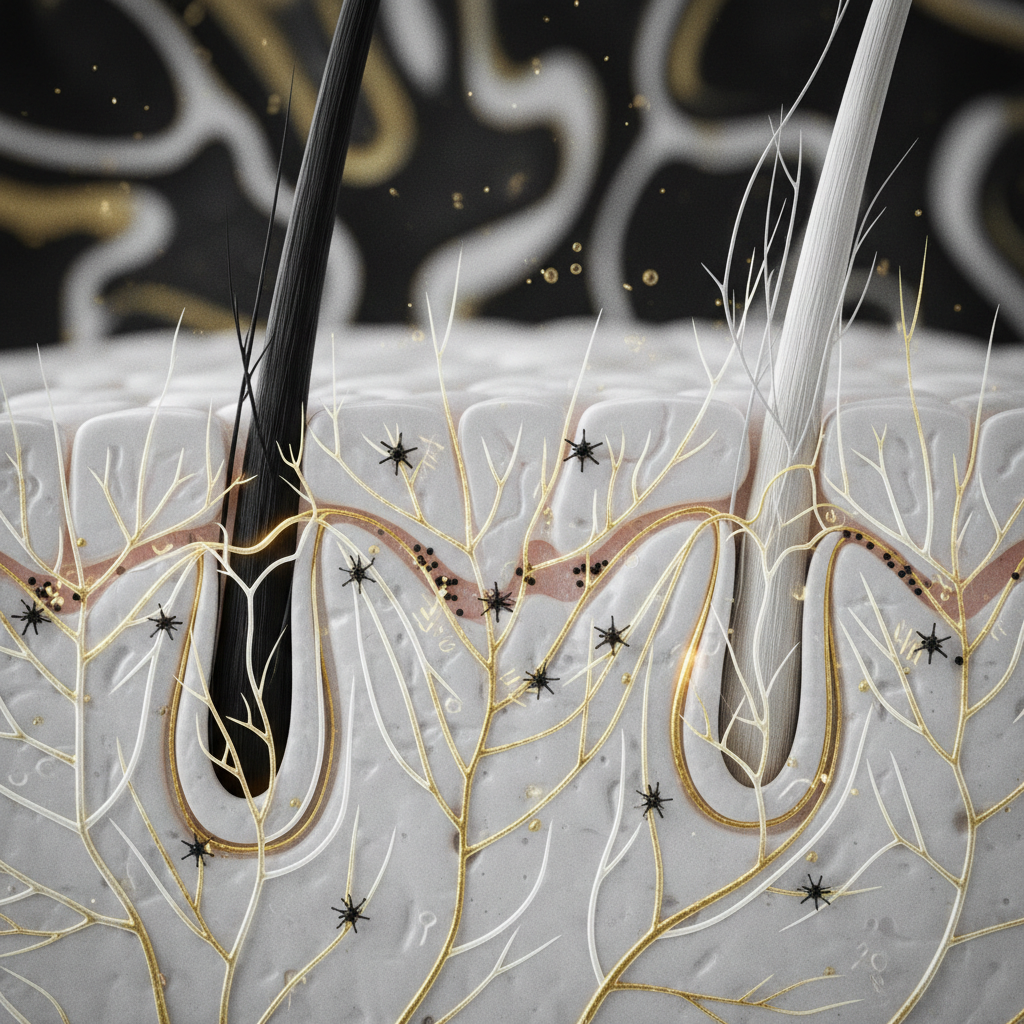
When you apply harsh formulations, small molecular weight irritants penetrate past the stratum corneum into the viable epidermis. Once inside, they trigger the release of pro-inflammatory cytokines, including interleukin-1 alpha (IL-1α) and tumour necrosis factor (TNF-α). This chemical cascade dilates blood vessels, producing visible erythema (redness). Simultaneously, it stimulates unmyelinated C-nerve fibres in the dermis, which your brain registers as burning, prickling, or intense itching.
If the skin barrier remains compromised, chronic subclinical inflammation can disturb the hair follicle environment. While barrier disruption does not directly cause follicular miniaturisation (androgenetic alopecia), prolonged scratching and inflammation can lead to mechanical breakage and temporary telogen effluvium shedding.
What you can do to calm a reactive scalp
Calming a sensitive scalp involves simplifying your routine and restoring the acid mantle:
- Audit your labels: Look for short, minimalist formulations without added perfume, masking agents, or harsh sulfates.
- Maintain an optimal pH: The scalp naturally sits between pH 4.5 and 5.5. Cleansers with an alkaline pH (above 6.5) cause the cuticles and stratum corneum to swell, worsening barrier leakage. Choose pH-balanced products.
- Wash with lukewarm water: Hot water strips protective sebum and dilates cutaneous blood vessels, intensifying redness and irritation.
- Perform a patch test: Apply a small coin-sized amount of new product to the inner forearm or behind the ear for 48 hours before using it across your entire scalp.
When the cause is something else
If eliminating common cosmetic irritants fails to relieve your symptoms, the issue might not be cosmetic sensitivity. Common alternative causes include:
- Seborrhoeic dermatitis: Driven by an overgrowth of Malassezia yeast interacting with sebum, producing greasy yellowish flakes, itching, and redness.
- Scalp psoriasis: An autoimmune condition characterised by sharply demarcated plaques covered with thick, silvery scales.
- Hard water build-up: Minerals like calcium and magnesium carbonate can react with fatty acids on the scalp, leaving insoluble curds that dry out skin and block follicles.
- Neurogenic sensitivity: Some individuals have hyper-reactive cutaneous nerves without any visible rash or scaling, a condition known as trichodynia.
When to seek professional advice
You should consult a GP or a registered trichologist if your scalp exhibits:
- Oozing, crusting, or yellow fluid (signs of secondary bacterial infection).
- Severe scaling that does not respond to gentle, fragrance-free care.
- Hair shedding accompanied by burning, tenderness, or bald patches.
- Symptoms that disrupt your sleep or daily activities.
A dermatologist can perform standard epicutaneous patch testing (such as the British baseline series) to identify your precise contact allergens, removing the guesswork from product selection.
Watermans approach to scalp-first care
Watermans designs formulations with a distinct scalp-first philosophy, recognising that healthy hair fibre growth depends entirely on a stable, nourished epidermal foundation. Rather than relying on aggressive detergents that strip the skin's defensive lipids, Watermans products balance active botanical nutrition with gentle cleansing chemistry. By supporting the scalp microenvironment with natural extracts, caffeine, and barrier-friendly humectants, this approach helps you maintain an optimal balance of cleanliness, comfort, and follicle vitality without needless irritation.
Summary on choosing gentle haircare
Navigating the landscape of Ingredients to Avoid for Sensitive Scalps comes down to barrier protection. By cutting out strong anionic detergents, synthetic fragrances, sensitising preservatives, and volatile alcohols, you give your epidermal barrier the quiet environment it needs to recover. Pay close attention to how your skin responds, prioritise simple formulations with a healthy physiological pH, and seek clinical advice whenever irritation persists.
Frequently asked questions about Ingredients to Avoid for Sensitive Scalps
What are the main Ingredients to Avoid for Sensitive Scalps?
The primary ingredients to avoid are harsh detergents like sodium lauryl sulphate (SLS), synthetic perfumes, drying alcohols (alcohol denat, isopropyl alcohol), and sensitising preservatives like methylisothiazolinone. Minimising oxidised essential oils like citrus and tea tree also helps prevent contact allergies.
Can natural essential oils trigger scalp reactions?
Yes. Although naturally sourced, essential oils contain concentrated aromatic compounds such as limonene and linalool that oxidise upon air exposure. These oxidised compounds are frequent causes of allergic contact dermatitis on sensitive, compromised scalps.
How do I know if my scalp reaction is an allergy or just irritation?
Irritant reactions usually happen rapidly, causing immediate burning, dryness, or stinging after product application. Allergic contact dermatitis is immune-mediated; it often takes 24 to 72 hours to manifest and presents with intense itching, redness, swelling, or small blisters.
Are all alcohols harmful to sensitive scalps?
No. Short-chain volatile alcohols (ethanol, alcohol denat, isopropyl alcohol) strip lipids and cause dryness. In contrast, long-chain fatty alcohols (cetyl, cetearyl, stearyl alcohol) are safe, soothing emollients that hydrate and soften the skin barrier.
Sources and references
- British Association of Dermatologists. Fragrance Allergy: Patient Information Leaflet. 2020.
- European Commission. Cosmetic Ingredient Regulation (EC) No 1223/2009: Annex V (Preservatives). Official Journal of the European Union.
- de Groot, A. C., & Schmidt, E. Essential Oils: Contact Allergy and Chemical Composition. CRC Press, 2021.
- Rawlings, A. V., et al. Stratum corneum moisturization at the molecular level. Journal of Investigative Dermatology, 2005.
- Trüeb, R. M. Scalp Condition Impacts Hair Growth and Retention via Oxidative Stress. International Journal of Trichology, 2018.
Find these ingredients in Watermans products
- Caffeine: you will find this ingredient in our Hair Growth Shampoo.