Managing Seborrhoeic Dermatitis: An Evidence-Based Scalp Guide
10 min read ·
Managing Seborrhoeic Dermatitis requires targeted antifungals, gentle scale removal, and sebum control to calm inflammation and prevent recurring scalp flaking.

Quick answer: Managing Seborrhoeic Dermatitis requires controlling the overgrowth of lipid-dependent Malassezia yeast, reducing epidermal inflammation, and clearing greasy, adhered scale from the scalp. Successful long-term control relies on consistent antifungal washes, gentle keratolytic agents, and avoiding heavy plant oils that feed yeast colonies. The main limitation is that seborrhoeic dermatitis is a chronic, relapsing inflammatory condition rather than an acute infection. It cannot be permanently cured, meaning ongoing maintenance washing is necessary to prevent flare-ups.
Key takeaways
- Seborrhoeic dermatitis is driven by an interaction between sebum production, individual immune sensitivity, and Malassezia yeast metabolising scalp lipids.
- Effective management relies on topical antifungals (such as ketoconazole, zinc pyrithione, or piroctone olamine) combined with gentle scale lifters like salicylic acid.
- Heavy natural oils rich in oleic and palmitic acids (such as olive or coconut oil) can worsen yeast proliferation and should not be used as leave-on scalp treatments.
- Severe inflammation can disrupt the hair cycle and trigger temporary telogen effluvium shedding, though seborrhoeic dermatitis does not destroy hair follicles directly.
- Maintenance routines must be sustained even after active redness and scaling clear, as the underlying skin predisposition remains.
Managing Seborrhoeic Dermatitis: what the evidence shows
Managing Seborrhoeic Dermatitis centres on targeted suppression of Malassezia globosa and Malassezia restricta. These yeasts are normal components of the human scalp microbiome, but in susceptible individuals, their metabolic activity triggers an inflammatory cascade. Clinical trials consistently demonstrate that regular application of antifungal actives significantly reduces both the erythema (redness) and desquamation (flaking) characteristic of the condition.
The standard clinical approach involves topical antifungal shampoos used two to three times per week during an active flare, tapering to once weekly or fortnightly for maintenance. According to dermatological guidelines from the British Association of Dermatologists and NICE, synthetic antifungal agents such as ketoconazole (1% to 2%), ciclopirox olamine (1%), and zinc pyrithione reduce fungal density rapidly. Keratolytic agents such as salicylic acid at 2% to 3% concentration dissolve the intercellular cement holding stubborn scales together, allowing medicated cleansers to reach the scalp surface effectively.
For acute, highly inflamed flares accompanied by intense pruritus (itching), short courses of mild to moderate topical corticosteroids may be prescribed alongside antifungals. However, topical steroids are limited to short intervals (usually under two weeks) to avoid cutaneous atrophy, telangiectasia, or rebound dermatitis.
Biological mechanism: why the scalp flares
The development of seborrhoeic dermatitis depends on three interlinked factors: active sebaceous glands, Malassezia lipases, and an individual barrier defect.
Sebaceous glands produce sebum, a lipid cocktail composed of triglycerides, squalene, wax esters, and free fatty acids. Malassezia species lack the genes required to synthesise their own fatty acids. To survive, they secrete lipase enzymes that cleave host triglycerides, consuming the saturated fatty acids they need while leaving behind unsaturated fatty acids, primarily oleic acid and arachidonic acid.
These remaining unsaturated fatty acids penetrate a vulnerable stratum corneum. In susceptible individuals, this penetration triggers an inflammatory immune response involving T-lymphocytes, reactive oxygen species, and disrupted epidermal differentiation. Instead of shedding invisibly as individual corneocytes, scalp skin cells turn over abnormally fast (accelerating from the normal 28 to 30 days down to 7 to 14 days) and clump together in thick, greasy, yellowish plaques.
Common signs and how to identify them
Seborrhoeic dermatitis presents with distinct clinical signs that differentiate it from standard, non-inflammatory scalp flaking.
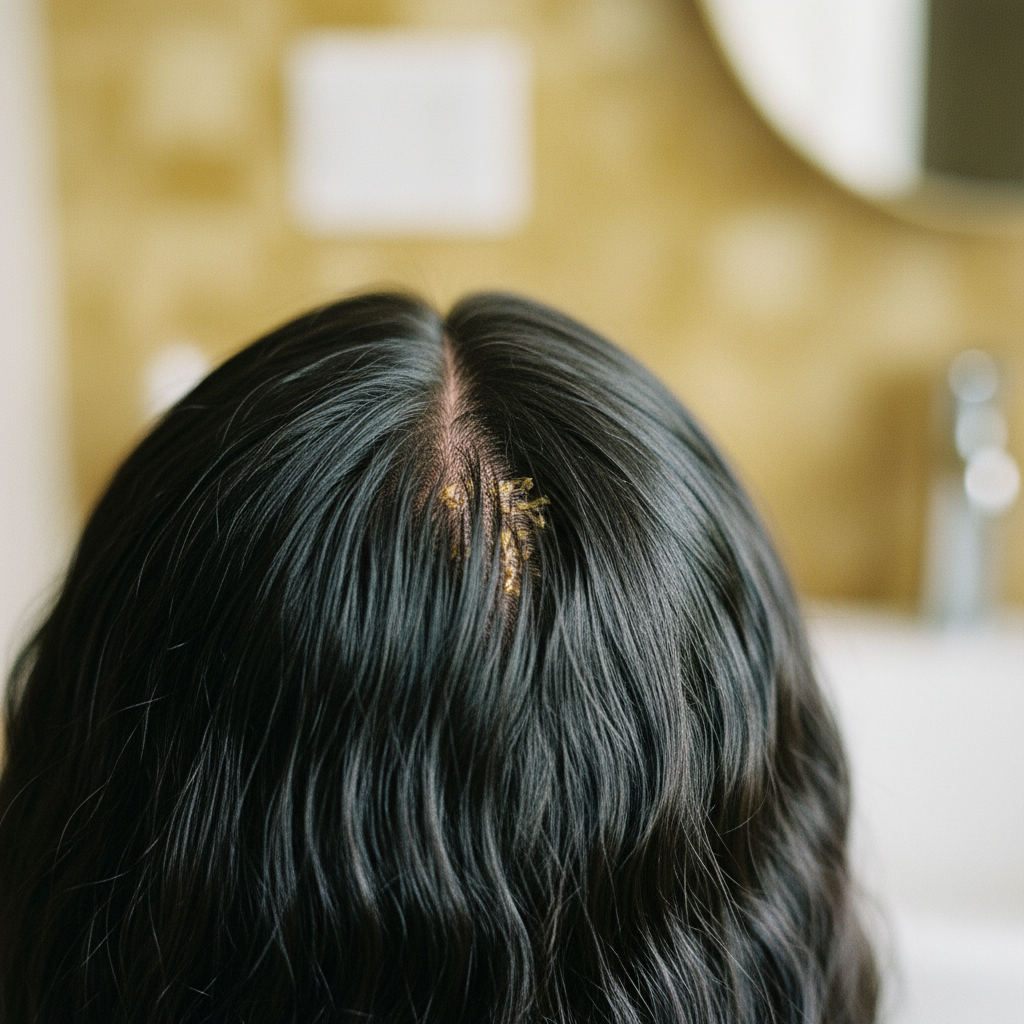
- Greasy, yellowish plaques: Unlike the small, dry, white flecks of simple pityriasis capitis (dry dandruff), seborrhoeic dermatitis produces larger, waxy, yellowish scales that cling tightly to the scalp and hair shafts.
- Perifollicular erythema: Visible pink to red skin beneath and around the flakes, often extending to the hairline, eyebrows, nasolabial folds, and behind the ears.
- Persistent pruritus and burning: Itching is frequent and can be accompanied by an uncomfortable burning or tingling sensation when sebum oxidises.
- Secondary shedding: Intense itching can lead to mechanical trauma from scratching, while widespread perifollicular inflammation can shift an unusually high percentage of hairs prematurely into the telogen (resting) phase, causing diffuse telogen effluvium.
Comparing seborrhoeic dermatitis to similar scalp conditions
| Condition | Primary Flake Appearance | Redness & Margin | Typical Scalp Locations | First-Line Management |
|---|---|---|---|---|
| Seborrhoeic Dermatitis | Greasy, yellowish, waxy, medium-to-large scales | Diffuse, ill-defined pink or red patches | Sebum-rich zones: crown, hairline, post-auricular | Topical antifungals, piroctone olamine, salicylic acid |
| Simple Dandruff (Pityriasis Capitis) | Dry, small, white or grey, loose flakes | Little to no visible erythema | Diffuse across the whole scalp | Mild surfactant cleansing, zinc pyrithione, selenium sulfide |
| Scalp Psoriasis | Thick, silvery-white, dry, micaceous plaques | Well-demarcated, raised salmon-red borders | Often extends well past hairline onto forehead and nape | Topical potent corticosteroids, vitamin D analogues, coal tar |
| Contact Dermatitis | Variable scaling, often crusting or weeping | Intense, localised redness matching contact area | Anywhere chemical or allergen was applied | Allergen elimination, barrier repair, topical corticosteroids |
What the evidence does not support
Popular home remedies frequently contradict dermatological science, worsening seborrhoeic dermatitis rather than soothing it.
- Applying kitchen oils: Rubbing olive oil, coconut oil, argan oil, or sweet almond oil onto the scalp is a common mistake. Because Malassezia yeasts feed voraciously on medium- and long-chain fatty acids (specifically carbon chains between C11 and C24), slathering plant oils provides fuel for the yeast population, intensifying the flare. Mineral oil and pure squalane do not feed Malassezia, but heavy vegetable oils should be strictly avoided.
- Infrequent washing to "preserve natural oils": The advice to wash hair only once a week to protect the moisture barrier does not apply here. Sebum accumulation is the primary driver of fungal proliferation. Reducing wash frequency allows sebum and irritant free fatty acids to build up, worsening inflammation.
- Expecting permanent eradication: No medical shampoo, natural rinse, or dietary restriction permanently alters your genetic sebum production profile or permanently removes Malassezia from human skin. Claims of a permanent cure reflect a misunderstanding of chronic skin flora.
Daily routines and scalp care steps
Managing your scalp requires combining active treatments with sensible cosmetic routines.
- Cleanse frequently: Wash your scalp at least every other day, or daily if you have naturally high sebum production. Frequent cleansing mechanically removes scale, oxidised sebum, and fungal metabolites.
- Respect the contact time: When using a medicated shampoo containing ketoconazole, zinc pyrithione, piroctone olamine, or selenium sulfide, leave the lather on the scalp for 3 to 5 minutes before rinsing. Rinsing immediately washes active molecules down the drain before they can penetrate the fungal cell membrane.
- Alternate cleansers: During remission, alternate your medicated antifungal shampoo with a gentle, sulphate-conscious daily wash to prevent hair lengths from drying out while keeping the scalp environment clean.
- Condition the fibre, not the scalp: Apply rinse-out conditioners and rich styling masks strictly from mid-lengths to ends. Keep rich conditioning agents away from the scalp skin to avoid occluding follicles.
- Dry your scalp thoroughly: Malassezia thrives in warm, humid conditions. Leaving hair wet for extended periods or going to bed with damp roots creates an ideal microclimate for microbial growth. Gently dry the scalp using the low-to-medium heat setting of a hairdryer.
When shedding occurs: what is happening to the hair?
Clients frequently worry that seborrhoeic dermatitis causes permanent baldness. It does not. Seborrhoeic dermatitis is a non-scarring skin condition that leaves the underlying dermal papilla intact.
However, severe, unchecked scalp inflammation can induce temporary telogen effluvium. When surrounding scalp tissue is chronically inflamed, pro-inflammatory cytokines such as interleukin-1 and TNF-alpha can shock anagen (growth phase) follicles into premature catagen and telogen phases. Furthermore, vigorous scratching damages the cuticle and fractures hair fibres, mimicking hair shedding through mechanical breakage. Once inflammation is resolved and scalp homeostasis is restored, normal follicular cycling resumes.
When to seek medical advice
Consult a GP or consultant dermatologist if your symptoms do not improve after three to four weeks of consistent over-the-counter antifungal shampoo use.
Seek prompt medical evaluation if you experience weeping, honey-coloured crusting, or sudden swelling, as these point to secondary bacterial infection (such as impetigo or Staphylococcus aureus overgrowth). You should also see a doctor if scaling forms thick, stubborn plaques that spread significantly down the neck, face, or chest, or if your scalp becomes intensely painful. In some cases, a scalp biopsy or dermoscopy is necessary to rule out conditions like sebopsoriasis, lichen planopilaris, or lupus erythematosus.
Supporting scalp balance with Watermans
Cosmetic haircare plays a valuable supporting role alongside medical protocols by keeping the scalp clean, reducing oxidative stress, and supporting fibre strength during shedding episodes.
Watermans GrowMe Shampoo provides a revitalising, nutrient-dense cleansing wash suitable for daily or alternate-day hygiene. Formulated with biotin, rosemary extract, niacinamide, and allantoin, it purifies the follicular environment of excess sebum without stripping the hair fibre. When used alongside prescribed antifungal washes, gentle cosmetic cleansers keep lengths supple and breakage-resistant while maintaining a fresh, balanced scalp foundation.
Frequently asked questions about Managing Seborrhoeic Dermatitis
How often should I wash my hair when managing seborrhoeic dermatitis?
When Managing Seborrhoeic Dermatitis, wash your scalp at least three to four times a week, or daily if you produce significant sebum. Regular cleansing removes the lipid reservoir that Malassezia yeast relies on for survival and washes away inflammatory fatty acids. Infrequent washing allows oils to accumulate, worsening inflammation and scale formation.
Can seborrhoeic dermatitis trigger permanent hair loss?
No, seborrhoeic dermatitis does not destroy hair follicles or cause permanent scarring alopecia. However, active inflammation and intense scratching can lead to temporary shedding (telogen effluvium) and hair breakage along the shaft. Once the scalp barrier is soothed and the fungal population is controlled, follicles return to their normal growth cycle.
Does diet affect seborrhoeic dermatitis?
Evidence linking specific foods directly to seborrhoeic flares is limited. However, diets high in refined sugars and saturated fats can influence systemic inflammation and potentially affect sebum composition. Alcohol consumption has also been associated with flare frequency in some epidemiological surveys. While dietary shifts support general skin health, they cannot replace topical antifungal hygiene.
Why do antifungal shampoos stop working after a few months?
Microbial tolerance or changes in the scalp barrier can make treatments seem less effective over time. If a product with ketoconazole stops delivering results, rotating between different antifungal actives (such as switching between piroctone olamine, selenium sulfide, and ciclopirox olamine) helps restore control over yeast populations without irritating the skin.
Can I colour or bleach my hair during an active flare?
It is best to avoid chemical services such as bleaching, permanent colour, or chemical perms during an active flare. Chemical oxidisers and high-pH alkaline agents can severely irritate an already damaged epidermal barrier, causing chemical burns, heightened dermatitis, and increased hair breakage. Wait until erythema and scaling have cleared.
Conclusion: long-term control of seborrhoeic dermatitis
Managing Seborrhoeic Dermatitis is an ongoing journey of biological regulation rather than a one-time cure. Because Malassezia yeasts are permanent members of the human microbiome and sebaceous activity is dictated by genetics and hormones, flares will periodically occur, especially during periods of cold weather or psychological stress.
By understanding that lipid management, consistent antifungal action, and gentle keratolytic cleansing form the pillars of scalp health, you can keep symptoms in full remission. Treat flare-ups early, avoid heavy botanical oils, and maintain steady, scalp-focused hygiene to keep your hair and skin balanced and healthy.
Sources and references
- British Association of Dermatologists. Seborrhoeic Dermatitis Guidelines. Bad.org.uk
- National Institute for Health and Care Excellence (NICE). Seborrhoeic Dermatitis: Clinical Knowledge Summaries. Nice.org.uk
- Dawson, T. L. Jr. "Malassezia globosa and restricta: Breakthrough Understanding of the Etiology and Treatment of Dandruff and Seborrheic Dermatitis through Whole-Genome Analysis." Journal of Investigative Dermatology Symposium Proceedings, 2007.
- Borda, L. J., & Wikramanayake, T. C. "Seborrheic Dermatitis and Dandruff: A Comprehensive Review." Journal of Clinical and Investigative Dermatology, 2015.
- Gupta, A. K., et al. "Management of seborrheic dermatitis." Seminars in Cutaneous Medicine and Surgery, 2008.
Find these ingredients in Watermans products
- Zinc: you will find this ingredient in our Hair Vitamins.
- Oleic Acid: you will find this ingredient in our Camellia & Black Castor Hair & Body Oil.
- Niacinamide: you will find this ingredient in our Hair Mask.