Hygral Fatigue in Hair Fibres: Science, Symptoms, and Fibre Repair
9 min read ·
Hygral Fatigue in Hair Fibres causes excessive elasticity and breakage from chronic water swelling. Learn the science, warning signs, and how to fix it.
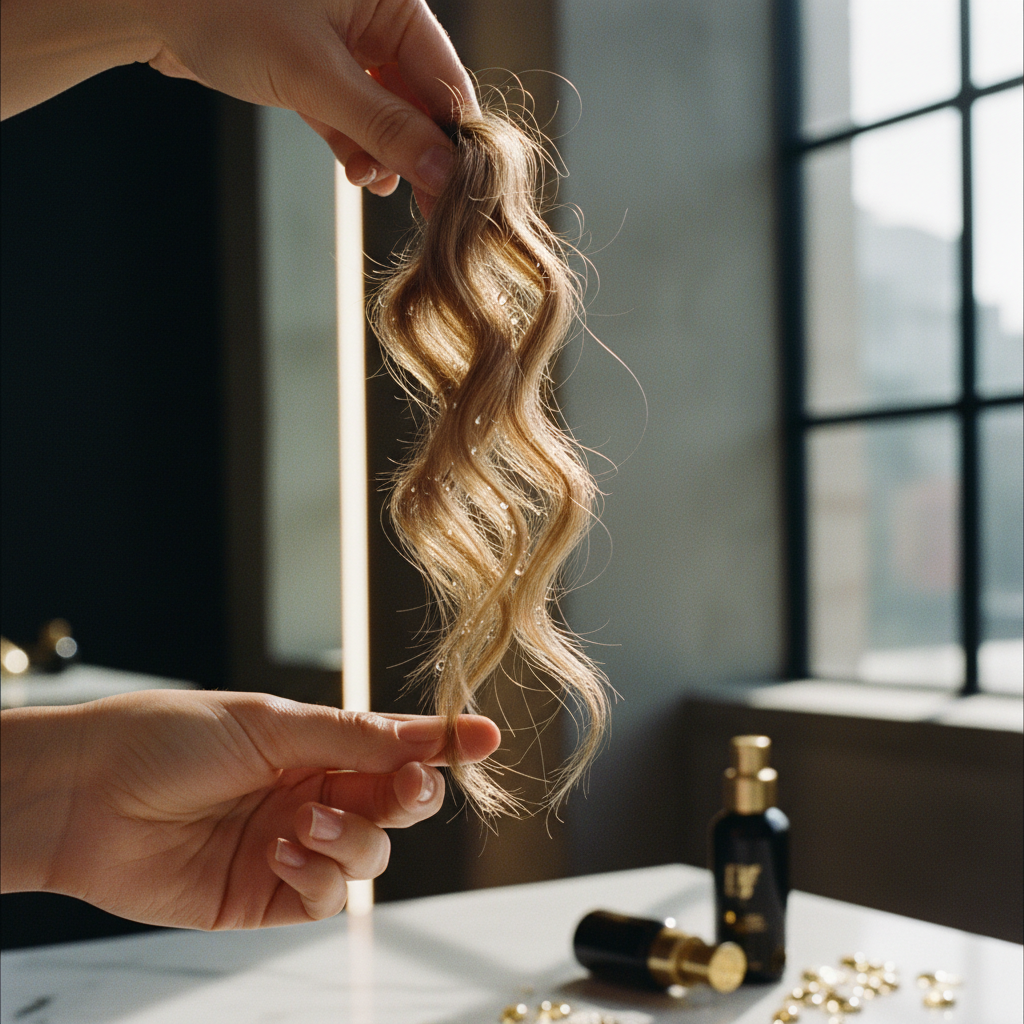
Quick answer: Hygral Fatigue in Hair Fibres occurs when the hair shaft repeatedly swells as it absorbs water and contracts as it dries, weakening the internal protein structure. This cycle causes cuticle lifting, loss of elasticity, and eventual hair breakage along the shaft. While common in highly porous or chemically altered hair, the main limitation of the concept is that it describes mechanical fibre damage, not follicular hair loss. Correcting it requires balancing moisture with structural protein and reducing prolonged water exposure.
Key takeaways
- Hygral fatigue is structural damage along the hair shaft caused by excessive swelling and deswelling cycles during washing or prolonged wetting.
- Water expands the hair fibre by up to 15 to 20 percent in diameter and roughly 1 to 2 percent in length, putting mechanical stress on the cell membrane complex.
- Highly porous, bleached, or heat-damaged hair is far more vulnerable because a damaged cuticle allows rapid, unchecked water absorption.
- The condition causes weak, gummy, overly stretchy strands that snap under low tension, but it does not cause hair to shed from the scalp follicle.
- Treatment centres on hydrolysed proteins, film-forming conditioning agents, and lipid-replenishing oils rather than deep moisturising masks alone.
Hygral Fatigue in Hair Fibres: what the evidence shows
Hygral Fatigue in Hair Fibres describes mechanical degradation resulting from alternating states of hydration and dehydration. When water enters a strand, it penetrates past the outer cuticle layer into the cortex, disrupting weak hydrogen bonds between keratin chains. As the cortex absorbs water, it swells significantly. Once the strand dries, the cortex shrinks back to its baseline size.
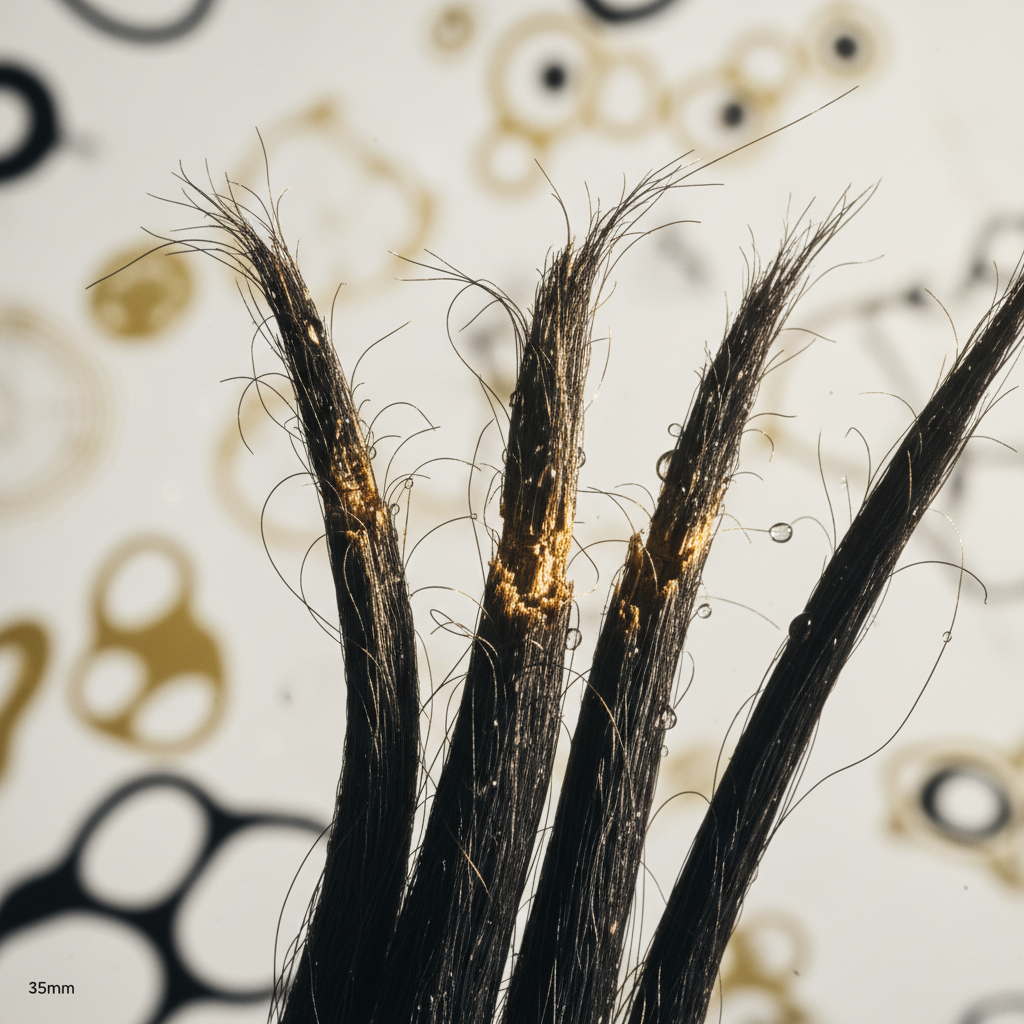
Research into cosmetic hair physics demonstrates that hair fibres absorb up to 30 percent of their own dry weight in water under high humidity or full immersion. In healthy virgin hair, the hydrophobic lipid layer, known as 18-methyleicosanoic acid (18-MEA), coats the cuticle and repels excess moisture. When chemical processing, bleaching, or chronic UV exposure strips this lipid layer, water enters rapidly. Over months of frequent washing, deep conditioning, and overnight masking, this constant expansion and contraction weakens the cell membrane complex that glues cuticle scales and cortical cells together.
The cosmetic result is a fibre that has lost structural integrity. Hair fibres suffering from this form of wear and tear become limp, mushy when wet, and significantly more prone to mid-shaft breakage.
The mechanical mechanism behind fibre breakdown
The internal machinery of a hair fibre is composed of rigid alpha-keratin microfibrils embedded in an amorphous, protein-rich matrix. This matrix is hydrophilic, meaning it readily attracts and binds water molecules.
When hair is submerged in water, water molecules insert themselves between the keratin chains, breaking hydrogen bonds and temporarily softening the matrix. In virgin hair with an intact cuticle, this swelling occurs gradually and is tightly regulated. However, in porous hair, the lack of an intact lipid barrier allows rapid water penetration. The cortex swells outward, forcing the overlapping cuticle scales to flare open under hydrostatic pressure.
When the hair dries, the cortex shrinks, but the cuticle scales do not always lay flat again. Repeated across hundreds of wash cycles, this movement creates micro-cracks in the cuticle layers, exposes the inner cortex, and eventually causes longitudinal splits and transverse snapping. Cosmetic scientists refer to this repeated mechanical stress as cyclic fatigue.
Recognising the signs of hygral fatigue
Spotting hygral fatigue requires looking at how the fibre behaves when wet versus dry. Because the symptom profile often overlaps with moisture overload, careful assessment helps identify the true issue.
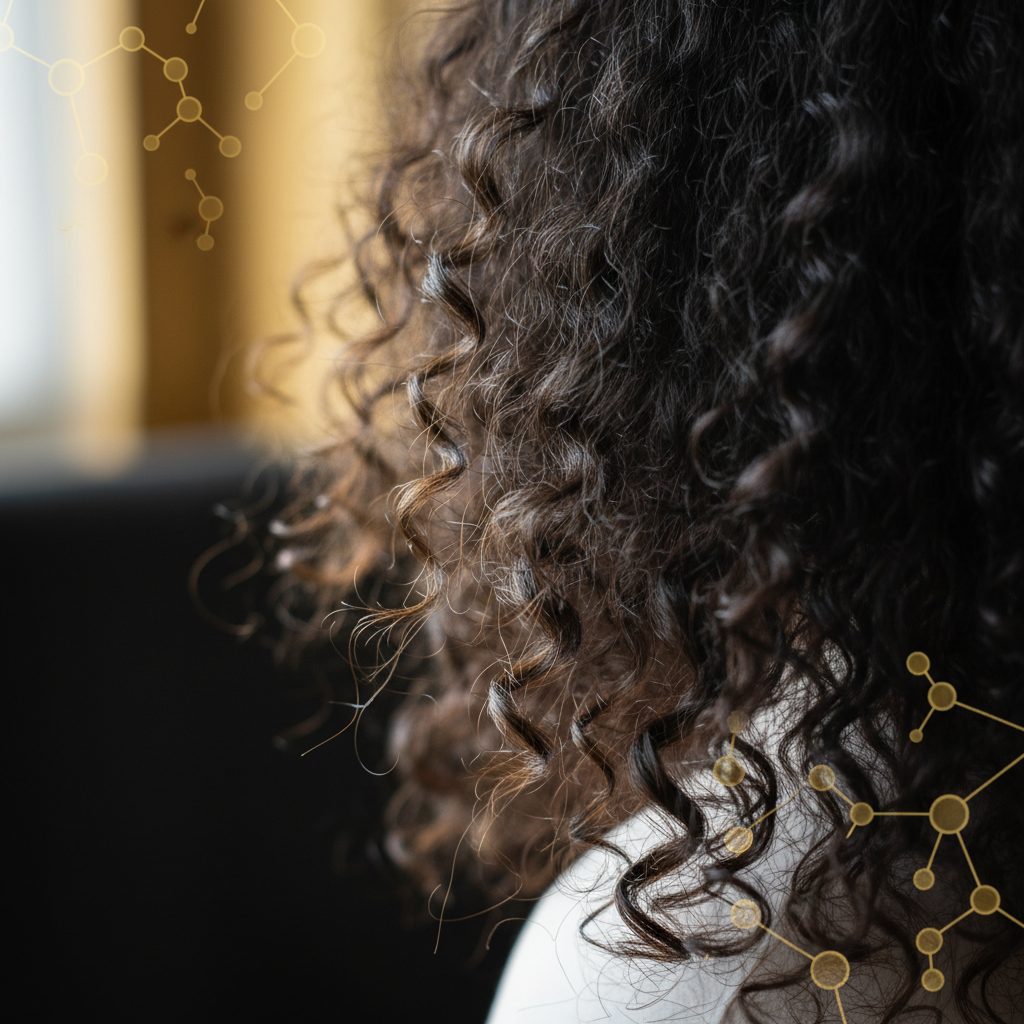
- Excessive wet elasticity: Wet hair normally stretches by roughly 30 percent of its length and returns to shape without breaking. Hair with hygral fatigue stretches well beyond this point, feels rubbery or gummy, and fails to bounce back.
- Dull, limp texture: Strands lose their natural curl pattern or wave definition, hanging flat even after styling.
- Snapping under minimal tension: The hair snaps easily when combed, especially while wet, producing short, broken fragments rather than full-length shed hairs with bulbs attached.
- Spongy dry time: The hair absorbs water almost instantly when rinsed, taking an unusually long time to dry thoroughly because the porous cortex holds onto moisture.
- Frizz that resists conditioning: Applying rich moisturising creams often makes the problem worse, leaving the hair feeling softer but even weaker and more fragile.
Hygral fatigue vs protein overload: how to tell the difference
Treating damaged hair effectively depends on diagnosing whether the fibre has absorbed too much water or accumulated too much surface protein. The two states require opposite corrective strategies.
| Characteristic | Hygral Fatigue | Protein Overload |
|---|---|---|
| Wet feel | Gummy, mushy, limp, slippery | Stiff, rough, straw-like |
| Elasticity | Over-stretches before snapping | Snaps immediately with zero stretch |
| Porosity state | Usually high porosity | Variable, often low to medium |
| Fibre diameter change | High lateral swelling when wet | Rigid, minimal lateral expansion |
| Reaction to deep conditioning | Worsens limpness and fragility | Temporarily softens surface stiffness |
| Primary solution | Hydrolysed proteins and ceramides | Clarifying wash and moisture-only masks |
What the evidence does not show
It is critical to separate social media narratives from published hair science. Hygral fatigue is frequently blamed for diffuse hair loss, receding hairlines, and excessive shedding on hairbrushes. The evidence does not support these claims.
Hygral fatigue is strictly a hair shaft condition. It does not affect the hair follicle seated 3 to 4 millimetres beneath the scalp surface. It cannot cause telogen effluvium, androgenetic alopecia, or alopecia areata. If you notice full-length hairs with white bulbs at the end coming out in the shower, this is natural shedding or an internal follicular shift, not hygral fatigue.
Furthermore, hygral fatigue does not develop overnight from a single long shower. It requires repeated, sustained wetting cycles over weeks or months, typically compounded by existing cuticle damage from bleach, permanent colour, relaxers, or high-heat tools. Healthy, untreated hair with an intact 18-MEA lipid layer has substantial natural resistance to this kind of cyclic swelling.
Practical steps to restore fibre balance
Recovering from hygral fatigue requires halting the swelling cycle, rebuilding cortical cohesion, and restoring a protective hydrophobic shield.
1. Introduce targeted hydrolysed proteins
Hydrolysed proteins, such as wheat, keratin, silk, or soy peptides with molecular weights between 500 and 2,000 Daltons, can penetrate the upper layers of the cortex. They fill structural voids, form ionic bonds with damaged keratin chains, and restore structural rigidity to limp fibres.
2. Stop prolonged wetting routines
Avoid sleeping with wet hair, wearing wet conditioning caps for hours, or soaking hair in deep conditioning masks longer than the manufacturer directs (typically 5 to 15 minutes). Prolonged exposure to moisture keeps the cortex in a swollen, weak state, accelerating fibre fatigue.
3. Use pre-shampoo lipid treatments
Applying penetrating oils before washing helps reduce water uptake. Triglyceride-rich oils, such as coconut or babassu oil, have a small molecular weight and straight carbon chains that allow them to penetrate the hair shaft. They take up space inside the cortex, mechanically reducing the volume of water the fibre can absorb during shampooing.
4. Adjust your washing pH
Hair sits at an isoelectric point of roughly pH 3.67, while the scalp rests around pH 5.5. Rinsing with products formulated within an acidic pH range of 4.0 to 5.0 encourages the cuticle scales to contract and lie flat, minimising excessive swelling and friction during washing.
5. Limit wet styling and combing
Because wet hair suffering from hygral fatigue has a compromised yield point, detangling wet strands generates micro-tears. Gently squeeze water out using a microfibre towel, apply a leave-in conditioner with film-forming silicones or plant polymers to reduce friction, and wait until hair is damp before styling.
Supporting hair density with Watermans
When addressing fibre fragility along the length of your hair, maintaining healthy scalp function and follicle activity is equally important. Watermans Grow Me Shampoo provides a gentle, sulphate-free cleanse that respects the natural moisture barrier while delivering targeted ingredients like biotin, rosemary, caffeine, and hydrolysed lupin protein.
For the mid-lengths and ends, pairing this with Watermans Condition Me Conditioner delivers cholesterol, niacinamide, and structural conditioning agents that smooth the cuticle surface and improve tensile strength without leaving hair waterlogged. While these topical formulations focus on cosmetic strengthening and fuller-looking volume, they provide the balanced, protein-rich foundation needed to protect vulnerable hair strands from daily washing wear.
When to seek professional advice
If your hair continues snapping despite balancing protein and moisture, schedule a consultation with a certified trichologist or experienced stylist. They can examine your hair fibres under magnification to distinguish hygral fatigue from chemical over-processing, trichorrhexis nodosa, or bubble hair deformity caused by heat tools.
Similarly, if you notice thinning at the parting, receding temples, or patches of scalp showing, consult a GP or dermatologist. These signs indicate follicular hair loss rather than shaft breakage, requiring medical assessment rather than cosmetic conditioning adjustments.
Frequently asked questions about Hygral Fatigue in Hair Fibres
Can overnight deep conditioning cause Hygral Fatigue in Hair Fibres?
Yes. Leaving a water-based conditioning mask on your hair overnight keeps the hair shaft saturated for eight hours or more. This extended submersion causes the cortex to swell continuously, putting stress on the cuticle and cell membrane complex. Masks are designed to work within 5 to 20 minutes; beyond this, the extra contact time weakens the structural integrity of vulnerable hair.
How do I know if my hair breakage is from hygral fatigue or shedding?
Check the broken strands. If the hair fibres you find are short pieces with blunt or frayed ends and no white bulb, you are experiencing hair breakage, which is a symptom of hygral fatigue. If the hairs are full length with a distinct white bulb at one tip, they have shed naturally from the scalp follicle, pointing to shedding rather than mechanical shaft fatigue.
Does coconut oil help prevent hygral fatigue?
Yes, scientific testing shows coconut oil reduces water absorption when used as a pre-wash treatment. Because of its low molecular weight and linear lauric acid chains, coconut oil penetrates inside the hair shaft. By occupying space within the cortex, it limits how much water can enter, significantly reducing swelling and contraction stress during washing.
Can virgin, uncoloured hair develop hygral fatigue?
While it is much less common, virgin hair can develop hygral fatigue under extreme circumstances. Frequent washing, swimming for hours daily, living in very high humidity, or chronic wet styling can slowly erode the natural lipid barrier. However, chemically bleached, dyed, or heat-styled hair is vastly more susceptible due to existing cuticle damage.
Conclusion
Managing Hygral Fatigue in Hair Fibres comes down to understanding the physics of your hair shaft and respecting its structural limits. Water is essential for pliability, but excessive swelling breaks down the internal bonds that keep hair strong. By limiting prolonged wetness, applying penetrating pre-shampoo oils, and introducing hydrolysed protein treatments, you can protect the cuticle, restore elasticity, and prevent unnecessary breakage.
Sources and references
- Robbins, C. R. (2012). Chemical and Physical Behavior of Human Hair. 5th ed. Springer Science & Business Media. DOI: 10.1007/978-3-642-25611-0.
- Ruetsch, S. B., et al. (2001). "Investigation of penetration of coconut oil into human hair fibres using secondary ion mass spectrometry." Journal of Cosmetic Science, 52(3), pp. 169-184.
- Evans, T. A. (2017). "Fatigue testing of hair fibres." Journal of Cosmetic Science, 68(1), pp. 57-67.
- Dawber, R. (1996). "Hair: its structure and response to cosmetic preparations." Clinics in Dermatology, 14(1), pp. 105-112.
- Gavazzoni Dias, M. F. (2015). "Hair cosmetics: an overview." International Journal of Trichology, 7(1), pp. 2-15. DOI: 10.4103/0974-7753.153450.