Hydrolysed Protein vs Moisture for Hair: The Essential Balance
10 min read ·
Demystify hydrolysed protein vs moisture for hair. Learn how peptides reinforce structure, how emollients restore elasticity, and how to stop mechanical breakage.
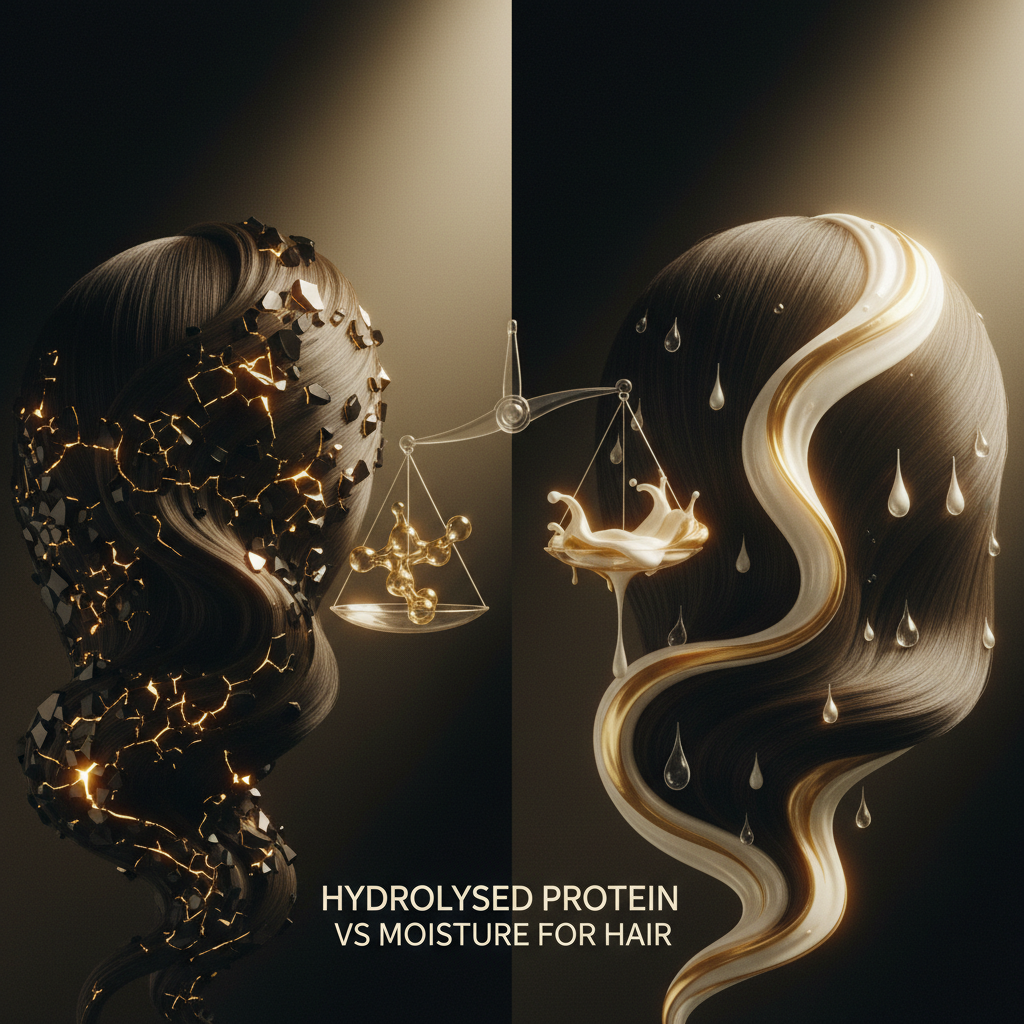
Quick answer: Balancing hydrolysed protein vs moisture for hair comes down to structure versus flexibility. Hydrolysed proteins are broken-down peptide chains that temporarily bind to gaps in damaged cuticles to rebuild tensile strength. Moisture involves conditioning agents, humectants, and lipids that draw in water and plasticise the hair shaft to prevent brittleness. The main limitation is that hair is non-living keratin; neither proteins nor humectants permanently repair a strand, meaning both require regular, balanced maintenance based on hair porosity and chemical exposure.
Key takeaways
- Hair structure relies on keratin proteins (roughly 85% to 90% of dry fibre weight) and bound moisture (typically 10% to 15% under moderate humidity).
- Hydrolysed proteins penetrate the cuticular gaps or coat the hair shaft to provide structural support, reducing fibre snapping and tensile breakage.
- Moisture treatments use emollients, fatty alcohols, and humectants to lubricate fibres, enhance elasticity, and reduce friction during styling.
- High-porosity, bleached, or heat-damaged hair requires higher ratios of hydrolysed protein, while low-porosity, untreated hair thrives on lightweight moisturising agents.
- Excessive protein application without adequate conditioning can leave hair feeling stiff, dry, and prone to mechanical breakage.
Hydrolysed Protein vs Moisture for Hair: what the evidence shows
Understanding hydrolysed protein vs moisture for hair requires examining the physiological makeup of the hair fibre. A single strand of hair consists of three primary layers: the outermost protective cuticle, the central cortex providing strength and elasticity, and sometimes a central medulla. Chemical services (such as bleaching, permanent dyeing, and chemical straightening) as well as heat styling damage the cuticle scale edges. When cuticles lift or wear away, cysteic acid forms from broken disulphide bonds, leaving the strand negatively charged, porous, and weak.
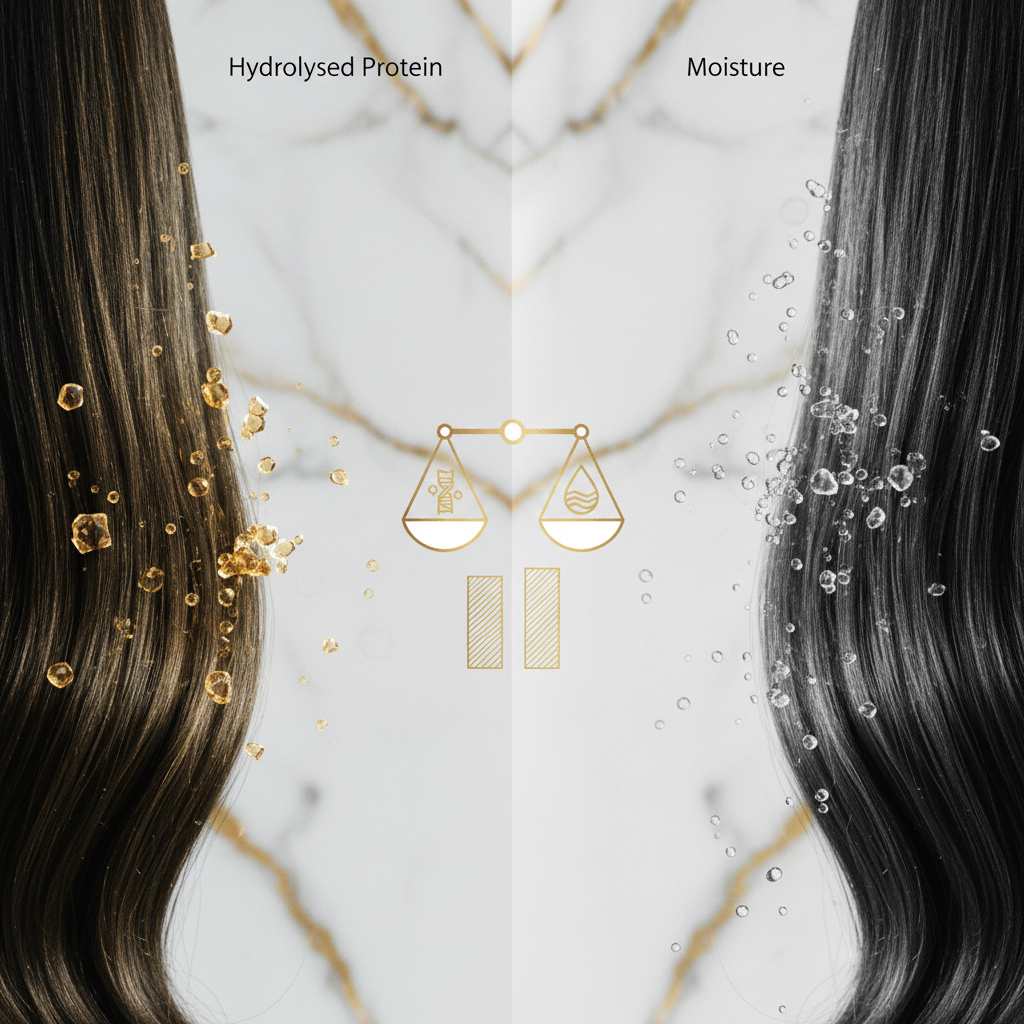
Protein in cosmetics cannot fully re-knit internal disulphide bonds. Instead, cosmetic scientists break down large proteins like keratin, wheat, soy, or silk via alkaline or enzymatic hydrolysis into smaller molecular weights, typically between 500 and 10,000 Daltons. These hydrolysed peptides carry a positive (cationic) charge at the acidic pH (around 4.0 to 5.5) typical of hair products. This charge enables them to electrostatically bind to the negatively charged, damaged sites on the hair fibre.
Moisture, biologically speaking, does not mean soaking the hair in liquid water. Liquid water without sealants actually swells the cortex, lifts the cuticles (hygral fatigue), and leaves hair brittle as it evaporates. In cosmetic formulation, "moisture" refers to the retention of ideal water balance through humectants (like glycerin and panthenol), emollients (such as natural oils and esters), and conditioning fatty alcohols (like cetyl and stearyl alcohol). These ingredients reduce water loss, smooth the cuticle surface, and dramatically lower wet combing force.
| Attribute | Hydrolysed Protein | Moisture (Emollients / Humectants) |
|---|---|---|
| Primary Goal | Reinforce tensile strength and fill cuticle defects | Increase flexibility, lubrication, and elasticity |
| Target Mechanism | Cationic adsorption to damaged, negatively charged keratin | Film-forming, lipid restoration, water-retention |
| Best For | Bleached, relaxed, heat-damaged, or gummy hair | Coarse, wire-like, dry, stiff, or low-porosity hair |
| Average Molecular Size | 500 to 10,000 Daltons (hydrolysed peptides) | Variable (small humectants to long-chain lipids) |
| Sensory Effect on Hair | Firmer, thicker, more resilient, textured | Softer, smoother, more pliable, easier detangling |
| Overuse Risk | Fibre stiffness, crunchiness, brittle breakage | Limpness, hygral fatigue, lack of curl retention |
What the evidence does not show
The science does not support several persistent haircare myths regarding proteins and conditioning.
First, hydrolysed protein does not permanently repair a hair strand. Hair is dead, non-living biological material (cornified keratinocytes). Adsorbed proteins act as temporary scaffolds or sacrificial layers. Over multiple wash cycles, surfactants strip away these superficial peptides, meaning treatments must be maintained periodically.
Second, moisture does not magically regenerate deep cortex bonds. A common salon assumption suggests that if hair is breaking, it simply "lacks moisture". If the hair has sustained extensive cortex degradation from peroxide, thermal degradation over 200°C, or chemical perms, infusing it solely with heavy oils or conditioners will not restore mechanical strength. In fact, over-softening weakened hair without reinforcing its protein lattice frequently increases breakage during detangling.
Finally, so-called "protein overload" is not an irreversible chemical poisoning of the fibre. It simply describes a state where an excessive outer coating of rigid peptide films creates high surface friction and removes flexibility, making the hair feel dry and straw-like. It can generally be corrected within one to three clarifying washes followed by deep conditioning.
The biological and chemical mechanism
The interplay between protein fragments and conditioning molecules hinges on molecular weight and isoelectric points.
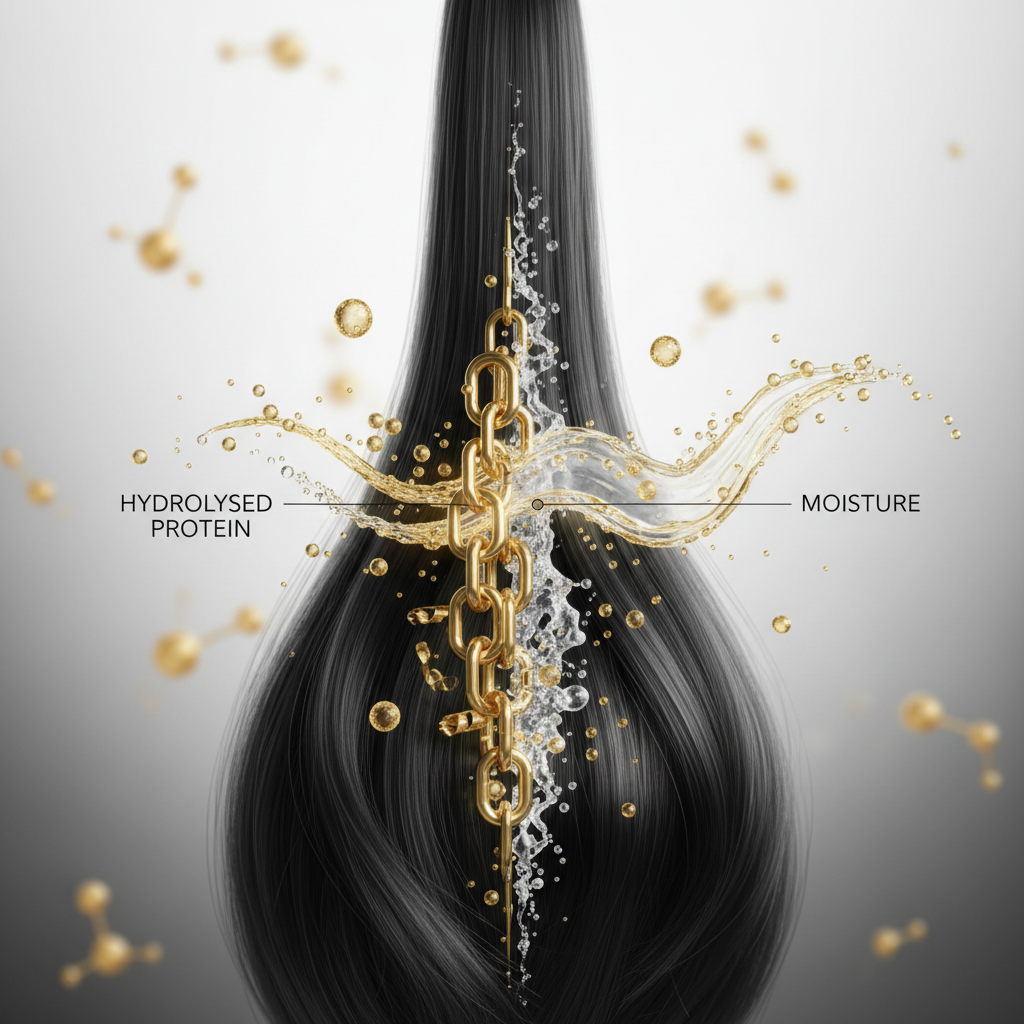
Natural, virgin human hair has an isoelectric point around pH 3.67. When chemical bleaching or ultraviolet radiation strips the protective 18-methyleicosanoic acid (18-MEA) lipid layer from the cuticle, the isoelectric point shifts further downward, increasing the net negative charge of the fibre. Hydrolysed proteins, which contain both amine and carboxyl groups, behave as amphoteric materials. Formulated at a slightly acidic pH (3.5 to 5.0), they maintain a net positive charge. This allows them to adhere firmly via electrostatic attraction to the damaged cortex and endocuticle.
Proteins with lower molecular weights (below 1,500 Daltons) are small enough to diffuse through micro-fissures into the cortex, increasing moisture retention within the internal protein matrix. Larger peptide chains (above 5,000 Daltons) remain on the outer surface, forming a cohesive cross-linked protective film that blunts mechanical friction and temporarily smooths lifted cuticle margins.
Conditioning moisturising agents complete this mechanism. Cationic surfactants, silicones, and fatty alcohols deposit hydrophobic coatings over both the natural keratin and the adsorbed hydrolysed peptides. This hydrophobic barrier keeps atmospheric humidity from causing erratic swelling while preventing internal water from evaporating too rapidly.
Signs your hair needs protein versus moisture
Evaluating whether your routine requires protein or moisture involves observing physical behaviour, touch, and wet elasticity:
Signs your hair needs hydrolysed protein
- Gummy or mushy texture when wet: When wet, damaged hair feels unnaturally soft, stretchy, and almost sticky, taking a long time to snap back into shape.
- Excessive stretching without rebound: Pulling a small section of wet hair causes it to stretch far past its standard length (more than 30%) without bouncing back, eventually tearing.
- History of chemical lifting: If the hair has undergone high-lift bleaching, perming, or chemical relaxers, its protein matrix is inherently compromised.
- Flat, lifeless curls: Curly or wavy hair that has lost its natural spring pattern and appears drooping or limp often lacks internal structural support.
Signs your hair needs moisture
- Rough, dry, and brittle feel: The hair feels like straw, rough along the cuticle, and makes a dry, rustling sound when rubbed together.
- Snapping with minimal stretch: When pulling a single wet or dry hair strand, it snaps almost immediately with zero give or elasticity.
- Tangling and high surface friction: Strands catch on each other easily, forming micro-knots and showing dullness due to lack of surface lipid lubrication.
- Coarse, wiry texture: Hair exposed to arid climates, frequent hard water, or naturally low-porosity hair that repels products.
How to balance hydrolysed protein and moisture in your routine
Finding equilibrium between hydrolysed protein vs moisture for hair requires matching treatment frequency to your hair's processing history and porosity:
- Assess porosity accurately: High-porosity hair absorbs water instantly and dries rapidly; it needs regular hydrolysed protein (weekly or fortnightly) followed immediately by an emollient mask. Low-porosity hair repels water initially and takes hours to dry; it needs protein rarely (once every 4 to 6 weeks) and responds best to heat-assisted, lightweight humectants.
- Read the ingredient lists: Look for terms like Hydrolysed Keratin, Hydrolysed Silk, Hydrolysed Wheat Protein, or Hydrolysed Vegetable Protein within the top 5 to 7 ingredients for a dedicated structural treatment. For moisture, prioritise Cetearyl Alcohol, Glycerin, Behentrimonium Chloride, and plant-derived oils.
- Follow protein with conditioning: Never finish a wash routine with an isolated, intense protein reconstructor. Always follow it with a pH-balanced, silicone- or lipid-rich conditioner to restore softness and seal the cuticle.
- Clarify regularly: Periodically remove treatment build-up using a mild chelating or clarifying shampoo to prevent residues that mimic protein stiffness.
When the cause is something else
If hair continues to snap or shed despite adjusting protein and moisture treatments, the root cause may not be cosmetic fibre degradation:
- Telogen effluvium: Widespread shedding across the scalp, where intact hairs with white bulbs fall out in the shower or brush, is a cycle disruption often triggered by physiological stress, illness, hormone shifts, or severe nutritional deficiencies. This is hair shedding, not fibre breakage.
- Androgenetic alopecia: Progressive thinning along the parting or crown caused by follicle miniaturisation and androgen sensitivity. Neither topical protein nor conditioning masks affect the hair follicle mechanism.
- Nutritional deficiencies: Inadequate dietary intake of iron (ferritin), vitamin D, zinc, or essential amino acids impairs normal keratin synthesis at the follicular level.
- Scalp dermatitis: Severe dandruff, seborrhoeic dermatitis, or psoriasis creates an inflamed follicular environment, compromising the structural integrity of the fibre as it emerges.
Consult a trichologist, dermatologist, or GP if you experience sudden diffuse thinning, patchy hair loss, scalp pain, or intense itching.
Watermans approaches to hair vitality
For individuals seeking to maintain a healthy scalp environment while managing fibre strength and hydration, Watermans formulations integrate structural and conditioning ingredients. Products like Watermans GrowMe Shampoo incorporate hydrolysed lupin protein alongside natural moisturising components like allantoin, rosemary extract, and argan oil. This approach ensures that the scalp surface receives targeted botanicals while the hair shaft benefits from balanced peptide deposition and lipid conditioning without creating heavy cosmetic stiffness.
Frequently asked questions about Hydrolysed Protein vs Moisture for Hair
How often should I balance hydrolysed protein vs moisture for hair?
Most healthy or lightly styled hair needs moisture every wash and hydrolysed protein every 3 to 4 weeks. If hair has suffered chemical damage, bleach, or high heat, incorporate hydrolysed protein every 1 to 2 weeks, always finishing with an emollient conditioning mask to maintain flexibility and minimise mechanical breakage.
Can low-porosity hair use hydrolysed protein?
Yes, but low-porosity hair tolerates hydrolysed protein only in tiny amounts. Because low-porosity cuticles lie flat and tightly packed, large proteins cannot penetrate and instead coat the surface, causing stiffness. Use lightweight, low-molecular-weight proteins like hydrolysed silk or wheat sparingly, perhaps once a month.
How do I fix hair that feels stiff from too much protein?
Wash hair with a clarifying shampoo to loosen the peptide film on the cuticles. Follow up with a deep, protein-free conditioning treatment rich in fatty alcohols and humectants. Applying gentle warmth using a shower cap helps open the cuticles, allowing moisturising agents to penetrate and soften the fibre.
Is hair breakage always caused by a lack of moisture?
No. Breakage often stems from severe structural deficits where internal keratin bonds are broken by bleaching, relaxers, or high heat. Hair in this condition has lost its tensile strength; adding moisture without hydrolysed proteins to reinforce the structure can make the hair overly soft and gummy, increasing wet breakage.
Does drinking water moisturise the hair shaft?
Drinking water supports general cellular function and initial follicular growth, but it has minimal direct effect on the dead hair shaft. Hair moisture retention is determined by environmental humidity and the integrity of the cuticle's protective lipid barrier, which requires topical emollients and humectants to prevent moisture loss.
Achieving long-term balance
Balancing hydrolysed protein vs moisture for hair is not a static formula; it changes with seasonal shifts, chemical services, and heat styling habits. By viewing hydrolysed proteins as structural reinforcements and moisturising agents as lubricating flexibilisers, you can tailor your routine to what your hair fibre actually needs. Regular evaluation of wet elasticity, porosity, and surface texture will guide you in switching between protein-rich treatments and deep hydrators, keeping hair resilient, pliable, and shielded against daily wear and tear.
Sources and references
- Robbins, C. R. (2012). Chemical and Physical Behavior of Human Hair. 5th ed. Springer-Verlag New York.
- Cruz, C. F., et al. (2016). "Human hair characteristics and methods to evaluate hair physical and mechanical properties." International Journal of Cosmetic Science, 38(5), 446-454.
- Tinoco, A., et al. (2018). "Proteins and peptides for hair care applications: a review." Cosmetics, 5(3), 44.
- Dawber, R. (1996). "Hair: its structure and response to cosmetic preparations." Clinics in Dermatology, 14(1), 105-112.
- Barba, C., et al. (2010). "Water content evaluation in human hair by thermogravimetry." Thermochimica Acta, 506(1-2), 102-106.
Find these ingredients in Watermans products
- Zinc: you will find this ingredient in our Hair Vitamins.
- Panthenol (Provitamin B5): you will find this ingredient in our Heat Protection Spray.