Hydral Fatigue in Hair Care: Causes, Symptoms, and Fibre Repair
9 min read ·
Hydral fatigue in hair care occurs when hair swells and contracts repeatedly from water absorption, leading to weak, gummy strands and severe breakage along the fibre.
Quick answer: Hydral fatigue in hair care describes the structural damage caused by the continuous swelling and contracting of the hair shaft when it absorbs and loses water repeatedly. Hair fibre absorbs up to 30% of its dry weight in water, which lifts and strains the protective cuticle layer. Over time, this mechanical stress degrades internal keratin bonds, leading to limp, gummy strands and severe breakage along the hair shaft. It is a fibre disorder, not a follicular scalp issue.
Key takeaways
- Hydral fatigue occurs when hair repeatedly expands with moisture and contracts during drying, weakening the cuticle and cortex.
- High-porosity, bleached, or heat-damaged hair is particularly vulnerable because a compromised lipid barrier allows rapid water absorption.
- Common signs include a spongy texture when wet, lack of elasticity, dullness, and snapping without stretching.
- Hydral fatigue causes hair breakage along the strand, not follicular hair loss or shedding from the scalp.
- Treatment requires restoring the protein-to-moisture balance, reducing soaking times, and using hydrophobic oils or conditioners.
Hydral Fatigue in Hair Care: what the evidence shows
Research in cosmetic chemistry and fibre biophysics shows that human hair is hygroscopic, meaning it readily takes up water from its environment. Virgin hair swells roughly 14% to 16% in diameter and about 1% to 2% in length when wet. In chemically altered or highly porous hair, this swelling can be significantly greater.
When water enters the cortex, it temporarily disrupts the secondary hydrogen bonds that hold keratin chains in their natural alignment. Under normal circumstances, drying restores these bonds. However, frequent washing, prolonged soaking, or leaving hair damp for extended periods subjects the cell membrane complex (CMC) and the cuticle scales to constant mechanical strain. The repeated cycle of expansion and contraction gradually chips away at the protective F-layer (the natural lipid coating composed of 18-methyleicosanoic acid) and lifts the outer cuticle tiles.
Cosmetic scientists refer to this wear-and-tear as fatigue failure. Over time, the hair fibre loses its structural integrity. Unlike healthy wet hair, which stretches comfortably by roughly 30% of its length and returns to its original state, hair damaged by moisture overload becomes excessively stretchy, mushy, and prone to snapping under minimal tension.
How water damages the hair shaft: the biological mechanism
To understand how water weakens the fibre, you have to look at the three layers of the hair shaft:
- The Cuticle: The outermost protective shield, consisting of 5 to 10 overlapping cellular layers. It is coated with a hydrophobic fatty acid layer that repels excess environmental moisture.
- The Cortex: The thick middle layer made of coiled keratin proteins. This layer provides tensile strength and elasticity.
- The Medulla: The central core, which is often absent in fine hair.
When the hydrophobic lipid layer is eroded by bleaching, heat, or harsh detergents, water rushes freely into the cortex. The cortex swells, forcing the rigid cuticle scales upward and outward. As the hair dries, the cortex shrinks back, but the cuticle scales do not always lie flat again. Repeated across hundreds of wash cycles, this process creates micro-fractures along the cuticle edges, strips away internal proteins, and leaves the inner cortex exposed to environmental stressors.
Signs of hydral fatigue versus protein overload
Because both conditions lead to brittle hair and snapping, people often confuse excessive moisture with excessive protein. Balancing these two elements is essential for hair health.
| Diagnostic Marker | Hydral Fatigue | Protein Overload |
|---|---|---|
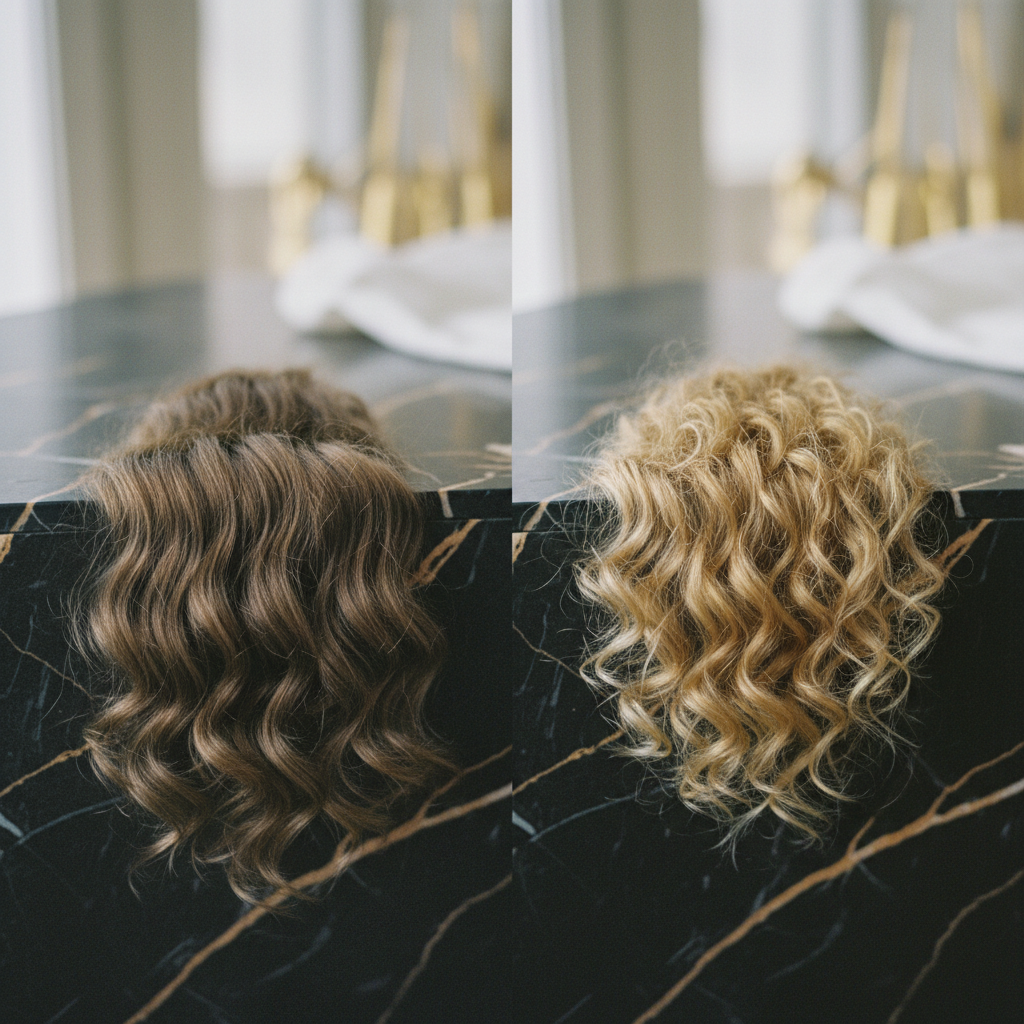
| Feel when wet | Spongy, mushy, slimy, or gummy | Stiff, harsh, straw-like |
| Elasticity test | Stretches excessively before snapping, fails to bounce back | Snaps immediately with virtually no stretch |
| Feel when dry | Limp, dull, flat, excessively soft | Rough, coarse, tangled, rigid |
| Primary cause | Excessive soaking, overnight masking, lack of protein | Excessive use of hydrolysed proteins or bond builders |
| Target corrective action | Hydrolysed protein treatments, sealing oils, shorter wash times | Clarifying shampoo, deep conditioning without proteins |
What the evidence does not show
There are several persistent myths regarding hydral fatigue in hair care:
- It does not cause follicular hair loss: Hydral fatigue is strictly a fibre issue that leads to hair breakage. It does not affect the dermal papilla, cause telogen effluvium, or trigger pattern hair loss (androgenetic alopecia).
- Water is not inherently toxic to hair: Hair requires a baseline moisture content (typically 10% to 15% at standard humidity) for pliability and softness. Problems arise from prolonged, unmanaged water exposure in already vulnerable hair, not from regular, mindful cleansing.
- Drying your hair naturally is not always gentler: Studies evaluating drying methods show that leaving hair wet for many hours keeps the cortex swollen longer, putting sustained pressure on the cell membrane complex. Controlled, low-heat blow-drying with a heat protectant can actually reduce CMC damage compared to air-drying over six to eight hours.
What you can do to prevent and correct hydral fatigue
Reversing the structural impact of hydral fatigue involves reinforcing the hair cortex, smoothing the cuticle, and minimising unnecessary water absorption.
Use targeted protein treatments
Hydrolysed proteins (such as keratin, wheat, or silk proteins) have low molecular weights, allowing them to temporarily adsorb to the hair surface and fill gaps in the damaged cuticle. This increases the fibre's tensile strength and reduces its capacity to absorb excess water.
Limit soaking time and avoid overnight conditioning
Never sleep in wet hair or leave deep conditioners on overnight. Conditioning agents typically reach their maximum efficacy within 15 to 30 minutes. Leaving wet emulsions on the hair for hours keeps the cuticle raised and invites moisture overload.
Apply pre-shampoo oil treatments
Certain penetrating oils, such as pure coconut oil, possess a high affinity for hair proteins and a low molecular weight. Research shows that applying coconut oil before washing reduces swelling by limiting the amount of water the fibre can absorb during cleansing.
Minimise mechanical stress when wet
Wet hair has a lower tensile strength than dry hair. Avoid aggressive towel-drying, which tears raised cuticle scales. Instead, blot gently with a microfibre towel or a cotton cloth. Always detangle with a wide-tooth comb, starting from the ends and moving up to the roots.
Dry hair efficiently
If your hair takes several hours to air-dry, consider using a hairdryer on a low-to-medium heat and medium-speed setting. Keep the nozzle at least 15 centimetres away from the hair surface to avoid thermal damage while minimising the time the hair spends in a swollen state.
Supporting strong hair fibre with Watermans
When managing hair that is prone to breakage from environmental and mechanical factors, using well-formulated, balanced haircare makes a noticeable difference. Watermans focuses on overall hair and scalp vitality with carefully measured formulations.
Watermans Grow Me Shampoo and Condition Me Conditioner are designed to deliver targeted nutrients without overloading the hair with unrinsed, heavy residues. The Condition Me formula contains hydrolysed lupin protein, which helps fortify the hair shaft, reinforce fibre resilience, and smooth lifted cuticles. This provides a balanced cosmetic environment that strengthens the feel of fragile hair while protecting it from everyday wear and tear.
When the cause may be something else
If you are experiencing noticeable thinning, patches of baldness, or clumps of hair coming out from the root (with a visible white bulb attached), your issue is not hydral fatigue.
Hair shedding from the scalp is usually tied to internal triggers such as nutritional deficiencies (ferritin, vitamin D, zinc), hormonal shifts (postpartum changes, thyroid imbalances), high stress (telogen effluvium), or genetic factors. Hydral fatigue produces short, snapped pieces of hair without a bulb, often noticed on your clothing, pillow, or bathroom counter.
When to seek professional advice
Consult a certified trichologist or a dermatologist if you experience sudden, diffuse hair shedding, scalp irritation, redness, pain, or visible widening of your part. If your hair continues to snap despite reducing water exposure and rebalancing your haircare routine, a professional salon stylist can assess whether your hair has reached a point of chemical degradation that requires a professional trim or bond-building intervention.
Frequently asked questions about Hydral Fatigue in Hair Care
Can low-porosity hair experience hydral fatigue in hair care?
Yes, but it is far less common. Low-porosity hair possesses a tightly closed, intact cuticle layer that naturally resists water absorption. However, if low-porosity hair is repeatedly soaked for hours, wrapped in plastic caps under heat, or conditioned overnight, water can eventually saturate the cortex and produce symptoms of hydral fatigue.
How long does it take to fix hydral fatigue?
Noticeable improvements often occur within two to four weeks once you introduce hydrolysed protein treatments and eliminate prolonged soaking. However, because hair is non-living tissue, severely fractured cuticles cannot technically regenerate. Full recovery of the hair length typically requires consistent protective habits and regular trims to remove compromised ends.
Is air-drying better than blow-drying for preventing hydral fatigue?
Not necessarily. While high heat damages the cuticle, prolonged air-drying keeps the hair swollen for hours, straining the internal cell membrane complex. A 2011 study published in the Annals of Dermatology found that using a hairdryer at a distance of 15 centimetres with continuous motion causes less cell membrane complex damage than leaving hair wet for extended air-drying periods.
Does hydral fatigue cause permanent hair loss?
No. Hydral fatigue in hair care does not affect the hair follicle or the scalp's ability to produce new strands. It causes breakage along the length of the hair fibre. While severe breakage can make the hair appear thinner at the ends, it does not cause follicular hair loss or true alopecia.
Maintaining balance to protect your hair
Hydral fatigue in hair care serves as a reminder that hair requires a precise balance between moisture and structural protein. While hydration keeps the fibre supple and manageable, unrestrained water absorption weakens the natural keratin structure and leads to avoidable breakage. By understanding the mechanical properties of your hair, keeping wash and dry times sensible, and incorporating targeted protein support, you can protect the integrity of your strands and maintain healthy, resilient hair.
Sources and references
- Lee, Y., Kim, Y. D., Hyun, H. J., Pi, L. Q., Jin, X., & Lee, W. S. (2011). Hair Shaft Damage from Heat and Drying Time of Hair Dryer. Annals of Dermatology, 23(4), 455-460.
- Robbins, C. R. (2012). Chemical and Physical Behavior of Human Hair. 5th Edition. Springer-Verlag.
- Ruetsch, S. B., Yang, B. Q., & Kamath, Y. K. (2001). Cuticle penetration and retention of low molecular weight ingredients from aqueous solutions. Journal of Cosmetic Science, 52(3), 169-184.
- Rele, A. S., & Mohile, R. B. (2003). Effect of mineral oil, sunflower oil, and coconut oil on prevention of hair damage. Journal of Cosmetic Science, 54(2), 175-192.
Find these ingredients in Watermans products
- Zinc: you will find this ingredient in our Hair Vitamins.