How to Strengthen Fragile Hair: The Evidence-Based Guide
9 min read ·
Learn how to strengthen fragile hair by balancing protein and moisture, minimising mechanical friction, and repairing cuticle damage to stop hair breakage.
Quick answer: Learning how to strengthen fragile hair requires a dual approach: reinforcing the internal cortex with hydrolysed proteins and shielding the external cuticle using conditioning lipids. Fragile hair snaps easily because chemical treatments, heat styling, or mechanical friction deplete its structural integrity. While you cannot biologically regenerate dead hair fibres, you can significantly reduce ongoing breakage, improve tensile elasticity, and support healthier new growth by optimising wash routines, balancing moisture and protein, and maintaining gentle handling techniques.
Key takeaways
- Fragile hair suffers from structural weakness in the keratin cortex and a lifted or eroded cuticle layer.
- Breakage is not hair loss; breakage is mechanical snapping along the shaft, whereas hair loss occurs at the follicle level.
- Hydrolysed proteins temporarily bind to damaged gaps in the hair fibre, boosting tensile strength.
- Wet hair can stretch up to 30 to 50 percent of its length before snapping, making it far more vulnerable to mechanical trauma than dry hair.
- Cosmetic products cannot permanently fuse split ends back together, meaning regular trims remain vital.
- Balancing wash water temperature, pH-balanced formulas, and protective styling yields measurable reductions in breakage.
How to Strengthen Fragile Hair: what the evidence shows
Research in cosmetic dermatology demonstrates that hair fibre strength depends on two main components: the integrity of the cortex and the protective seal of the cuticle. When assessing how to strengthen fragile hair, the primary goal is protecting the cross-linked polypeptide chains (keratin) from degradation.
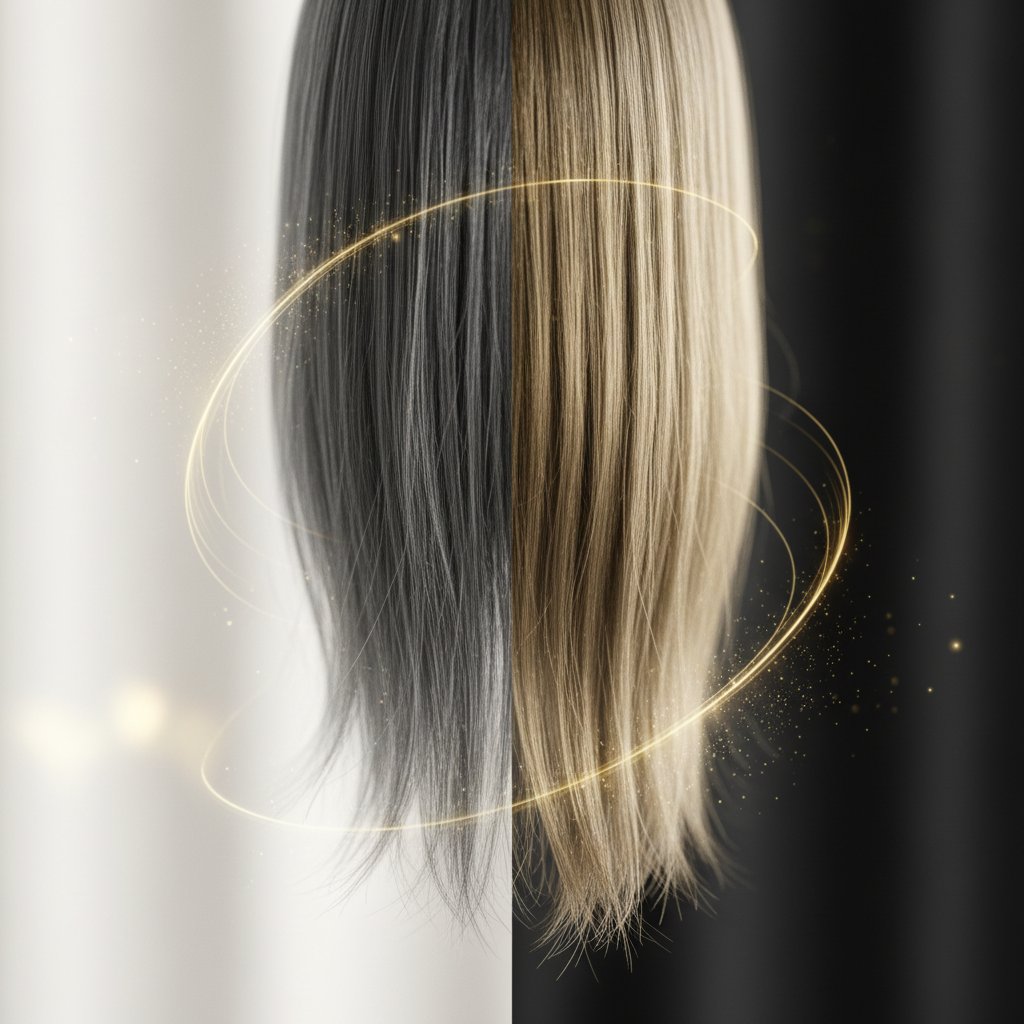
A healthy hair strand consists of an outer cuticle composed of overlapping scales, bonded by an intercellular cement rich in 18-methyleicosanoic acid (18-MEA). When alkaline chemicals like bleach, relaxers, or high-pH shampoos strip this lipid layer, the cuticle lifts. This exposes the inner cortex to moisture loss and environmental wear. Controlled laboratory studies reveal that repeated chemical processing can decrease the tensile strength of the hair fibre by upwards of 30 to 50 percent.
Cosmetic formulations with hydrolysed proteins (such as wheat, soy, or keratin) have small enough molecular weights (typically between 500 and 2,000 Daltons) to penetrate beneath lifted cuticles and adhere to porous sites. This temporary reinforcement increases the force required to break the fibre. Additionally, cationic conditioning polymers neutralise negative electrostatic charges along damaged strands, smoothing the cuticle and dramatically lowering wet and dry combing friction.
Signs your hair is fragile rather than shedding
It is critical to distinguish between natural follicular shedding and fibre breakage before adjusting your haircare routine.
- Absence of a white bulb: Shed hair from the root features a small, pale keratin bulb at the end. Broken hair has blunt, split, or frayed ends without a root bulb.
- Short, uneven fragments: If you find tiny lengths of hair on your shoulders, pillowcase, or bathroom counter, your hair is snapping mid-shaft.
- Loss of elasticity: Take a single wet strand and gently stretch it. Healthy hair stretches and returns to its original length. Fragile hair snaps instantly under minimal tension.
- Rough texture and dullness: Damaged cuticles cannot reflect light evenly, leaving fragile strands feeling dry, raspy, or brittle to the touch.
| Attribute | Healthy Hair | Fragile / Damaged Hair | Severely Compromised Hair |
|---|---|---|---|
| Elasticity | Stretches 30% wet and snaps back | Snaps with moderate pulling | Snaps immediately with low tension |
| Cuticle Condition | Smooth, flat, intact 18-MEA layer | Lifted scales, chipped edges | Completely stripped, exposed cortex |
| Porosity | Normal (low to medium) | High (absorbs and loses water fast) | Extreme (sponge-like, tangles rapidly) |
| Combing Friction | Low resistance | Moderate snagging | High friction, frequent mid-shaft snapping |
| Best Intervention | Routine maintenance conditioning | Protein treatments and lipid sealants | Trimming split ends, no thermal tools |
What the evidence does not show
Marketing claims often promise to rebuild or permanently restore fragile hair, but biological realities contradict this.

Hair is non-living biological tissue once it emerges from the scalp. It contains no living cells, blood vessels, or nervous tissue, meaning it cannot biologically regenerate or heal itself like skin. No topical treatment, mask, or serum can permanently mend split ends. Products that claim to seal split ends use film-forming polymers that temporarily glue the frayed fibres together until the next shampoo.
Similarly, there is no clinical evidence that taking excessive nutritional supplements will strengthen existing hair lengths if you do not have an underlying vitamin or mineral deficiency. Taking extra biotin or collagen will not alter the tensile strength of hair that has already grown out of your head.
Mechanisms that weaken hair fibre
Understanding what weakens your strands is the first step toward knowing how to strengthen fragile hair. The primary drivers of mechanical and chemical degradation include:
- Thermal oxidation: Heat tools operating above 180 degrees Celsius convert the hair's natural moisture into steam, causing microscopic structural blisters within the cortex known as bubble hair. Heat also degrades alpha-keratin into beta-keratin, leading to permanent loss of natural elasticity.
- Hygral fatigue: Repeated swelling and deswelling of the hair fibre caused by prolonged exposure to water weakens the cell membrane complex. When hair remains wet for hours, the cortex stays swollen, placing continuous stress on the cuticle scales.
- Alkaline exposure: Hair fibres thrive in a mildly acidic environment with a pH between 4.5 and 5.5. High-pH tap water, alkaline soaps, and chemical straighteners cause the cuticle to flare, drastically increasing friction and knotting.
- Physical friction: Vigorous towel drying with rough cotton terrycloth, aggressive brushing, and harsh elastic hair bands physically strip the cuticle layer, leaving thin fracture points along the shaft.
Practical steps to reinforce fragile hair
To stop breakage and preserve the structural integrity of your strands, implement these evidence-based adjustments:
1. Balance protein and moisture
Incorporate wash-off treatments featuring hydrolysed proteins every two to three weeks to patch damaged areas in the cortex. Follow every protein treatment with a rich emollient conditioner containing fatty alcohols (such as cetyl or stearyl alcohol) to restore suppleness. Protein without moisture causes hair to feel stiff and snap; moisture without protein leaves strands soft but limp and structurally weak.
2. Guard against wet friction
Hair is at its absolute weakest when wet. Never use a fine-tooth comb or stiff bristle brush on damp hair. Apply a leave-in detangling spray to reduce friction, then gently work through tangles using a wide-tooth comb or flexible detangling brush, starting at the tips and moving gradually toward the roots.
3. Lower tool temperatures
If you must use heat, always apply a silicone- or polymer-based heat protectant first. Keep styling irons under 175 degrees Celsius, and dry hair to at least 80 percent with cool or warm air before introducing a round brush.
4. Protect strands overnight
Cotton pillowcases generate significant friction as you move during sleep, catching fragile cuticle scales. Switch to a smooth silk or satin pillowcase, or wrap your hair in a satin scarf to eliminate mechanical friction.
When weakness is caused by systemic factors
If your hair appears fragile, breaks close to the scalp, or lacks density despite minimal heat and chemical use, the problem may stem from internal physiological issues.
Deficiencies in ferritin (stored iron), zinc, vitamin D, or essential fatty acids can alter the structural quality of the hair shaft during follicular synthesis. Thyroid disorders (both hypothyroidism and hyperthyroidism) frequently cause hair to emerge thin, dry, and prone to breaking. Hormonal shifts following pregnancy or during perimenopause can also affect sebum output and diameter, making individual strands feel significantly more fragile.
If fragile hair is accompanied by patchy thinning, widespread shedding at the root, or scalp itching and tenderness, consult a GP or trichologist for blood panels and a scalp evaluation.
Supporting hair vitality with Watermans
Cosmetic care plays an important supporting role in managing fragile strands. The Watermans collection offers targeted solutions designed to create the optimal environment for strong-looking hair.
Watermans Grow Me Shampoo is formulated with a revitalising blend of biotin, rosemary, caffeine, niacinamide, argan oil, and allantoin. Free from harsh, stripping sulphates, it cleanses gently while supporting an invigorated scalp. Pairing it with Watermans Condition Me Conditioner introduces moisturising cholesterol alongside hydrolysed lupin protein, smoothing the cuticle surface and improving manageable slip to minimise comb-induced breakage. For leave-in support, Watermans Grow More Elixir delivers targeted scalp nourishment between washes, keeping roots refreshed.
Frequently asked questions about How to Strengthen Fragile Hair
How often should I use protein treatments on fragile hair?
Use a hydrolysed protein treatment once every two to four weeks. Using protein too frequently without adequate moisturising agents can make strands rigid and brittle, increasing the risk of snapping. Monitor how your hair feels; if it feels stiff, switch to an emollient-rich moisture mask.
Can split ends be healed without cutting them?
No. Split ends represent permanent structural separation of the hair fibre. While leave-in serums can temporarily seal split ends using film-forming polymers, the effect washes away with your next shampoo. The only permanent solution is trimming the hair above the split to stop the tear from travelling up the shaft.
Does cold water make fragile hair stronger?
Cold water does not physically strengthen the internal cortex of the hair, but rinsing with cool water helps minimise excessive cuticle swelling compared to very hot water. Cool water can help flatten the cuticle scales, which lowers friction, improves light reflection, and leaves hair feeling smoother.
What is the most effective approach for how to strengthen fragile hair?
The most effective approach for how to strengthen fragile hair combines hydrolysed protein treatments to reinforce porous sections with fatty-alcohol conditioners to restore lipid flexibility. Minimising thermal styling, avoiding vigorous towel drying, and using wide-tooth combs on wet hair will significantly reduce snapping.
Why does my hair snap easily after bleaching?
Bleaching relies on alkaline agents and hydrogen peroxide to dissolve natural melanin inside the cortex. This chemical process inevitably oxidises disulphide bonds that give hair its strength, leaving the cortex porous and the cuticle stripped of its protective 18-MEA lipid layer.
Summary
Discovering how to strengthen fragile hair requires patience, gentleness, and an understanding of hair fibre mechanics. While you cannot biologically rebuild dead strands, you can reinforce vulnerable sections with targeted proteins, protect cuticles with nourishing conditioning agents, and avoid the high heat and physical friction that trigger breakage. Pair consistent cosmetic care with routine trims to maintain resilient, healthy-looking hair from root to tip.
Sources and references
- Robbins, C. R. (2012). Chemical and Physical Behavior of Human Hair. 5th ed. Springer-Verlag.
- Gavazzoni Dias, M. F. (2015). Hair cosmetics: An overview. International Journal of Trichology, 7(1), 2-15.
- Dawber, R. (1996). Hair: Its structure and response to cosmetic preparations. Clinics in Dermatology, 14(1), 105-112.
- Cruz, C. F., et al. (2016). Human hair characteristics and methods to investigate them. Cosmetics, 3(3), 26.
- British Association of Dermatologists. (2021). Hair Loss and Hair Care Information Hub.