How Heat Damage Affects Keratin: The Molecular Impact on Hair
8 min read ·
Discover how heat damage affects keratin at a molecular level, transforming hair's protein structure, causing chronic breakage, and why this process cannot be reversed.

Quick answer: Understanding how heat damage affects keratin comes down to protein denaturation and structural collapse. Keratin forms the coiled helical backbone of the hair cortex. High styling temperatures (above 150°C dry or 130°C damp) permanently unravel these alpha-helical coils into disordered beta-sheets, while oxidising vital disulphide bonds. The main limitation is that keratin cannot biologically regenerate; once thermal breakdown alters the fibre's secondary protein structure, the resulting loss of elasticity, porosity changes, and tensile weakness are permanent and can only be managed, not reversed.
Key takeaways
- Hair consists of roughly 65% to 95% keratin protein organised into ordered alpha-helices.
- Temperatures above 150°C initiate irreversible protein denaturation, changing alpha-keratin into disorganized beta-structures.
- Moisture accelerates thermal degradation, causing rapid steam expansion ("bubble hair") at temperatures as low as 120°C to 140°C.
- Disulphide cystine bonds oxidise under high heat into cysteic acid, permanently weakening the hair shaft's tensile strength.
- Cuticle scales lift, crack, and abrade when heat strips protective surface lipids (18-MEA), causing chronic moisture loss and fibre breakage.
- Once keratin proteins are denatured, they cannot heal biologically; cosmetic routines can only mask the deficit or protect uninjured lengths.
How Heat Damage Affects Keratin: what the evidence shows
Research into hair physics demonstrates that thermal styling tools systematically degrade hair's structural integrity across molecular, cellular, and macro-fibre levels. At the core of this breakdown is protein denaturation. In healthy hair, keratin polypeptides coil into stable alpha-helices held in tension by hydrogen bonds, salt links, and covalent disulphide bonds. When you apply heat, these bonds weaken and break.
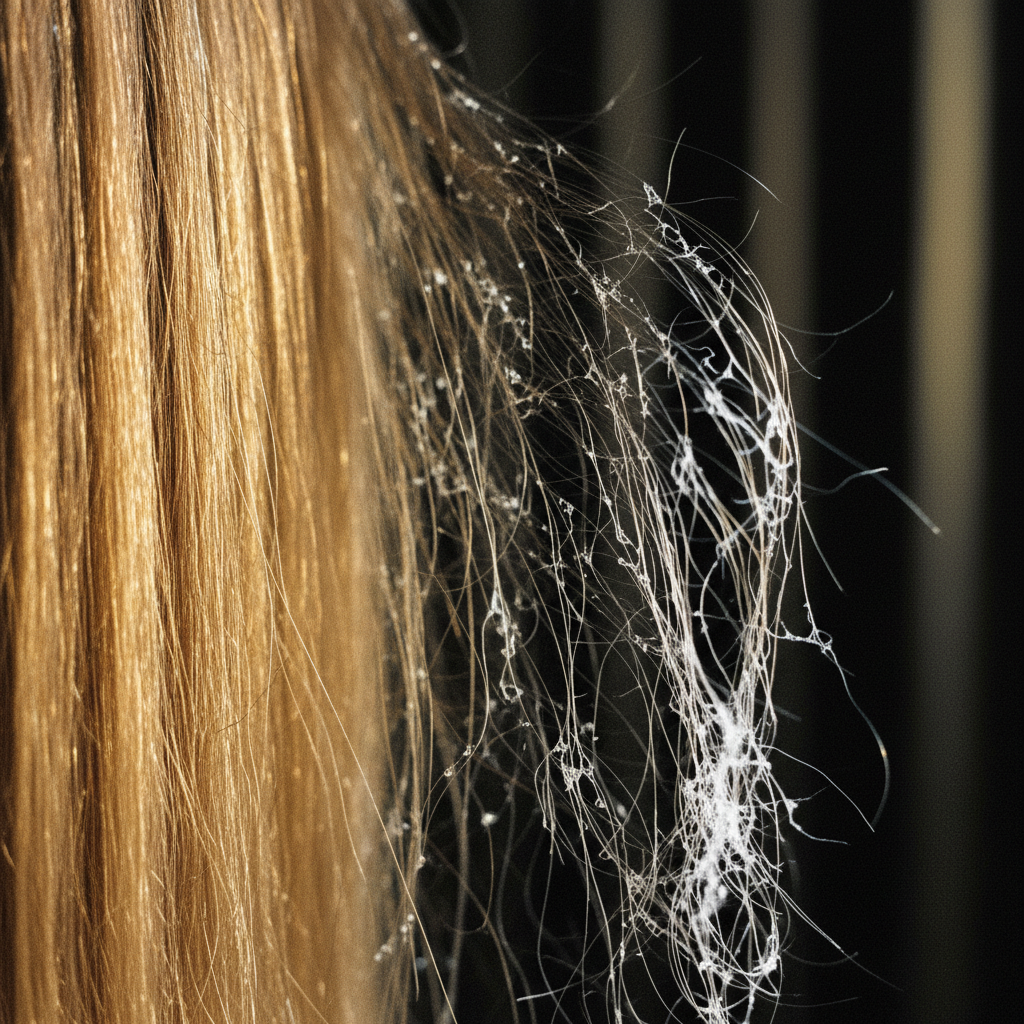
Differential scanning calorimetry (DSC) tests show that dry, intact human hair undergoes a major thermal transition between 220°C and 250°C, where crystalline alpha-keratin melts completely. However, sub-lethal thermal degradation begins far lower. Repeated exposure to temperatures between 150°C and 180°C destabilises the alpha-helical conformation, forcing it into randomly folded beta-sheet arrangements.
This phase shift permanently compromises hair elasticity. Instead of stretching and rebounding, the hair stretches unevenly, deforms, and snaps under minor tension. Heat also drives the oxidation of cystine, an amino acid responsible for the hair's high disulphide cross-link density. Cystine degrades into cysteic acid residues, diminishing the hair's mechanical resistance and leaving the inner cortex chemically compromised.
The role of moisture: steam damage and "bubble hair"
Styling wet or damp hair dramatically lowers the temperature threshold for structural ruin. Water inside the hair fibre has a high specific heat capacity. When flat irons or curling wands exceed 100°C on damp hair, this trapped water vaporises instantly.
Because steam expands to over 1,500 times the volume of liquid water, it cannot escape through the dense cuticle quickly enough. The resulting internal pressure forms spherical, gas-filled cavities within the hair cortex, a clinical condition known as bubble hair. The keratin surrounding these bubbles is thinned, stretched, and brittle, creating immediate focal points for transverse hair breakage.
The molecular mechanism of heat breakdown
Thermal degradation of hair keratin follows a predictable step-by-step cascade as temperatures climb:
- Moisture loss (50°C to 120°C): Free and bound water evaporates from the hair shaft. While temporary dehydration is reversible upon re-equilibration in ambient humidity, it increases fibre stiffness and friction.
- Surface lipid degradation (130°C to 160°C): The protective outer layer of the cuticle, primarily composed of 18-methyleicosanoic acid (18-MEA), begins to decompose. This alters the hair from hydrophobic (water-repelling) to hydrophilic (water-absorbing), promoting frizz and cuticle flaking.
- Alpha-helix to beta-sheet transition (150°C to 190°C): The ordered alpha-helical coils of keratin unwind into pleated beta-sheets. This permanently alters the natural spring and flex of the fibre.
- Cystine bond oxidation and cleavage (180°C to 210°C): Strong disulphide linkages split. Chemical oxidation produces acidic breakdown products like cysteic acid, directly reducing the hair's tensile load tolerance.
- Protein melting and decomposition (above 220°C): The crystalline matrix melts completely. The cortical structure collapses, producing blistering, severe cuticle loss, and complete fibre failure.
| Temperature Range | Structural Target | Physical Consequence | Reversibility |
|---|---|---|---|
| 50°C, 100°C | Free water in cuticle & cortex | Temporary dryness, raised surface friction | Fully reversible |
| 100°C, 140°C | Trapped moisture (damp hair) | Steam expansion, cortex cavitation (bubble hair) | Irreversible |
| 140°C, 160°C | 18-MEA lipid layer & cuticles | Loss of hydrophobicity, increased porosity | Irreversible |
| 160°C, 200°C | Alpha-helical keratin proteins | Loss of elasticity, beta-sheet conversion | Irreversible |
| 200°C, 230°C+ | Cystine disulphide bonds & matrix | Keratin liquefaction, severe fibre breakage | Irreversible |
Signs of heat-damaged keratin in hair
Because keratin provides structural architecture, heat-damaged hair displays clear physical symptoms:
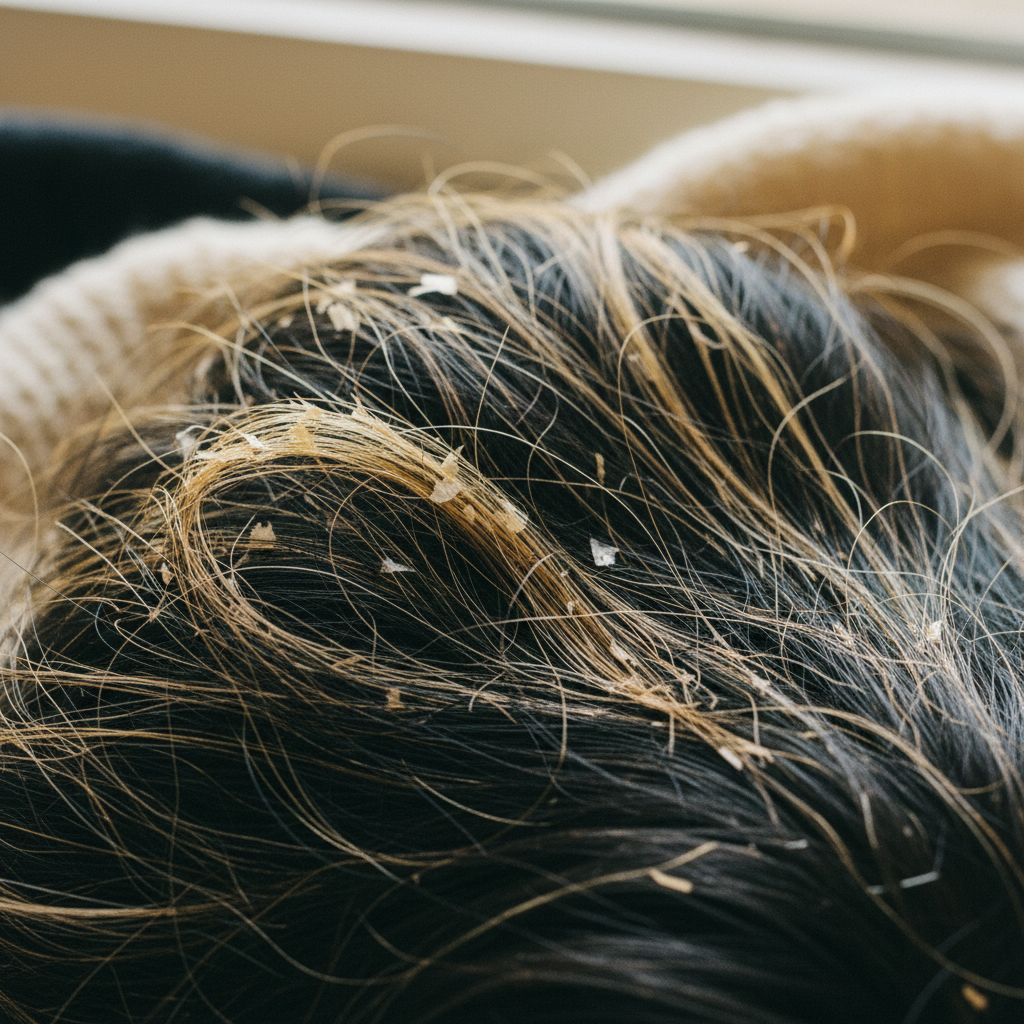
- Altered curl or wave pattern: When alpha-keratin unravels, natural curl memory disappears. Ringlets become limp, irregular, or stringy.
- Fibre snapping (breakage): Shorter pieces break off along the mid-lengths rather than shedding naturally from the follicle with a white bulb intact.
- Hyper-porosity and rapid drying: Damaged cuticles let water in quickly, but denatured cortical proteins cannot retain moisture, so hair dries excessively fast and feels like straw.
- Extreme brittleness when dry: Loss of natural disulphide bridging leaves the hair feeling stiff and crackly.
- Split ends (trichoptilosis): The protective cuticle wears away, causing the exposed cortex to unravel longitudinally into brush-like fringes.
What you can do to manage and prevent damage
Because hair fibres are non-living biological structures, denatured keratin cannot be metabolically healed. You cannot "repair" broken keratin back to its virgin state. However, strategic habits prevent progressive degradation and improve the handling of compromised fibres.
Lower the thermal load
Never apply direct hot tools (flat irons, curling irons) to damp or wet hair. Ensure the hair is 100% dry before heat styling. Keep styling tools below 180°C (350°F) for normal hair, and below 150°C (300°F) for fine, bleached, or previously processed hair. Limit passes with a straightener to a single, smooth stroke rather than multiple slow passes over the same section.
Use film-forming heat protectants
Heat protectants do not make hair impervious to high heat, but they reduce the rate of heat transfer. Ingredients like silicones (dimethicone, amodimethicone), polyquaternium compounds, and hydrolysed proteins coat the cuticle. They lower thermal conduction, distribute heat evenly across the shaft, and preserve the internal moisture barrier.
Replenish structural support externally
Conditioners, leave-in serums, and masks containing hydrolysed wheat, soy, or keratin proteins can temporarily sit within cuticle gaps and adhere to the shaft through electrostatic attraction. While they do not reform covalent bonds inside the cortex, they temporarily patch voids, reduce friction, and lessen mechanical breakage during brushing.
The role of thoughtful haircare routines
For those seeking to maintain strong-feeling lengths while supporting a clean scalp environment, Watermans offers targeted formulations like the GrowMe Shampoo and ConditionMe Conditioner. Designed to fortify the feel of fine or stressed strands without harsh sulphates, these products supply gentle conditioning agents, hydrolysed lupin protein, and natural extracts that help coat fragile hair and minimise breakage from daily mechanical wear.
When the cause may be something else
It is common to confuse heat-induced fibre snapping with root-level hair shedding:
- Thermal damage causes structural hair breakage. Broken fragments are usually short, variable in length, lack a root bulb, and have frayed or snapped ends.
- Telogen effluvium is actual hair shedding. Entire hairs fall out from the scalp follicle, complete with a small, white keratinised bulb at the base. This is triggered by systemic factors like illness, high stress, nutritional deficiencies, or hormonal fluctuations, not styling tools.
- Chemical damage from bleaching, perms, or relaxers also breaks disulphide bonds. If you both bleach and flat-iron, the rate of keratin degradation compounds rapidly.
Frequently asked questions about How Heat Damage Affects Keratin
Does heat damage actually destroy the keratin in hair?
Yes. High temperatures denature the crystalline alpha-helical structure of keratin, transforming it into disordered beta-sheets. Beyond 180°C, heat also oxidises disulphide bonds (cystine) into cysteic acid. While the physical atoms remain, the organised molecular architecture that provides hair with strength, spring, and elasticity is permanently ruined.
Can protein treatments rebuild hair after how heat damage affects keratin?
No cosmetic treatment can biologically reverse how heat damage affects keratin. Hydrolysed proteins and bond-building products can temporarily patch surface crevices, fill porosity gaps, and improve tensile resistance mechanically. However, they do not permanently recreate the original coiled alpha-helical protein structure inside the hair cortex.
At what temperature does heat damage to keratin begin?
On completely dry hair, microscopic structural changes to keratin begin around 150°C (302°F), with critical protein melting occurring between 200°C and 230°C. However, on wet or damp hair, keratin degradation and internal steam cavitation (bubble hair) can occur at temperatures as low as 120°C to 140°C.
Is heat damage to keratin reversible over time?
Heat damage to keratin is completely irreversible. Hair is non-living tissue and contains no active cells to heal, regenerate, or synthesise new proteins once it has emerged from the scalp. The only true cure for heat-damaged lengths is trimming off the split and broken ends while protecting new growth as it emerges.
Conclusion
Understanding how heat damage affects keratin clarifies why compromised hair feels brittle and loses its natural bounce. From melting the protective lipid layer to permanently unraveling alpha-helical proteins and fracturing disulphide bonds, excessive heat alters hair chemistry at every level. Because hair cannot biologically repair denatured keratin, prevention remains the gold standard: dry hair thoroughly before styling, restrict iron temperatures to safe thresholds, use protective barriers, and trim frayed ends before splits travel up the shaft.
Sources and references
- Journal of Cosmetic Dermatology, "Thermal degradation of hair keratin", 2011.
- International Journal of Cosmetic Science, "The effect of heat on hair structure and properties", 2004.
- Journal of the Society of Cosmetic Chemists, "The effects of heat styling on human hair", 1998.
- British Association of Dermatologists, "Hair breakage versus hair loss: clinical distinctions", 2020.
- Society of Cosmetic Chemists Monograph, "Chemical and Physical Behaviour of Human Hair", C.R. Robbins, 2012.